Is it possible that the very service meant to save your car could actually end up damaging it? It is one of the most common fears we hear at Eagle Transmission & Auto Repair when drivers ask about a transmission flush vs drain and fill. We understand the hesitation. Between the steep climbs up I-70 and the freezing winter mornings in Parker, your vehicle faces intense thermal stress that most cars never see. You want to protect your investment, but getting conflicting advice from different mechanics can make you feel like you are guessing with your gearbox.
At our shop, we believe in honest diagnostics because our motto is “WE FIX EVERYTHING,” and that starts with giving you the right information. This article will help you discover the critical differences between these two services and identify which one is best for your vehicle’s longevity in Colorado’s demanding driving conditions. We will break down the safety of each method based on your mileage and explain why the thin air and mountain grades of Douglas County mean you might need a different maintenance schedule than the average driver.
Key Takeaways
- Learn why transmission fluid is vital for your drivetrain and how Colorado’s unique climate and high altitudes accelerate fluid breakdown.
- Understand the mechanics of a transmission flush vs drain and fill to determine if your car needs a basic fluid refresh or a complete system exchange.
- Identify the specific risks associated with flushing high-mileage vehicles and how to protect a transmission that has missed previous service intervals.
- Discover how mountain driving and heavy towing impact your maintenance needs and why a “lifetime fluid” claim might not hold up in the Rockies.
- See how a professional diagnostic at Eagle Transmission & Auto Repair removes the guesswork, ensuring your service plan is tailored to your vehicle’s actual health.
Table of Contents
- Understanding Transmission Fluid Maintenance in Parker, CO
- Transmission Flush vs Drain and Fill: A Technical Comparison
- Deciding Between a Flush and a Drain & Fill: Risks and Rewards
- Why Colorado Driving Demands a Different Maintenance Schedule
- The Eagle Transmission Diagnostic Approach: WE FIX EVERYTHING
Understanding Transmission Fluid Maintenance in Parker, CO
Think of your transmission fluid as the multitasking hero of your vehicle’s drivetrain. It does not just sit there; it is constantly working as a lubricant, a coolant, and a hydraulic fluid. In an automatic system, this fluid provides the pressure necessary to shift gears while simultaneously whisking away the intense heat generated by moving metal parts. Without healthy fluid, your transmission would essentially grind itself to a halt within minutes. At Eagle Transmission & Auto Repair, we see firsthand how vital this liquid is to the life of your car or truck.
In Parker and surrounding Douglas County, our environment is particularly demanding on these systems. The high altitude and steep mountain grades mean your transmission works harder than it would at sea level. Research indicates that 90% of all transmission failures are caused by overheating and fluid degradation. Over time, the combination of friction and extreme Colorado temperature swings causes the fluid to oxidize. When fluid oxidizes, it loses its protective properties and becomes acidic, which can lead to internal damage. This is why the debate over a transmission flush vs drain and fill is so common among local drivers. Proactive maintenance is the only reliable way to avoid a situation where the “WE FIX EVERYTHING” team at our shop has to perform a full, expensive rebuild.
The Vital Role of Transmission Fluid
The chemistry of Automatic transmission fluid (ATF) is complex for a reason. It must maintain a specific viscosity to enable precise gear shifts through hydraulic pressure. If the fluid becomes too thin or too dirty, those shifts can become erratic or delayed. Furthermore, the cooling properties are what prevent your internal clutches from burning up during a heavy climb up I-70. If you drive a 4×4 or an All-Wheel Drive vehicle, clean fluid is equally essential for your transfer case. Fresh fluid ensures that power is distributed to your wheels smoothly, protecting the longevity of your entire drivetrain.
Signs Your Transmission Fluid Needs Attention
How do you know if your fluid is reaching the end of its life? Your senses are often the best diagnostic tools. If you notice a smell similar to burnt toast coming from your engine bay, your fluid is likely scorched and failing. You can also check the color and consistency. Healthy fluid should be a translucent, bright red. If it appears dark, opaque, or smells acrid, it is no longer doing its job. Physical symptoms like hesitating shifts, slipping gears, or unusual whining noises are also major red flags. If you experience these issues, it is time to look into transmission repair in Parker before a small maintenance task turns into a major mechanical failure.
Transmission Flush vs Drain and Fill: A Technical Comparison
Choosing between a transmission flush vs drain and fill often feels like a guessing game for many drivers. It should not be. At Eagle Transmission & Auto Repair, we see these as two distinct tools used for different stages of a vehicle’s life. Think of a drain and fill as being similar to a standard oil change. We pull the drain plug or remove the pan, let the gravity-fed fluid out, and replace what was lost. However, there is a technical catch. A large portion of your fluid stays trapped inside the torque converter and the cooler lines. Because of this, a simple drain only replaces about 40% to 50% of the total fluid volume. You are essentially mixing clean fluid with old, dirty leftovers.
What is a Transmission Drain and Fill?
This service involves dropping the transmission pan to drain the fluid and, in most cases, replacing the internal filter. It is a straightforward, manual process. Because it only introduces a few quarts of fresh fluid at a time, it is often considered a “gentle” way to maintain a vehicle. If your car has high mileage or a spotty service history, this is frequently the safest path. It refreshes the additive package without shocking the internal components. Following a consistent preventative maintenance schedule helps ensure this smaller refresh is enough to keep your gears turning smoothly without overtaxing an older system.
What is a Transmission Flush?
A transmission flush is a much more comprehensive procedure. Instead of relying on gravity, we use professional equipment to perform a total fluid exchange. This machine connects to the transmission’s cooler lines, allowing us to swap out 90% to 95% of the old, degraded fluid with fresh ATF. This process reaches the fluid hidden deep in the torque converter and the valve body. It also helps carry away accumulated sludge and microscopic metal shavings that a simple drain might leave behind. For newer vehicles or those that have been meticulously maintained, a flush is the gold standard for long-term protection.
Our technicians in Parker don’t just pick a service at random. We evaluate your vehicle’s mileage, the color of the fluid, and your driving habits before making a recommendation. Because our motto is “WE FIX EVERYTHING,” we want to ensure the service we provide actually solves the problem rather than masking it. If you are unsure which service fits your current needs, stopping by our shop on Parkglenn Way for a quick fluid check is a great place to start. We are here to help you make the best choice for your car’s future.
Deciding Between a Flush and a Drain & Fill: Risks and Rewards
One of the most common questions we hear at Eagle Transmission & Auto Repair involves the “High Mileage Dilemma.” You might have heard a horror story about a friend who got a transmission flush on an older truck, only to have the unit start slipping a week later. These stories often lead to a fear of “breaking” a transmission that seems to be running fine. While these situations are rare, they are rooted in a specific mechanical reality. When a transmission has been neglected for 100,000 miles or more, the internal clutches wear down, and microscopic friction material becomes suspended in the old, thick fluid. In some cases, this “grit” is actually helping worn clutches grab. Replacing 100% of that fluid with slippery, fresh ATF can occasionally reveal a failure that was already in progress.
This is why we don’t just sell you a service off a menu. Our “WE FIX EVERYTHING” philosophy starts with a professional diagnostic. We look at the color of your fluid, check for a burnt odor, and even look for excessive metal debris in the pan. If your vehicle has an unknown service history or very high mileage, a drain and fill is often the safer, more conservative choice. It allows us to refresh the protective additives without the risk of shocking a sensitive system. However, for vehicles that have been well-maintained, the rewards of a full flush far outweigh the risks.
The ‘Old Fluid’ Myth: When a Flush Can Be Risky
The danger isn’t usually the pressure of the flush machine; it is the high concentration of detergents in the new fluid. Fresh fluid is very efficient at cleaning. If your transmission has significant sludge buildup, those detergents can dislodge a “chunk” of debris that might get stuck in the narrow passages of the valve body. If your car starts shifting poorly after a service, it usually means there was a pre-existing mechanical issue that the old, dirty fluid was masking. In Parker, our experts will always advise you if your fluid looks too degraded to safely handle a full exchange.
Why a Full Flush is Often the Superior Choice
When your vehicle is healthy, a full flush is undoubtedly the gold standard for transmission repair and prevention. By removing 90% to 95% of oxidized fluid and contaminants, you restore optimal hydraulic pressure and cooling efficiency. This is especially important for fleet vehicles or families who frequently tow trailers through Douglas County. A flush ensures that every drop of fluid in the torque converter and cooler lines is fresh, providing the maximum possible protection against the heat of mountain driving. If you are following your manufacturer’s recommended intervals, a flush is the best way to ensure you never need a major rebuild.
Why Colorado Driving Demands a Different Maintenance Schedule
Standard owner manuals are often written for sea-level commutes on flat terrain. In Parker, those simply don’t exist. The decision between a transmission flush vs drain and fill becomes much more critical when you consider our “Severe Service” environment. Between steep mountain climbs and thin air, your drivetrain works significantly harder than a car driving in the Midwest. At Eagle Transmission & Auto Repair, we understand that “normal” driving conditions are a myth in Douglas County.
Heat is the primary enemy of your drivetrain. While we previously noted that heat causes the vast majority of failures, the way that heat builds up here is unique. When you are pulling a trailer up I-70 or navigating the stop-and-go traffic between Centennial and Castle Rock, your fluid temperatures can spike far beyond what a standard radiator expects. Waiting for a generic mileage milestone can result in fluid that has already lost its ability to protect your gears from friction and wear.
Mountain Towing and High-Altitude Heat Stress
At 6,000 feet and above, your vehicle’s cooling system has to work much harder to shed heat. For owners of Ford F-150 and F-250 trucks used for heavy work or weekend towing, this is a daily reality. This constant stress accelerates the breakdown of protective additives in your fluid. High-altitude oxygen levels also impact the rate of oxidation. If you rely on “lifetime” fluid claims, you might be driving on degraded oil that can no longer cushion the internal metal parts of your transmission.
The Severe Service Schedule for Parker Drivers
We also have to account for our dramatic seasonal shifts. Winter cold starts in Parker are brutal on fluid viscosity. Thick, cold fluid does not flow as effectively during those first few miles of your commute, which can lead to increased friction. Because of these factors, we recommend checking your fluid health every 15,000 miles to ensure everything is operating at peak efficiency.
This does not mean you need a full service every time, but a quick inspection ensures you are never caught off guard. Whether you are climbing mountain passes or dealing with Lone Tree traffic, our team is here to help. Because our motto is “WE FIX EVERYTHING,” we want to catch small issues before they become major rebuilds. If you want to ensure your vehicle is ready for the next Colorado adventure, transmission repair in Parker starts with a professional fluid evaluation. We live on these same roads and know exactly what it takes to keep your car running safely. Come see us at our Parker location to make sure your drivetrain is ready for the Rockies.
The Eagle Transmission Diagnostic Approach: WE FIX EVERYTHING
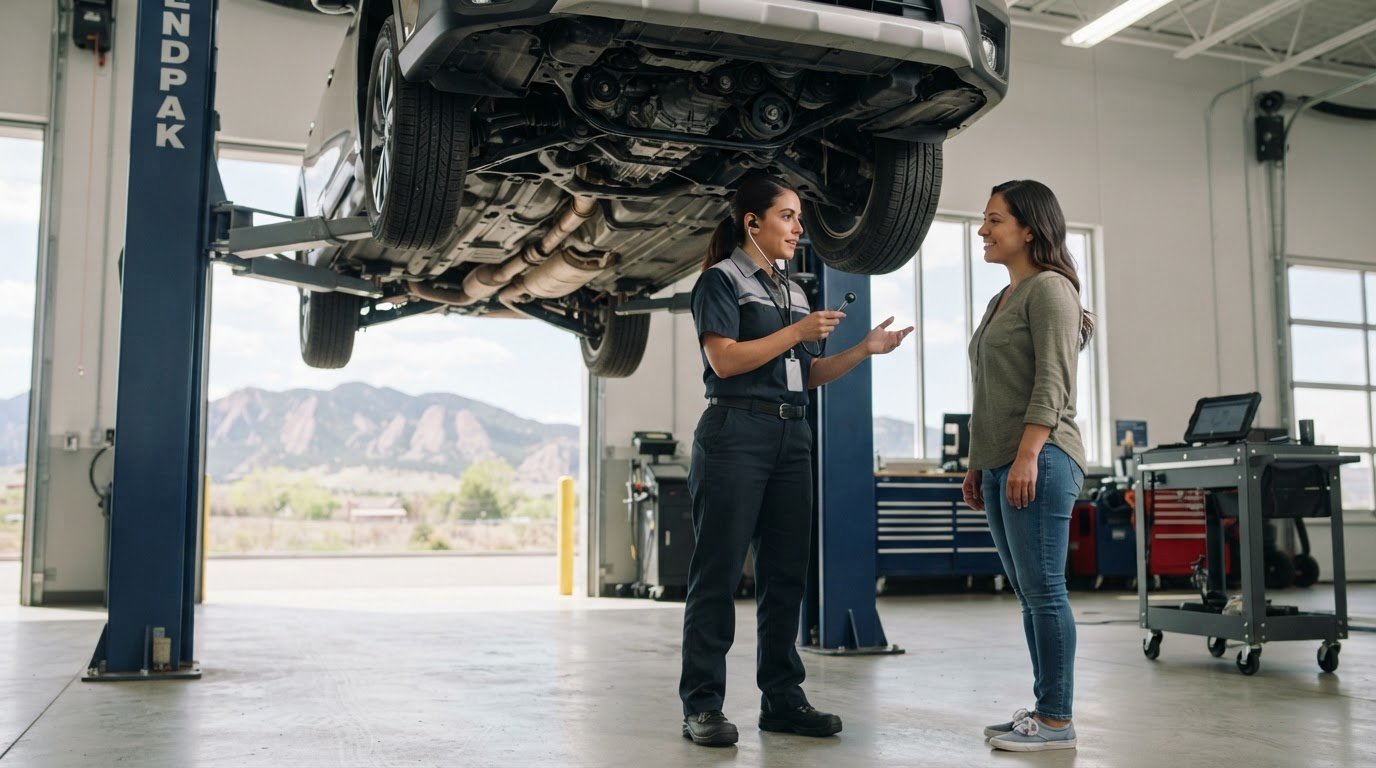
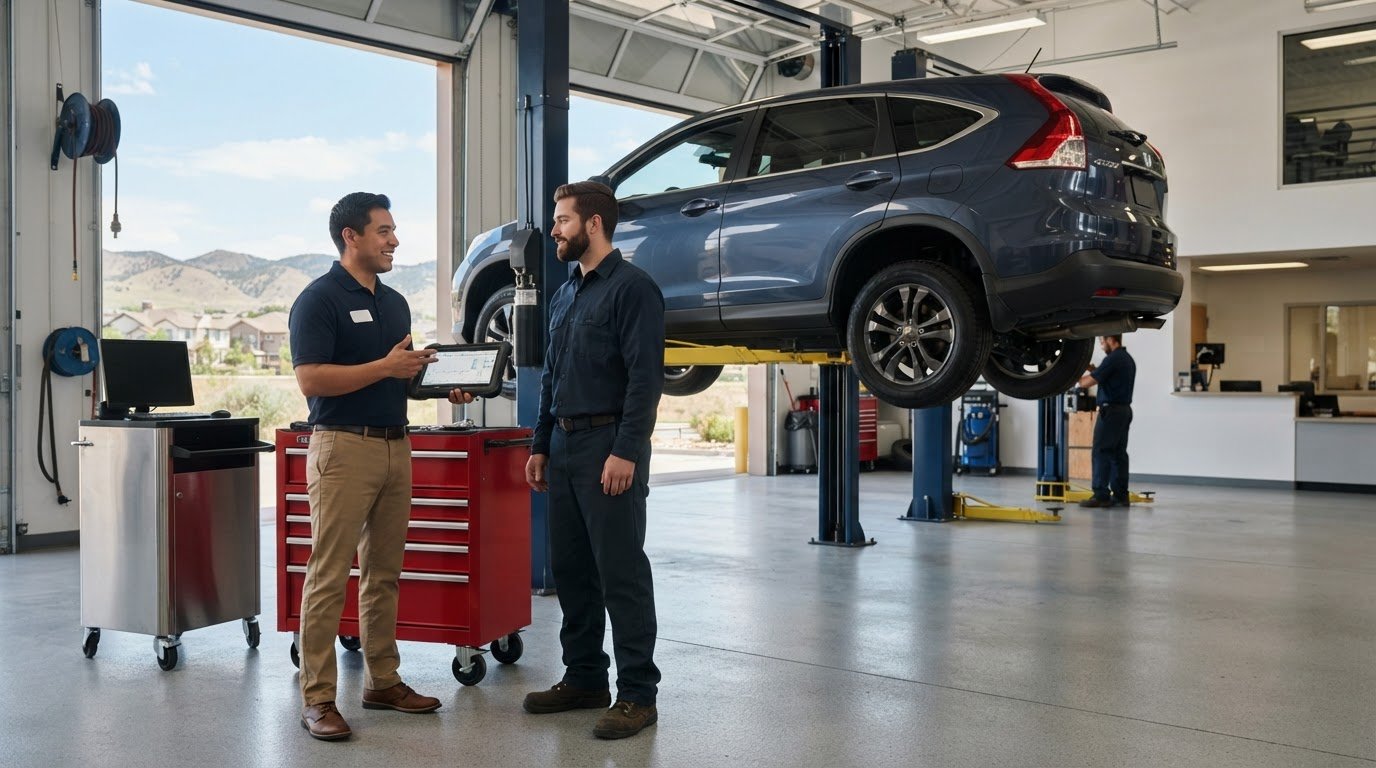
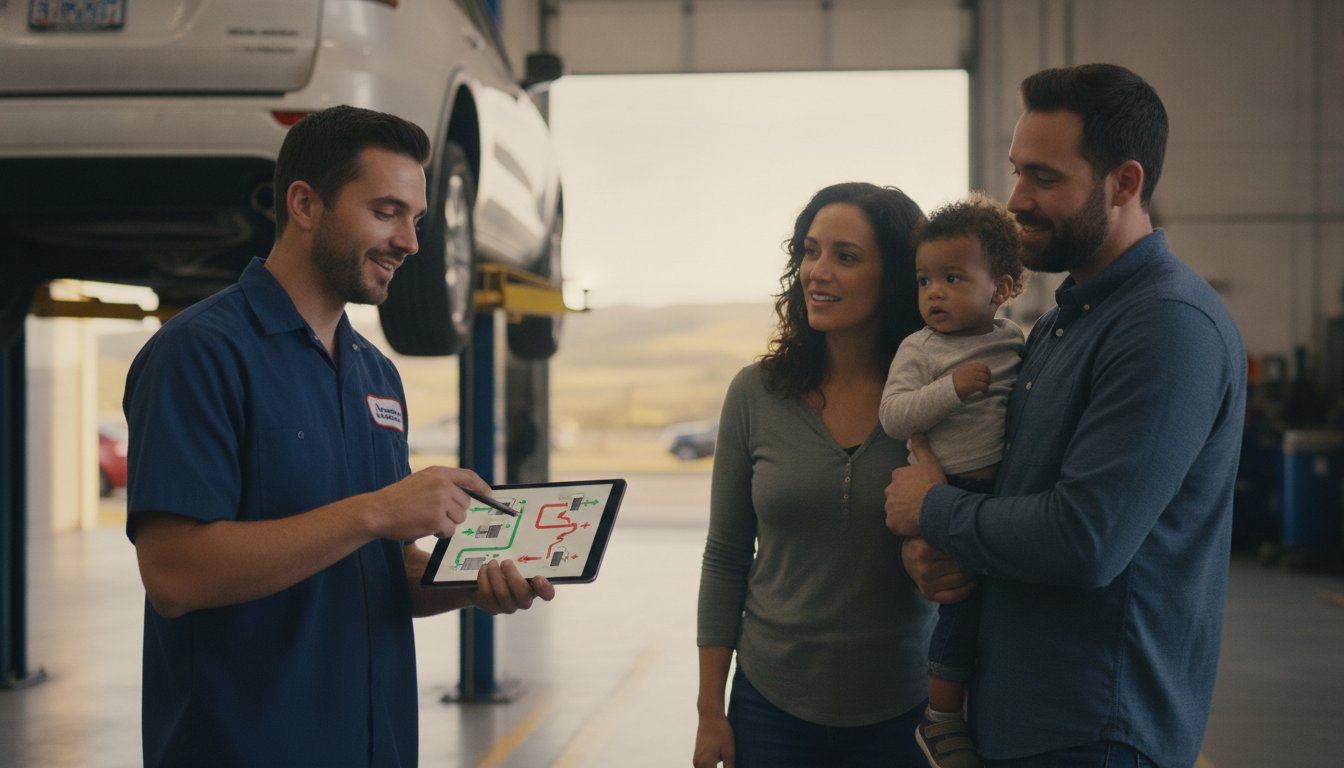
When you are stuck deciding between a transmission flush vs drain and fill, the last thing you need is a guess. Some shops might just sell you whatever service you ask for, but at Eagle Transmission & Auto Repair, we take a different path. We believe that every service should begin with a professional diagnostic. Our goal is to understand the actual health of your drivetrain before we ever crack open a drain plug or connect an exchange machine. This transparency is the foundation of our partnership with the Parker community.
Our technicians don’t just look at the fluid; they look at the story your vehicle is telling. If your transmission is already showing signs of internal mechanical failure, we will tell you the truth. We won’t sell you a “magic” flush that won’t fix a broken part. Because our motto is “WE FIX EVERYTHING,” we have the specialized expertise to handle complex transmission repair, engine work, and diesel service. This comprehensive knowledge means we can identify if a shifting issue is actually a computer sensor problem or a mechanical slip, saving you time and unnecessary expense.
Beyond the Fluid: Our Multi-Point Transmission Inspection
A true evaluation goes much deeper than the dipstick. Our multi-point inspection includes a comprehensive scan of your vehicle’s onboard computer. We look for “hidden” codes that might not have triggered a check engine light yet but indicate an impending issue with hydraulic pressure or solenoid function. We also physically inspect the unit for external leaks that could lead to low fluid levels and eventual overheating.
For our many neighbors in Douglas County who drive 4×4 trucks and SUVs, we go a step further. We check the fluid levels and condition in your transfer case and differentials. These components are often overlooked during a standard transmission flush vs drain and fill debate, yet they are vital for your safety on icy Colorado roads. If we do recommend dropping the pan, we carefully inspect it for excessive metal debris or clutch material, which provides a clear window into the internal health of your gears.
Schedule Your Service in Parker Today
Your vehicle is more than just a way to get from point A to point B; it’s what keeps your family safe on mountain passes and through winter storms. Choosing the right maintenance path should provide peace of mind, not more anxiety. Whether you are coming from Centennial, Castle Rock, or right here in Parker, you can trust our team for an honest, expert evaluation of your drivetrain.
We invite you to visit our shop for a professional consultation. We will help you navigate the best maintenance schedule for your specific vehicle and driving habits, ensuring your car stays on the road for years to come. If you are ready for a team that prioritizes your safety and vehicle longevity, get directions to Eagle Transmission & Auto Repair in Parker and come see us on Parkglenn Way today. We are ready to show you why our “WE FIX EVERYTHING” promise is the gold standard for Colorado drivers.
Protecting Your Drivetrain for the Road Ahead
Choosing between a transmission flush vs drain and fill does not have to be a stressful decision. By understanding that a flush offers a deep clean for newer units while a drain and fill provides a gentle refresh for older ones, you are already ahead of the curve. Remember that our unique high-altitude environment and mountain grades put extra pressure on your fluid, making regular inspections a necessity rather than a luxury for your vehicle’s health.
At Eagle Transmission & Auto Repair, we have served as local Parker experts for over 20 years. Our specialized 4×4 and fleet technicians are here to provide the honest diagnostics you deserve. We live by our promise that “WE FIX EVERYTHING,” and that starts with making sure you have the right service for your specific mileage and driving habits. Get Directions to our Parker Shop for a Transmission Diagnostic and let our team take the guesswork out of your maintenance. We look forward to helping you keep your vehicle safe and reliable for every mountain adventure.
Frequently Asked Questions
Is a transmission flush better than a drain and fill for high-mileage cars?
A drain and fill is usually the safer choice for high-mileage vehicles, especially those with an unknown service history. While a flush is an excellent preventative tool for newer cars, it can sometimes dislodge accumulated sludge or debris in neglected units. At Eagle Transmission & Auto Repair, we always perform a diagnostic first to see which method is safer for your specific odometer reading and fluid condition.
How much does a transmission flush cost compared to a drain and fill in Colorado?
A transmission flush is more expensive than a drain and fill because it requires specialized exchange equipment and a much larger volume of fluid. While a simple drain only replaces about 40% to 50% of the total capacity, a flush exchanges nearly 100% of the old fluid. This thoroughness provides better protection for newer vehicles, though the investment is higher due to the amount of fresh fluid required.
Can a transmission flush cause my transmission to start slipping?
A flush does not “break” a healthy transmission, but it can reveal pre-existing mechanical wear that was being masked by old fluid. In neglected units, microscopic clutch material can become suspended in thick, dirty fluid, actually helping worn parts “grab.” When fresh, slippery fluid is introduced, that pre-existing slip may become noticeable. This is why our Parker technicians evaluate your fluid health before recommending a full exchange.
How often should I change my transmission fluid if I drive in the mountains?
When debating a transmission flush vs drain and fill for mountain driving, we recommend a “Severe Service” schedule of every 30,000 to 45,000 miles. The steep grades on I-70 and the thin air in Douglas County cause your transmission to run much hotter than it would on flat ground. This extreme heat degrades fluid quickly, making proactive service essential for your vehicle’s longevity.
Does a drain and fill include a new transmission filter?
Yes, at our shop in Parker, we typically drop the transmission pan to replace the filter during a drain and fill service. This is a critical step because a clogged filter can restrict hydraulic pressure, leading to sluggish shifting. Replacing the filter ensures that the fresh fluid we add can circulate freely and protect your internal components from premature wear.
What color should my transmission fluid be if it’s healthy?
Healthy transmission fluid should be translucent and bright red. If you check your dipstick and see fluid that is dark brown, black, or opaque, it has oxidized and lost its ability to protect your drivetrain. If the fluid also has a burnt smell or contains visible metal flakes, you should schedule a diagnostic appointment immediately to check for internal damage.
Is it okay to mix old and new transmission fluid during a drain and fill?
It is perfectly safe and very common to mix old and new fluid during a drain and fill. Because this service only removes the fluid in the pan, it naturally leaves some old fluid in the torque converter and cooler lines. This method refreshes the protective additive package without the risk of shocking a sensitive, older system with a 100% fluid exchange.
Will a transmission flush fix shifting problems I’m already having?
A flush is a maintenance tool, not a repair solution, so it rarely fixes existing mechanical failures. If your vehicle is already hesitating, grinding, or slipping, fresh fluid is unlikely to repair the damaged internal parts. Because our motto is “WE FIX EVERYTHING,” we suggest a full diagnostic scan to identify the root cause of your shifting issues before you spend money on a fluid service.