Imagine you’re halfway up Monument Hill on I-25 when your engine revs high but your truck barely moves. That sinking feeling in your stomach isn’t just the altitude; it’s the realization that your clutch might be giving up right when you need it most. We’ve all been there, and we know how quickly anxiety kicks in when you’re worried about being stranded or facing a massive bill for clutch repair Castle Rock drivers shouldn’t have to stress over. You deserve an honest answer about your vehicle, not a mechanic who just guesses with your money.
This guide will show you exactly how to spot the early warning signs of failure and why specialized service is vital for our unique Colorado terrain. We’ll walk through the difference between simple wear and deep transmission issues, ensuring you get an accurate diagnosis from a local expert. By the end, you’ll know how to restore your vehicle’s reliability and keep your family safe on every steep grade Douglas County throws your way.
Key Takeaways
- Learn to spot the subtle cues of manual transmission trouble, like slipping gears or that unmistakable burning smell, before you’re stuck on the side of the road.
- Discover why Castle Rock’s 6,224-foot elevation and steep mountain grades put unique stress on your vehicle’s friction materials.
- Understand why choosing a specialist for clutch repair Castle Rock ensures your hydraulic system and pressure plate are calibrated specifically for Colorado driving.
- Find out how a professional diagnosis can determine if you need a full clutch kit replacement or just a simple hydraulic fluid flush.
- Explore how a dedicated transmission expert identifies the specific failure point to save you from unnecessary part-swapping costs.
Recognizing the Warning Signs of Clutch Failure in Castle Rock
Driving a manual in Colorado is a bit of an art form. You know your car’s rhythm, the exact moment to shift on a steep grade, and the weight of the pedal under your foot. Because you’re so in tune with your vehicle, you’ll likely notice the first tiny hints of trouble before they become a full-blown roadside emergency. Catching these signs early is the best way to ensure your clutch repair Castle Rock remains a manageable fix rather than a complete drivetrain overhaul.
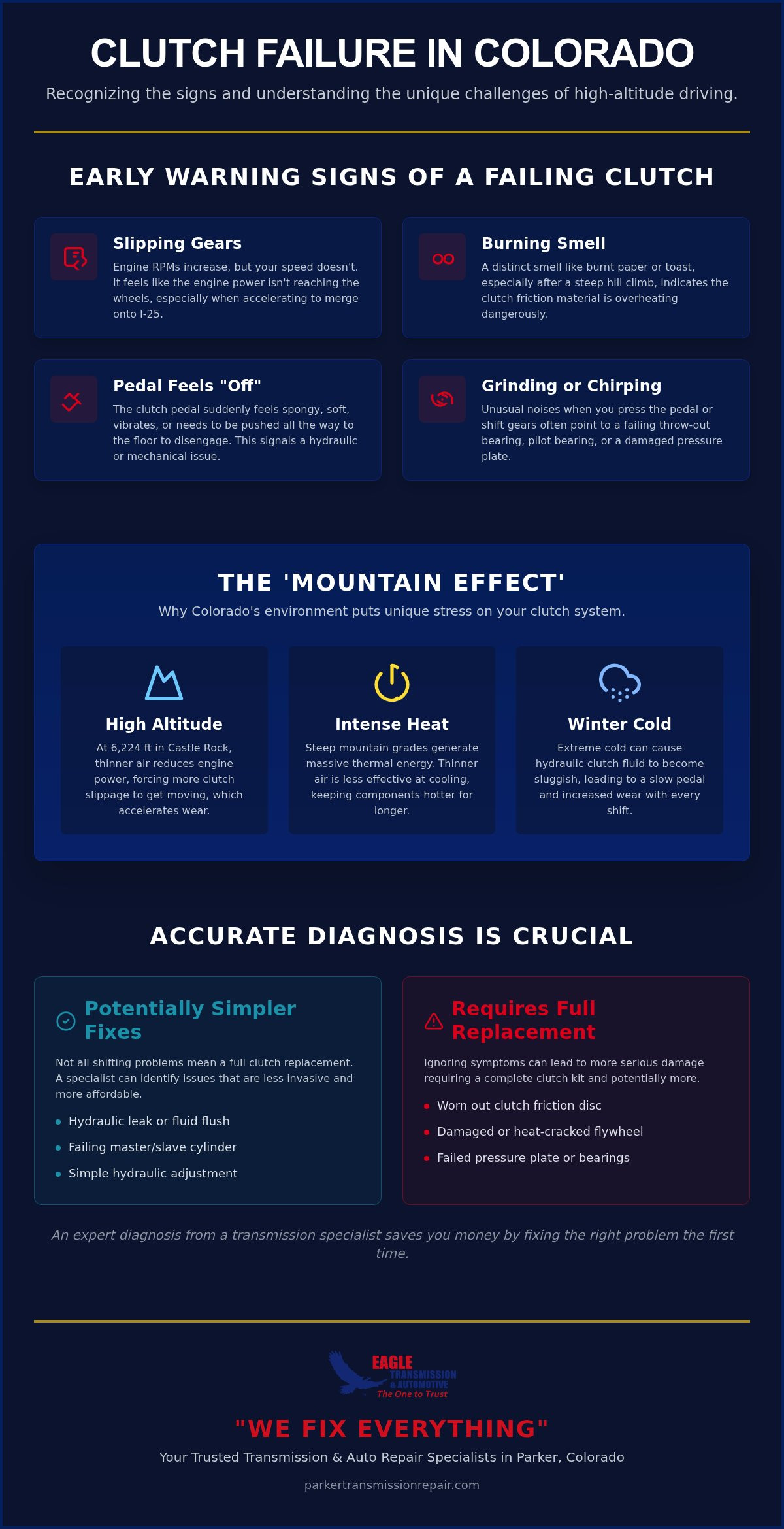
- Slipping Gears: This is often the first red flag. You press the gas to pass a slower vehicle, the RPMs climb higher than usual, but your actual speed doesn’t increase. It feels like the power isn’t reaching the wheels.
- The Burning Smell: If you catch a whiff of something like burnt paper or scorched toast after a heavy hill climb, it’s likely your friction material overheating.
- Pedal Personality Changes: A clutch pedal that suddenly feels “spongy,” vibrates, or requires you to push it all the way to the floorboard is telling you something is wrong.
- Grinding and Chirping: Unusual noises when you press the pedal or shift gears usually indicate a failing throw-out bearing or a pressure plate that’s seen better days.
Why You Shouldn’t Ignore a Slipping Clutch on I-25
Merging onto I-25 near Castle Rock requires a reliable burst of power. If your clutch is slipping, that power delivery becomes unpredictable. Losing momentum while trying to match highway speeds isn’t just frustrating; it’s a safety risk for you and your family. A slipping clutch generates immense heat, which can quickly heat-crack your flywheel. Once the flywheel is damaged, a simple clutch disc replacement turns into a much more expensive repair. Taking care of it now protects the rest of your transmission from unnecessary stress.
Common Manual Transmission Shifting Issues
Sometimes the problem isn’t the clutch disc itself, but the systems that help it move. If you find it nearly impossible to slide into first gear or reverse while sitting at a stoplight, you might have a hydraulic leak or a failing master cylinder. It’s also important to distinguish between a clutch that won’t “disengage” and a transmission synchronizer that has worn out. A specialist can tell the difference quickly. Getting an expert opinion on clutch repair Castle Rock ensures you aren’t paying for a transmission rebuild when you only need a hydraulic adjustment or a fresh clutch kit.
Why Colorado Driving Demands More from Your Clutch
Living in Castle Rock at 6,224 feet above sea level means your vehicle works harder than a car in the Midwest. It isn’t just about the thin air making you winded; it significantly affects your engine’s vacuum and power delivery. When your engine has less “oomph” due to the altitude, you might find yourself slipping the clutch a little longer than usual just to get moving from a stoplight. This extra friction adds up quickly. If you’ve noticed your vehicle struggling on the local hills, it might be time to look into clutch repair Castle Rock drivers can trust to handle these specific high-altitude conditions.
The ‘Mountain Effect’ on Friction Materials
Heat is the absolute enemy of any manual transmission. In our steep terrain, your clutch generates massive amounts of thermal energy every time you start on an incline. Thin air actually dissipates heat less effectively than denser air at sea level. This means your friction disc stays hotter for longer periods. Standard factory clutches are often built for flat, low-altitude driving. Our “WE FIX EVERYTHING” approach means we look at your specific driving habits. We ensure your components are ready for the local peaks, not just a quick trip to the grocery store.
Then there’s the stop-and-go reality of I-25 or Founders Parkway. Creeping along in traffic while on a grade is the “worst-case scenario” for a manual driver. It forces the clutch to stay in that “half-engaged” zone where most wear occurs. Add in a Colorado winter, and things get even trickier. Extreme cold can make hydraulic clutch fluid sluggish, leading to a “slow” pedal that doesn’t return as quickly as it should. This delay causes even more unnecessary wear on the disc every time you shift.
Towing and Hauling in Douglas County
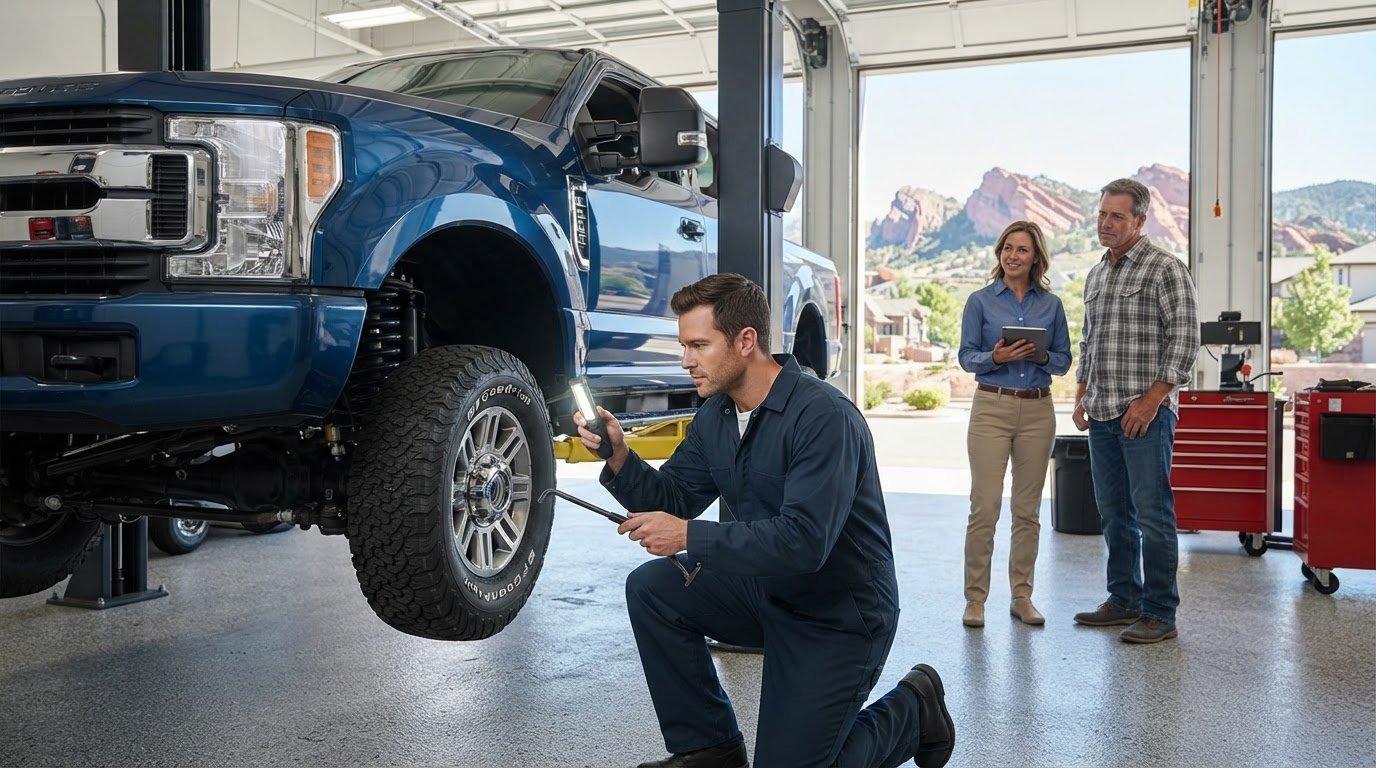
If you’re driving a heavy-duty diesel or an F-250, you’re likely hauling trailers or heavy equipment. Mountain loads put incredible torque through the drivetrain. For these high-stress situations, we often recommend Expert Ford Truck Drivetrain Repair to ensure your clutch kit can handle the heat. Upgrading to a heavy-duty kit with better heat dissipation can be a lifesaver when you’re pulling a trailer up a mountain pass. It’s about building in a margin of safety so you don’t end up stranded on a shoulder.
Don’t let a worn clutch keep you from enjoying the drive or getting the job done. If your pedal feels off or you smell something unusual after a climb, stop by our shop for a quick check so we can make sure your truck is ready for the next adventure.
Clutch Repair vs. Replacement: Finding the Right Solution
Is it just a small tweak or a total replacement? That’s the question we hear most often when someone comes in for clutch repair Castle Rock. It’s a fair concern. Nobody wants to spend more than necessary, but you also don’t want to be back in the shop two months later because a “cheap fix” didn’t hold up. Sometimes, that stiff pedal or difficult shifting is actually a hydraulic issue. If your master or slave cylinder is leaking air, a simple fluid flush or a hydraulic adjustment might get you back on the road without even pulling the transmission.
When the friction material is actually gone, you’re looking at a full clutch kit. We always recommend replacing the whole set rather than just the disc. Think of it as a team where every player needs to be at their best. A standard kit includes:
- The Clutch Disc: The main friction surface that connects your engine to the transmission.
- The Pressure Plate: The heavy-duty spring that clamps the disc in place.
- The Throw-out Bearing: The part that physically disengages the clutch when you step on the pedal.
Replacing these together ensures everything wears evenly. Since the labor cost to get inside the transmission is the same, it’s a smart way to protect your investment and avoid paying for the same job twice.
Components of a Professional Clutch Service
A professional service isn’t just about the big parts. We look at the pressure plate to make sure the spring tension is strong enough to hold against Colorado’s steep grades. We also replace the pilot bearings and bushings. These tiny parts are often overlooked, but they prevent the annoying vibrations that can rattle your teeth. We prioritize high-quality friction materials because they handle heat better, which is essential for our local terrain and heavy-duty diesel trucks.
When Replacement is the Only Safe Option
There are times when a simple fix just won’t cut it. If we see “hot spots”—those blue, glazed patches on your flywheel—it means the metal has been heat-damaged. Resurfacing can sometimes save it, but if the cracks are deep, replacement is the only way to keep you safe. Once the friction material wears down to the rivets, those metal bits start scoring the plate, causing permanent damage. In these cases, Expert Auto Repair in Castle Rock means being honest about when a part has reached the end of its life. Waiting for total failure often leads to higher costs and the risk of being stranded on a mountain pass.
The Eagle Transmission Diagnostic and Repair Process
When you bring your vehicle in for clutch repair Castle Rock, we start with a conversation rather than a wrench. We want to know exactly what you’re feeling on the road because your experience is the best diagnostic tool we have. Our process begins with a comprehensive road test. We aren’t just looking for slipping; we’re feeling for engagement points and listening for those tiny chirps or grinds that signal internal wear. Before we ever pull the transmission, we rule out the simple stuff. An external hydraulic inspection checks your master and slave cylinders for leaks. Why replace a whole clutch kit if it’s just a leaky hose or air in the lines?
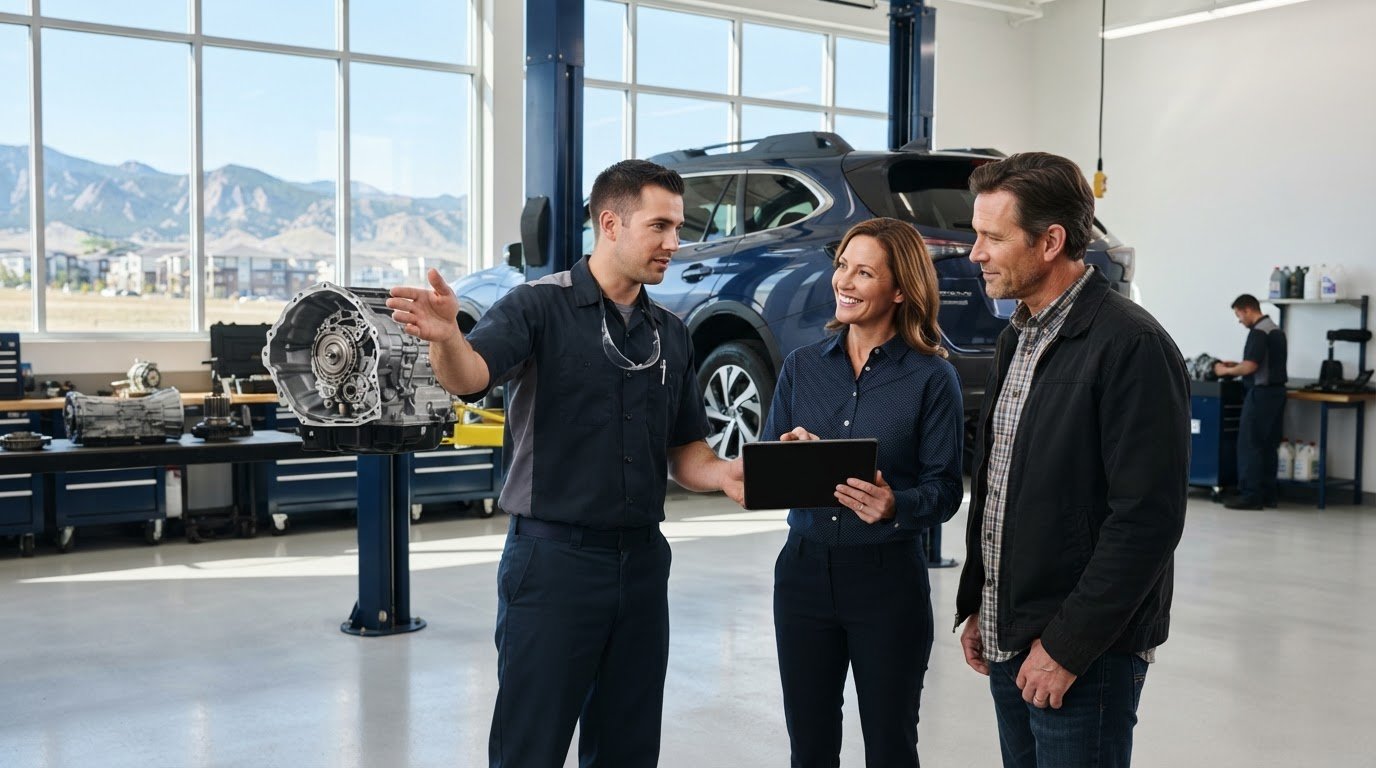
Once we confirm an internal failure, our team performs a precision removal of the transmission to access the clutch housing. This is where our “WE FIX EVERYTHING” motto really shines. We don’t just swap the disc and call it a day. We perform a detailed component inspection of the entire drivetrain while things are apart. We look at the input shaft, the rear main seal of the engine, and the flywheel surface. After reassembly, we perform a post-repair calibration to ensure that smooth, “like-new” pedal feel you expect from a specialist.
Advanced Drivetrain Diagnostics
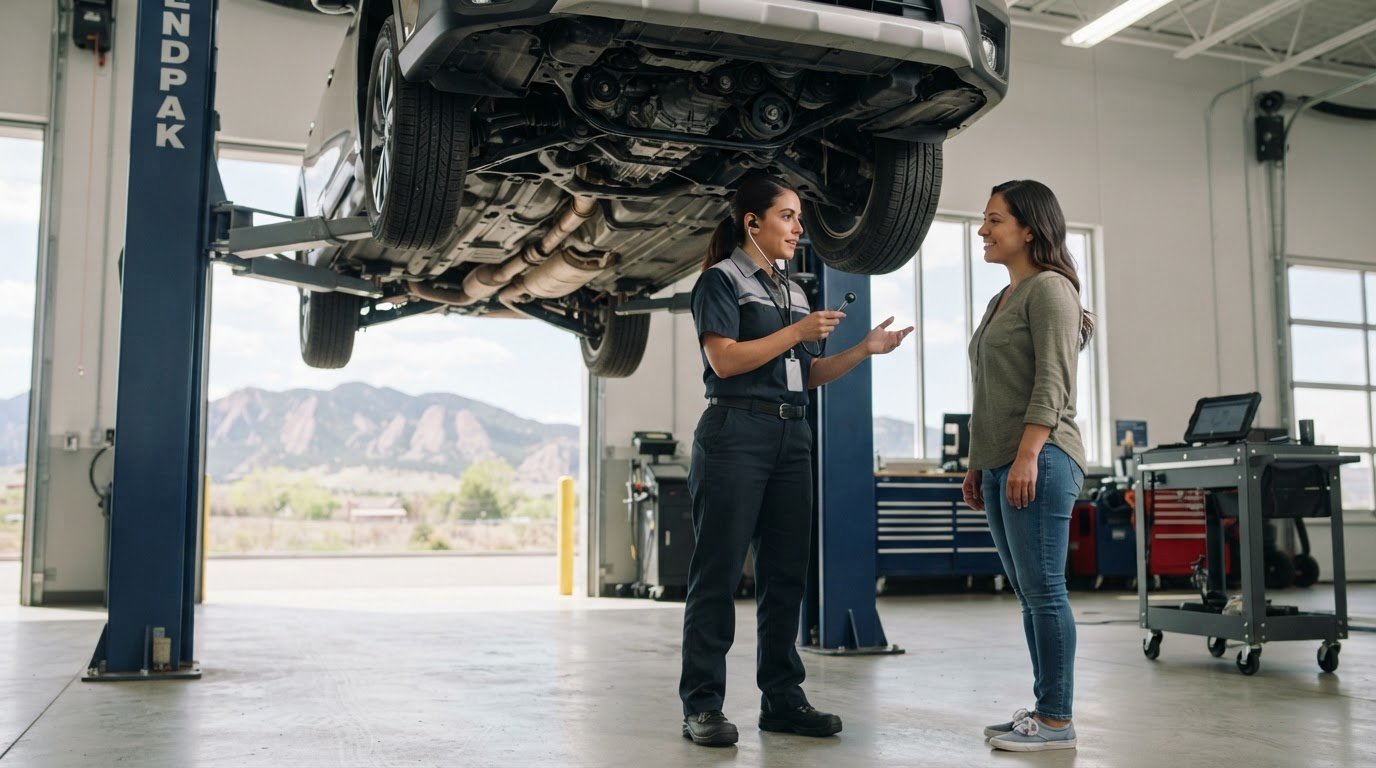
Sometimes a problem that feels like a clutch is actually something else entirely. In Douglas County, many of our trucks and SUVs feature 4×4 systems that add complexity. A failing transfer case can sometimes mimic the vibrations or slipping of a worn clutch. We also check your engine mounts and drivetrain alignment. If your engine is shifting too much under load, it can put strange angles on the clutch linkage. We combine modern diagnostic tools with decades of mechanical experience to ensure we’re fixing the actual root cause, not just the symptom.
The Importance of Proper Break-in
Think of a new clutch like a new pair of leather hiking boots; it needs a little time to settle in before it’s ready for a trek up Pikes Peak. The first 500 miles after a clutch repair Castle Rock are critical for the longevity of the friction surfaces. We recommend avoiding high-RPM “redline” shifts and staying away from heavy towing during this window. During these initial miles, the friction material on the disc and the metal surfaces of the pressure plate and flywheel wear into each other to create a perfectly matched, high-grip surface. Taking it easy now ensures the components “mate” correctly, which prevents glazing and premature failure down the road.
Ready for a real diagnosis from a team that knows manual transmissions inside and out? Drive over to our shop and let our experts take a look at your vehicle today.
Trusting Your Manual Transmission to a Specialist
Choosing where to take your car shouldn’t feel like a gamble. While many general auto shops handle basic maintenance perfectly well, they often outsource complex manual transmission work because it requires specialized tools and deep technical knowledge. This usually means your car sits on a trailer or in another shop’s lot for days, and you end up paying an extra “middleman” fee. By coming to a dedicated expert for clutch repair Castle Rock, you ensure your vehicle stays in the hands of the people you actually talked to at the front desk. We believe in transparency, which means we’ll show you exactly what’s wearing out and why it matters for your specific driving style.
Supporting the local Douglas County community is at the heart of what we do. We’ve spent decades evolving our techniques to meet the demands of modern vehicles while keeping our roots firmly planted in neighborhood values. We don’t see you as just another repair order on the board; we see a neighbor who needs their truck back for work or their SUV ready for a weekend soccer tournament. That’s why we focus on building trust through clear communication and the kind of specialized expertise you won’t find at a big-box brake shop.
Specialized Care for Cars and Trucks
Whether you’re driving a nimble compact to commute into Denver or a heavy-duty Ford F-series pickup to haul gear across the Front Range, your vehicle needs a customized approach. A diesel truck’s clutch has a completely different personality than a sports car’s, and we treat them accordingly. We take pride in our “Friendly Guide” philosophy. We don’t just tell you that you need a new part; we explain how the system works and why a Professional Transmission Repair in Douglas County is the best way to keep your family safe. Our goal is to build a long-term partnership with our neighbors, grounded in honest advice and technical mastery.
Schedule Your Clutch Inspection Today
Don’t wait until you’re stuck on the shoulder of Founders Parkway during rush hour to address that weird vibration or slipping sensation. A proactive inspection can often catch a minor hydraulic leak before it ruins your expensive flywheel. We want you to have total peace of mind before your next mountain adventure or weekend camping trip. Our team is ready to provide a clear, jargon-free diagnosis that gets you back on the road with confidence. Get Directions to Eagle Transmission and Schedule Your Service today to experience the specialist advantage for yourself.
Drive with Confidence on Every Colorado Grade
Your manual transmission is the heart of your driving experience, especially when navigating the steep climbs and thin air of the Front Range. We’ve walked through how to spot slipping gears early and why specialized care is the only way to ensure your vehicle handles the unique stress of our 6,000-foot elevation. Choosing the right team for clutch repair Castle Rock means getting an honest diagnosis from experts who have served Douglas County for decades.
As specialists in manual transmission and clutch replacement, we understand the specific needs of heavy-duty diesel trucks and complex 4×4 systems. You don’t have to settle for “part-swapper” mechanics when you can have a local partner who explains the reasoning behind every service. Whether you’re hauling a trailer or just commuting on I-25, we’re here to keep your journey smooth and safe.
Ready to restore your vehicle’s reliability? Schedule Your Clutch Diagnostic and Get Directions to our Shop today. We look forward to seeing you and getting you back on the road with total peace of mind. Let’s make sure your car is ready for your next mountain adventure.
Frequently Asked Questions
How long should a clutch last in Colorado driving conditions?
Typically, a clutch lasts between 50,000 and 100,000 miles, but Colorado’s steep terrain and thin air can shorten that lifespan. Frequent hill starts and heavy towing in Douglas County put extra heat into the friction material, which accelerates wear. If you spend a lot of time on mountain passes, you might see wear closer to the lower end of that range. Proper shifting habits can help extend its life significantly.
Can I drive my car with a slipping clutch?
You shouldn’t continue driving once you notice a slip, as it can lead to a complete breakdown at any moment. A slipping clutch generates extreme heat that can warp your flywheel and damage other drivetrain components. Getting a professional inspection for clutch repair Castle Rock early can save you from the higher costs of replacing a heat-cracked flywheel or needing a tow from a mountain pass during rush hour.
What is the average cost of a clutch replacement in Castle Rock?
Costs for a clutch replacement vary widely based on your vehicle’s make, model, and whether it’s a heavy-duty truck or a compact car. Parts like the pressure plate, disc, and throw-out bearing all factor into the total service requirements. While we don’t provide flat rates without seeing the vehicle, we prioritize transparent communication and will give you a detailed breakdown after a physical inspection of your specific drivetrain.
Why does my clutch pedal feel soft or go to the floor?
A soft or “spongy” pedal usually indicates an issue with the hydraulic system rather than the clutch disc itself. This often happens when air enters the lines or when the master or slave cylinders begin to leak. It’s a safety-critical issue because it prevents the clutch from fully disengaging when you shift. We check these external components first to see if a simple hydraulic repair can solve the problem for you.
Is it always necessary to resurface the flywheel during a clutch job?
We highly recommend resurfacing or replacing the flywheel every time you install a new clutch kit. Just like putting new brake pads on old, warped rotors, a new clutch disc needs a perfectly flat surface to grab onto. If the flywheel has “hot spots” or glazing, your new clutch will slip and wear out prematurely. It’s the best way to ensure long-term reliability for your Colorado driving needs.
What is the difference between a clutch repair and a transmission repair?
A clutch repair typically involves the components that connect the engine to the transmission, while a transmission repair deals with the gears and shafts inside the gearbox itself. The clutch is a wear item designed to be replaced, much like your brake pads. If your car is grinding between gears even when the pedal is fully depressed, the issue might be internal to the transmission rather than just a clutch failure.
How do I know if my clutch master cylinder is failing?
You’ll likely notice a change in pedal feel, such as it sticking to the floor or feeling unusually light under your foot. You might also see dark or cloudy fluid in the reservoir or visible leaks near the pedal assembly inside the cabin. Since the master cylinder provides the pressure needed to move the clutch, a failure here will eventually make it impossible to shift gears safely while the engine is running.
Does Eagle Transmission work on 4×4 truck clutches?
Yes, we specialize in heavy-duty 4×4 and diesel truck clutch services for residents needing clutch repair Castle Rock. Trucks like the Ford F-150 and F-250 face unique stresses when hauling trailers through Douglas County’s rolling hills. Our team understands how to calibrate these high-torque systems and inspect transfer cases to ensure your entire 4×4 drivetrain is ready for the work you demand from it every day.