
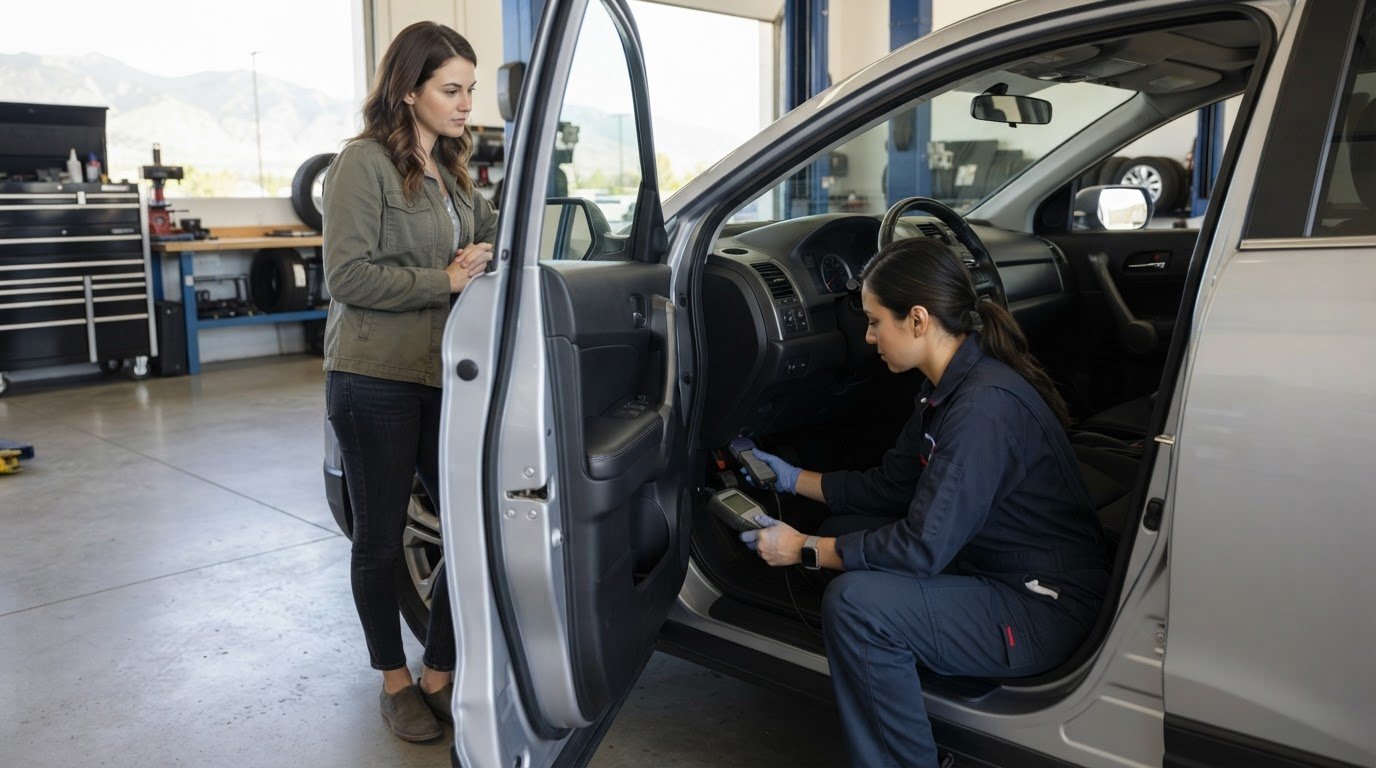
For OBD2 scanner diagnosis in Castle Rock, a scan can reveal stored trouble codes, but it may not identify the failed part or the complete repair. Diagnostic charges depend on the vehicle, labor, and findings, while a written estimate should explain the recommended work and expected charges. Think of the scan as a useful starting point, not a final repair decision. Understanding that difference can help you approach the warning with better questions and clearer expectations.
A check engine light can be unsettling, especially when a scanner displays unfamiliar terms or a code that seems to point directly to one part. It’s natural to want a straightforward answer before deciding what to do. The useful answer, though, comes from making sense of the scan alongside the vehicle’s specific situation.
This guide explains what diagnostic evaluations and written estimates cover, how code scans relate to vehicle inspections, and what may cause a check engine light. You’ll also learn how to interpret scan results, what details help explain a vehicle concern, and when further evaluation can clarify the next step. A code is a starting point, not a diagnosis by itself.
Key Takeaways
- Diagnostic charges depend on the vehicle and the testing needed, while a written estimate lays out recommended repairs and their expected charges.
- A trouble code points toward a system or condition to investigate, but it does not automatically identify a failed part.
- Inspection and testing help distinguish between possible causes of a check engine light before repair decisions are made.
- A flashing check engine light can signal an engine misfire that may damage the catalytic converter, so take the warning seriously.
- Learn what to expect from a local scan and diagnosis, and when engine testing or repair may be the next step.
Diagnostic pricing and written estimates
OBD2 scanner diagnosis in Castle Rock may involve separate diagnostic and repair estimate charges. A diagnostic charge covers labor used to investigate a vehicle concern. A repair estimate describes the corrective work recommended from the findings. The price depends on the vehicle, parts, labor, extent of damage, and diagnostic findings. The price for a specific case is provided after a quote request.
An estimate is most useful when it separates completed diagnostic work from further investigation and proposed repairs. A technician may identify a concern that needs component inspection before recommending a repair. The estimate can describe the concern, the next step, and the labor or parts involved, so each item has a clear purpose.
Look for a description that connects each item with a task. “Inspect engine concern” gives less detail than naming the system being tested and the next action. Parts descriptions should distinguish replacement items from inspection steps, and labor entries should match the listed work. Clear details explain what the estimate covers.
Some findings narrow down a concern without establishing the repair needed. In that situation, an estimate can identify additional testing and explain its purpose. An intermittent problem, for example, may need testing under the conditions when it appears. Knowing whether the next step involves testing, replacement, or both clarifies what the estimate includes.
Vehicle differences can change the work involved, even when warning symptoms sound alike. Component access, engine configuration, parts selection, and related damage affect labor and parts. An inspection and a repair requiring component removal represent different scopes. The estimate should reflect the vehicle and findings. Each warning light concern needs a scope based on its specific diagnostic results.
Before approving proposed work, review the vehicle details and listed concern. Check that the recommendation addresses the reported symptom and separates additional testing. If new findings change the scope, request an updated explanation before proceeding. This keeps the decision tied to current results rather than earlier assumptions. It also helps distinguish the original recommendation from any newly proposed work.
An estimate also helps you compare the proposed repair with the concern you reported. If you mentioned a warning light and rough operation, read the scope carefully to see which concerns it addresses. Keep scan results with the estimate and note unfamiliar terms. A clear record makes conversations about completed and remaining work more precise.
Trouble-code scanning and vehicle inspections
An OBD2 scan retrieves information stored by a vehicle’s computer. A thorough inspection adds context by checking whether the code matches the vehicle’s symptoms and test results.
OBD2 Scan Access in Castle Rock
Some auto parts stores near Castle Rock offer code scans, but services vary by location. Call ahead to ask whether scanning is available and what results you’ll receive. A printed code can help document the warning, while an inspection can investigate the system behind it.
Can I get an OBD2 scan at an auto parts store near Castle Rock? Some stores provide scans, but the service and information can differ. Save the full code and description for later reference, rather than treating a brief scan result as a complete diagnosis.
Reading and Interpreting Trouble Codes
How do I read and interpret OBD2 trouble codes before visiting a mechanic? Record the full code and note any symptoms, such as hesitation, rough idling, or difficulty starting. The code points toward a system or condition, but doesn’t prove which component caused it.
Keep the code’s exact characters and any accompanying description together. A shortened label can lose useful detail. Also note when the warning appeared, such as after starting or during acceleration. These observations help connect scan results with the vehicle’s behavior during inspection.
Next Steps After a Trouble Code
What should I do after an OBD2 scanner finds a trouble code? Save the result, record related symptoms, and arrange appropriate testing. Avoid replacing a part solely because its name appears in a code description. The underlying issue may involve another component or system.
During an inspection, scan information can be compared with symptoms and relevant checks. For example, a code associated with engine operation needs to be investigated alongside how the engine runs. That comparison helps determine whether further testing or repair is appropriate.
According to the U.S. Environmental Protection Agency, under the revised failure criteria, a vehicle fails an inspection if any diagnostic trouble code causes the Check Engine light to be commanded on. Understanding the warning can therefore matter for inspection outcomes as well as repair decisions.
A thorough vehicle inspection considers the stored code, visible conditions, and the driver’s description. A loose connection, for instance, may call for a different check than a repeated rough idle. Each clue adds context, helping distinguish an electronic alert from a confirmed mechanical fault. Keep the scan record available so the inspection can use its exact information.
Check-engine light diagnostics in Castle Rock
A check engine light signals that the vehicle’s computer detected a condition worth investigating. The light’s behavior, stored codes, and changes in how the vehicle runs help guide diagnosis. A scan can identify a starting point, while further checks help determine what needs attention.
Can a vehicle pass Colorado emissions testing with the check engine light on? Don’t assume it will pass. According to the U.S. Environmental Protection Agency, under revised failure criteria, a vehicle fails an inspection if any diagnostic trouble code causes the Check Engine light to be commanded on.
A steady light indicates a problem that shouldn’t be overlooked. Note when it appeared and whether the engine feels different, such as rough idling or reduced power. Those details help connect the warning to the vehicle’s behavior.
A flashing light needs more urgent attention. It signals an engine misfire that can damage the catalytic converter. If the light flashes while driving, reduce unnecessary driving and arrange prompt diagnosis, particularly if the engine shakes or runs poorly.
Is it safe to drive with a check engine light or an OBD2 trouble code? A code alone doesn’t establish whether continued driving is safe. A steady light with normal operation differs from a flashing light or a warning accompanied by severe shaking, loss of power, or unusual engine noise.
Which auto shops in Castle Rock offer free check engine light code scans? Some auto parts stores may provide code scans, but a scan reads codes rather than confirming a failed part. The service and information provided can vary by location, so treat any result as an initial clue.
For a useful diagnostic visit, preserve the code and note the conditions around the warning. Include whether the light is steady or flashing, when it appeared, and any changes in starting, idling, or acceleration. These observations add context that a code description cannot provide by itself.
A thorough check compares the stored code with the vehicle’s symptoms and relevant system tests. For example, a misfire code calls for investigating engine operation, not automatically replacing a part named in the code description. The findings help distinguish a detected condition from its underlying cause.
Keep track of whether the warning returns after starting the vehicle, and avoid clearing codes before diagnosis. Clearing them can remove useful information about the concern. If the light flashes or vehicle behavior changes sharply, prioritize prompt assessment over repeated scanning.
In Castle Rock, check engine light diagnostics should connect the warning, stored code, and vehicle behavior. That combination helps determine the next step, whether further testing or a specific repair is appropriate.

Common check-engine light causes
A check engine light can point to problems in several vehicle systems. An engine misfire, an air or fuel mixture issue, and an emissions system fault are common possibilities. The stored code helps identify where testing should begin, but it doesn’t confirm a failed part.
An engine misfire happens when a cylinder doesn’t burn its fuel mixture correctly. A driver may notice rough idling, hesitation, or reduced power. Possible causes include ignition, fuel delivery, or engine problems. A misfire code directs attention toward the affected cylinder or system, while further testing narrows down the source.
Air and fuel problems can also trigger a warning. A sensor may report that the engine’s air and fuel mixture is outside its expected range. A damaged sensor is one possibility, but a vacuum leak or fuel delivery concern can create similar results. Diagnosis compares code details with engine operation and related system checks.
A loose or damaged fuel cap can affect the evaporative emissions system, which limits fuel vapors escaping from the vehicle. A driver might see a warning after refueling, but the light alone cannot confirm the cap is responsible. A proper check looks for a sealing problem or another fault in the vapor system.
Exhaust and emissions components can be involved, too. An oxygen sensor reports information about exhaust gases, while the catalytic converter helps reduce certain emissions. A code involving either component doesn’t automatically prove it has failed. Another engine condition may affect the readings, so diagnosis should follow the evidence.
Airflow measurement, engine temperature, and electrical connections offer other possible clues. For instance, an airflow sensor reading that doesn’t match engine behavior can point toward a measurement or air intake concern. A technician can compare scan data with a physical inspection and system tests to distinguish a faulty reading from an issue elsewhere.
Useful diagnosis connects the stored code, symptoms, and test results. If a vehicle idles roughly, loses power, or uses fuel differently, note when each change happens. Those observations can help identify whether the warning appears during startup, acceleration, or steady driving. Clearing the code without recording it can remove useful troubleshooting information.
Maintenance records can add context. A recent repair, refueling stop, or change in vehicle behavior may help explain when the light appeared. Avoid replacing a part solely because its name appears in a code description. Confirming the cause first helps target the repair to the system that needs attention.
Where can I get an OBD2 scan in Castle Rock, Colorado?
In Castle Rock, the right place depends on whether you need a code read or a diagnosis. An auto parts store may offer a basic scan, while a repair facility can connect scan findings with a vehicle inspection. Choose based on the question you need answered, not just the scanner result.
A basic scan can be useful if you want the stored code recorded. Before going, call the location to ask whether scan service is available and what results it provides. Keep the printed code or write down its full identification, since a short label may omit useful details.
If a problem affects how the vehicle runs, code retrieval alone may not answer the question. For example, if an engine stumbles during acceleration, diagnostic testing can assess that symptom alongside the stored code. The goal is to determine whether both clues point to the same system.
Think about the result you need before choosing a diagnostic next step. A driver preparing for an emissions inspection may need to understand a warning light’s status. Someone facing rough idling, hard starting, or reduced power needs the cause investigated. That situation calls for more than a code description.
When arranging a diagnostic visit, share the vehicle’s make and model, the warning light’s behavior, and the symptoms you noticed. Mention whether the issue began after refueling, starting, or accelerating. These details give the inspection a useful starting point and help relate scan data to driving conditions.
Bring any code printout and relevant maintenance or repair notes. A previous scan can provide a comparison, especially if the warning has returned. Avoid clearing codes before the visit, because stored information can help explain what the vehicle detected.
In Castle Rock, a scan result should lead to a clear next step. If the code and symptoms do not match, further testing can examine related systems instead of assuming the named component has failed. Ask for the findings in plain language, including what the scan shows and what additional inspection established.
Choose a diagnostic setting that can address the vehicle’s concern beyond reading a code. For a check engine light paired with rough running, arrange an assessment that considers both. Get directions for a vehicle diagnostic visit and bring your scan results and symptom notes.
When seeking professional assistance for your vehicle in the area, it is always wise to contact local service providers directly. Ask whether they offer the specific scan or diagnostic service you need, what information they can provide, and whether an appointment is required. Confirm the expected time and any preparation before bringing the vehicle in.
When comparing diagnostic options, consider whether the visit can address your actual concern rather than only produce a code. Eagle Transmission & Auto Repair provides free computer diagnostics for repairs, and transmission diagnostic testing is always free. Share what the vehicle is doing so the findings can guide an appropriate next step.
Eagle Transmission & Auto Repair
Eagle Transmission & Auto Repair can help you move from an OBD2 code to a clearer repair decision. A scanner result is a clue, not a complete explanation, so share the code alongside changes you’ve noticed, such as rough idling or reduced power.
If findings point to an engine concern, Engine Repair may be the next step. If your vehicle also has shifting or clutch symptoms, Transmission Repair, Transmission Service, or Manual Transmission Repair & Clutch Replacement may be relevant. The appropriate work depends on the vehicle’s symptoms and inspection results.
Bring any scan printout and describe when the warning appeared. Contact Eagle Transmission & Auto Repair to discuss your check engine light and arrange a suitable next step.
Take the Next Step With Your Scan Results
A warning light can feel like a puzzle, but your scan record gives the next conversation a useful starting point. Keep the code, note when the light appears, and describe changes you notice while driving. Those details help connect the electronic alert with what the vehicle is actually doing.
For OBD2 scanner diagnosis in Castle Rock, focus on getting a clear explanation of the findings and the recommended next step. Eagle Transmission & Auto Repair offers check engine light diagnosis, along with Engine Repair, Transmission Repair, and Transmission Service when inspection results point to those needs. The right repair depends on the vehicle’s symptoms and diagnostic findings.
If you’re ready to discuss a warning light or scan result, get directions to Eagle Transmission & Auto Repair and bring your code information. A clear starting point can make the next decision easier.
Frequently Asked Questions
How much does an OBD2 diagnostic scan cost in Castle Rock?
Eagle Transmission & Auto Repair provides free computer diagnostics for repairs, and transmission diagnostic testing is always free. A scan reads available trouble codes, while additional testing may be needed to identify the cause and determine a repair. Repair costs vary by vehicle, parts, labor, and diagnostic findings. An inspection helps establish the appropriate work and estimate instead of relying on a code reader alone.
What does a basic OBD2 code reader check, and what does it not diagnose?
A basic OBD2 code reader retrieves accessible trouble codes and may show a brief description of the affected system. It doesn’t confirm that a named part has failed, assess every mechanical problem, or explain the full cause by itself. For example, a code related to an engine sensor doesn’t establish whether the sensor, wiring, or another condition caused the reading. Further testing provides the evidence needed to choose a repair.


