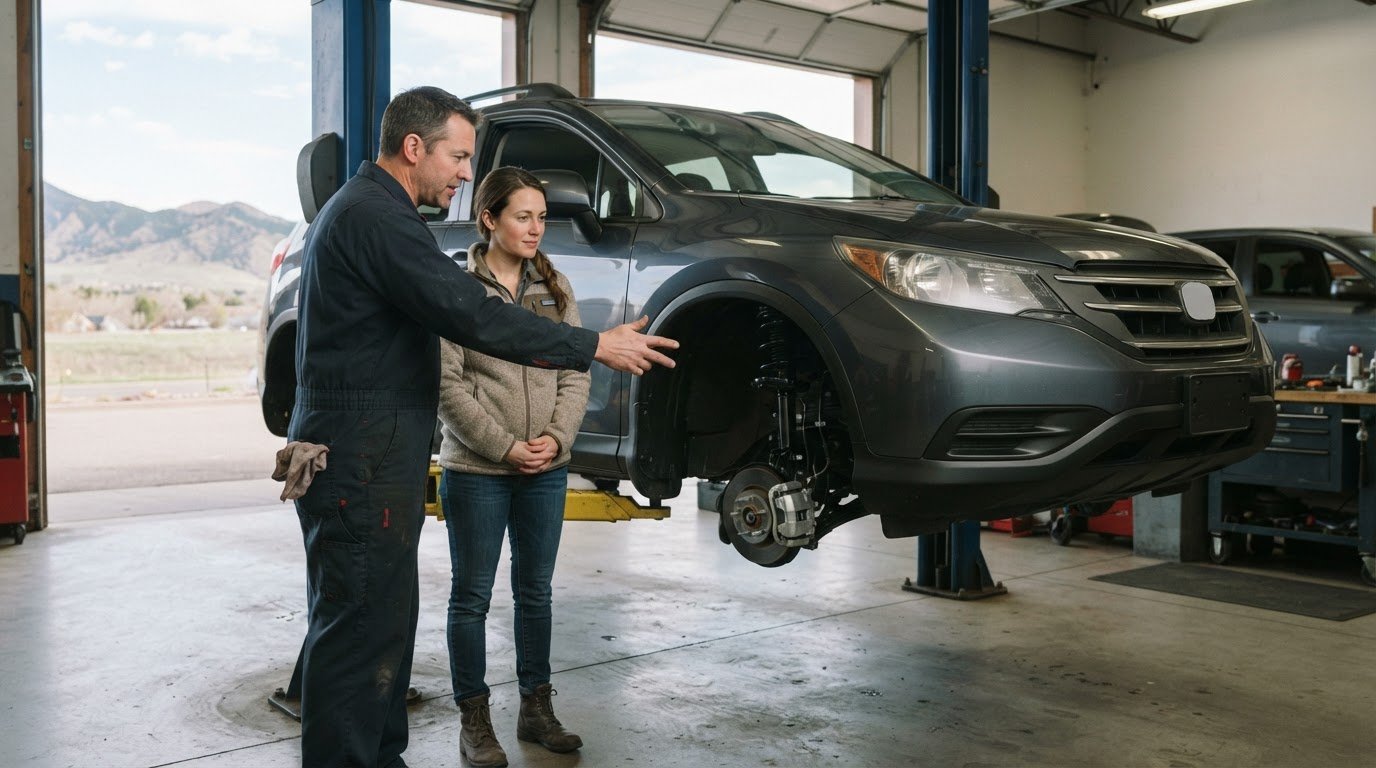
A new whine, rumble, or grinding sound from the front of your vehicle may point to low differential lubricant or worn gears and bearings, but noise alone cannot confirm the cause. Front differential service in Parker can address fluid maintenance and assess signs of gear trouble. The right maintenance schedule depends on your vehicle and how you use it.
Drivetrain noise can be easy to mistake for a problem elsewhere, especially when it changes with speed or while turning. Differential fluid lubricates the gears that let the wheels rotate at different speeds through a turn. Frequent towing or demanding off-road use can also affect maintenance needs.
This guide explains what front differential service can cover, what unusual sounds may signal, and why fluid changes matter. You’ll learn how needs differ among four-wheel-drive and all-wheel-drive vehicles, what to consider when choosing service near Parker, and when differential gear work may be the next step.
Key Takeaways
- A whine, rumble, or grinding sound can point to lubrication or gear problems, but the noise alone does not identify the cause.
- Towing and frequent low range use can affect differential fluid needs, so consider how the vehicle is driven when planning maintenance.
- Fluid service addresses lubrication needs, while differential repair may involve worn or damaged gears and related parts.
- Axle upgrades and changes to ring and pinion gear ratios can affect how the differential operates and should be considered when investigating new noise.
- Differential gear service can help address fluid and gear concerns as part of drivetrain care.
Differential Noise as a Sign of Lubrication or Gear Problems
A front differential may whine, rumble, or grind when its lubrication or internal parts need attention. When the sound occurs can offer useful clues, especially after towing, low range driving, or changes to the axle setup.
Noise and Possible Gear Problems
A steady whine that rises with road speed may point to differential gears or bearings, while a rumble can have several possible sources. Compare the sound during acceleration, steady cruising, coasting, and turns. Changes between these conditions help describe the pattern, but do not identify a failed part on their own. Note whether the sound began suddenly or developed gradually.
Grinding deserves attention, particularly if it continues in different driving conditions. A leak near the front axle is another useful clue, since lubricant loss can reduce protection for the gears. Note where you see fluid and when the sound occurs. These observations give an inspection a clearer starting point than simply reporting that the front end is noisy.
Towing, Low Range Use, and Gear Oil Wear
Regular towing puts added demand on the drivetrain, while low range driving is used for slow travel in demanding conditions. If either is part of your routine, note how often and when it happens as you describe a new noise. Gear oil changes with use, and heat or contamination can reduce its ability to protect moving surfaces. Your driving pattern helps frame the maintenance question.
For example, a truck that recently began towing a trailer may be operating differently than it did during everyday commuting. A four wheel drive vehicle used on steep or rough routes may also spend more time in low range. Neither detail proves differential damage, but both matter when deciding whether to investigate a new whine or rumble.
Axle and Differential Gear Upgrades
Axle or differential upgrades can change how the drivetrain behaves. Larger tires, replacement axle parts, or newly installed differential gears may alter loads and operating conditions. If a sound began after an upgrade, note which parts changed and whether the noise started immediately or later. This timeline helps distinguish a sound related to the new setup from a separate developing issue.
Keep available part details with the vehicle’s service history. A technician can use them to understand the current configuration rather than assume it remains factory standard. Mention tire size or axle component changes along with the symptom, especially if the sound varies under load.
Ring and Pinion Gear Ratios
The ring and pinion transfer power through the differential, and their ratio affects the relationship between engine and wheel rotation. If the ratio has changed, engine speed at a given road speed may differ from before. Compare when the sound occurs now with the conditions before the gear change, such as acceleration or steady cruising.
A ratio change can also make earlier comparisons with engine or road speed less useful. Share the new ratio, if known, along with other vehicle modifications. That context can help guide diagnosis without treating a changed sound as proof of damaged gears.
Scheduling Gear Service
Arrange an assessment if a new noise persists, changes noticeably, or follows towing or drivetrain modifications. Describe when it occurs, how the vehicle has been used, and any axle or gear work. These details help distinguish a lubrication concern from a possible mechanical issue, though an inspection is needed to determine the cause.
For front differential service in Parker, explain whether the vehicle is used for towing, low range travel, or upgraded gearing. The Parker auto repair guide also provides local service context. Share the sound pattern clearly so the next step can focus on the right concern.
Differential Fluid Changes and Routine Maintenance
Differential fluid maintenance should follow the schedule for the specific vehicle, rather than a universal interval. Eagle’s published guidance gives a differential fluid change range of every 25,000 to 30,000 miles. Confirm which schedule applies to the vehicle’s make, model, and use before planning service.
A useful maintenance record identifies the serviced unit, such as the front differential, and includes the odometer reading. This distinction matters because a four-wheel-drive vehicle can have separate front and rear differentials. Recording each unit prevents a service entry for one component from being mistaken for service on another.
What Routine Service Addresses
A differential fluid change replaces lubricant in the selected housing with fluid suited to that vehicle. The service is maintenance, not a repair to internal parts. Eagle’s differential fluid change information focuses on this drivetrain maintenance. The vehicle’s service information guides the required fluid specification and amount.
- Identify the unit: Record whether service concerns the front or rear differential.
- Follow the schedule: Use the vehicle’s maintenance guidance and current odometer reading.
- Keep a record: Note the service date, mileage, and component addressed.
- Track changes: Update the record after vehicle use or configuration changes.
Clear entries make the next maintenance decision easier. A record that says only “differential fluid,” for example, may not show which axle was serviced. Naming the unit avoids confusion, particularly for a four-wheel-drive vehicle with front and rear differentials.
Planning the Next Fluid Change
Before arranging service, identify your vehicle’s make and model and review its maintenance schedule. If the schedule gives different guidance for ordinary and demanding use, follow the category that matches your driving. Service records can show whether a previous fluid change covered the front axle or another drivetrain component.
For a vehicle with multiple drivetrain units, list each one separately in the service history. A front differential entry is not a record of rear differential or transfer case service. Clear records are especially useful after a change of ownership or a shift in use, such as regular work driving.
If the schedule or prior records leave the next service unclear, arrange a maintenance assessment. Bring the vehicle’s maintenance information and explain which drivetrain units have been serviced. For directions to the Parker location, use directions to the shop.

Differential Service
Differential service can mean scheduled maintenance or diagnosis of a specific drivetrain concern. Its scope depends on the vehicle, the unit being assessed, and the findings. A useful service discussion distinguishes requested work, such as fluid maintenance, from any additional repair identified during inspection.
When comparing front differential service in Parker, clarify what the inspection covers and what work is being recommended. Inspection and repair are separate steps: the findings should identify the concern before additional work is considered.
An inspection can assess the housing, visible leaks, and reported symptoms. It can also help clarify whether the concern involves the front axle or another drivetrain unit. A four-wheel-drive vehicle, for example, has both front and rear differentials, so identifying the unit keeps the service scope clear.
Service discussions are more useful when you describe the concern specifically. Share how the vehicle is used, any recent changes, and what you noticed. A fleet vehicle used regularly for work may have a different service history from a personal SUV used mainly for local driving. These details help define a maintenance or diagnostic request without assuming a repair is needed.
- Identify the vehicle: Provide its make, model, and drivetrain configuration.
- Name the concern: Explain whether you need maintenance, an inspection, or help with a new symptom.
- Describe the context: Mention recent towing, off road use, or drivetrain modifications.
- Clarify the scope: Distinguish the front differential from the rear differential or transfer case.
A service plan should connect the requested work to the assessment. For routine maintenance, the vehicle’s schedule and service records help establish what is due. If a symptom prompted the visit, when and under what conditions it occurs can help guide diagnosis. These are different reasons for service, even when they involve the same differential.
Keep inspection and repair distinct. An inspection evaluates a concern; repair addresses a component found to need work. Requesting a front differential inspection does not, by itself, mean that gears or bearings need replacement. The findings guide the next step.
For drivers in Parker, a practical first step is to identify which unit needs attention and explain why. Include recent vehicle use and any available maintenance records. This gives the discussion a clear starting point and keeps the requested differential service focused on the vehicle’s needs.
What Is the Difference Between Front Differential Fluid Service and Differential Repair?
Front differential fluid service replaces or refreshes lubricant according to the vehicle’s maintenance needs. Differential repair addresses a mechanical problem, such as damaged gears, worn bearings, or a leaking seal. The inspection findings, not drivetrain noise alone, determine what service is appropriate.
What Fluid Service Does
During fluid service, the existing lubricant is drained or removed as the vehicle’s design requires. The differential is then filled with fluid suited to that specific unit. The correct fluid type matters because front differentials vary by vehicle and drivetrain configuration.
Fluid service is maintenance, not internal gear repair. It can address lubricant that has reached its service interval or been compromised by conditions such as water exposure. It cannot restore a damaged bearing or repair chipped gear teeth. For a vehicle without abnormal noise or leakage, fluid maintenance may be the relevant need.
What Differential Repair Addresses
Repair may be appropriate when inspection points to a mechanical fault. Work can involve a seal that allows lubricant to escape, bearings that support rotating parts, or gears that transfer power through the axle. The scope depends on the affected component and the extent of wear or damage.
A leaking front differential presents a different concern from one with internal gear damage. A seal leak may call for attention to the sealing surface and related parts. Gear or bearing concerns require closer examination of the assembly. Replacing fluid alone would not fix a damaged component.
How the Need Is Distinguished
Diagnosis starts with the vehicle’s symptoms and service history. A technician considers when the noise occurs, whether the housing shows signs of leakage, and whether the fluid condition raises concern. A whine under acceleration, for example, is a clue to investigate, not proof that a specific gear has failed.
The distinction is useful when choosing the next step:
- Routine maintenance: Service is due based on the vehicle schedule or operating conditions.
- Fluid concern: Contamination or leakage calls for assessing the fluid and its cause.
- Mechanical concern: Persistent noise, vibration, or visible component damage can warrant further diagnosis.
On a four-wheel-drive vehicle, confirm which differential is being assessed. Front differential service does not automatically include the rear differential or transfer case. Each unit has its own lubrication needs and possible repair concerns.
If your vehicle has a new front drivetrain noise or a visible leak, arrange an inspection to clarify whether it needs fluid maintenance or mechanical work. Get directions for a differential inspection.
Eagle Transmission & Auto Repair: Differential Gear Service
Eagle Transmission & Auto Repair provides Differential Gear Service for front and rear differential concerns. If your vehicle has a persistent whine, a leak, or a change in drivetrain sound, contact the shop to discuss the concern. The next step depends on whether the need involves fluid maintenance, differential gears, or another drivetrain component.
A front differential is one part of a vehicle’s powertrain. In a four-wheel-drive vehicle, it works with the rear differential to send power to the wheels. Noise near the front axle is a reason to seek an assessment, but the sound alone cannot identify the faulty part. Describe when it happens, such as during acceleration, coasting, or turning.
Service needs differ between fluid maintenance and mechanical repair. A fluid change addresses lubricant maintenance, while gear service addresses concerns with the differential assembly. A leak may point to a sealing concern, for example, while persistent noise may warrant closer attention to gears or bearings. Symptoms and inspection findings help determine the appropriate next step.
Useful details to bring to a differential service discussion include:
- The vehicle’s make, model, and drivetrain configuration.
- Whether the noise occurs while accelerating, coasting, or turning.
- Recent towing, low range driving, or off road use.
- Any axle or differential gear changes that could affect the setup.
These details help explain the concern without assuming that a symptom proves a specific failure. An axle modification, for instance, is important context if a new sound appeared afterward. Fleet vehicles with regular use can also benefit from clearly documenting drivetrain concerns and service needs through fleet repair and services.
Eagle also provides Transmission Repair and Transmission Service. These services are relevant when a vehicle has a separate transmission concern alongside differential symptoms. The transmission and differential do different jobs, so drivetrain noise should not automatically be treated as a transmission problem. Identifying the system involved keeps the repair discussion focused.
For Parker drivers considering front differential service, distinguishing routine maintenance from gear repair can help explain the concern. A new sound, visible leak, or recent change in towing or off-road use provides useful context. Eagle Transmission & Auto Repair provides Differential Gear Service for concerns involving the differential itself.
For help with a differential concern, contact Eagle Transmission & Auto Repair to discuss service for your vehicle.
Take the Next Step With a Clear Diagnosis
The right next step depends on what your vehicle needs. If a sound, leak, or change in driving behavior has you considering front differential service in Parker, bring your vehicle to Eagle Transmission & Auto Repair for diagnostic testing. Share the symptoms and service history to give the assessment a useful starting point without assuming the differential is the only possible source.
Eagle Transmission & Auto Repair provides Differential Gear Service. If an assessment points to a separate powertrain concern, the shop also offers Transmission Repair, Transmission Service, and Engine Repair. Each system has a different role, so identifying the source helps focus the repair discussion on the issue at hand.
Bring details about when the symptom appears and any recent changes in vehicle use. A clear description can help frame the next diagnostic step. Get directions to Eagle Transmission & Auto Repair and take the next step toward understanding your vehicle’s drivetrain needs.
Frequently Asked Questions
What does front differential service include?
Front differential service focuses on the lubricant and condition of the assembly. Depending on the vehicle’s needs, service may involve replacing fluid and assessing the housing for leaks or visible concerns. It does not automatically include internal gear repair. Fluid maintenance and repair of a damaged seal, for example, are different scopes of work.
How often should a front differential be serviced?
A commonly listed differential fluid change interval is every 25,000 to 30,000 miles. The appropriate schedule depends on the vehicle’s maintenance guidance and how it’s used. A vehicle that regularly tows or sees demanding off road conditions may have different service needs than one used mainly for ordinary paved road driving. Use the vehicle specific schedule to plan maintenance.
How much differential fluid does a vehicle need, and what type is required?
Capacity and fluid specifications depend on the vehicle and differential design, so there is no single amount or fluid type for every front axle. The owner’s manual or vehicle-specific service information identifies the requirements. A Ford truck and a Toyota SUV, for example, may require different capacities or lubricant specifications. Using the correct product and fill amount matters.
What are signs that a front differential needs service or repair?
A new whine, grinding sound, fluid leak near the front axle, or vibration can be a reason to arrange an inspection. Note whether the symptom occurs during acceleration, coasting, or turns, and whether it began after towing or drivetrain work. These details help describe the problem, but a symptom alone cannot identify its exact cause.
Does front differential service require special attention for AWD or 4WD vehicles?
Yes. AWD and 4WD systems can include several drivetrain units with separate fluid requirements. A vehicle may have front and rear differentials, and an AWD setup may also include a transfer case. For example, servicing the front differential doesn’t automatically service the rear unit. Identify which components the vehicle has and follow the maintenance guidance for each one.