Quick Summary
Diesel engine repairs usually cost more than gas engine repairs because parts are heavier, systems are more complex, and labor takes longer. Diesel maintenance can run roughly double gas maintenance in fleet comparisons, though the gap depends on the vehicle and how it is driven.
- Annual diesel maintenance is estimated at $1,200 to $2,000, versus $600 to $1,000 for gasoline.
- Emissions components such as the DPF, EGR, and SCR/DEF systems are the biggest reason diesel bills outpace gas bills.
- Short-trip driving is hard on a diesel particulate filter because it needs sustained highway heat to burn off soot.
- Gas engine repairs like ignition parts and sensors are usually lighter, easier to reach, and more widely available.
- Get a proper diagnosis before replacing parts on either engine, especially when a warning light or derate message appears.
Table of Contents
- Diesel vs Gas Engine Repair Costs: What the Research Shows
- Common Diesel Engine Problems and Why They Cost More to Fix
- Common Gas Engine Problems and What They Typically Involve
- Frequently Asked Questions
Diesel vs Gas Engine Repair Costs: What the Research Shows
Diesel engines usually cost more to maintain than gas engines, but the gap depends on the vehicle and how it is used. At Eagle Transmission & Auto Repair in Parker, drivers from Castle Rock, Centennial, and Highlands Ranch weigh these costs before buying or paying for diesel engine repairs on a truck.
The comparisons available to us are mostly built around fleets and commercial trucks. One source puts annual diesel maintenance at roughly $1,200 to $2,000, compared with $600 to $1,000 for gasoline, though it does not state its methodology (FleetRabbit diesel versus gasoline maintenance comparison). Another estimates five-year maintenance at $6,800 for diesel and $4,200 for gas, but does not name the vehicles it covers (Truck Ranch truck ownership cost estimate). Treat these as rough benchmarks, not quotes for your truck.
The comparisons we could find are mostly built around fleets and commercial trucks, and they give these rough benchmarks:
| Source | Diesel | Gas |
|---|---|---|
| FleetRabbit (annual maintenance) | $1,200 to $2,000 | $600 to $1,000 |
| Truck Ranch (five-year maintenance) | $6,800 | $4,200 |
Common Diesel Engine Problems and Why They Cost More to Fix
Diesel repairs often cost more because parts are heavier, systems are more complex, and labor takes longer. Our diesel engine and diagnostic services cover the engine work diesel trucks commonly need.
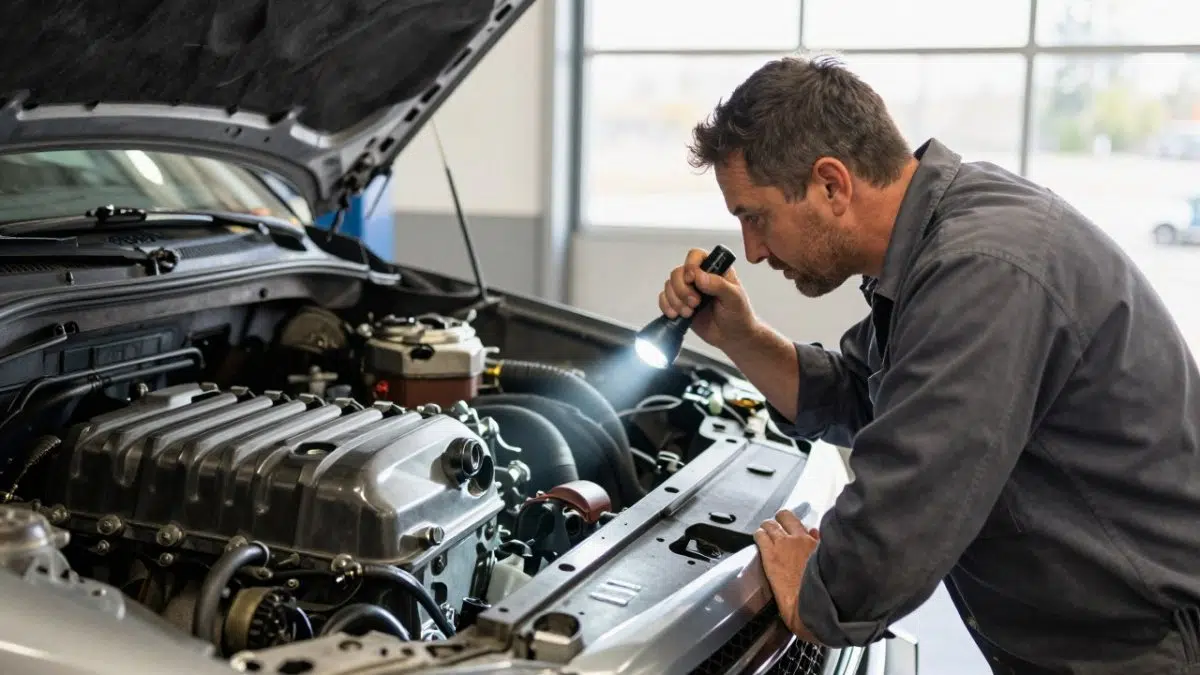
Diesel engines commonly develop problems in four areas:
- Fuel injectors. High-pressure injectors can stick or leak, causing rough idle, smoke, hard starts, or fuel smell; labor to reach them is often the bulk of the bill.
- Turbochargers. Signs include power loss, whistling, blue or gray smoke, or a boost code. A failed turbo can send debris into the intake, so we inspect the intercooler and piping too.
- Emissions components. DPF, EGR, and SCR/DEF systems are the biggest reason diesel bills outpace gas bills. Short-trip driving around Stonegate or Meridian is hard on a DPF because it needs sustained highway heat to burn off soot.
- High-pressure fuel system. A pump failure can contaminate the entire fuel system, so we diagnose fuel-pressure complaints before replacing parts.
Colorado adds its own stress. Cold starts on a 10-degree morning in Parker are harder on diesel batteries, glow plugs, and fuel gelling than a mild-climate start. Towing a trailer up the I-70 mountain grades loads the turbo and transmission far more than flatland driving, and altitude reduces the air density the turbo has to work with.
A diesel truck that runs rough, loses power, or shows a warning light needs a proper diagnosis before any parts are replaced. Our shop handles diesel diagnostics for Power Stroke, Cummins, and Duramax engines, and we will explain what we find before any work begins. Diesel engine diagnostic services
Watch out: a derate message is not a suggestion to keep driving, continuing can turn a sensor or filter issue into a much larger repair.
Common Gas Engine Problems and What They Typically Involve
Gas engines tend to have lower routine service costs, and their most common repairs are usually more contained than diesel emissions work, parts are lighter, easier to reach, and more widely available. Because repair costs also depend on labor rates and shop choice, comparing dealer and independent mechanic estimates can put the difference in perspective, as Performance Automotive and Tire Center notes.
The gas-engine jobs we see most often fall into a few familiar categories:
- Ignition components. Worn plugs, coils, and coil packs cause rough idle, a flashing check engine light, reduced power, or worse fuel economy.
- Sensors and emissions controls. Oxygen sensors, mass airflow sensors, and catalytic converters are common check-engine-light causes. Fix the root cause first, a converter failing from an unresolved misfire is an expensive lesson.
- Cooling system parts. Water pumps, thermostats, hoses, and radiators are wear items, and Colorado’s temperature swings are hard on plastic and rubber.
- Timing components. Timing belts and chains have service intervals, and ignoring them is one of the few gas-engine repairs that can total an engine.
If your gas engine shows a warning light or misfires, start with a diagnostic scan before replacing parts. You can book an engine diagnostic in Parker to get a clear answer about what the repair involves.
Colorado driving adds stress to any engine. Cold starts, temperature swings, and stop-and-go commuting along the Front Range shorten battery and sensor life, and the altitude that affects turbo diesels also costs naturally aspirated gas engines some power.
The practical question is not which engine is cheaper in the abstract but which repair risks you are prepared to absorb. Our team at Eagle Transmission & Auto Repair in Parker can inspect either engine and give you a straight answer, call (720) 778-1888 or stop by 10189 Parkglenn Way, Parker, CO 80138.
Ready to find out what your truck or car needs? Call Eagle Transmission & Auto Repair at (720) 778-1888, or visit us at 10189 Parkglenn Way, Parker, CO 80138. We are open Monday through Friday, 8:00am to 6:00pm.
Frequently Asked Questions
Are diesel engines more expensive to repair than gas engines?
Often, yes, but it depends on the job. Fleet comparisons generally report higher annual maintenance costs for diesel than for gasoline, though the figures vary by vehicle and usage. Diesel repairs can cost more because they often require specialized parts, more oil, and specialized filters. The best way to know your number is a written diagnosis and estimate from a shop that inspects your specific truck or car.
Does a diesel truck cost more to maintain than a gas truck?
Routine diesel service can cost more because oil changes use more oil and specialized filters. Truck-ownership estimates generally put five-year maintenance higher for diesel than for gas, but these are general estimates, not repair quotes. Your actual cost depends on how you drive, how many miles you put on the truck, and how well it has been maintained. Keeping up with scheduled service helps avoid larger bills later.
How can I tell whether my diesel or gas engine needs professional diagnosis?
Warning lights, unusual noises, rough idling, loss of power, smoke from the exhaust, or fluid leaks are all reasons to have the engine checked. Diesel and gas engines can show similar symptoms, so guessing at the cause often leads to unnecessary parts replacement. At Eagle Transmission & Auto Repair in Parker, we offer a free road test and computer diagnostics so you can understand the problem before committing to any repair.