Could a shudder or a pause when shifting mean your torque converter is failing, or could another problem be behind it? The symptoms of a bad torque converter can overlap with signs of other transmission or engine issues, so one rough shift or vibration isn’t enough to identify the cause.
It makes sense to worry when your vehicle’s behavior changes, especially if you’re unsure whether it’s sensible to keep driving. A vibration at a steady speed, slipping, delayed engagement, unusual noises, or signs of overheating can point to a torque converter concern. The pattern matters: for example, a converter’s lockup clutch may be involved in a shudder, but other transmission components or control issues can create similar sensations.
This guide explains common symptom patterns, possible causes, and how testing can help narrow them down without guessing. You’ll also learn what details to note, such as when the symptom happens and whether it changes with speed or shifting. If you’re arranging an inspection in Parker, those observations can help describe the problem clearly, while a proper diagnosis determines what’s actually going on.
Key Takeaways
- The symptoms of a bad torque converter can overlap with other vehicle problems, so treat them as clues rather than a confirmed diagnosis.
- Note when the shudder, slipping, or shifting change occurs, along with any warning lights and how the symptom changes over time.
- Compare symptoms with possible transmission, engine, and driveline causes to understand why testing matters.
- Avoid repeatedly accelerating to trigger shuddering or slipping, since provoking the symptom may add strain.
- A professional evaluation can help distinguish a torque converter concern from another transmission fault and guide the next step.
What symptoms can point to a bad torque converter?
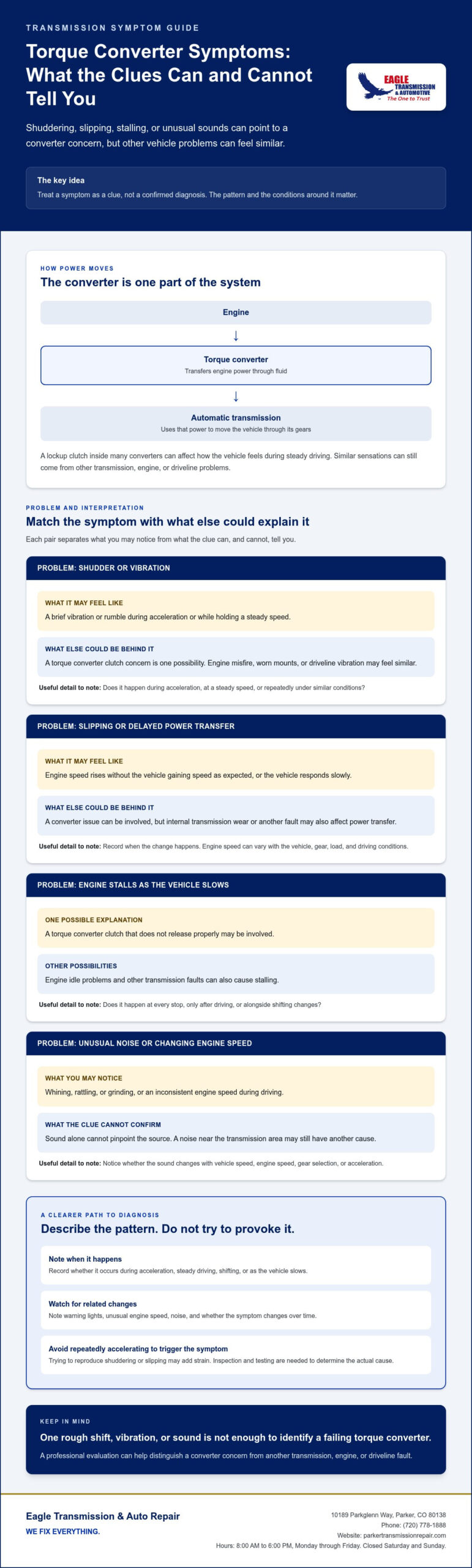
The symptoms of a bad torque converter can include shuddering, slipping, unusual changes in engine speed, delayed power transfer, odd noises, or stalling as the vehicle slows. These signs can suggest a converter concern, but none confirms it on its own. Similar behavior can come from other transmission, engine, or driveline problems, so a useful diagnosis depends on what happens and when.
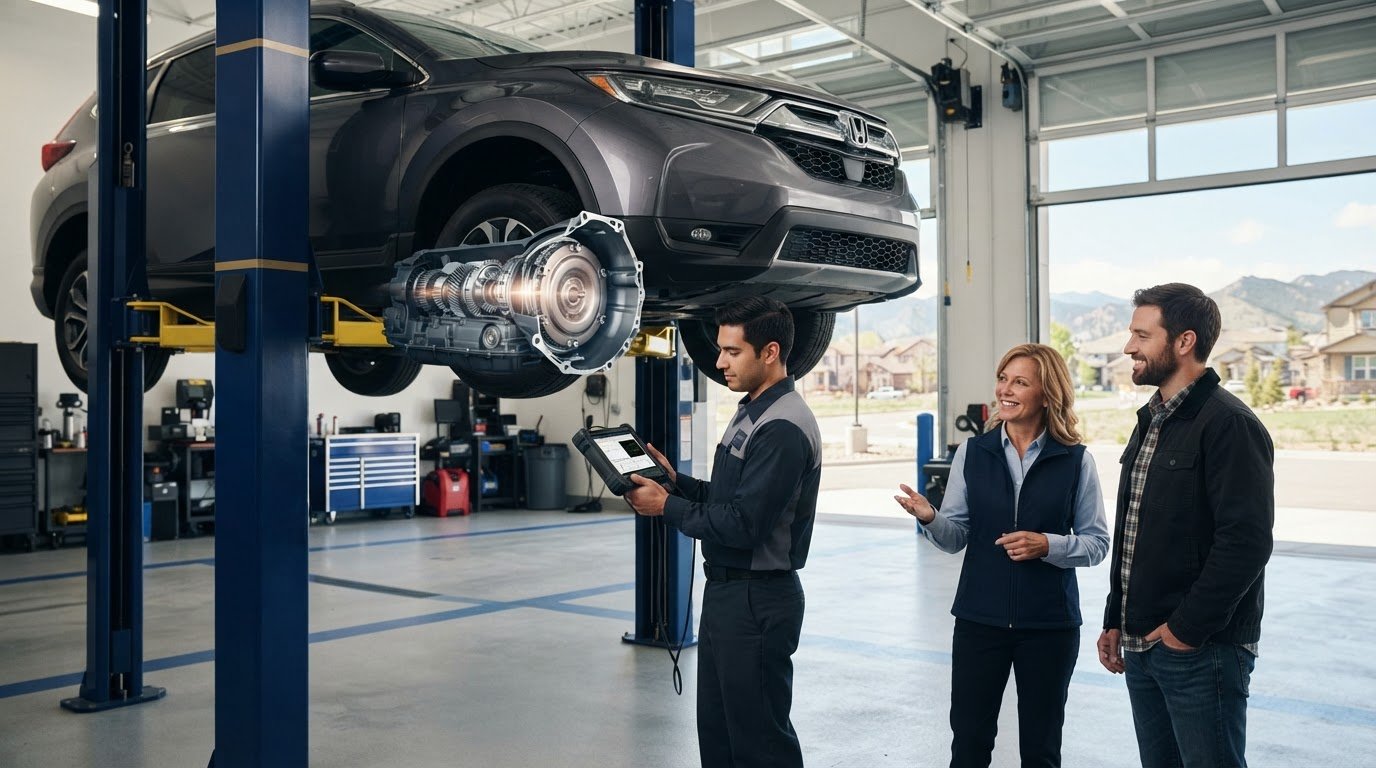
A torque converter connects the engine to an automatic transmission through fluid, helping transfer power as the vehicle moves. Its internal lockup clutch can also affect how the vehicle feels during steady driving. The How a Torque Converter Works overview explains the components and their role. A fault elsewhere in the vehicle can still produce sensations that seem transmission related.
Symptom patterns matter more than one isolated sign.
Shuddering, slipping, and changes in engine speed
A shudder may feel like a brief vibration or rumble through the vehicle during acceleration or while holding a steady speed. A torque converter clutch concern is one possibility, but engine misfire, worn mounts, or driveline vibration may feel similar. Notice whether the sensation repeats under similar conditions, or appears only as the vehicle shifts or accelerates.
Slipping means engine speed rises without the vehicle gaining speed as expected. The vehicle may feel slow to respond, or the engine may rev higher than you anticipate. A converter issue can be involved, but internal transmission wear or other faults may also affect power transfer. RPM behavior varies by vehicle, gear, load, and driving conditions, so a single reading is not enough to identify the cause.
Stalling, unusual sounds, and other less specific signs
If the engine stalls as the vehicle slows or stops, a torque converter clutch that does not release properly is one possible explanation. Engine idle problems and other transmission faults can also cause stalling. Don’t assume the converter is at fault based on this symptom alone. Note whether it happens at every stop, only after driving, or alongside shifting changes.
Whining, rattling, or grinding sounds may also deserve attention, but sound alone cannot pinpoint the source. Pay attention to where the noise seems to come from and whether it changes with vehicle speed, engine speed, gear selection, or acceleration. A sound near the transmission area can still have another cause, and noises from different vehicle systems may travel through the body.
- Shudder: Note whether it happens during acceleration or steady driving.
- Slipping: Observe whether engine speed rises without expected acceleration.
- Stalling or noise: Record when it occurs and whether other changes happen at the same time.
Write down what you notice rather than repeatedly trying to trigger the symptom. A clear description of the conditions can help distinguish a possible torque converter problem from another fault, while inspection and testing are needed to determine what is actually happening.
How the torque converter works and why symptoms appear
A torque converter is the fluid based connection that transfers engine power to an automatic transmission. It sits between the engine and transmission, helping the engine keep running while the vehicle is stopped in gear and helping transfer power as the vehicle moves. It’s one part of the system, not the entire transmission.
A torque converter transfers engine power through fluid; the transmission uses that power to move the vehicle through its gears. That distinction matters. A change in acceleration or engine speed may involve the converter, but it can also come from another transmission component or a different vehicle system.
The converter, transmission fluid, and power transfer
Picture two small fans facing each other, with one turning and moving air that makes the other spin. A torque converter uses transmission fluid in a similar way: an engine driven component moves fluid, which turns another component connected to the transmission. Internal parts help direct fluid and support power transfer, particularly as the vehicle begins moving.
This fluid connection allows some difference in rotational speed between the engine and transmission. The converter and transmission work together, but they do different jobs. The transmission selects gear ratios; the converter transfers engine power into it. For a plain language mechanical overview, see Understanding Torque Converter Function. Knowing that relationship helps explain why a sensation can seem transmission related without proving the converter is the source.
What the lockup clutch changes during driving
Many automatic transmissions use a lockup clutch inside the converter. Under certain driving conditions, it connects parts of the converter more directly, reducing the speed difference, or slip, between engine and transmission. This can change engine RPM during steady driving. The exact timing and feel depend on the vehicle’s design and operating conditions.
If the clutch engages unevenly or doesn’t behave as intended, a driver might notice shudder or inconsistent engine speed. Those clues can also have other causes, so they aren’t proof of a converter fault. Vehicle speed, gear, engine load, and temperature can all affect what the driver feels. The symptoms of a bad torque converter need to be considered alongside other evidence, not read as a stand alone diagnosis.
- Converter: transfers engine power through fluid.
- Lockup clutch: reduces converter slip under some conditions.
- Transmission: uses the transferred power and selects gears.
When a concern involves power transfer or shifting, transmission repair and diagnosis can help distinguish a converter concern from another fault. If you’re noticing a change in how your vehicle drives, find Eagle Transmission & Auto Repair in Parker for an evaluation.
Torque converter trouble or another problem? Compare the clues
A shudder, delayed response, or change in engine speed can fit a torque converter concern, but similar driving changes can come from other parts of the vehicle. Comparing when the symptom occurs and what happens alongside it gives useful context. It still takes an assessment of the vehicle to separate a likely converter issue from a transmission, engine, or driveline fault.
| Observed symptom | Possible system involved | Why testing matters |
|---|---|---|
| Engine speed rises, but acceleration feels weak | Torque converter or another transmission component | Several faults can interfere with power transfer, and the sensation alone cannot identify which part is responsible. |
| Harsh, delayed, or inconsistent shifts | Transmission, including its internal or control components | A shift concern may occur with a converter problem, but it can also have a separate transmission cause. |
| Hesitation or uneven acceleration | Engine performance or transmission | An engine that is not producing power smoothly may feel like it is slipping, so both systems may need consideration. |
| Vibration that changes with road speed | Driveline or other rotating components | The speed and conditions where the vibration occurs can help distinguish it from a transmission related sensation. |
| Unusual fluid appearance | Transmission fluid or an internal transmission concern | Fluid condition offers context, but it cannot confirm that the converter has failed. |
Symptoms that can overlap with other transmission faults
Slipping, delayed engagement, and rough shifts may raise concern about the converter, but the transmission contains multiple parts that affect power delivery and gear changes. A symptom that appears during a shift, for example, may point toward a broader transmission issue rather than the converter alone. Eagle’s guide to common signs of transmission trouble offers more context on overlapping warning clues.
General symptom lists can be a starting point, not a diagnosis. Common Symptoms of a Bad Torque Converter describes signs associated with converter trouble, but similar signs still need to be evaluated in the context of the specific vehicle.
When an engine or driveline issue may be involved
An engine performance problem can make acceleration feel weak, uneven, or delayed, even if the transmission is working as expected. Because engine management software dictates throttle response and torque output, ECU calibration experts like StageX Performance OÜ note that engine control issues can easily be mistaken for transmission lag. A vibration may also come from the driveline, the parts that carry power from the transmission toward the wheels. Where and when the vibration occurs can help guide an inspection, but it cannot identify a failed component by itself.
Fluid condition can add a clue to the overall picture, but appearance alone doesn’t establish the source of a problem. A technician needs to assess the vehicle and use appropriate testing to narrow down the cause. In short, the symptoms of a bad torque converter can resemble faults elsewhere, so avoid settling on a repair based on one clue.
What to Do About Torque Converter Symptoms
If your vehicle starts shuddering, slipping, or behaving differently, focus on gathering useful details rather than trying to diagnose the converter yourself. A clear account of the conditions can help a technician assess the concern. Don’t repeatedly accelerate or shift in ways that bring on the symptom just to see if it happens again.
- Describe what you feel. Note whether the vehicle shudders, hesitates, slips, stalls, or makes an unusual sound. Use everyday language rather than guessing which part has failed.
- Record the driving conditions. Note whether it happens during acceleration, steady cruising, slowing down, or when shifting into gear. Include whether the vehicle was carrying a load or traveling uphill if that seems relevant.
- Write down warning lights and changes. Record any dashboard warning lights, when they appeared, and whether the behavior has become more frequent or severe.
- Arrange an assessment. Share your notes and have the vehicle inspected if the symptoms persist, worsen, or make operation feel unreliable.
Record when the symptoms happen
Timing helps describe the pattern. For example, note whether a vibration starts as you accelerate from a stop, appears only during steady cruising, or occurs as you slow down. If a noise accompanies it, record when you hear it and whether it changes with speed. Don’t interpret a warning light or sound as proof of a converter problem. Simply report what you observed.
Also mention changes over time. A symptom that was occasional but now happens more often is useful information, as is a new delay or change in how the vehicle responds. If someone else drives the vehicle, compare notes so the inspection can account for different experiences.
Know when to arrange an inspection
Arrange professional assessment promptly if the symptoms are getting worse, the engine stalls, or the vehicle’s response makes it difficult to control reliably. A vehicle that still moves can still have a problem that needs attention. There’s no universal safe distance to drive with a suspected converter fault; the concern, how the vehicle behaves, and the conditions around you all matter.
If the vehicle stalls or its response feels unreliable, avoid provoking the symptom or continuing a trip that feels unsafe. Seek appropriate help to decide how to proceed. Repeatedly testing the vehicle can add strain and won’t tell you which component is responsible.
For a local inspection, get directions to Eagle Transmission & Auto Repair in Parker. Share what you recorded so the concern can be evaluated through transmission diagnostics and repair, rather than relying on a symptom alone.
Getting torque converter symptoms diagnosed in Parker, Colorado
Shuddering, slipping, or an unusual change in engine speed can raise concern about the torque converter, but similar symptoms may come from other transmission or vehicle faults. A professional evaluation helps narrow down what is happening before you make a repair decision. The symptoms of a bad torque converter are useful clues, not a diagnosis on their own.
Why diagnosis comes before a repair decision
A torque converter concern and a broader transmission problem can feel much alike from the driver’s seat. Engine performance issues or driveline vibration may also affect acceleration and how smoothly the vehicle moves. That overlap is why a repair recommendation should be based on inspection and testing, not one sensation or warning light.
In general, diagnosis starts with the symptom pattern and the vehicle’s condition. A technician may inspect the vehicle, review relevant warning codes, and assess transmission information or operation as appropriate for that vehicle. These checks help distinguish possible causes. Fluid condition can contribute context, but it cannot prove the converter has failed, and no single finding should be treated as the whole answer.
Repair options depend on what the inspection and testing reveal, as well as the condition of the related transmission components. A converter concern does not automatically mean the entire transmission needs replacement. For more on weighing those choices, see this guide to transmission repair versus replacement.
Local transmission service for Parker drivers
Eagle Transmission & Auto Repair provides transmission diagnostics and repair in Parker. If you notice changes in shifting, acceleration, or vehicle response, sharing when the symptoms occur can give the evaluation useful context. The goal is to identify the likely source before deciding what repair, if any, makes sense.
Transmission concerns can involve more than the converter itself, so transmission diagnostics and repair can help assess the broader system rather than assuming one component is at fault. Bring along details such as whether the issue happens during acceleration, steady driving, or slowing down, and note any warning lights or sounds.
If the vehicle’s behavior is getting worse, it stalls, or it doesn’t feel reliable to operate, arrange an assessment instead of repeatedly testing it on the road. A vehicle that still moves may still need inspection, and the right next step depends on the actual findings.
For a local evaluation, get directions to Eagle Transmission & Auto Repair in Parker. Call (720) 778-1888 to discuss an inspection for possible torque converter or transmission symptoms.
Take the next step with confidence
You don’t need to arrive with a diagnosis or know which part needs repair. A clear description of what your vehicle is doing is enough to start a useful conversation. The symptoms of a bad torque converter can guide that conversation, but they aren’t a verdict about what’s wrong.
If you’re unsure how the behavior is changing, jot down what you notice before arranging an inspection. If the vehicle stalls, feels unreliable, or the symptoms are getting worse, focus on having it assessed rather than trying to reproduce the issue on the road. A measured next step can help replace guesswork with useful information.
Share your observations and let the inspection findings guide what comes next. Get directions to Eagle Transmission & Auto Repair to arrange an inspection. You can move forward one informed step at a time.
Frequently Asked Questions
Can a bad torque converter cause the check engine light to come on?
Yes, a torque converter related fault can be associated with the check engine light, but that warning can also relate to other systems. If the light comes on, note whether it is steady or flashing and whether the vehicle’s behavior changes at the same time. Share those details during diagnosis. A warning light alone doesn’t identify the failed part, so avoid replacing components based only on the light.
Can torque converter symptoms appear only at highway speeds?
Yes, a driver may notice a concern only during highway travel because speed, gear, and load differ from stop and go driving. Make a note of the approximate speed, road grade, and whether you were accelerating or holding a steady pace. Don’t try to recreate the issue in traffic. If it happens on a familiar route, describe the conditions rather than conducting repeated tests.
Does transmission fluid condition confirm a bad torque converter?
No. Fluid appearance by itself can’t tell you whether the converter is faulty. If you notice a leak where the vehicle is usually parked, note its location and appearance without touching an unfamiliar fluid. Don’t add fluid unless you know the correct type and procedure for your vehicle. Mention any recent fluid service or visible change during an inspection, since that history can help guide the evaluation.
Does a bad torque converter always need to be replaced?
No. The appropriate repair depends on what inspection findings show and on the condition of the vehicle’s transmission. A recommendation should explain which concern was found and why the proposed repair addresses it. If you receive a repair recommendation, ask for the findings that support it and whether related transmission concerns were considered. That helps you understand the choice without assuming a specific part must always be replaced. When substantial repair estimates threaten to exceed a car’s worth, assessing market equity becomes essential, and dealerships like Auto Sale Newport provide helpful guides on evaluating trade-in value when deciding whether to invest in repairs or move on.
Can torque converter problems affect fuel economy?
They can contribute to reduced fuel economy if the converter isn’t transferring power efficiently. But fuel use can also change with route, traffic, weather, load, and engine condition. Compare similar trips rather than drawing conclusions from one tank of fuel, and note whether the change started alongside a new driving symptom. That context can help an inspection separate a possible mechanical concern from ordinary changes in driving conditions.
For an inspection of possible torque converter or transmission symptoms, call Eagle Transmission & Auto Repair at (720) 778-1888 or get directions to the Parker shop.
Eagle Transmission & Auto Repair
10189 Parkglenn Way, Parker, CO 80138
Phone: (720) 778-1888
Website: parkertransmissionrepair.com
Hours: 8:00 AM to 6:00 PM, Monday through Friday. Closed Saturday and Sunday.