Last Updated: November 3, 2026
Quick Summary
A transmission rebuild is a repair where a technician takes the transmission apart, inspects every component, replaces worn or damaged parts, and reassembles the unit. The original transmission case and sound parts stay in use, which separates a rebuild from a full replacement. Testing follows reinstallation to confirm proper shifting.
- Diagnosis comes first, using a road test and computer codes to confirm a rebuild is needed.
- The transmission is removed, drained, and separated, with parts kept in order during disassembly.
- Every component is cleaned and inspected for gear wear, clutch friction, bands, and valve body debris.
- Rebuild scope ranges from soft-parts repair to full rebuild, and a written estimate should itemize parts.
- After reassembly, the unit is refilled with fluid and road tested before returning to the owner.
Table of Contents
- What a Transmission Rebuild Is and Why Shops Do It
- Step 1: Diagnosing the Problem Before Any Work Starts
- Step 2: Removing and Disassembling the Transmission
- Step 3: Cleaning and Inspecting Every Component
- Step 4: Replacing Worn Parts, Seals, Gaskets, and Clutches
- Step 5: Reassembly, Testing, and Road Testing
- Rebuild vs. Replace: Choosing the Right Option for Your Vehicle
- Is a Transmission Rebuild Worth It for Your Car in Parker? Schedule Your Diagnosis
- Frequently Asked Questions
What a Transmission Rebuild Is and Why Shops Do It
A transmission rebuild is a repair where a technician takes the transmission apart, inspects every component, replaces the parts that are worn or damaged, and puts the unit back together. The transmission case and parts still in good condition stay in use, which is what separates a rebuild from a full replacement.
At Eagle Transmission & Auto Repair in Parker, we rebuild transmissions when the core unit is sound but internal parts have failed. Shifting problems, slipping gears, and burnt-smelling fluid are common signs. Rebuilding can be a practical choice for many drivers, especially when the transmission case and major components are still sound.
Drivers in Parker and surrounding communities like Castle Rock, Centennial, and Highlands Ranch often notice these symptoms after cold starts on winter mornings or during stop-and-go commuting on busy roads. Those conditions put steady stress on the transmission, so catching problems early matters.
Step 1: Diagnosing the Problem Before Any Work Starts
Before we authorize a rebuild, we need to confirm what is actually wrong. Many transmission symptoms look alike, but they can come from very different causes.
We start with a road test and computer diagnostics to check for stored codes and see how the transmission shifts.
Diagnosis is what tells us whether a rebuild makes sense. A fluid leak or a faulty sensor may be a much simpler repair. Our goal is to find the real problem first so the repair addresses what your car actually needs.
What to check at home first:
- Fluid level and color on the dipstick, if your vehicle has one
- Any delay when shifting into drive or reverse
- Slipping, flaring, or rough shifts
- Warning lights on the dashboard
Step 2: Removing and Disassembling the Transmission
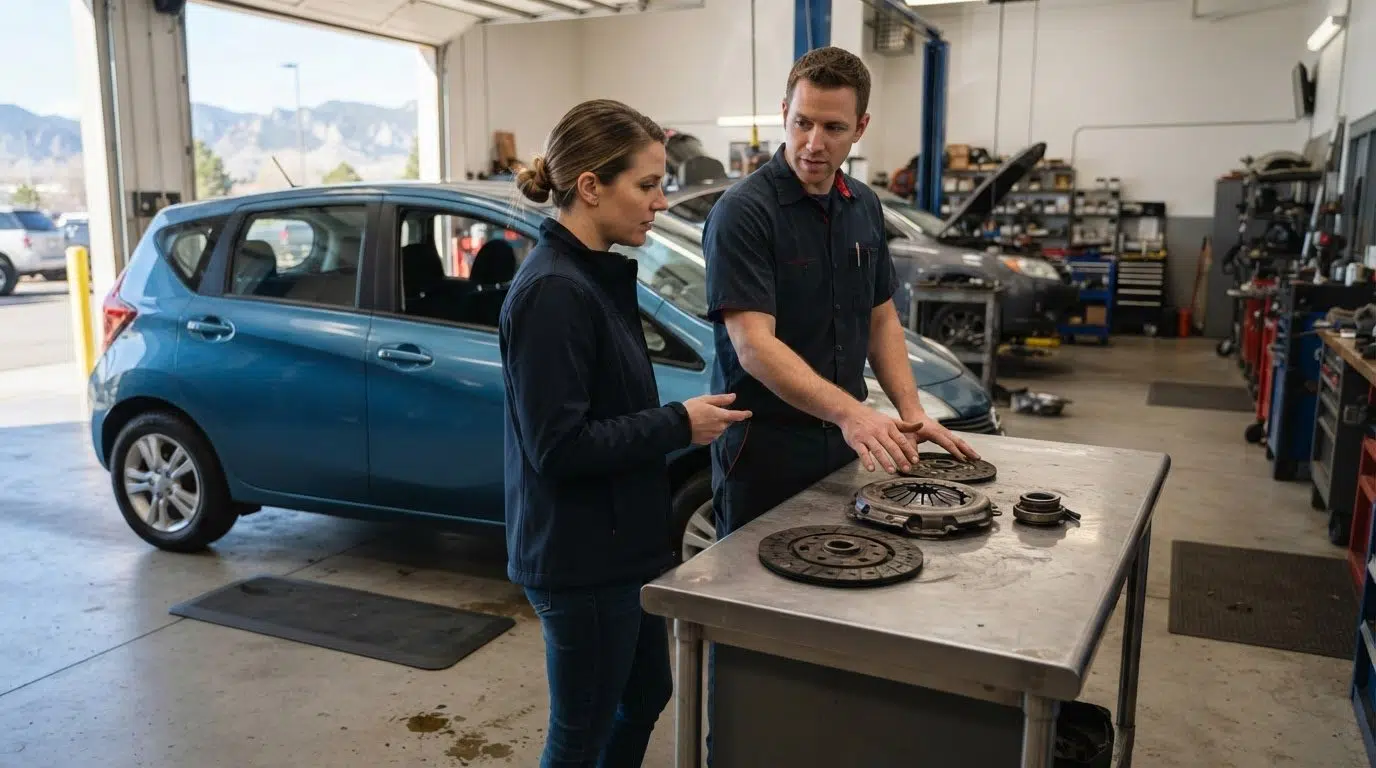
Once a rebuild is approved, the transmission is removed from the vehicle. This is heavy work that needs the right lifts and tools.
After removal, the technician drains the remaining fluid and separates the transmission case from the internal assembly. Each part is removed in order and kept organized, since clutch packs, bands, and gears must go back exactly where they came from.
Careful disassembly matters. Rushing this step can damage good parts or lead to mistakes during reassembly.
Step 3: Cleaning and Inspecting Every Component
Once the transmission is apart, every component gets cleaned and inspected. This is where a technician finds out how much wear there really is.
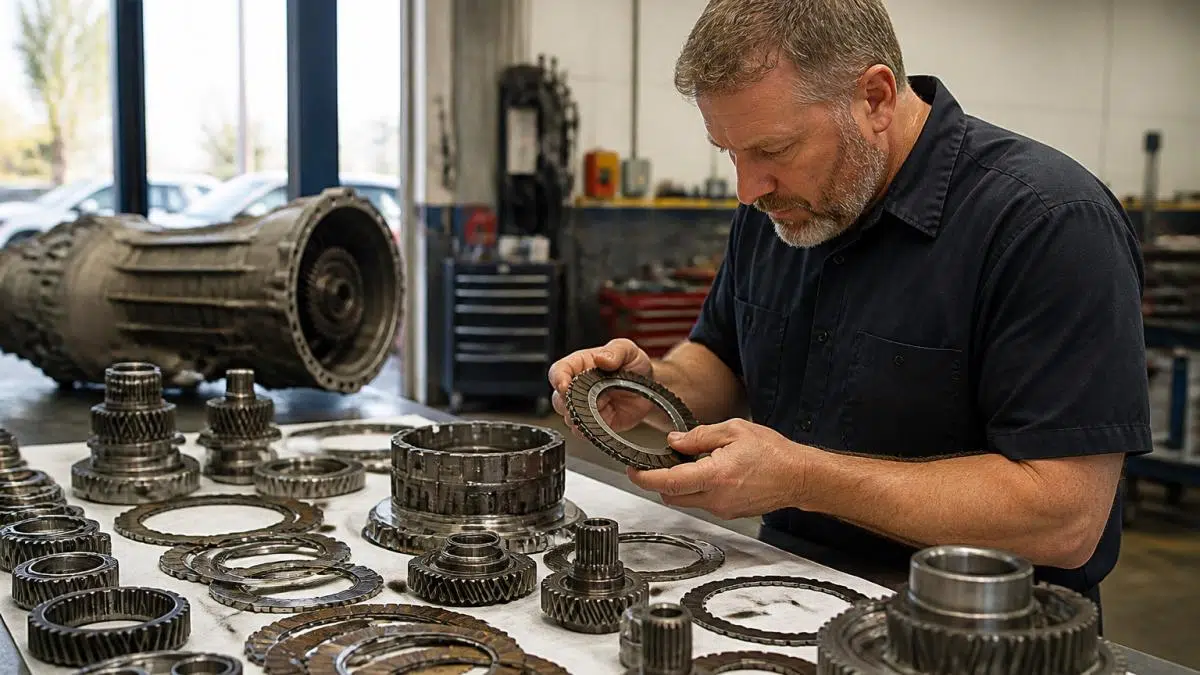
A typical inspection covers:
- Gears: Checked for chipped teeth, pitting, and wear
- Clutch packs and friction plates: Checked for burning and thickness
- Bands: Checked for wear and cracking
- Valve body: Checked for debris and sticking valves
- Torque converter: Checked for damage that could affect performance
- Bearings and bushings: Checked for play and rough spots
Step 4: Replacing Worn Parts, Seals, Gaskets, and Clutches
This is the step that decides how long your rebuild lasts. Two shops can quote the same job and install very different parts, so it pays to understand what is going into your transmission before you approve the work.
Most rebuilds fall into one of three scopes:
- Soft-parts rebuild: Seals, gaskets, filters, and fluid are replaced, along with any clutch packs and bands that failed inspection. Internal hard parts that pass inspection are reused. This is the most common scope when the failure is wear-related.
- Full rebuild: All wear items are replaced, and hard parts such as gears, bearings, bushings, and the valve body are replaced or reconditioned as needed. This scope is typical when the transmission has high mileage or debris has circulated through the unit.
- Rebuild with upgraded components: Certain known weak points are replaced with updated or heavy-duty parts. This is common on vehicles used for towing or mountain driving, where heat and load accelerate wear.
Parts quality matters as much as scope. Ask which parts are being used for the clutch packs, solenoid pack, and torque converter, since those are the parts most likely to fail again if quality is cut.
What a written estimate should spell out:
- Which parts are being replaced and which are being reused
- Whether the torque converter is being replaced, reconditioned, or reused
- Whether the valve body is being rebuilt or replaced
- The fluid specification being used and how much
- Labor included, and whether removal and reinstallation are covered
- Warranty terms: parts coverage, labor coverage, mileage or time limits, and exclusions
Watch out: a quote that lists only a total and a timeframe tells you nothing about scope. Ask for the itemized version in writing before you authorize the rebuild, and confirm whether the warranty covers labor as well as parts, a parts-only warranty still leaves you paying to have the transmission pulled a second time.
For drivers in Parker and the surrounding communities, towing or repeated cold starts in winter make parts quality a real durability question. If you are weighing options, our transmission repair in Parker page explains how we scope a job after diagnosis.
Step 5: Reassembly, Testing, and Road Testing
After new parts are installed, the transmission is reassembled in reverse order. Clearances, bolt torque, and valve body alignment all need to be right. A small error here can cause problems that show up later.
Once reassembled, the unit is reinstalled in the vehicle, filled with the correct fluid, and tested. We run the car through a road test to check shifting, engagement, and noise. Any issue found during testing gets fixed before the car goes back to you.
Rebuild vs. Replace: Choosing the Right Option for Your Vehicle
A rebuild and a replacement both fix a failed transmission, but they fit different situations. The decision usually comes down to four things: what failed inside the unit, the condition of the case and hard parts, your vehicle’s overall health, and how long you plan to keep it.
| Factor | Rebuild | Replacement |
|---|---|---|
| Best for | Sound case and hard parts, with wear or failure confined to internal components | Cracked or damaged case, heavy debris throughout the unit, or a unit that is no longer serviceable |
| What you get | Your original transmission, rebuilt to a defined scope | A new, remanufactured, or used unit installed in place of yours |
| Parts and scope | Defined by the written estimate; you can see exactly what was replaced | Defined by the seller of the unit; ask for the build sheet or remanufacturing scope |
| Warranty | Set by the shop and parts supplier; confirm parts and labor coverage | Set by the unit supplier; confirm who honors it and where |
| Matching to the vehicle | Stays matched to your VIN and calibration | Must match your vehicle’s calibration; mismatches cause shift problems |
When a rebuild usually makes sense:
- The case and major hard parts are intact
- The failure is wear-related, clutch packs, bands, seals, or solenoids
- The rest of the vehicle is in good shape and you plan to keep driving it
- You want the transmission matched to your vehicle’s original calibration
When replacement usually makes sense:
- The case is cracked or the internal damage is widespread
- Debris has circulated through the entire unit, including the cooler circuit
- A remanufactured unit with a clear, transferable warranty is available for your vehicle
- The vehicle is a candidate for a factory remanufactured unit with documented updates
Questions worth asking either way:
- Is the cooler circuit being flushed as part of the job? Debris left in the cooler can destroy a fresh rebuild.
- Is the torque converter being replaced or reconditioned?
- What is the warranty, who honors it, and does it cover labor?
- What is the realistic timeline, and does it depend on parts availability?
Watch out: a low quote on a replacement unit can hide a used unit of unknown history. Ask whether the unit is new, remanufactured, or used, and get that in writing on the estimate.
For Parker drivers, the practical tiebreaker is often the rest of the vehicle. A proper diagnosis is what tells you which situation you are in, schedule a transmission diagnosis at our Parker shop and we will walk you through the options for your specific vehicle.
Is a Transmission Rebuild Worth It for Your Car in Parker? Schedule Your Diagnosis
Whether a rebuild is worth it depends on your car’s overall condition, mileage, and how much you rely on it. Our Colorado cost guide breaks down what a rebuild typically involves so you can weigh the value. A rebuild often makes sense on a vehicle that is otherwise in good shape. For an older car with other major issues, replacement or repair of a smaller problem may be the better path.
The best first step is a proper diagnosis. At Eagle Transmission & Auto Repair, we offer a free road test and computer diagnostics, so you can learn more about what is wrong before you decide. We will explain your options honestly and give you a clear recommendation.
Contact our Parker shop to schedule your transmission diagnosis. We serve drivers from Parker and surrounding communities.
Frequently Asked Questions
Is getting a transmission rebuilt a good idea?
It can be, depending on the vehicle and the condition of the transmission case and major components. A rebuild reuses the existing case and replaces only the parts that have failed, which can be a practical choice when the unit is otherwise sound. Before deciding, have a shop complete a diagnosis at our Parker location so you know which components are worn and whether repair makes financial sense for your vehicle’s age and mileage.
How long does it take to rebuild a transmission?
Turnaround depends on the transmission type, how much internal damage is found during teardown, and parts availability. Once the diagnosis is complete, parts sourcing and reassembly often make up most of the schedule. Turnaround depends on the diagnosis, so the timeline is best confirmed with our Parker shop after inspection.
What parts are replaced during a transmission rebuild?
Shops typically replace seals, gaskets, bands, and friction clutch plates, along with any gears, bearings, or bushings that show wear or damage during inspection. The exact list depends on the diagnosis, so the scope should be confirmed before work begins.
How can I tell if a transmission has been rebuilt?
Ask the shop for records showing the work performed and the parts installed, and check whether the warranty and rebuild scope are documented. Signs of a recent rebuild can include fresh gaskets and a clean transmission pan, but records are the most reliable evidence.