Quick Summary
A failing car differential usually shows up as a whine or hum that rises with vehicle speed, clunking or clicking during turns or shifts, vibration through the floor, or gear oil leaks. Noise that tracks road speed and load points to the differential, while noise that changes when you turn points to a wheel bearing.
- A whine that rises with speed and gets louder under acceleration often points to worn pinion or carrier bearings.
- Noise that changes when turning left versus right is a classic wheel bearing clue.
- A loud bang or grinding followed by loss of drive means you should stop driving and arrange a tow.
- Dark, sticky residue on the rear axle housing can signal a differential fluid leak.
- A road test with the vehicle on a lift helps a technician confirm the noise source before parts are ordered.
Table of Contents
- What the Differential Does and Why It Fails
- Whining and Humming Noises That Change With Speed
- Clunking, Banging, and Clicking During Turns or Shifts
- Rear Differential Noise: How to Tell It Apart From Tires and Wheel Bearings
- Vibration Through the Floor and Driveline
- Differential Fluid Leak and Low Fluid Level Warnings
- Bad Pinion Bearing Symptoms and Bad Differential Symptoms to Act On Now
- Booking a Differential Inspection at Our Parker Shop
- Frequently Asked Questions
9 Signs of a Failing Car Differential in Parker, CO
Last Updated: November 2, 2026
What the Differential Does and Why It Fails
The differential is the set of gears that lets your drive wheels turn at different speeds. When you take a corner, the outside wheel travels farther than the inside one, and the differential makes that possible. Most rear-wheel-drive and all-wheel-drive vehicles have one, and many front-wheel-drive vehicles combine it with the transmission.
A failing car differential usually comes down to a few common causes: low or contaminated gear oil, worn bearings, and gears that wear down over time. Colorado driving adds stress. Mountain grades, towing, and stop-and-go commuting along the Front Range all load the gears harder than flat, light driving does.
Catching a problem early usually means a simpler repair, so here are the nine warning signs we tell drivers to watch for.
Whining and Humming Noises That Change With Speed
A whine or hum that rises and falls with vehicle speed is one of the most common signs of a failing differential. It often sounds like a steady tone that gets louder as you accelerate and quieter as you coast.
Pay attention to when the noise shows up. A whine that appears only under acceleration can point to worn pinion or carrier bearings. A noise that stays while you coast may point to gear wear. Because a failing differential sound can resemble tire noise or a wheel bearing, a professional diagnosis is the reliable way to confirm the source.
Clunking, Banging, and Clicking During Turns or Shifts
Clunking when you shift into drive or reverse, or a clicking or popping sound while turning, can signal worn gears, damaged axle joints, or a loose differential mount. Limited-slip differentials are especially prone to clicking during tight turns when the clutch packs or fluid are worn. Get a local differential diagnosis in Centennial if you hear these sounds.
These sounds deserve prompt attention. Continued driving with a damaged gear set can lead to a larger, more expensive repair.
Rear Differential Noise: How to Tell It Apart From Tires and Wheel Bearings
A noise from the rear of the vehicle is the most common reason drivers call us about a differential, and it is also the easiest to misdiagnose. Tire noise, a worn wheel bearing, a bad U-joint, and a failing differential can all sound similar from the driver’s seat. The trick is to pay attention to three things: when the noise appears, what makes it change, and where it seems to come from.
Start with when the noise happens
- Only at certain speeds, steady tone: often tire noise. Tires tend to hum in a narrow speed band and change with the road surface.
- Rises and falls with vehicle speed, louder under acceleration: points toward the differential, especially worn pinion or carrier bearings.
- Louder when coasting or decelerating: often gear wear inside the differential.
- Changes when you turn left versus right: a classic wheel bearing clue. The noise usually gets louder when the vehicle leans onto the worn bearing.
- Tied to engine RPM rather than road speed: more likely transmission, engine, or exhaust-related, not the differential.
Then check what makes it change
A simple road test tells you a lot. Find a quiet stretch of road and note the noise at steady speed, under light acceleration, while coasting, and while turning gently. A differential noise usually tracks road speed and load. Tire noise usually tracks the pavement. Wheel bearing noise usually tracks steering direction. If the sound follows the same pattern no matter what you do, it may be a driveline or transmission issue rather than the differential itself.
Front versus rear differentials
Rear-wheel-drive and many all-wheel-drive vehicles have a rear differential, and the noise usually comes from behind the rear seat. Front-wheel-drive vehicles have a differential built into the transaxle, so a failing front differential often shows up as noise or vibration from the front, sometimes paired with clicking during turns from worn CV joints. All-wheel-drive vehicles can have both, which is why a technician checks each one separately.
Watch out: guessing at the source and replacing a wheel bearing when the differential is the real problem, or the reverse, is a common and expensive mistake. A road test with the vehicle on a lift lets a technician check for bearing play, fluid condition, and leaks before any parts are ordered.
If you are hearing a noise you cannot pin down, schedule a differential inspection at our Parker shop. We serve drivers from Parker and the surrounding communities, and we will tell you what we find before recommending a repair. Review typical differential repair cost in Parker to plan ahead.
Here is a quick way to tell the most common differential noise patterns apart from tire and wheel bearing noise.
| Noise pattern | Likely source | What to check |
|---|---|---|
| Steady tone at certain speeds | Tire noise | Changes with road surface |
| Rises with speed, louder under acceleration | Differential, worn pinion or carrier bearings | Track road speed and load |
| Louder when coasting or decelerating | Gear wear inside the differential | Note coasting behavior on a quiet road |
| Changes when turning left versus right | Wheel bearing | Noise gets louder when leaning onto the bearing |
| Tied to engine RPM, not road speed | Transmission, engine, or exhaust | Not the differential |
Vibration Through the Floor and Driveline
A vibration you feel through the floor, seat, or steering wheel can come from a worn differential, but it can also come from a driveshaft, U-joint, or tire problem. Differential-related vibration usually appears at certain speeds and may worsen under load, such as when towing or climbing a hill.
If a vibration begins suddenly or grows quickly, have the vehicle checked soon rather than waiting.
Differential Fluid Leak and Low Fluid Level Warnings
Gear oil keeps the differential’s gears and bearings lubricated and cool. A leak around the differential cover, pinion seal, or axle seals can drop the fluid level and cause rapid wear. Look for dark, sticky residue on the rear axle housing or dripping underneath the rear of the vehicle.
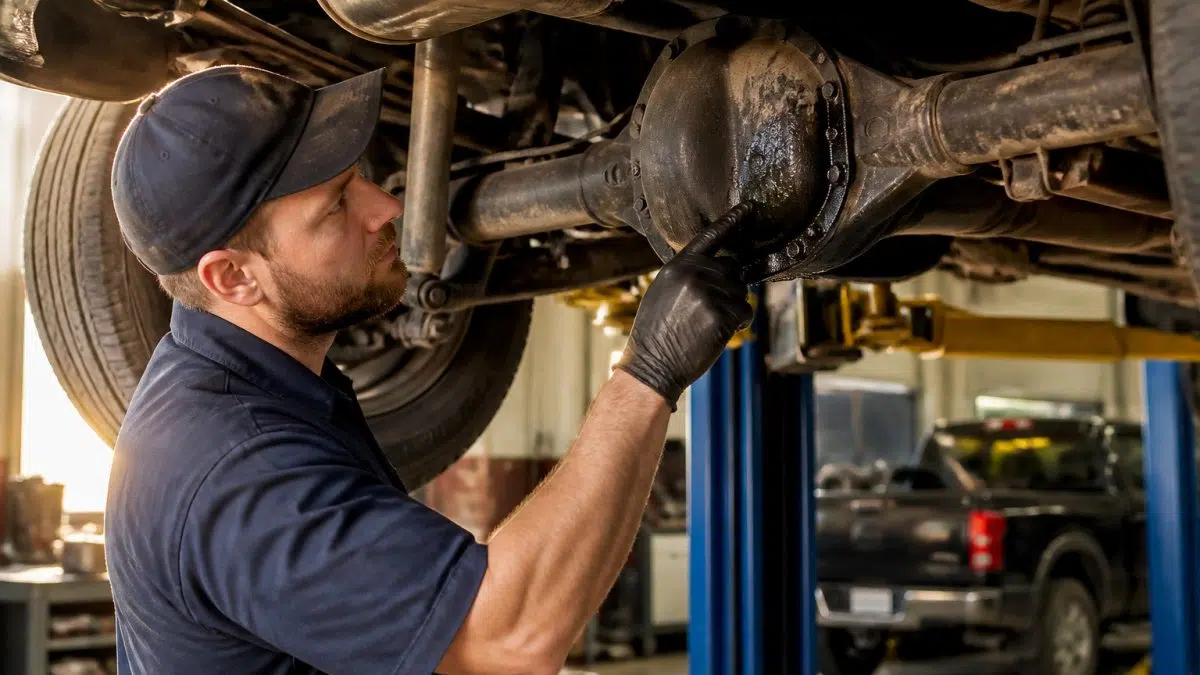
Low fluid is one of the most preventable causes of differential failure. Checking the fluid level during routine service and fixing leaks promptly can help protect the gears. Read about differential fluid change cost in Parker, CO if your fluid is due for service.
Gear oil can also show signs of internal wear, such as fine metal particles.
Bad Pinion Bearing Symptoms and Bad Differential Symptoms to Act On Now
Some differential symptoms can wait a few days for an appointment. Others mean you should stop driving and arrange a tow. Knowing the difference protects your safety and your wallet.
Symptoms that warrant stopping and towing
- A loud bang or grinding followed by loss of drive: a gear or axle may have failed. Do not keep driving.
- A wheel that locks, drags, or feels like it is binding: this can be a broken axle or a seized bearing and is a control risk.
- Heavy metal shavings or chunks in the gear oil: the differential is already damaged internally.
- A burning smell combined with noise or vibration: lubrication has likely broken down.
- A sudden, severe vibration or clunk that gets worse within a few miles: stop and have the vehicle inspected.
Symptoms to book promptly but can usually be driven gently
- A steady whine or hum that has been present for a while and is not getting worse quickly.
- A small leak or weeping seal with no noise yet.
- A light clunk when shifting into drive or reverse.
- Mild clicking during tight turns on a limited-slip differential.
With these, avoid hard acceleration, heavy towing, and long mountain grades until a technician looks at it. Colorado conditions make this matter: a differential that is marginal on flat ground can fail on a sustained climb or during a cold start on a below-freezing morning when the gear oil is thick.
What a bad pinion bearing feels like
A worn pinion bearing often produces a growl or howl that rises with speed and can feel rough under acceleration. Ignoring worn pinion bearings can lead to damage to the ring and pinion gears.
Watch out: if you are unsure which category your symptom falls into, err on the side of caution. A short tow is almost always cheaper than a failed differential on I-25 or a mountain pass.
If any of these symptoms sound familiar, contact our Parker shop to arrange a differential inspection. We work with drivers from Parker and nearby communities, and we will help you decide whether to drive it in or have it towed.
Booking a Differential Inspection at Our Parker Shop
If you hear any of these warning signs, we can help. Our Parker shop offers a free road test and computer diagnostics, so you can understand what is happening before committing to a repair. Learn how long differential repair takes in Parker, CO before you book. We serve drivers from Parker and the surrounding communities.
Our shop has over 40 years of experience specializing in transmissions, and we base repair recommendations on what we actually find. If you’re hearing whining, clunking, or leaks, schedule a differential inspection with us in Parker and we’ll tell you what we find and what it will take to fix it.
Frequently Asked Questions
Is it worth replacing a rear differential?
Whether a rear differential is worth replacing depends on the damage found during diagnosis. Worn gears or a failed pinion bearing often mean a rebuild or replacement is the correct repair, while a leaking seal or low fluid may only need a reseal and fluid service. Older vehicles with high mileage may warrant comparing repair cost against the vehicle’s overall condition. Our shop provides a diagnosis first so you can make that decision with clear information. Call our Parker shop to schedule an inspection.
What happens if a car runs out of differential fluid?
Running low on differential fluid lets the gears and bearings run with too little lubrication, which causes heat buildup and metal-on-metal wear. Early signs include whining that grows louder with speed and occasional clunking during turns. Continued driving can destroy the gears, leaving a repair that costs far more than a fluid service. If you notice a leak or a noise change, have the fluid level checked promptly at our Parker shop.
What does a failing car differential sound like?
A failing differential most often produces a whining, humming, or growling noise that rises and falls with vehicle speed, not engine RPM. It may be louder during acceleration or coasting, and it can change when you turn. Clunking or banging when shifting between drive and reverse can also point to differential wear. Because similar sounds can come from tires or wheel bearings, a road test helps narrow the cause. Our shop offers a free road test and computer diagnostics to help identify the source.
Can a differential problem cause vibration?
Yes. Worn gears, a failing pinion bearing, or a loose driveline component can send vibration through the floor or the vehicle body, often most noticeable at certain speeds. Vibration from a differential usually comes with a noise that also changes with speed. Vibration alone does not confirm a differential problem, since tires, wheel balance, and driveshafts can cause similar symptoms. A diagnostic inspection at our Parker shop can pinpoint the source before you commit to repairs.