What if the most helpful tips for extending transmission life aren’t driving tricks, but consistent care matched to your vehicle? It’s understandable to feel unsure when advice about fluid changes conflicts, or when one rough shift leaves you wondering whether something is wrong. There isn’t one schedule or fluid that fits every transmission, so your owner’s manual is the best place to start.
This guide explains how to find your vehicle’s service intervals and fluid specifications, and how habits such as avoiding abrupt acceleration or shifting before your vehicle stops can help reduce unnecessary strain. You’ll also learn why towing, heavy loads, and stop and go driving may affect maintenance needs, and which changes in shifting are worth noting. A symptom alone can’t confirm the cause, but professional testing can offer clearer answers than guesswork. With a few practical checks and a better sense of when to seek help, you can make informed choices about transmission care.
Key Takeaways
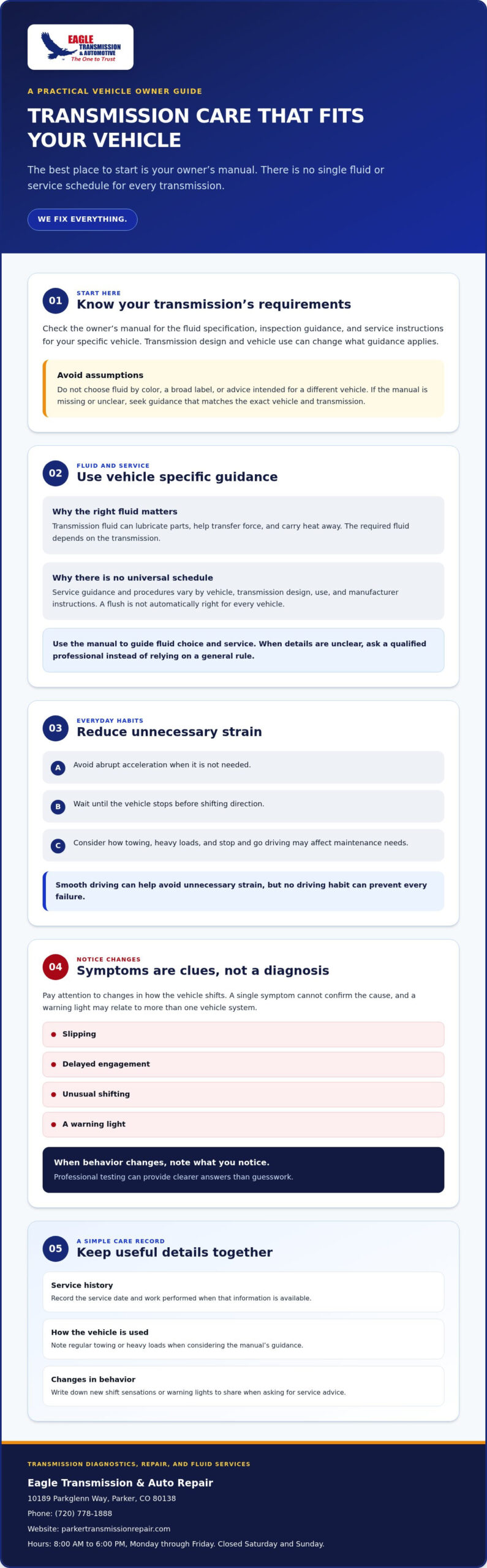
- Use your owner’s manual to check the fluid specification and service guidance for your specific vehicle.
- Good tips for extending transmission life include avoiding unnecessary strain, but no driving habit can prevent every failure.
- Consider how towing, heavy loads, and demanding routes may affect your vehicle’s maintenance needs.
- Slipping, delayed engagement, unusual shifting, or a warning light can have several causes, so don’t rely on one symptom to diagnose a problem.
- Keep a simple care checklist based on your manual, how you drive, and any changes in transmission behavior.
Tips for Extending Transmission Life Start With Knowing Your Vehicle
The most useful tips for extending transmission life start with your owner’s manual, not a one size fits all rule. Careful driving and following the right maintenance guidance can help avoid unnecessary strain, but no habit can guarantee how long a transmission will last or prevent every failure. Needs differ by vehicle, transmission design, how the vehicle is used, and the manufacturer’s instructions.
Transmission fluid is more than a generic lubricant. It has specific operating requirements for a particular transmission. In automatic transmissions, fluid also helps transfer force and manage heat. For a plain language overview of how automatic transmissions work, see Wikipedia’s reference.
Which transmission information should drivers check first?
Start with the owner’s manual. Look for the specified fluid, inspection guidance, and service instructions. Don’t choose fluid by color, a broad label, or advice meant for a different vehicle. Automatic and manual transmissions can have different fluid and service requirements, and some vehicles have more specific instructions than others. If the manual is missing, look for information that matches the exact year, make, model, and transmission rather than assuming a general interval or fluid type applies.
Keep a record of transmission service, including the date and work performed when that information is available. Also note whether the vehicle is regularly used for towing or carrying heavy loads. That context can help you apply the manual’s guidance and explain the vehicle’s use when asking for service advice.
Why does transmission life depend on more than driving style?
Driving smoothly is useful, but it’s only one part of the picture. Vehicle design determines what the transmission needs, maintenance history helps show what care it has received, and operating conditions affect how hard it works. Two vehicles driven similarly may still have different service requirements. Use the guidance for your vehicle instead of treating general advice as a substitute for its manual.
A new shift sensation or warning light is worth noticing, but one symptom alone can’t identify a specific transmission problem. For example, a warning light may relate to more than one vehicle system. If one comes on, this check engine light diagnosis information explains the related diagnostic service available from Eagle Transmission & Auto Repair.
Vehicle specific care matters because transmission design, service history, and driving conditions all shape which maintenance guidance applies. Keep the manual handy, follow its instructions, and note changes in how the vehicle behaves. Those simple habits help you make informed care choices without relying on a universal schedule or assuming every transmission works the same way.
Transmission Fluid and Heat: Follow Vehicle Specific Maintenance Guidance
Transmission fluid has a demanding job. Depending on the vehicle, it can lubricate parts, help transmit force, and carry heat away. But fluid that looks clean isn’t automatically the right fluid, and a familiar label doesn’t confirm it meets your transmission’s requirements. Check the specification in your owner’s manual before choosing or adding fluid. Using the wrong type may affect how the transmission operates.
How should drivers approach transmission fluid service?
Use the manual to find the recommended fluid and maintenance guidance for your vehicle. There’s no universal change interval or service procedure that fits every transmission. The right approach can depend on the design, the vehicle’s use, and the manufacturer’s instructions. If the guidance is unclear, ask a qualified professional rather than selecting a service based on a general rule.
Procedures can differ, too. A fluid service may involve different steps depending on the vehicle, so don’t assume a flush is automatically appropriate or that every vehicle calls for the same method. Eagle’s explanation of transmission flush versus drain and fill can help clarify what those terms mean. The vehicle’s service guidance and condition should inform the choice.
Why can engine cooling and operating conditions matter?
Heat is one factor to consider, but it doesn’t point to one universal cause of transmission trouble. Some vehicles use related cooling components to help manage transmission temperature, while the exact arrangement varies. If an engine cooling concern appears alongside a change in shifting, note both symptoms. That connection may be useful context, but it doesn’t confirm a transmission fault.
Towing, carrying heavy loads, stop and go traffic, or demanding routes can change how hard a vehicle works. Those conditions don’t prove damage has occurred. They may, however, affect which maintenance guidance applies, so check the manual for instructions related to your driving use.
Good transmission maintenance advice should match the vehicle, its service guidance, and the way it’s used. The Car Care Council’s maintenance guide is another general reference, but use your owner’s manual for vehicle specific recommendations. If you’re unsure what fluid service your vehicle needs, Eagle Transmission & Auto Repair offers transmission service and diagnostics. Get directions to Eagle Transmission & Auto Repair to discuss your vehicle’s maintenance guidance.
Driving Habits That Can Help Reduce Unnecessary Transmission Strain
Thoughtful driving can help avoid unnecessary strain, but no checklist can guarantee a particular transmission lifespan. The goal is simple: operate the vehicle as its manual directs and avoid abrupt inputs that aren’t needed. These practical tips for extending transmission life are habits to consider, not a substitute for vehicle specific maintenance guidance.
Which everyday driving choices are worth reviewing?
Notice how you accelerate, stop, park, and shift. A smoother pace can reduce sudden changes in load. Follow the manual’s instructions for cold conditions, since operating guidance can differ between vehicles. There’s no single warm up or idling duration that applies to every transmission.
- Accelerate progressively when traffic allows instead of repeatedly rushing away from a stop.
- Bring the vehicle to a complete stop before changing between Drive and Reverse.
- On a slope, use the parking brake as directed in the owner’s manual rather than relying on a general rule for every vehicle.
- In cold conditions, follow the vehicle’s own operating instructions instead of assuming a fixed idle time is required.
These are modest adjustments, not a formula for preventing wear. The transmission maintenance best practices from the Motorist Assurance Program offer another general reference, while your manual remains the guide for your particular vehicle.
What changes when towing or carrying heavy loads?
Towing and heavy loads can change the demands placed on a vehicle. Check the manual for instructions about towing and load limits, operating guidance, and any maintenance considerations for that use. Don’t assume advice for everyday commuting covers a vehicle that regularly carries substantial weight. For commercial haulers and severe-duty vehicles, specialized facilities like IQ Truck Center focus specifically on heavy-duty truck repair and maintenance.
Route matters, too. If your regular Colorado driving includes steep grades, especially while towing or carrying a heavy load, count that as part of how you use the vehicle. It doesn’t prove the transmission is being damaged, but it is useful context when reviewing maintenance guidance. Follow any instructions the manual provides for grades and loaded driving, and look to towing specialists like ProPride, Inc. for guidance on proper hitch setup and weight distribution to keep heavy loads stable.
For drivers in Parker, Centennial, Castle Rock, Douglas County, Lone Tree, and Aurora, a practical checklist can account for local trips as well as longer or more demanding drives: drive smoothly when conditions allow, stop fully before changing direction, use the parking brake on slopes as instructed, and consider towing or heavy loads when checking maintenance recommendations. If questions remain about your vehicle’s transmission care, find Eagle Transmission & Auto Repair in Parker to discuss transmission service or diagnosis.
Transmission Warning Signs: When Prevention Tips Are Not Enough
Maintenance and careful driving can support transmission care, but they can’t replace attention to a new change in how your vehicle behaves. Slipping, delayed engagement, unusual shifting, or a warning light are reasons to pay attention. Each can have several possible causes, so a symptom alone doesn’t confirm that the transmission is at fault.
Use the guide to signs a transmission may need repair as a starting point for recognizing changes. It’s a reference, not a way to diagnose a vehicle without testing.
What changes should a driver note before seeking diagnosis?
Describe the behavior rather than naming a repair. Does the shift feel different when starting out, changing speed, or backing up? Does the concern happen once, or does it return? These details help explain what you noticed without assuming what caused it.
- Note what the vehicle was doing when the change occurred, such as accelerating or shifting into gear.
- Record whether the behavior repeats or seems to be getting more noticeable.
- Write down any warning lights that appear and when you first noticed them.
- Share any related changes, such as a new sound or a fluid spot where the vehicle was parked.
If a warning light is on, avoid interpreting a code or light as a diagnosis by itself. Eagle’s check engine light information explains its diagnostic service, but identifying the cause requires evaluating the vehicle.
When should a transmission concern be checked?
Arrange a professional evaluation for a new, recurring, or worsening change in shifting, or when a warning light appears alongside a driving concern. A diagnostic assessment can help distinguish a transmission issue from other possible causes. Don’t choose a repair based on one symptom, and don’t assume a vehicle is fine just because the change happens intermittently.
A warning sign is a reason to investigate, not a confirmed diagnosis. That distinction matters. For example, delayed engagement may point to a transmission concern, but the observation alone cannot identify which part or system is responsible. Testing the vehicle alongside a review of its symptoms provides a more useful basis for deciding what to do next.
If you’ve noticed a change in shifting or a warning light, arrange a transmission diagnostic with Eagle Transmission & Auto Repair. Get directions to Eagle Transmission & Auto Repair in Parker to have the concern evaluated.
Build a Simple Transmission Care Checklist and Know Your Next Step
A useful transmission care routine doesn’t need to be complicated. The best tips for extending transmission life are practical reminders based on your vehicle’s manual, how you use it, and changes you notice. Regular care can support transmission health, but it can’t prevent every failure or replace diagnosis when a new symptom appears.
What should go on a transmission care checklist?
Keep the owner’s manual or its maintenance information easy to find. Use it to guide fluid selection, service recommendations, and operating instructions. Add a brief note about your driving use and any new shift behavior. This makes it easier to spot patterns and share useful context if you need professional advice.
- Check vehicle guidance: Confirm the specified fluid and maintenance recommendations in the manual rather than relying on a general interval.
- Track changes: Note when unusual shifting, slipping, or delayed engagement happens and whether it returns.
- Review demanding use: Before towing or carrying heavy loads, check the manual for relevant operating and load guidance.
- Keep service records: Save available maintenance details so you can refer to what has already been done.
This checklist helps organize care, not predict exactly how long a transmission will last. Eagle Transmission & Auto Repair offers transmission diagnostics and repair, and its transmission service guide provides additional information to consider alongside your manual.
How can Parker drivers take a practical next step?
If your vehicle is shifting differently, use your notes to describe what changed and when it happens. A symptom can have more than one possible cause, so avoid choosing a repair based only on a checklist or a single observation. A professional diagnostic evaluation can help clarify whether the concern involves the transmission or another system.
For transmission diagnostics, repair, or service, contact Eagle Transmission & Auto Repair. If you’ve noticed a new or recurring shift change, get directions to Eagle Transmission & Auto Repair in Parker to discuss having it evaluated.
10189 Parkglenn Way, Parker, CO 80138
Phone: (720) 778-1888
Website: parkertransmissionrepair.com
Hours: 8:00 AM to 6:00 PM, Monday through Friday. Closed Saturday and Sunday.
Make Transmission Care Part of Your Routine
The most practical tips for extending transmission life start with your vehicle’s own maintenance guidance. Use the owner’s manual to check fluid specifications and service recommendations, then consider how towing, heavy loads, or demanding routes affect the way you use your vehicle. Smooth driving can help avoid unnecessary strain, but it can’t prevent every transmission problem.
Keep a simple record of service and pay attention to new or recurring changes in shifting. A symptom is a reason to look closer, not a diagnosis. If something feels different, noting when it happens can help you explain the concern clearly and seek an appropriate evaluation.
Eagle Transmission & Auto Repair offers transmission diagnostics, repair, and service. Call (720) 778-1888 to discuss a transmission inspection, visit parkertransmissionrepair.com, or get directions to Eagle Transmission & Auto Repair in Parker, Colorado. A thoughtful checklist and vehicle specific guidance can help you make the next step with confidence.
Eagle Transmission & Auto Repair
10189 Parkglenn Way, Parker, CO 80138
Phone: (720) 778-1888
Website: parkertransmissionrepair.com
Hours: 8:00 AM to 6:00 PM, Monday through Friday. Closed Saturday and Sunday.
Frequently Asked Questions
How often should transmission fluid be changed?
Follow the service guidance in your owner’s manual, because the recommended interval depends on the vehicle and transmission. Check the manual for the required fluid specification as well as when to inspect or service it. Tips for extending transmission life are not one size fits all, so avoid relying on a general mileage interval or advice intended for another vehicle. If the manual is unclear, ask a qualified professional.
Does warming up a car help extend transmission life?
Follow your vehicle’s instructions for starting and driving in cold conditions. There isn’t one idling time that applies to every car, and a set warm up period shouldn’t be treated as a guarantee of longer transmission life. Rather than guessing, check the owner’s manual for cold weather operating guidance. If shifting changes after startup or as the vehicle warms, note when it occurs and consider having the concern evaluated.
Can towing shorten the life of a transmission?
Towing can increase the demands on a vehicle, but towing alone doesn’t confirm that a transmission has been damaged or predict its lifespan. Check the owner’s manual for towing and load guidance, including any maintenance recommendations for that use. If you tow regularly or drive demanding grades with a load, include those conditions when reviewing your vehicle’s service needs. Don’t assume ordinary driving guidance covers every towing situation.
Is it safe to drive if a transmission slips sometimes?
There isn’t a reliable way to judge safety from that symptom alone. Slipping can have different causes, and an intermittent problem may change. Avoid assuming the vehicle is safe to keep driving or choosing a repair based only on the sensation. Note when the slipping happens and arrange a professional evaluation, especially if the behavior returns, worsens, or affects your ability to control the vehicle.
Can a check engine light mean there is a transmission problem?
Yes, a check engine light can be associated with a transmission concern, but it can also point to another issue. The light alone doesn’t confirm the cause, and guessing from it can lead you in the wrong direction. Drivers in Parker, Centennial, Castle Rock, Douglas County, Lone Tree, and Aurora can seek check engine light diagnosis and transmission diagnostics from Eagle Transmission & Auto Repair. Contact Eagle Transmission & Auto Repair in Parker to discuss a diagnostic evaluation.