Imagine you’re halfway up a steep mountain pass for a weekend getaway when a strange, low-pitched whirring starts vibrating through your floorboards. Is it your transmission, or is a gear about to seize? That sinking feeling of a potential breakdown in the middle of the Rockies is something no Colorado driver should have to face. We know how much you rely on your truck or SUV to handle the unique stresses of Douglas County driving, where high elevations and steep grades put your drivetrain through a heavy workout every single day.
Scheduling a professional differential fluid change in Parker CO is the most cost-effective way to protect your vehicle from these extreme conditions and avoid a $3,000 differential rebuild. At Eagle Transmission & Auto Repair, we live by the motto “WE FIX EVERYTHING,” and that starts with keeping your gears running smoothly. In this article, you’ll discover how to identify warning sounds before they become failures, why mountain driving exhausts your lubricants faster than flat-land cruising, and how fresh fluid provides the confidence you need for every mountain pass. We are here to help you keep your drivetrain quiet and your family safe on the road.
Key Takeaways
- Learn how gear oil protects your axles from the intense friction caused by winding mountain roads and steep Colorado grades.
- Identify the specific whirring or howling sounds that signal your gears need attention before an expensive breakdown occurs.
- Discover why a differential fluid change Parker CO is vital every 30,000 to 50,000 miles to debunk the dangerous “lifetime fluid” myth.
- Understand how our specialized inspection of the magnetic drain plug catches metal wear early, potentially saving you from a $3,000 rebuild.
- Find out why local Ford and Jeep owners trust Eagle Transmission & Auto Repair for expert 4×4 and heavy-duty drivetrain maintenance.
What is a Differential Fluid Change and Why is it Critical for Parker Drivers?
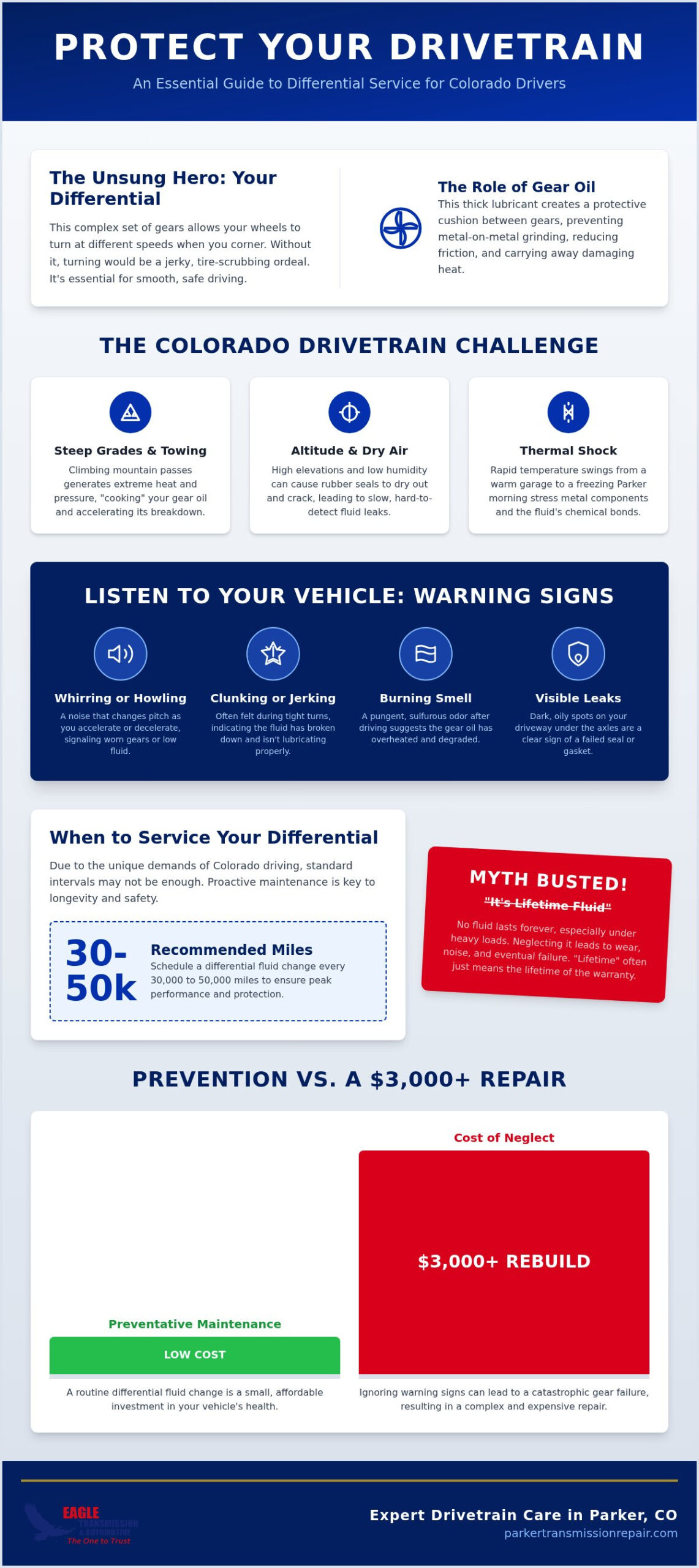
Most folks don’t think about their axles until something goes wrong. Think of your differential as the unsung hero of your drivetrain. It’s a complex set of gears that allows your wheels to spin at different speeds, which is exactly what a differential is designed to do. Without it, your tires would scrub and hop every time you turned onto Mainstreet or headed toward Hess Road. To keep these gears from grinding themselves into metal shavings, they sit in a bath of heavy-duty lubricant called gear oil. At Eagle Transmission & Auto Repair, our “WE FIX EVERYTHING” approach means we treat this fluid with the same respect as your engine oil. Whether you have a front-wheel-drive sedan, a rear-wheel-drive truck, or a sophisticated AWD SUV with front, rear, and center differentials, keeping that fluid fresh is the secret to a long-lasting vehicle.
The Vital Role of Gear Oil in Your Drivetrain
Gear oil isn’t your average lubricant. It’s thick and intentionally sticky for a reason. Inside your axle, the ring and pinion gears meet with incredible force. The oil creates a microscopic cushion between these metal teeth, preventing them from overheating and welding together under pressure. It also acts as a cooling agent, carrying heat away from the friction points and toward the housing where it can dissipate safely into the air. If you want to learn more about the mechanical side of things, check out our guide on Expert Rear Differential & Drivetrain Repair in Parker, CO. A timely differential fluid change Parker CO ensures this protection never fades, keeping your drivetrain quiet and efficient.
How Colorado Terrain Stresses Your Differential
Living in the Rockies changes the maintenance rules. When you’re towing a trailer up Kenosha Pass or navigating the steep grades of I-70, your differential gears generate massive amounts of heat that can “cook” the oil. High altitude and low humidity also play a role; dry air causes rubber seals to lose their elasticity, leading to slow leaks you might not notice until it’s too late. Then there’s the “thermal shock” factor. Imagine your truck sitting in a cozy 60-degree garage, only for you to back out into a -10°F Parker morning. This rapid temperature swing causes metal to contract and expand, which can stress the fluid’s chemical bonds over time. While the standard recommendation is every 25,000 to 50,000 miles, local conditions often mean you need a differential fluid change Parker CO sooner to stay safe. Regular service at Eagle Transmission & Auto Repair helps combat these local challenges before they lead to gear failure.
Warning Signs: How Your Car Tells You It’s Time for New Differential Oil
Your vehicle has its own way of talking to you, and it usually speaks through sound and feel. If you start noticing a low whirring or a distinct “howling” noise while driving down Parker Road, your drivetrain is likely asking for attention. These sounds often change pitch based on your speed, becoming higher as you accelerate and dropping off when you coast. Have you noticed a strange clunking or a jerking sensation when pulling into a tight parking spot at the grocery store? This often happens when the fluid has broken down so much that the gears can’t slide past each other smoothly during a turn. At Eagle Transmission & Auto Repair, we believe in catching these small signals early. Our “WE FIX EVERYTHING” approach starts with listening to your concerns and identifying these symptoms before they lead to a total gear seize.
Another red flag is a pungent, sulfurous “burning” smell after a long commute or a trip back from the mountains. This scent is a clear indicator that your gear oil has overheated and lost its ability to protect the metal surfaces. If you see oily residue or dark spots on your driveway near the center of your axles, it’s time to check for leaks. A quick visual inspection of the differential housing can reveal if a gasket or seal has failed, allowing vital lubricant to escape. If you’re hearing any of these sounds, it’s a good idea to stop by our shop on Parkglenn Way so we can take a quick look and ensure your vehicle is safe for the road.
Acoustic Clues: Whining vs. Grinding
Distinguishing between different noises can save you a lot of stress. A high-pitched whine usually points toward bearing wear or dangerously low fluid levels. It’s important to distinguish this from wheel bearing noise; while a wheel bearing sound changes when you steer left or right, differential noise stays consistent regardless of steering. If that whine turns into a harsh grinding, it suggests actual gear tooth damage where metal is meeting metal. We recommend checking our transmission repair Parker CO page for more details on how these sounds relate to your overall drivetrain health.
Visual and Physical Symptoms
Physical symptoms are often just as telling as the sounds. You might feel a “chatter” or vibration in limited-slip differentials during low-speed maneuvers if the fluid friction modifiers have worn out. Keep an eye out for leaking pinion seals where the driveshaft meets the differential, as this is a common failure point in Colorado’s dry climate. Metal shavings suspended in your gear oil act like liquid sandpaper, grinding down your precision-cut gears until they eventually fail. A timely differential fluid change Parker CO can flush these contaminants out, preserving the life of your vehicle and your peace of mind.
The Professional Differential Service Process at Eagle Transmission
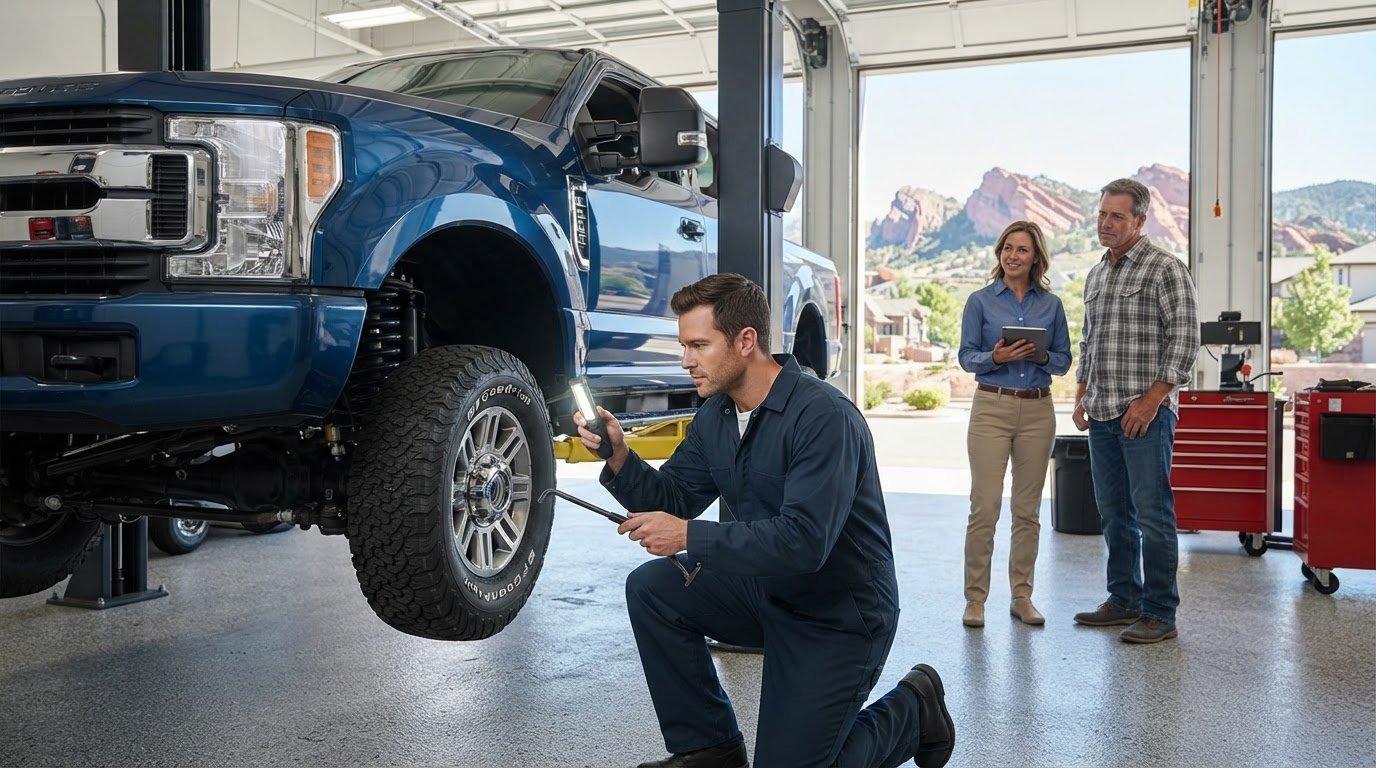
We don’t just pull a plug and walk away. A professional differential fluid change Parker CO at our shop is a methodical process designed to catch small issues before they leave you stranded. Before your vehicle ever hits the lift, one of our technicians takes it for a road test. This allows us to hear the drivetrain under load, while coasting, and during turns to confirm the noise patterns you’ve been noticing. Once on the lift, we examine the magnetic drain plug. It’s normal to see a bit of fine metallic “fuzz” on the magnet, which represents standard wear. However, if we find actual metal chunks or silver flakes, it tells us that a bearing or gear tooth is failing, and we’ll talk you through the next steps immediately.
At Eagle Transmission & Auto Repair, we believe in doing the job right the first time. While a quick-lube shop might just suck the old fluid out through a fill hole, we often recommend removing the differential cover entirely. This gives us a clear view of the internal components and ensures every bit of old, contaminated oil is removed. Our “WE FIX EVERYTHING” philosophy means we aren’t just looking for an oil change; we’re looking for peace of mind for your next trip into the mountains. We only use high-grade synthetic gear oils that stay fluid during our sub-zero winters but won’t thin out when you’re pulling a trailer up a steep grade in July.
Cleaning and Inspection: Beyond the Drain
Once the cover is off, we use specialized cleaners to wash away the grey sludge that accumulates at the bottom of the housing. We then inspect the “backlash,” which is the tiny amount of play between the gears. If this play is too wide, it causes that howling noise we mentioned earlier. We also check the gear contact patterns to ensure the teeth are meeting exactly where they should. Before buttoning everything back up, we clean the mounting surfaces and apply a fresh bead of high-temp RTV sealant or a high-quality gasket to prevent future leaks.
Fluid Selection and Friction Modifiers
Choosing the right oil weight is vital for Colorado drivers. For most daily drivers, a 75W-90 synthetic provides excellent fuel economy and protection. However, if you’re frequently towing a heavy camper or driving a diesel work truck, we might suggest a heavier 80W-140 to handle the extra heat. Many Jeeps and Ford trucks also feature limited-slip differentials that require specific friction modifiers to prevent “chatter” during turns. For a complete look at your vehicle’s health, consider pairing this with our Professional Transmission Service Near Me guide to ensure your entire drivetrain is ready for the road.
Maintenance Intervals: When Should You Schedule a Differential Flush in Douglas County?
You might have seen a “lifetime fluid” sticker on your vehicle or read it in your owner’s manual. In the automotive industry, “lifetime” often refers only to the length of the factory warranty. For those of us living in the shadow of the Rockies, that definition simply doesn’t hold up. The extreme temperature swings and steep grades we face in Douglas County break down gear oil much faster than a flat highway in the Midwest. To keep your drivetrain healthy, a differential fluid change Parker CO is typically recommended every 25,000 to 50,000 miles. This interval ensures the additives that protect your gears from high-pressure friction remain active and effective.
Contamination is another reason to stick to a strict schedule. Every differential has a small vent tube designed to release pressure as the housing heats up. When you drive through deep slush on Dransfeldt Road or cross a stream in your Jeep, that vent can actually suck in moisture or road salt. This creates a gritty, acidic environment that eats away at your precision bearings. If you have been through heavy winter storms or off-road adventures lately, it’s a smart move to visit our shop for a quick fluid health check.
The “Severe Service” Reality in Colorado
Most Parker drivers actually fall into the “severe service” category without realizing it. Frequent stop-and-go traffic on E-470 or I-25 prevents the differential from maintaining a consistent operating temperature, which leads to condensation. When moisture mixes with gear oil, it emulsifies and turns a “milky” color, losing almost all its lubricating properties. We recommend an annual inspection for high-mileage fleet vehicles and work trucks to ensure these daily stressors aren’t causing hidden damage.
Preventative Service vs. Expensive Gear Repair
Think of a fluid change as an insurance policy for your axles. The modest cost of fresh synthetic oil is a drop in the bucket compared to the high price of a master overhaul kit or a complete differential replacement. Beyond the money, there’s the value of peace of mind. During a heavy Colorado winter storm, your 4WD reliability is non-negotiable for your family’s safety. At Eagle Transmission & Auto Repair, our “WE FIX EVERYTHING” motto means we have the tools to rebuild any axle, but we’d much rather help you prevent the need for a major repair through simple, timely maintenance.
Why Parker Residents Trust Eagle Transmission & Auto Repair for Drivetrain Care
Choosing a shop for your vehicle shouldn’t feel like a gamble. For over 20 years, our team has been a fixture in the community, helping our neighbors in Parker, Centennial, and Castle Rock stay on the road safely. We have built our reputation on a simple foundation: technical mastery and honest communication. When you bring your truck or SUV in for a differential fluid change Parker CO, you aren’t just getting a service; you’re gaining a partner in your vehicle’s longevity. We specialize in the high-torque, heavy-duty systems found in Ford trucks and Jeeps, which are the lifeblood of Colorado driving. Because these vehicles face such unique stresses, they deserve the attention of drivetrain specialists rather than the “one-size-fits-all” approach of a general quick-lube chain.
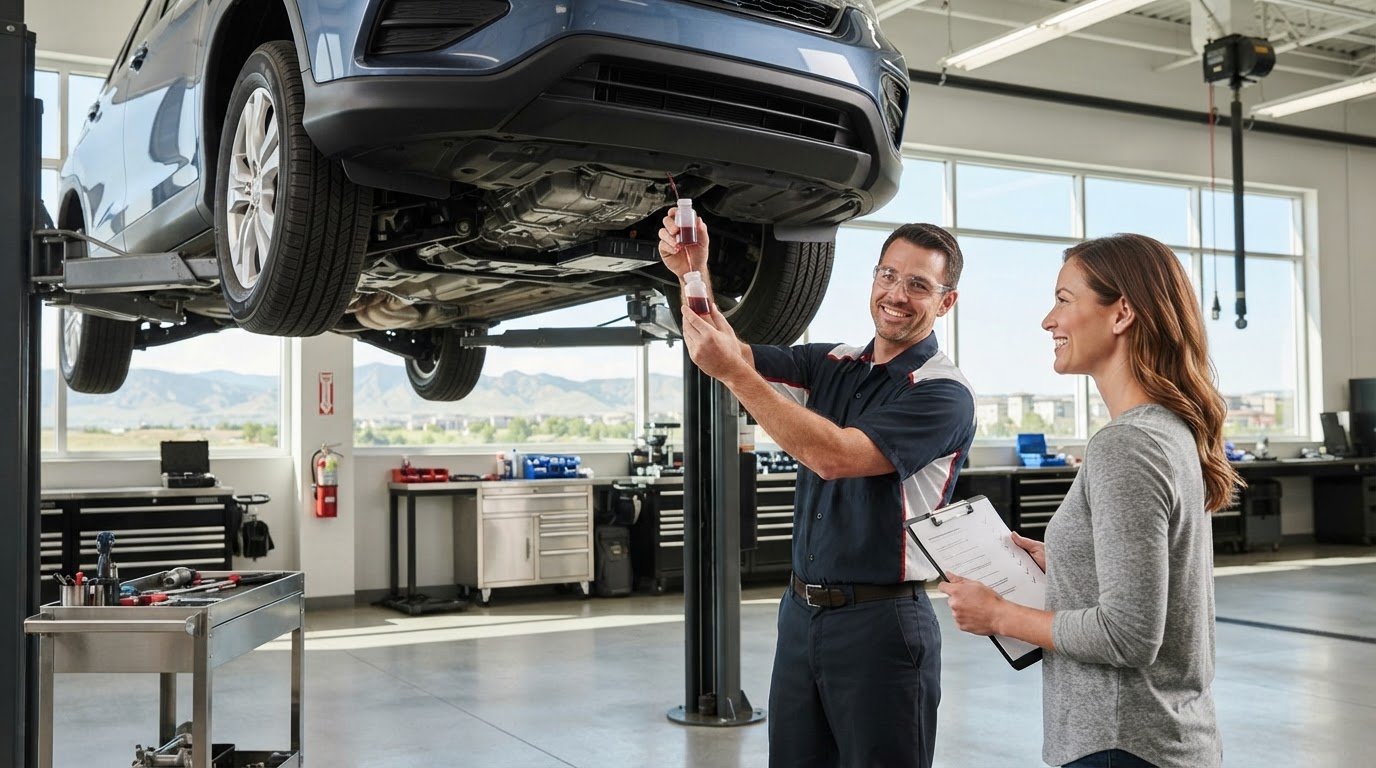
Transparency is at the heart of everything we do. We don’t expect you to take our word for it when we say your fluid is contaminated. We make it a point to show you the old gear oil, explaining what the color or presence of debris tells us about your internal gears. This educational approach helps reduce the anxiety often associated with auto repair. At Eagle Transmission & Auto Repair, we live by the motto “WE FIX EVERYTHING,” and that includes the complex drivetrain issues that other shops might shy away from. We want you to leave our shop feeling confident that your vehicle is ready for whatever the Colorado weather throws your way.
Specialized Tools and Local Expertise
Being an independent, privately owned local business allows us to prioritize quality over volume. Our technicians have the specialized tools and, more importantly, the seasoned ears to spot subtle drivetrain issues that others might miss. Whether it’s a slightly worn pinion bearing or a seal that is just beginning to weep, catching these details early saves you from a major breakdown. Our convenient location at 10189 Parkglenn Way makes it easy for Douglas County residents to get the expert care they need without the hassle of driving into Denver. We understand the local terrain because we drive it every day, just like you do.
Schedule Your Drivetrain Inspection Today
Don’t wait for a small whirring sound to turn into a major repair bill. Whether you are prepping for a summer of towing a camper or getting ready for the first winter freeze, a professional fluid analysis is the best way to ensure your vehicle is Colorado-ready. If you are experiencing a drivetrain issue that makes you feel unsafe behind the wheel, we also offer mobile diagnosis and repair to help determine the best path forward. Stop by Eagle Transmission & Auto Repair today and experience the peace of mind that comes with expert, neighborly service.
Keep Your Drivetrain Ready for the Next Colorado Adventure
Your drivetrain is the backbone of your vehicle’s performance on these high-altitude roads. By prioritizing a differential fluid change Parker CO, you’re choosing the most effective way to avoid expensive gear rebuilds while ensuring your truck or SUV stays quiet and reliable. We’ve seen how the Rockies can push even the toughest axles to their limit; our goal is to keep you moving safely through every season without the fear of a sudden gear failure.
Since 2004, Eagle Transmission & Auto Repair has served as a trusted local expert for drivers in Parker, Centennial, and Castle Rock. Our specialized focus on drivetrain health means we don’t just change oil; we protect your investment. Remember our promise that “WE FIX EVERYTHING,” but we’d much rather help you maintain your vehicle so it never needs a major fix in the first place.
Schedule Your Differential Fluid Change in Parker Today! Stop by our shop on Parkglenn Way for a professional assessment. We’re here to help you drive with total confidence.
Frequently Asked Questions
How often should I change my differential fluid in Parker, CO?
You should generally plan for this service every 25,000 to 50,000 miles. However, our heavy mountain driving and steep grades mean your gears work much harder than average. If you frequently tow a trailer or head into the Rockies, we recommend a differential fluid change Parker CO on the earlier side of that range. This ensures your gear oil hasn’t “cooked” or lost its ability to protect the metal surfaces from high-heat friction.
What is the average cost of a differential fluid change in Douglas County?
The cost of this service depends primarily on the type of fluid your vehicle requires and whether you have one or two differentials. High-performance synthetic oils or specialized additives for limited-slip systems can affect the final total. Since we follow the Colorado Motor Vehicle Repair Act, we always provide a clear, written estimate before starting any work. This ensures you know exactly what to expect without any surprises at the counter when you pick up your car.
Can I drive my truck if the differential is making a whining noise?
You can drive it, but we strongly recommend heading straight to a repair shop. A whining noise is a clear signal that your bearings are worn or your fluid level is dangerously low. If you ignore this sound, the friction will eventually cause the gears to overheat and seize. This can lead to locked wheels while you’re driving, which is a major safety hazard for you and your family on busy roads like E-470.
What is the difference between differential fluid and transmission fluid?
These fluids handle very different jobs within your drivetrain. Transmission fluid is typically thinner and focuses on hydraulic pressure and cooling for complex valve bodies. Differential fluid, or gear oil, is much thicker and heavier. It’s designed specifically to cushion the intense metal-on-metal pressure of your ring and pinion gears. Mixing them up can cause rapid wear and significant mechanical failure in both systems, leading to a much larger repair bill.
Why does my Jeep need a friction modifier additive in the differential?
Jeep models often feature limited-slip differentials that use a series of internal clutches to manage wheel spin. Without a friction modifier, these clutches can “chatter” or grab unevenly, causing a jerking sensation when you make tight turns. This additive ensures the clutches slip and engage smoothly. At Eagle Transmission & Auto Repair, we always check your specific vehicle requirements to ensure the correct additives are included in your service to keep your 4WD system working perfectly.
Does Eagle Transmission service AWD systems for SUVs like Subarus?
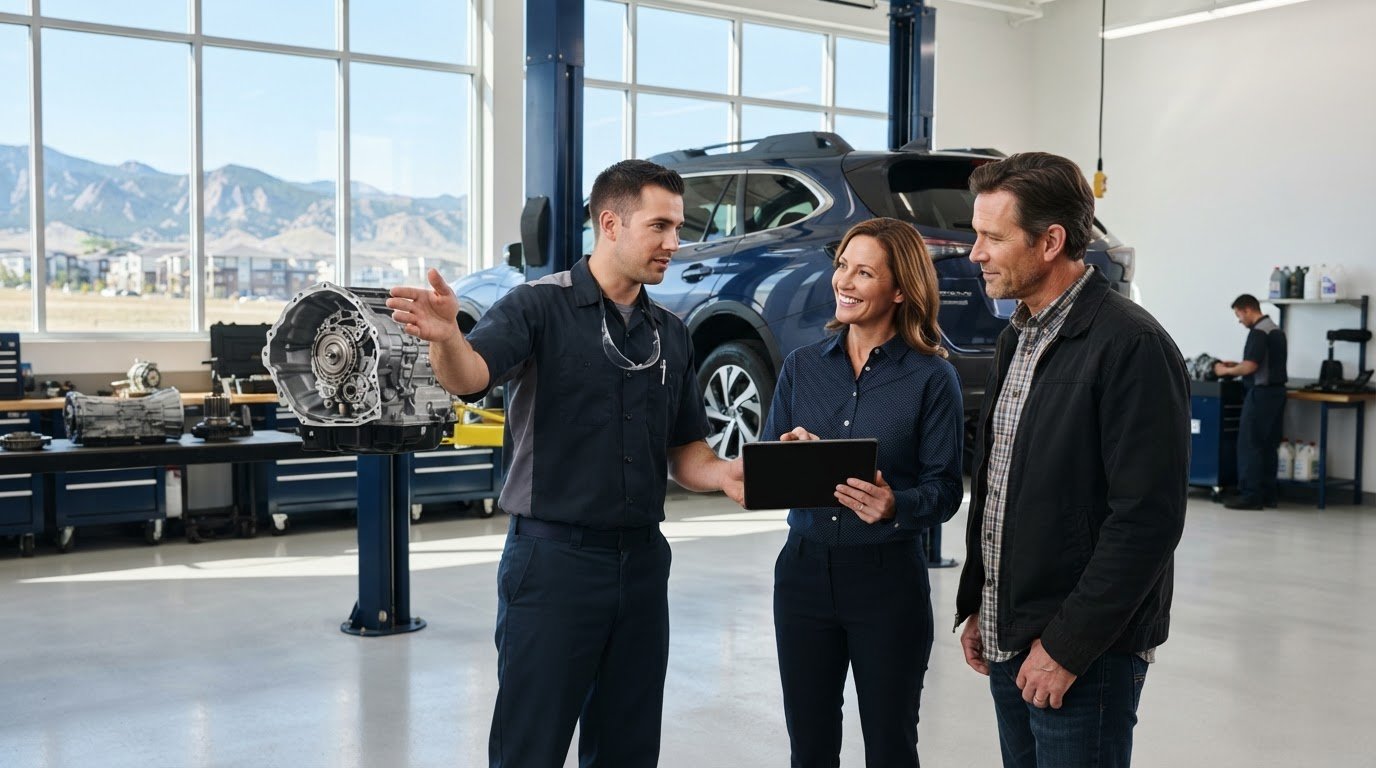
We certainly do, as our “WE FIX EVERYTHING” motto covers all makes and models. AWD vehicles like Subarus have unique drivetrain needs because they use front, rear, and often center differentials to distribute power. Each of these components requires regular inspection and fluid maintenance to prevent expensive failures. We have the specialized tools and experience to handle these complex systems for our neighbors in Parker, Centennial, and Castle Rock.
What happens if I never change my differential fluid?
Over time, your gear oil will oxidize and become gummy, losing its ability to lubricate. It also collects tiny metal shavings that act like liquid sandpaper on your precision gears. If you never perform a differential fluid change Parker CO, the internal components will eventually overheat and break apart. This usually results in a complete drivetrain failure that requires a full rebuild, which is far more expensive than simple, timely preventative maintenance.