That sinking feeling when your car jerks or hesitates at a stoplight doesn’t always mean you’re facing a total mechanical disaster. While the most obvious choice might seem like swapping out the whole unit to be safe, that “nuclear option” is often the most expensive path for your wallet. We understand the immediate anxiety that comes with searching for the transmission slipping repair cost. It’s stressful to worry about being overcharged or misdiagnosed when all you want is a reliable ride to get your family through the Parker hills safely.
You deserve a partner who speaks your language and prioritizes your safety over a quick sale. In this guide, you’ll learn the critical differences between repairing, rebuilding, and replacing your transmission so you can make a confident, cost-effective choice. We’re going to look at common fixes for local favorites like the Ford F-150, decode the mystery of remanufactured parts, and show you how a “diagnosis first” approach keeps more money in your pocket while keeping your vehicle on the road for years to come.
Key Takeaways
- Learn why a detailed diagnosis is your best defense against unnecessary part swaps and how to identify if a simple seal or solenoid repair is all you need.
- See how to calculate the transmission slipping repair cost relative to your vehicle’s mileage and market value so you don’t over-invest in an older car.
- Discover how Parker’s unique high altitude and mountain terrain impact drivetrain wear, requiring specific service adjustments for local Douglas County drivers.
- Compare the practical differences in turnaround times and warranty protections between custom shop rebuilds and factory remanufactured replacements.
The Transmission Dilemma: Understanding Your Three Main Options
Facing a transmission issue feels a lot like hearing a strange noise in the middle of the night; your mind immediately jumps to the worst case scenario. We know that for many Parker drivers, the first thought is about the looming expense. However, at Eagle Transmission, our “WE FIX EVERYTHING” approach means we look at your vehicle as a puzzle to be solved, not just a part to be swapped. There isn’t a one size fits all answer for the hills of Douglas County. Depending on what our team finds, we generally look at three distinct paths to get you back on the road safely.
The first path is a targeted transmission repair. This involves fixing specific, isolated components like a leaking seal, a faulty sensor, or a single solenoid without removing the entire unit. The second option is a transmission rebuild. Here, we take the unit apart, clean every piece, and replace the worn internal parts while keeping your original heavy duty case. Finally, there is transmission replacement, where we swap your entire unit for a new or remanufactured one. Each choice carries a different balance of reliability and budget, and we’re here to help you weigh those options based on how you actually use your car.
When is a minor repair enough?
Sometimes the problem is sitting right on the surface. If you’ve noticed a red puddle on your driveway or a dashboard light, you’re likely worried about the total transmission slipping repair cost. But what if the fix is just a faulty wire or a worn out gasket? Modern vehicles rely on complex electronics to manage an Automatic transmission, and a simple solenoid swap can often restore smooth shifting. This is why we prioritize professional transmission diagnostics. We want to find the electronic glitch or external leak before it turns into a mechanical meltdown, potentially saving you thousands of dollars in the process.
The Rebuild middle ground explained
A rebuild is often the “Goldilocks” solution for local drivers. It’s more thorough than a simple repair but usually more accessible than a full replacement. By disassembling the unit, we can inspect every gear and clutch for wear. This is especially effective for 4×4 trucks and diesel engines that work hard in our mountain terrain. At Eagle Transmission, a custom rebuild allows us to address specific factory weaknesses. Instead of just putting in a generic part, we can often make the unit stronger than it was when it first left the assembly line. It’s a smart way to get a “like new” level of reliability without the higher cost of a factory crate unit.
Comparison Table: Repair vs. Rebuild vs. Replacement
Choosing the right path for your vehicle isn’t just about the immediate bill; it’s about how much you rely on that car to get your family through the Parker hills every day. When neighbors ask us about the transmission slipping repair cost, they are often looking for the quickest fix. However, the cheapest option today can sometimes be the most expensive one next year if the underlying issue isn’t solved. Our “WE FIX EVERYTHING” motto means we don’t just push the most expensive service. Instead, we match the level of work to your car’s mileage and your future driving plans.
| Service Level | Turnaround Time | Typical Longevity | Best For |
|---|---|---|---|
| Minor Repair | 1 to 2 Days | Short to Medium Term | Electronic glitches or external leaks |
| Custom Rebuild | 3 to 5 Days | Long Term (100k+ miles) | Keeping your original heavy duty unit |
| Replacement | 1 to 3 Days | Maximum (New car feel) | Severe internal mechanical failure |
Longevity and Reliability Expectations
A minor repair is often a bridge rather than a permanent fix. If your clutches are already worn, a new sensor won’t stop the eventual mechanical failure. A quality rebuild at our shop often exceeds factory specs because we address known weaknesses. If you are worried about the transmission slipping repair cost, we focus on which path provides the most miles for every dollar spent. Remanufactured replacements offer that “new car” feel and are perfect for drivers who plan on keeping their vehicle for another decade.
Warranty and Peace of Mind
When you look at Transmission Repair and Replacement Prices, it becomes clear that the warranty is a huge part of the value. A local shop warranty is great for neighborhood driving, but a national remanufacturer warranty protects you even on road trips far from Douglas County. We stand behind every drivetrain service we perform because we want you to feel safe every time you turn the key. If a rebuilt unit has a hiccup six months later, you won’t be left stranded. You can always visit our Parker shop for a detailed inspection to see which warranty path fits your lifestyle best.

The Decision Matrix: How to Choose the Right Path
Deciding how to move forward when your car isn’t shifting right can feel like a high stakes guessing game. We want to take the guesswork out of that equation for you. Most of our Parker neighbors find that the best path depends on three things: the car’s current value, its mileage, and how much longer you need it to last. While the transmission slipping repair cost is a big factor, it isn’t the only one. We often use a friendly benchmark called the 50% Rule. If a repair quote exceeds half of the vehicle’s total market value, it might be time to consider a different vehicle rather than a major overhaul.
Mileage milestones also play a huge role in this choice. If your SUV has 80,000 miles and the rest of the car is in great shape, investing in a high quality fix makes perfect sense. You’re essentially resetting the clock on your drivetrain. However, if you’re looking at a sedan with 220,000 miles, that same repair might be a temporary patch on a vehicle that is nearing the end of its life. High value vehicles like a Ford F-250 or a specialized 4×4 are the exception. These trucks hold their value so well in Colorado that even a significant repair is usually much cheaper than a new truck payment.
Evaluating Vehicle Value vs. Repair Cost
We always suggest looking at local Parker market data to see what your car is actually worth today. Prices in Douglas County can be different than national averages, especially for all wheel drive vehicles. You also have to think about the “hidden” cost of being without your car. A complex rebuild can take several days. If you’re paying for a rental car during that time, that adds to your total investment. Sometimes, swapping for a remanufactured unit is the faster path to getting your life back to normal.
The Keep it or Trade it Factor
Are you planning to sell your car next month or drive it for five more years? If you’re trading it in soon, a minimal repair might be all you need to ensure it’s safe and functional for the next owner. But if you’re keeping the family car for the long haul, cutting corners now will only lead to more stress later. Investing in a rebuilt transmission provides the durability needed for Colorado’s demanding roads. Plus, a documented, high quality transmission service can actually add significant resale value if you do decide to sell down the road.
Colorado Factors: Why Parker Roads Change the Math
Living in Parker means our vehicles face challenges that cars in the flatlands never see. The steep grades of Douglas County and our high altitude environment change how we calculate the transmission slipping repair cost. It’s not just about the parts themselves; it’s about how those parts survive the Rockies. When you’re engine braking down a steep hill or towing a trailer toward Castle Rock, your drivetrain is under immense pressure. This is why a “standard” repair that works in the Midwest might not cut it here in Colorado.
Our “WE FIX EVERYTHING” approach is built on understanding these local stressors. We see a lot of transmission issues that stem from the extreme temperature swings we experience. One day it’s 70 degrees, and the next it’s a sub-zero cold start in January. These cycles cause seals to shrink and expand, leading to leaks that can quickly escalate into a slipping transmission. By focusing on the specific needs of Parker drivers, we can offer custom solutions that prioritize drivetrain longevity over a quick, temporary fix.
The Impact of High-Altitude Cooling
Thin air is a poor coolant, and your transmission generates a lot of internal heat when it’s working hard to climb. Transmission fluid is the lifeblood of the system, but it breaks down much faster in our environment. At higher elevations, the decreased atmospheric pressure and lower oxygen levels accelerate the rate of fluid oxidation, significantly shortening the lifespan of your transmission’s protective properties. For many of our neighbors with heavy duty trucks, we often recommend specialized external coolers. These help shed that extra heat before it has a chance to cook your internal clutches and drive up your transmission slipping repair cost.
Towing and 4×4 Demands in Douglas County
If you drive a Jeep or a Land Rover, your 4×4 system is likely getting a workout on the weekends. This puts extra strain not just on the transmission, but also on the transfer case and differentials. We find that Jeep owners in our region need more frequent differential gear service to prevent metal shavings from migrating through the system. The health of your transfer case is directly linked to the survival of your transmission. If one fails, it often takes the other with it.
We also pay special attention to Ford F-150 and F-250 owners. These trucks are the workhorses of Parker, often used for hauling horses or construction equipment. The torque converters in these Fords face unique stresses on our mountain passes. We look for heavy duty upgrades during our rebuilds to ensure your truck can handle the weight without breaking a sweat. If you’re worried about how your 4×4 is handling the hills, stop by our shop on Parkglenn Way for a local expert’s perspective on your drivetrain health.
Diagnostics First: The Eagle Transmission Approach
Finding out why your car is hesitating shouldn’t feel like a trip to the principal’s office. At Eagle Transmission, we believe that a truly honest repair starts with a conversation, not just a computer screen. While some shops might look at a trouble code and immediately quote you a high transmission slipping repair cost, we dig much deeper. Our goal is to find the smallest, most cost-effective fix that still guarantees your family’s safety on the road. By identifying the specific point of failure, our “WE FIX EVERYTHING” approach often saves you thousands of dollars by avoiding a total unit swap when a targeted repair is all you need.
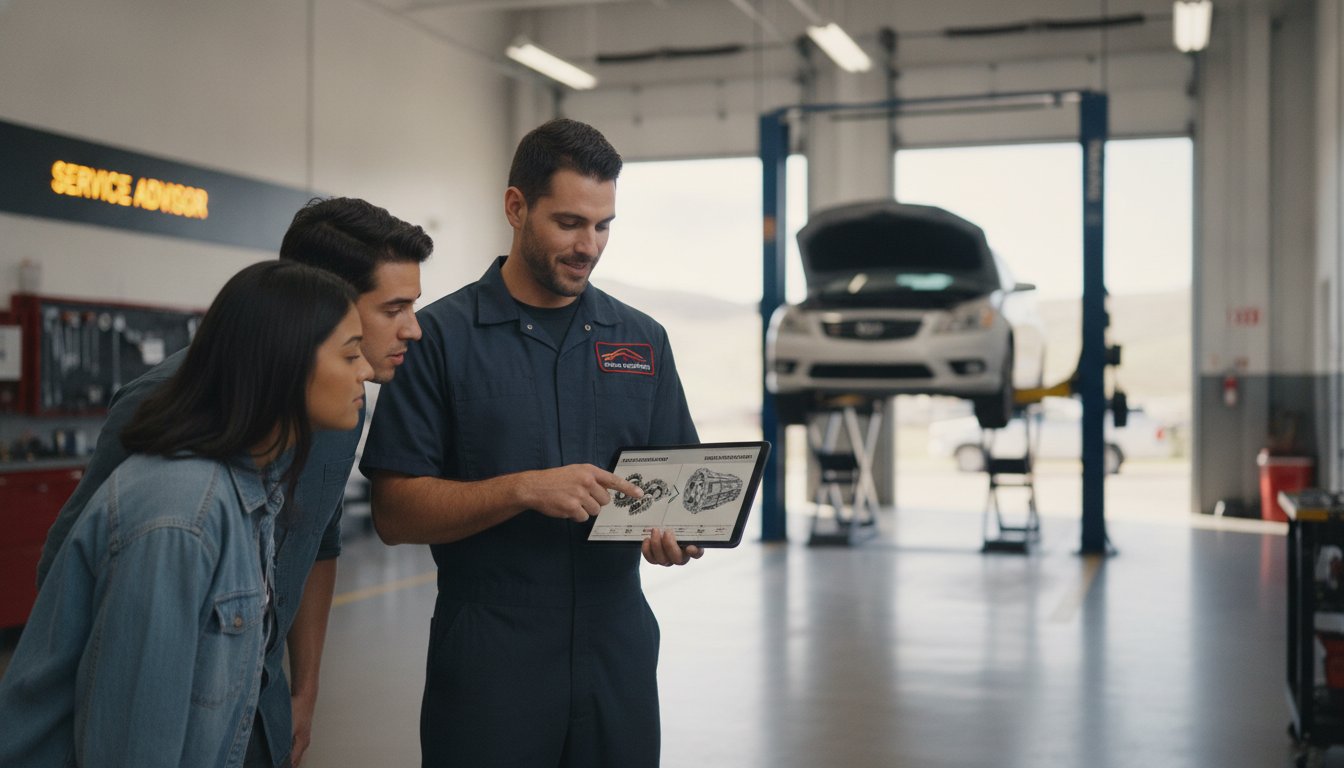
Transparency is the foundation of everything we do. We don’t want you to feel confused by technical jargon or pressured into a decision you don’t understand. Instead, we act as your local expert guide, showing you the evidence and explaining your options clearly. Whether you’re dealing with a minor electronic glitch or a major mechanical hurdle, we provide the context you need to choose the path that fits your budget and your long term goals for the vehicle.
What to expect during your diagnostic appointment
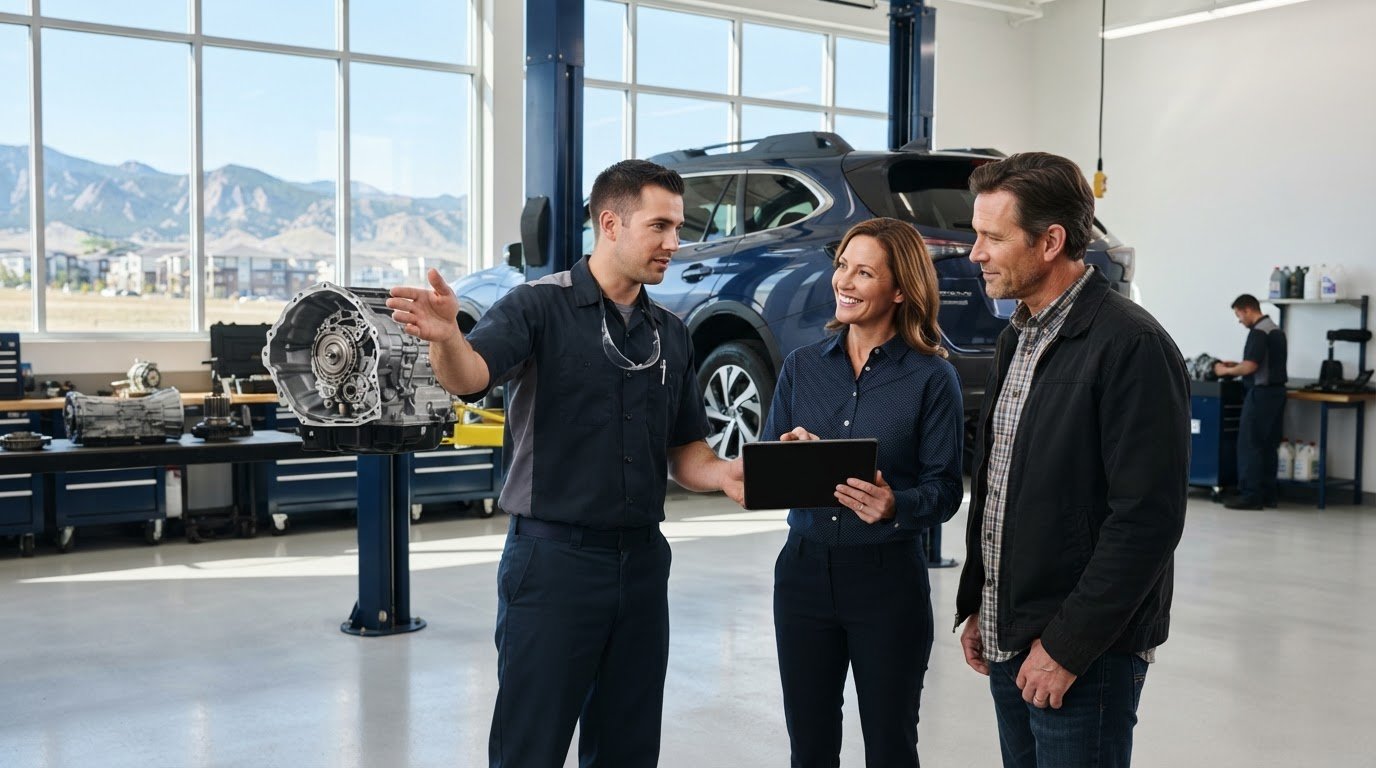
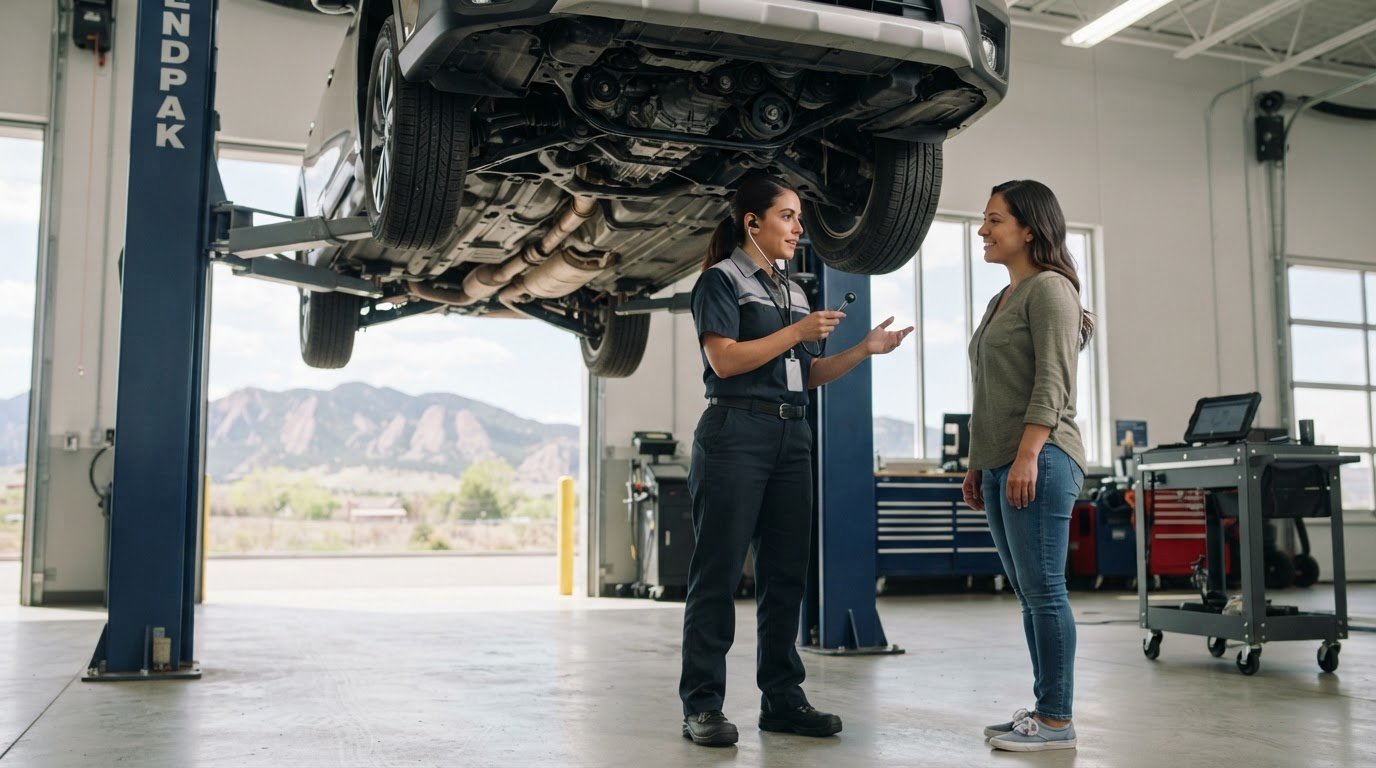
When you bring your vehicle to our Parker location, we start with a comprehensive road test. We need to feel the shift points and hear the noises you’re concerned about in real world conditions. This is followed by advanced computer scanning to check for communication errors between your car’s brain and the drivetrain. We perform both internal and external inspections to find the root cause. Is it a leaking seal, a clogged filter, or a faulty solenoid? We’ll sit down with you and explain our findings in plain English. We’ll show you the worn parts and explain how they impact your car’s performance, giving you a clear, no-nonsense look at your best move forward.
Your partner in automotive health
We aren’t just here to fix a gearbox; we’re here to keep your entire vehicle healthy for the long haul. Sometimes, a shifting issue is actually tied to engine repair needs or a sensor miscommunication elsewhere in the car. Our team looks at the synergy of your entire drivetrain to ensure we aren’t just treating a symptom. We help you weigh the pros and cons against your specific family budget, ensuring you don’t spend a penny more than necessary. Our closing promise to you is simple: you’ll get the same reliable, honest advice we’d give our own family members. When you’re ready for answers, we’re here to help you get back on the road with confidence.
Take the Next Step Toward a Reliable Ride
Deciding how to handle a drivetrain issue doesn’t have to be a stressful guessing game. You’ve learned how a professional diagnosis can often uncover a simple fix, and why matching your choice to your vehicle’s value and the rugged Douglas County terrain is the smartest move for your wallet. Our “WE FIX EVERYTHING” promise means we’re committed to finding the most reliable path forward, whether that’s a targeted repair or a full rebuild designed to handle Colorado’s steep mountain grades.
Don’t let the uncertainty of a potential transmission slipping repair cost keep you off the road. Our team of local experts brings specialized Ford and 4×4 knowledge to every inspection, ensuring your vehicle is ready for whatever the Rockies throw your way. We’re here to provide the honest, neighborly advice you deserve so you can make the best choice for your family’s safety and budget.
Schedule Your Professional Transmission Diagnostic in Parker Today
We look forward to seeing you at the shop and helping you drive with peace of mind again!
Frequently Asked Questions
Is it cheaper to rebuild or replace a transmission in 2026?
It’s usually more budget-friendly to rebuild your transmission because we focus on replacing only the worn internal components while keeping your original heavy-duty case. A full replacement involves the cost of a complete factory unit, which can be higher depending on the vehicle. We’ll help you look at the total transmission slipping repair cost versus the longevity of each option so you can choose the path that makes the most sense for your specific vehicle and goals.
How long does a typical transmission replacement take at your Parker shop?
A typical transmission replacement usually takes between one and three business days at our Parker location. This timeframe includes the removal of the old unit, the installation of the new or remanufactured one, and a thorough road test to ensure everything is performing perfectly. We know being without your car is a major hurdle for your family’s schedule, so we work efficiently to get you back on the Douglas County roads as quickly as possible.
Can I drive my car with a slipping transmission while I decide?
You shouldn’t continue driving your vehicle once the transmission begins to slip because it indicates internal friction materials are already failing. Each time the engine revs without moving the car forward, you’re generating intense heat that can turn a simple sensor repair into a total mechanical meltdown. It’s much safer for your drivetrain and your wallet to have the vehicle inspected as soon as you notice any hesitation or jerking.
Do you offer warranties on rebuilt transmissions for 4×4 trucks?
We absolutely provide warranties for our rebuilt 4×4 transmissions because we understand the unique stress Colorado mountain driving puts on your drivetrain. Whether you’re towing a trailer or navigating steep grades in your Jeep or Ford truck, we stand behind our technical mastery. We’ll walk you through the specific coverage details for your custom rebuild or remanufactured unit during your visit so you can drive with total peace of mind.
Will a new transmission increase the resale value of my car in Colorado?
A new or remanufactured transmission definitely adds significant resale value to your car here in Colorado. Buyers in our region prioritize drivetrain health because of our demanding terrain and high altitudes. Having a documented, high-quality transmission service or replacement shows potential buyers that the vehicle is reliable and ready for the hills, making your car much more attractive and valuable on the local market.
What are the most common signs that my transmission is failing beyond simple repair?
The most common signs of severe failure include a distinct burnt smell from the fluid, grinding noises while in gear, or a significant delay when you shift from park to drive. If you notice metal shavings in the fluid during a check, it usually means internal hard parts are breaking down. These symptoms often suggest that the transmission slipping repair cost might involve an internal overhaul rather than just a simple external fix like a solenoid swap.