Have you ever felt your steering wheel shimmy like a nervous habit every time you tap the pedal on a downhill stretch of I-70? Most drivers assume their brake rotors are physically bent out of shape, but the truth is often much more interesting and far less catastrophic. If you’re noticing a pulsating sensation or a vibrating seat, you’re likely searching for the signs you need new brakes Parker CO residents often encounter after a few trips into the high country. At Eagle Transmission & Auto Repair, we see this every day. It isn’t just about a warped piece of metal; it’s about how our unique Colorado environment changes the way your vehicle stops.
We understand that any unexpected vibration can lead to a bit of repair bill anxiety, especially when you’re responsible for the family’s safety. Our team lives by the motto “WE FIX EVERYTHING,” and that starts with giving you the facts. You’ll learn the real science behind brake shudder, why our thin mountain air and steep descents are so tough on your rotors, and how we can restore your stopping power for good. We’re going to dive into the difference between resurfacing and replacement so you can feel confident and safe behind the wheel again.
Key Takeaways
- Discover why “warped” rotors are usually a myth caused by uneven brake pad material sticking to the rotor surface rather than the metal actually bending.
- Identify the primary signs you need new brakes Parker CO drivers should watch for, including a vibrating steering wheel or a pulsating brake pedal during stops.
- Learn how Colorado’s steep mountain grades and high altitude contribute to thermal shock, which creates the common “brake shudder” felt on local commutes.
- Understand the difference between resurfacing a rotor on a professional brake lathe to save money and opting for a full replacement to ensure maximum safety.
- See how Eagle Transmission & Auto Repair applies our “WE FIX EVERYTHING” philosophy to diagnose the entire braking system, ensuring your family stays safe on every descent.
The Warped Rotor Myth: What is Really Happening to Your Brakes?
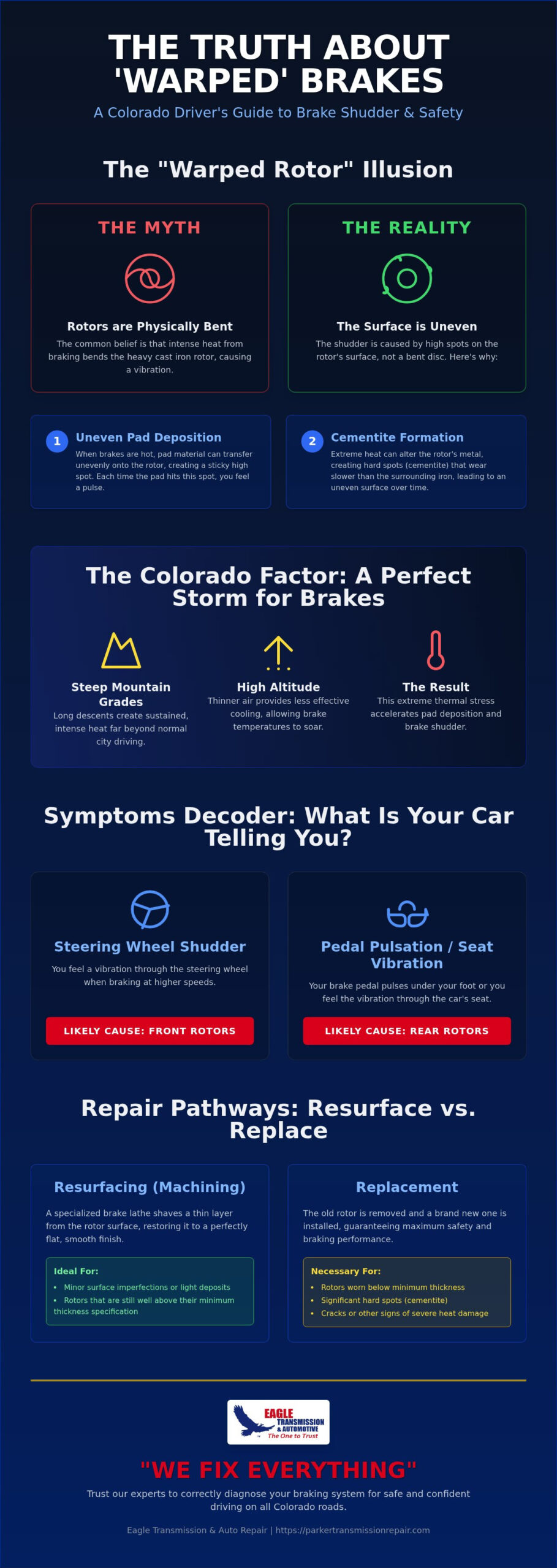
If you’ve ever walked into a shop and been told your rotors are “warped,” you probably pictured a piece of heavy metal twisted like a potato chip. In reality, cast iron rotors are incredibly rigid. They don’t actually bend under normal or even heavy driving conditions. When we talk about the signs you need new brakes Parker CO drivers often notice, that annoying steering wheel shimmy is usually caused by something much more subtle than a physical bend in the metal. At Eagle Transmission & Auto Repair, we believe in showing you the “why” behind the repair so you can drive with total confidence.
Think of your brake pads like a stack of sticky notes. When you’re coming down a steep grade in Parker or heading home from the mountains, your brakes get incredibly hot. If you come to a complete stop and keep your foot clamped on the pedal, some of that hot pad material can actually “glue” itself to the rotor in one specific spot. This is called uneven pad deposition. The next time you hit the brakes, the pads hit that extra layer of material, causing a vibration. Most mechanics use the term “warped” simply because it’s a quick way to describe a rotor that is no longer smooth, but understanding the real cause helps you prevent it from happening again.
Pad Material Deposition vs. Lateral Runout
It’s helpful to distinguish between pad deposition and lateral runout. Pad deposition is an “additive” problem where material builds up on the surface. Lateral runout is a “positional” problem where the Disc brake rotor isn’t sitting perfectly flush against the wheel hub. Whether it’s a buildup of old pad resin or a hub that needs cleaning, the result feels the same: a pulsating pedal that makes you wonder if your car is falling apart. Because our motto is “WE FIX EVERYTHING,” we don’t just swap parts; we find out which of these two issues is actually causing your trouble to ensure a reliable brake replacement when it’s truly needed.
The Science of Cementite
When rotors face extreme thermal stress, the cast iron can actually undergo a molecular change. Intense heat can turn portions of the iron into a very hard substance called cementite. These hard spots don’t wear down as fast as the rest of the rotor. As the surrounding metal wears away, these “icebergs” of hard metal stick out, leading to that classic brake shudder. This is one of the most common signs you need new brakes Parker CO vehicle owners experience after heavy mountain hauling or towing. Proper brake pad bedding, which is the process of gradually warming up new brakes to distribute material evenly, is the best way to keep these hard spots from forming in the first place.
Signs You Need New Brakes: Is Your Car Sending a Warning?
Your vehicle is actually quite talkative if you know how to listen. When you’re driving around Douglas County, you might notice your car acting differently than it did just a few months ago. Recognizing the signs you need new brakes Parker CO drivers often overlook can be the difference between a quick pad service and a much larger repair bill. At Eagle Transmission & Auto Repair, we want to help you decode these messages. Our goal is to ensure your family stays safe whether you’re running errands downtown or heading out for a weekend in the mountains.
The most common warning isn’t a light on the dash. It’s a physical sensation. You might feel a rhythmic thumping or a shimmy that wasn’t there before. These sensations are your car’s way of telling you that the relationship between your brake pads and rotors has become “unbalanced.” Because we live by the motto “WE FIX EVERYTHING,” we’ve seen every version of these symptoms, from the subtle pulse to the violent shake.
Steering Wheel Shudder vs. Pedal Pulsation
If your steering wheel starts shaking the moment you apply pressure at highway speeds, your front rotors are likely the culprits. The front brakes handle the majority of your vehicle’s stopping power, so they absorb the most heat. However, if you feel a vibration in your seat or strictly through the brake pedal, the rear rotors are usually the cause. You can perform a simple test in a safe, flat area. Try a very light stop from about 10 mph. If you feel a “catch and release” sensation as the car rolls to a stop, it’s a confirmed sign of uneven rotor surfaces.
Noisy Braking and Visual Heat Cues
Sound is another major warning sign. While a high-pitched squeal often means the wear indicator is doing its job, a deep grinding sound suggests metal-on-metal contact. If you look through your wheel spokes, you might see a blueish or rainbow tint on the metal. This “blueing” is a sign of extreme overheating, which we often see on heavy-duty trucks like the Ford F-250 after descending steep grades. You might also spot tiny “heat cracks” or spider-webbing on the rotor face. If you see these signs that diagnosis and repair should be scheduled, it’s best to act quickly.
We take pride in being your neighborly experts. Whether it’s a minor squeak or a concerning shudder, our team can perform a thorough brake repair and replacement to restore your peace of mind. If you’re worried about a new vibration, you can always find our shop on Parkglenn Way for a quick professional look at your braking system.
The Colorado Factor: Why Mountain Driving is Brutal on Rotors
Parker drivers face a unique set of challenges that vehicle owners in flatter parts of the country simply don’t understand. Between our high elevation and the steep grades of the Front Range, your vehicle’s braking system is under constant thermal stress. When we talk about the signs you need new brakes Parker CO locals report, we often find that the environment is the primary culprit. Thin air at our 5,900-foot elevation doesn’t just make it harder for us to breathe; it makes it significantly harder for your rotors to shed heat. Since air is the primary cooling agent for your braking system, the reduced atmospheric density means your brakes stay hotter for longer after a long descent.
This heat build-up is amplified when you’re towing a trailer or hauling a heavy load in your truck through Douglas County. Coming down a long grade creates a massive amount of friction. If you “ride” the brakes the whole way down, you’re essentially turning your rotors into glowing heaters. At Eagle Transmission & Auto Repair, we see the aftermath of this every season. Our “WE FIX EVERYTHING” approach means we look at the whole picture, from your transmission’s ability to help you downshift to the condition of your brake fluid. We want to ensure your vehicle is prepared for the specific demands of Colorado life.
Mountain Driving and Heat Management
The most critical moment for your brakes often happens right after the descent. If you’ve just come down a steep hill and immediately hit a stoplight or heavy stop-and-go traffic, the heat has nowhere to go. Without the airflow of a moving vehicle, that heat “soaks” into the metal components, which is when pad material transfer and surface damage usually occur. To protect your vehicle, we recommend using engine braking. By downshifting your transmission, you allow the engine to help control your speed. This practice saves your brake repair Parker CO for when you truly need it. It’s a simple habit that can significantly extend the life of your rotors.
Winter Weather and Rotor Corrosion
Colorado winters add another layer of complexity to your brake health. Local road crews use magnesium chloride and salt to keep our streets safe, but these chemicals are brutal on cast iron. These substances can lead to pitting and corrosion on the rotor surface, which creates an uneven texture that you’ll feel in the pedal. Additionally, hitting a deep puddle of slush with hot rotors causes rapid, uneven cooling. This thermal shock can lead to surface cracks. Keeping an eye out for the signs you need new brakes Parker CO residents often see after a heavy snow season is vital for your safety. A quick seasonal inspection after the spring thaw can catch these corrosive issues before they compromise your stopping distance.
Resurfacing vs. Replacement: Which Fix is Right for You?
Once you’ve identified the signs you need new brakes Parker CO drivers often encounter, the next big question is whether you can save your current rotors or if it’s time for a fresh set. This is a crossroads where professional expertise makes a huge difference. Resurfacing, which many people call “turning” or “machining,” involves using a precision brake lathe to shave off a tiny, uniform layer of metal. This removes those uneven pad deposits and hard spots we discussed earlier, leaving you with a perfectly flat surface for your new pads to grip.
However, we always put safety first. Every rotor has a “Minimum Thickness” measurement stamped directly into the metal by the manufacturer. If a rotor is already near that limit, machining it further makes the metal too thin to safely dissipate heat. In our Colorado climate, a thin rotor is a liability. It will heat up much faster and is far more likely to develop that annoying shudder again within just a few thousand miles. At Eagle Transmission & Auto Repair, our “WE FIX EVERYTHING” philosophy means we won’t suggest a temporary patch that we know won’t last through a summer of mountain driving.
When Can Your Rotors Be Saved?
Your rotors are usually candidates for resurfacing if they have plenty of “meat” left on them and don’t show signs of deep thermal damage. We see this most often with older heavy-duty trucks or classic vehicles that were built with beefier cast iron components. To do the job right, the technician must achieve a non-directional finish. This ensures the new pads can “bed in” or seat properly without creating squeaks or vibrations. If your rotors meet these criteria, turning them is a great way to maintain performance while keeping your repair costs down.
The Case for New Rotor Installation
For most modern cars and SUVs, and especially when we’re performing Ford truck repairs, we typically recommend installing new rotors. Modern manufacturers design rotors to be as light as possible to improve fuel economy, which leaves very little room for machining. By starting with new rotors, you ensure the best possible bond between the pad and the metal. Many high-quality aftermarket rotors are actually better suited for our local terrain than the original factory equipment because they feature improved venting to handle high-altitude heat. If you’re ready to get rid of that pedal pulse for good, visit our shop in Parker for a digital inspection and a clear, honest recommendation on your braking system.
Professional Brake Solutions at Eagle Transmission & Auto Repair
When you notice those signs you need new brakes Parker CO drivers often describe, you need a team that looks at more than just a checklist. At Eagle Transmission & Auto Repair, we don’t just swap parts and send you on your way. We take a holistic look at your vehicle. Because our motto is “WE FIX EVERYTHING,” we understand that a brake vibration might actually be rooted in your suspension or even a drivetrain issue. This comprehensive approach is what has made us a trusted name for Parker auto repair for decades.
We specialize in the vehicles our community loves most. Whether you’re driving a heavy duty Ford F-150 that spends its weekends towing or a family SUV that handles the daily school run, we know exactly where these systems tend to fail under Colorado’s unique conditions. Transparency is the foundation of our relationship with you. We’ll show you exactly what’s happening with your vehicle, explain the science behind it, and help you make a decision that keeps your loved ones safe without unnecessary costs. We’re your neighbors, and we want you to feel as comfortable in our shop as you do in your own living room.
Beyond the Rotors: A Complete Safety Inspection
Sometimes, a “warped” sensation isn’t about the rotor metal at all. A stuck brake caliper can cause one side of your system to overheat, leading to the localized pad deposition we discussed earlier. We also check your wheel bearings and hubs. If a hub has even a tiny amount of “runout” or wobble, it will cause a brand-new rotor to feel like it’s vibrating immediately. Additionally, we test your brake fluid for moisture content. In our high altitude environment, moisture in the fluid can lower the boiling point significantly. This leads to dangerous brake fade on long mountain descents, a risk no Colorado driver should take.
Schedule Your Brake Inspection in Parker Today
Ignoring that steering wheel shimmy doesn’t just make for an annoying drive. Over time, that constant vibration can shake your suspension components loose. This leads to much more expensive repairs like tie rod or ball joint replacement. We help you choose the right materials for your specific needs, whether you need heavy duty ceramic pads for towing or a softer compound for quiet city driving. Recognizing the signs you need new brakes Parker CO residents experience is the first step, but taking action is what keeps you safe. If you’re ready for a professional diagnosis and repair session, our team is here to help you get back on the road with total confidence.
Restore Your Stopping Power and Peace of Mind
Understanding the truth behind “warped” rotors means you can stop worrying about bent metal and start focusing on real solutions. Whether your vehicle is suffering from uneven pad deposits or the thermal stress of a daily mountain commute, identifying the signs you need new brakes Parker CO vehicle owners often face is the first step toward a safer drive. We’ve been your local Parker experts since 1983. We provide specialized care for everything from family SUVs to heavy duty Ford and Diesel trucks. Our team knows exactly how Colorado’s high altitude and steep grades affect your vehicle’s health.
At Eagle Transmission & Auto Repair, our “WE FIX EVERYTHING” promise means we look at your entire braking and drivetrain system to find the root cause of every vibration. You don’t have to settle for a shaky steering wheel or a pulsating pedal. Let our experienced technicians provide the honest diagnostics and high quality repairs you deserve to keep your family safe on the road.
Frequently Asked Questions
Is it safe to drive with warped rotors?
It is generally not safe to continue driving with rotors that are causing a significant vibration. While your car may still stop, the uneven surface reduces the efficiency of your brake pads and can lead to increased stopping distances. Over time, the constant shaking can also damage your tires and suspension components like ball joints. If you are noticing these signs you need new brakes Parker CO conditions often cause, it’s best to get them checked immediately. At Eagle Transmission & Auto Repair, our WE FIX EVERYTHING motto means we prioritize your safety above all else.
How much does it cost to fix warped rotors in Parker, CO?
The cost to address rotor issues varies depending on whether your vehicle needs a simple resurfacing or a full replacement. Factors like the size of your vehicle and whether you drive a heavy duty truck like a Ford F-250 will influence the parts and labor required. Higher quality aftermarket rotors designed for mountain driving may also affect the final price. We recommend a professional diagnosis at our Parker shop to determine the most cost-effective and safe path forward for your specific car or truck.
Can I fix warped rotors by just changing the brake pads?
No, simply changing the brake pads won’t fix a vibration caused by the rotors. If you put smooth new pads on a rotor with uneven material deposits or hard spots, the new pads will quickly wear unevenly to match the rotor’s surface. This often results in the vibration returning almost immediately. For a long term fix, the rotors must be either resurfaced on a precision brake lathe or replaced entirely to ensure a smooth, safe stop.
How long do brake rotors typically last in Colorado?
In Colorado, brake rotors often last between 30,000 and 70,000 miles, but this range can be much lower for frequent mountain drivers. The extreme heat from descending steep grades and the corrosive effects of winter road chemicals in Douglas County can accelerate metal wear. Regular inspections are the only way to know for sure how much life is left in your specific braking system. We often see rotors wear out faster on vehicles that frequently tow heavy loads through the foothills.
Why do my brakes only shake when I am driving down from the mountains?
Your brakes shake on mountain descents because the intense heat causes the metal and pad deposits to expand. When the rotors are cool, the surface imperfections might be too small to feel. Once they reach high temperatures during a long downhill stretch, those uneven spots become more pronounced against the brake pads. This is a classic example of the signs you need new brakes Parker CO drivers experience after a weekend trip to the high country.
Will turning my rotors make them thinner and more likely to warp again?
Yes, resurfacing or “turning” a rotor does make it thinner because a layer of metal is removed to smooth the surface. Since there is less mass to absorb heat, the rotor will reach higher temperatures more quickly than a brand-new one. If the rotor is machined too close to its minimum thickness, it becomes much more susceptible to developing new heat spots and vibrations during heavy use. We always measure your rotors first to ensure they can be safely turned.
What is the best way to prevent my rotors from warping in the future?
The best prevention method is using engine braking to control your speed on steep hills rather than riding your brakes. By downshifting your transmission, you allow the engine to do the heavy lifting and keep your rotors cool. Additionally, making sure your new brakes are properly “bedded in” after installation helps create an even layer of material on the rotor surface. This simple habit protects your investment and keeps your stopping power consistent throughout the changing Colorado seasons.