What if your vehicle’s “lifetime” transmission fluid is actually designed to last only until your warranty expires, leaving you with a massive repair bill just a few miles later? It’s a question we hear often at Eagle Transmission & Auto Repair, especially from neighbors in Parker who are tired of getting conflicting answers from every manual and mechanic they meet. When you’re trying to figure out how often to change transmission fluid, the advice can feel like a moving target that shifts depending on who you ask.
We understand the confusion and the very real fear that a transmission flush might do more harm than good on an older vehicle. Our team believes that “WE FIX EVERYTHING” starts with preventing the break in the first place through honest, expert education. This guide will show you the exact service intervals needed for Colorado’s steep mountain grades and thin air. You’ll learn why 2026 driving conditions demand a specific schedule, the difference between various service types, and the warning signs that your fluid is failing before it turns into a costly repair. We’re here to help you protect your car and your budget with clear, local expertise.
Key Takeaways
- Colorado’s unique mountain terrain and seasonal weather require a more proactive maintenance schedule than most generic owner’s manuals recommend.
- We provide clear guidelines to help you determine how often to change transmission fluid based on your specific driving habits in Douglas County.
- You’ll understand the critical difference between a transmission flush and a drain and fill service, ensuring you choose the safest option for your vehicle’s mileage.
- Learn how to spot early warning signs of fluid failure, like unusual smells or slipping gears, to prevent minor issues from becoming major mechanical breakdowns.
- At Eagle Transmission & Auto Repair, we apply our “WE FIX EVERYTHING” philosophy to provide comprehensive 2026-standard inspections for every neighbor in Parker.
Why Transmission Fluid Maintenance Matters for Colorado Drivers
Think of your transmission as the heart of your vehicle’s mobility. For drivers in Parker, Colorado, the strain on this system is significantly higher than in flatter, lower-altitude regions. Understanding how often to change transmission fluid isn’t just a matter of checking a box on a generic maintenance list; it’s a vital step in protecting one of your car’s most complex and expensive components. At Eagle Transmission & Auto Repair, we’ve seen firsthand how proactive care saves our neighbors from the stress of unexpected mechanical failures.
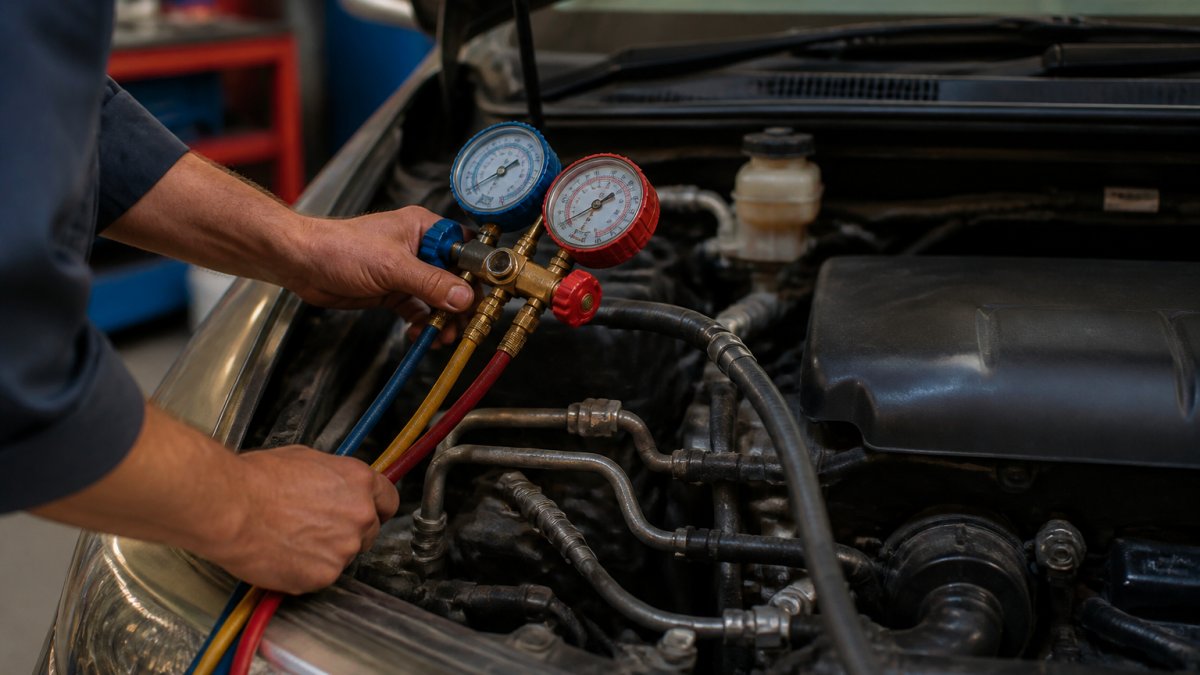
Automatic transmission fluid (ATF) serves as the lifeblood of your vehicle’s drivetrain. It isn’t just there to keep things slippery. It provides the essential cooling, lubrication, and hydraulic pressure required for your car to function. When this fluid breaks down, it leads directly to increased friction, overheating, and eventually, total mechanical failure. Our “WE FIX EVERYTHING” philosophy is rooted in the belief that a little bit of prevention today prevents a massive headache tomorrow.
The Role of Fluid in Your Drivetrain
Your transmission fluid is like the “blood pressure” of your car. It flows through a sophisticated maze of hydraulic valves to enable smooth gear shifting. Without the right pressure, those shifts become harsh, delayed, or non-existent. Beyond shifting, the fluid contains special additives designed to clean internal parts and prevent sludge buildup. Over time, these additives lose their effectiveness, allowing debris to accumulate and damage sensitive components. Keeping this fluid fresh ensures your transmission repair needs stay at a minimum.
High Elevation and Mountain Driving Impacts
Driving in Colorado presents unique challenges that most manufacturer manuals don’t fully account for. Whether you’re climbing I-70 for a weekend getaway or navigating the daily commute through Castle Rock, your transmission is working overtime. Heat is the number one enemy of transmission fluid. In our high-elevation environment, the air is thinner, which makes it harder for your vehicle’s cooling system to shed excess heat. This causes the fluid to oxidize and thicken much faster than it would at sea level. When the fluid gets too hot, it loses its ability to protect your gears, making the question of how often to change transmission fluid a critical one for every local driver.
Recommended Service Intervals: Manufacturer vs. Real-World Driving
It’s a common phrase in modern car sales: “lifetime” transmission fluid. While that sounds like one less thing to worry about, it’s often a marketing tactic to lower the perceived cost of ownership during the warranty period. At Eagle Transmission & Auto Repair, we know that “lifetime” usually means the lifetime of the warranty, not the actual life of your vehicle. If you want your car to last 200,000 miles or more, you need to look past the sales brochure. When deciding how often to change transmission fluid, you have to consider the mechanics of the machine, not just the marketing claims.
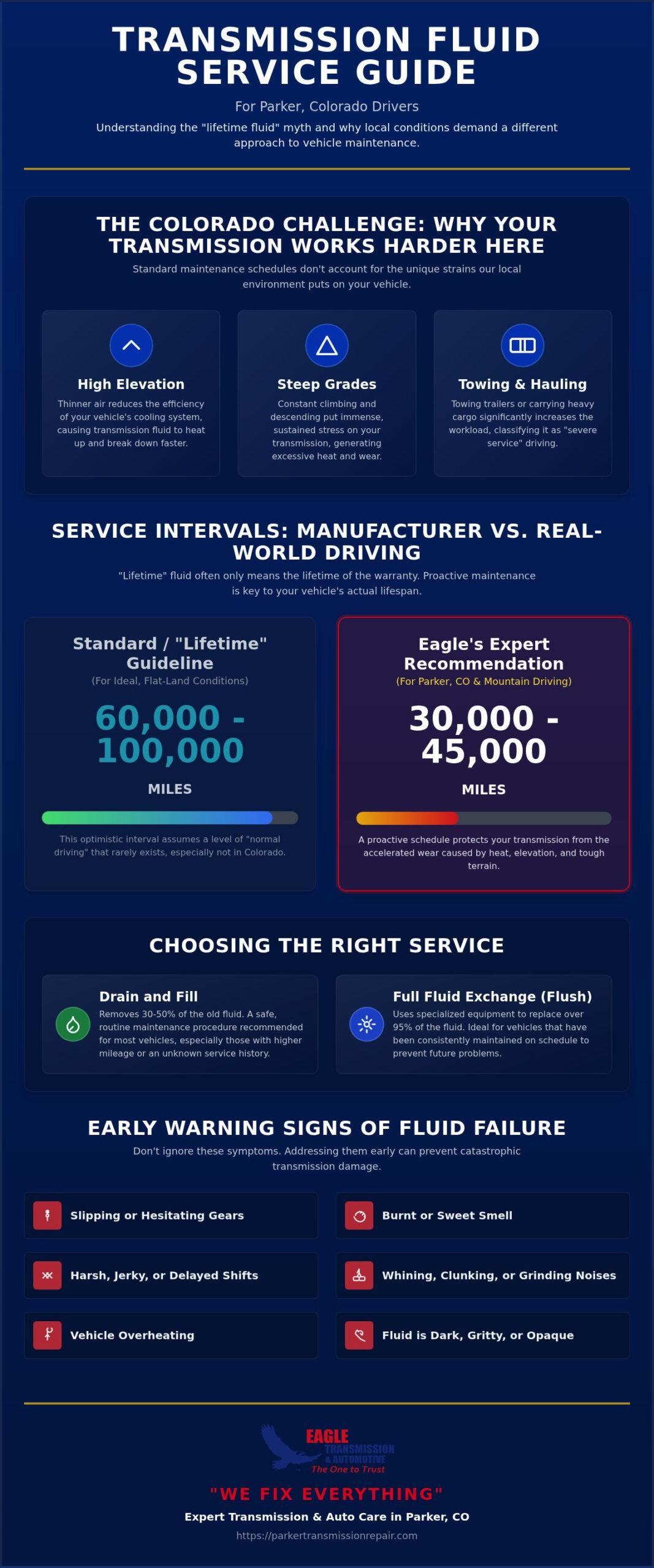
Choosing expert transmission service in Parker involves understanding your specific vehicle’s needs. Because we live by the motto “WE FIX EVERYTHING,” we’ve seen the results of both neglected and well-maintained systems across all makes and models. The following table highlights the gap between ideal conditions and the reality of driving in Douglas County.
| Driving Condition | Typical Interval | Recommended Action |
|---|---|---|
| Standard (Flat land, mild weather) | 60,000 – 100,000 Miles | Check fluid level annually |
| Severe (Parker, CO / Mountains) | 30,000 – 45,000 Miles | Full inspection every 30k miles |
| Heavy Towing / Work Trucks | 30,000 Miles | Regular fluid health checks |
Standard Maintenance Schedules
Typical 60,000 to 100,000-mile intervals are designed for vehicles driven in flat-land, temperate environments. These numbers are often optimistic because they assume “normal” driving, which rarely exists in the real world. While your owner’s manual is a vital baseline, it doesn’t account for the unique stress of our local geography. If you aren’t sure where your vehicle stands, you can always stop by our shop on Parkglenn Way for a quick fluid health check.
Severe Service Intervals for Parker and Douglas County
Parker is the definition of a “Severe Service” environment. Between the stop-and-go traffic in Aurora and the long periods of winter idling, your transmission works incredibly hard. For Colorado drivers, the 30,000 to 45,000-mile range is the sweet spot to prevent internal wear. This is especially true for those needing Ford truck drivetrain repair or maintenance on heavy-duty diesel engines. Towing a trailer up a mountain pass or navigating icy hills puts immense pressure on your gears, making frequent fluid changes the cheapest insurance policy you can buy for your car.
Choosing the Right Service: Transmission Flush vs. Drain and Fill
Once you determine how often to change transmission fluid for your specific vehicle, the next step is deciding which method is best for your car’s current health. At Eagle Transmission & Auto Repair, we don’t believe in a one-size-fits-all approach. Choosing between a transmission flush vs drain and fill is a decision that should be based on your vehicle’s mileage, its maintenance history, and our professional diagnostic findings. Because our motto is “WE FIX EVERYTHING,” we prioritize the method that protects your drivetrain for the long haul.
Regardless of the method chosen, replacing the filter is a non-negotiable part of our process. A fresh filter ensures that the new fluid remains clean and can flow freely through the system. Think of it like changing your home’s air filter; you wouldn’t want to blow clean air through a clogged, dirty screen. This attention to detail is what helps our Parker neighbors avoid the high costs of premature mechanical failure.
When a Transmission Flush is the Best Option
A professional transmission flush is like a complete reset for your vehicle’s drivetrain. Using specialized exchange machines, we remove nearly 100% of the old, oxidized fluid and contaminants from the entire system, including the torque converter and cooler lines. This service is ideal for low-mileage vehicles, typically those under 60,000 to 70,000 miles, that have followed a regular maintenance schedule. By replacing all the fluid at once, you ensure that the additives are at full strength to provide maximum cooling and lubrication for your next 30,000 miles of Colorado driving.
The Safe Drain and Fill for High-Mileage Vehicles
If your vehicle has higher mileage or a spotty maintenance history, a “power flush” can actually be risky. Over time, neglected transmissions develop a layer of varnish and sludge on internal components. A high-pressure flush can dislodge this debris, sending it into the tiny passages of the valve body and causing a total blockage. This is why many drivers fear flushes on older cars. In these cases, we recommend a gentle drain and fill.
A drain and fill replaces about 40% to 60% of the fluid safely. We perform this by dropping the transmission pan, which allows us to:
- Inspect the bottom of the pan for internal metal shavings or “clutch mud.”
- Clean the pan magnets that collect wear particles.
- Replace the internal filter.
- Check the condition of the pan gasket to prevent future leaks.
This method introduces fresh detergents gradually, reducing the risk of shocking an older system while still improving overall fluid health.
How to Tell if Your Transmission Fluid is Failing
While knowing how often to change transmission fluid is a great baseline, your car often has its own way of telling you when it’s time for a service. At Eagle Transmission & Auto Repair, we want to empower you to spot these red flags before they turn into a major headache. If your vehicle still has a traditional dipstick, checking your fluid health is as simple as pulling it out and wiping it on a white paper towel. If you have a newer “sealed” unit without a dipstick, you’ll need to pay closer attention to how the car feels during your daily drive through Douglas County. Catching a problem early is the difference between a simple maintenance visit and needing a full transmission repair Parker CO drivers want to avoid.
If your dashboard lights up, don’t ignore it. Modern vehicles have sensors that monitor everything from fluid temperature to gear ratios. A flashing light or a steady warning often points to a specific electronic or hydraulic issue. We recommend a professional check engine light diagnosis to pull the specific codes and find the root cause. Our “WE FIX EVERYTHING” motto means we don’t just clear the code; we find out why it triggered in the first place to keep you safe on the road.
Visual Inspection: The Fluid Color Guide
Healthy fluid is bright red and has a slightly sweet smell. As it ages and faces the heat of Colorado mountain driving, it begins to change. If the fluid is brown or opaque, oxidation has started. This is your sign that a service is due soon to prevent internal wear. If the fluid is black or has a distinct burnt toast smell, your transmission is in immediate danger. At this stage, we usually advise against a flush, as the burnt fluid often contains friction material that is actually helping the worn gears grip. Instead, you should visit our shop on Parkglenn Way for a comprehensive diagnostic to see what can be saved.
Performance Symptoms to Watch For
Performance issues are often the first sign that you’ve waited too long to ask how often to change transmission fluid. You might notice a “delayed engagement,” where you shift into Drive but have to wait a second or two for the car to actually move. You might also experience slipping gears, where the engine revs up high like it’s in neutral, but the car doesn’t accelerate. Strange noises are another common symptom. A whining sound often points to a clogged filter or a struggling pump, while clunking during gear transitions suggests mechanical wear that needs immediate attention from a specialist.
Professional Maintenance at Eagle Transmission & Auto Repair
Eagle Transmission & Auto Repair isn’t just another shop; it’s a staple of the Parker community. We’ve spent decades serving neighbors across Douglas County, from the heart of downtown Parker to the growing outskirts. Our commitment to you goes beyond just answering how often to change transmission fluid. It’s about providing a reliable sanctuary for your vehicle in an industry that can often feel cold or intimidating. When you walk through our doors, you’re not just a customer; you’re a neighbor we want to keep safe on the road.
Our 2026 inspection process is built on total transparency. We use modern diagnostics to show you exactly what’s happening inside your gearbox. This isn’t just about the transmission, either. Our motto is “WE FIX EVERYTHING,” which means we bring the same level of mastery to reliable engine repair in Parker, differentials, and general maintenance. By looking at the vehicle as a whole system, we can spot how a cooling issue might be stressing your transmission fluid, or how a suspension problem might be affecting your drivetrain’s health.
Our Maintenance Philosophy
We believe in treating every car like it belongs to our own family. That means we give you the same advice we’d give our own parents or children. You won’t find high-pressure sales tactics at Eagle Transmission & Auto Repair. Instead, you’ll get honest, expert recommendations based on the actual condition of your fluid and components. Whether you drive a domestic workhorse like a Ford or Jeep, or a precision-engineered import, our specialists have the training to handle it. We know that trust is earned through consistent, high-quality work and clear, neighborly communication.
Scheduling Your Transmission Health Check in Parker
For drivers in Centennial or Castle Rock, getting expert care is just a short drive away. We make the process simple because we know your time is valuable. When you visit Eagle Transmission & Auto Repair for the first time, expect a warm welcome and a thorough, jargon-light explanation of our findings. We’ll help you establish a personalized schedule for how often to change transmission fluid based on your specific commute, mountain driving habits, and towing needs. Don’t wait for a warning light to tell you there’s a problem. Schedule your fluid check today to beat the harsh Colorado winter and ensure your vehicle stays reliable all year long.
Protect Your Vehicle for the Colorado Roads Ahead
Your transmission is a sophisticated system that deserves more than a “one size fits all” approach to maintenance. We’ve explored how Colorado’s unique terrain demands a proactive schedule and why choosing the right service type is critical for your car’s longevity. Now that you understand how often to change transmission fluid in our local environment, you have the knowledge to prevent the friction and heat that lead to mechanical failure.
At Eagle Transmission & Auto Repair, we take pride in being Douglas County’s specialized Ford and diesel repair experts. We’ve served neighbors in Parker, Centennial, and Castle Rock for decades with a focus on transparency and real expertise. Whether you’re dealing with a slipping gear or just want to stay ahead of the winter weather, our “WE FIX EVERYTHING” motto ensures your vehicle is in the best possible hands.
Don’t let a small maintenance task turn into a major repair. Schedule your professional transmission service at Eagle Transmission & Auto Repair today and experience the difference of neighborly care. We’re here to keep you and your family moving safely across the Front Range!
Frequently Asked Questions
Is it true that changing transmission fluid on a high-mileage car causes it to fail?
Changing your fluid doesn’t cause failure, but the method you choose matters for older vehicles. If a car has high mileage and neglected fluid, a high-pressure flush could dislodge sludge that clogs narrow internal passages. At Eagle Transmission & Auto Repair, we often recommend a gentle drain and fill for these vehicles. This replaces a portion of the fluid safely without shocking the system. It’s about choosing the right approach for your car’s specific history.
What is the difference between a transmission flush and a fluid change?
A transmission flush uses a professional machine to replace nearly 100% of the fluid throughout the entire system, including the cooler lines. A fluid change, or “drain and fill,” only replaces the fluid in the pan, which is usually about half of the total volume. When deciding how often to change transmission fluid, remember that a flush is a deep clean for healthy systems, while a change is a safer maintenance step for older gearboxes.
Can I just top off my transmission fluid instead of changing it?
Topping off your fluid is only a temporary fix for a low level; it doesn’t address the quality of the fluid. Over time, transmission fluid loses its ability to cool and lubricate due to heat and debris. Simply adding fresh fluid to a dirty system won’t restore the protective additives or remove the contaminants that cause wear. If you’re constantly low, you likely have a leak that needs a professional diagnosis at our Parker shop.
How much does a typical transmission fluid service cost in Parker, CO?
The cost of a transmission service depends on several factors, including your vehicle’s make, the type of specialized fluid required, and whether you choose a flush or a drain and fill. Modern synthetic fluids and CVT fluids are generally more expensive than traditional types. We prioritize transparency and provide honest recommendations based on your car’s needs. We invite you to visit us for a personalized estimate tailored to your specific truck or car.
Does my manual transmission need a fluid change as often as an automatic?
Yes, manual transmissions require regular fluid changes, though the intervals and fluid types differ. Most manufacturers recommend replacing manual transmission gear oil every 30,000 to 60,000 miles. Because manual gearboxes rely on the fluid to protect heavy gears from metal on metal contact, neglecting this service can lead to difficult shifting and noisy operation. Our “WE FIX EVERYTHING” motto includes specialized care for manual transmission repair and clutch replacement for all local drivers.
What happens if I never change my transmission fluid?
If you never change your fluid, it will eventually turn into a thick, gritty sludge that can’t provide cooling or lubrication. This leads to internal overheating, which is the primary cause of transmission failure. You’ll likely experience slipping gears, harsh shifting, and eventually a total mechanical breakdown. In our Colorado climate, the combination of mountain driving and winter idling accelerates this breakdown, making regular maintenance the best way to avoid a full rebuild.