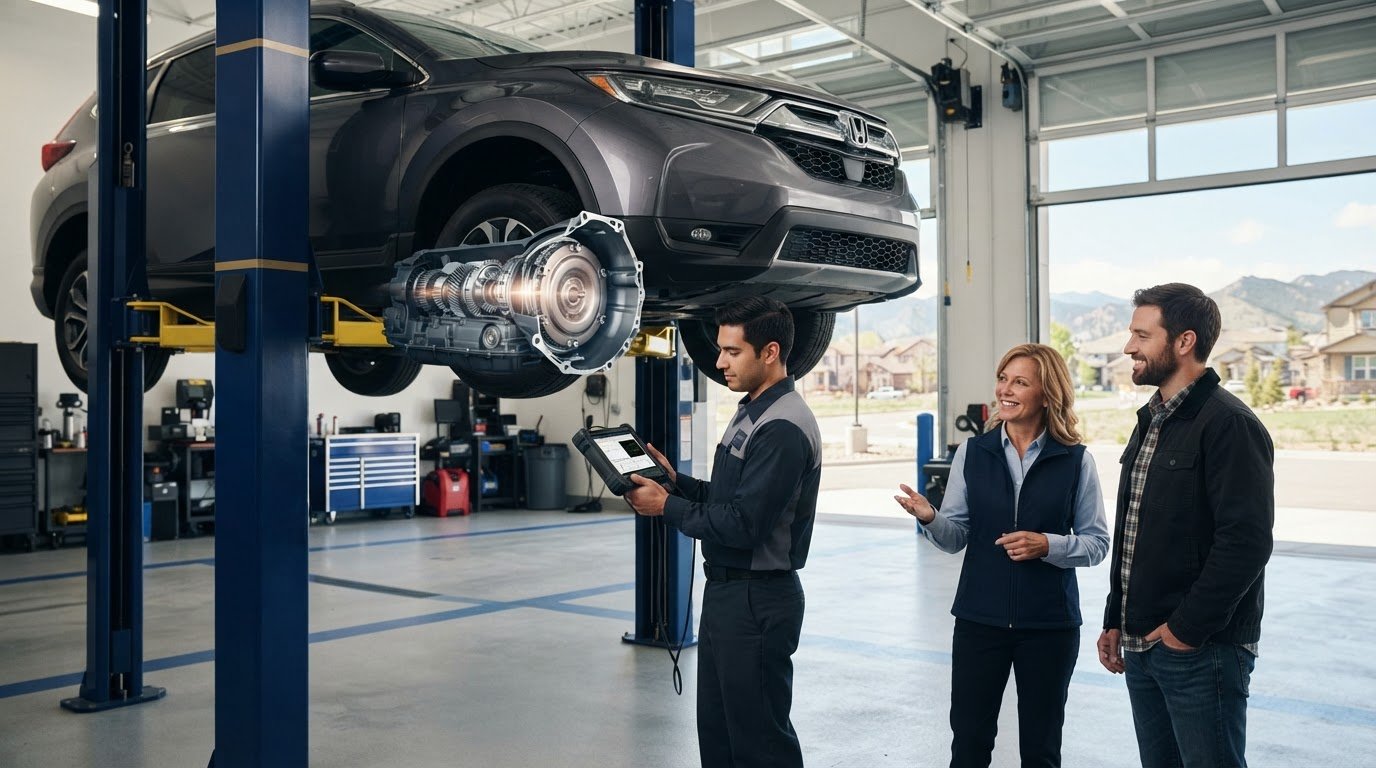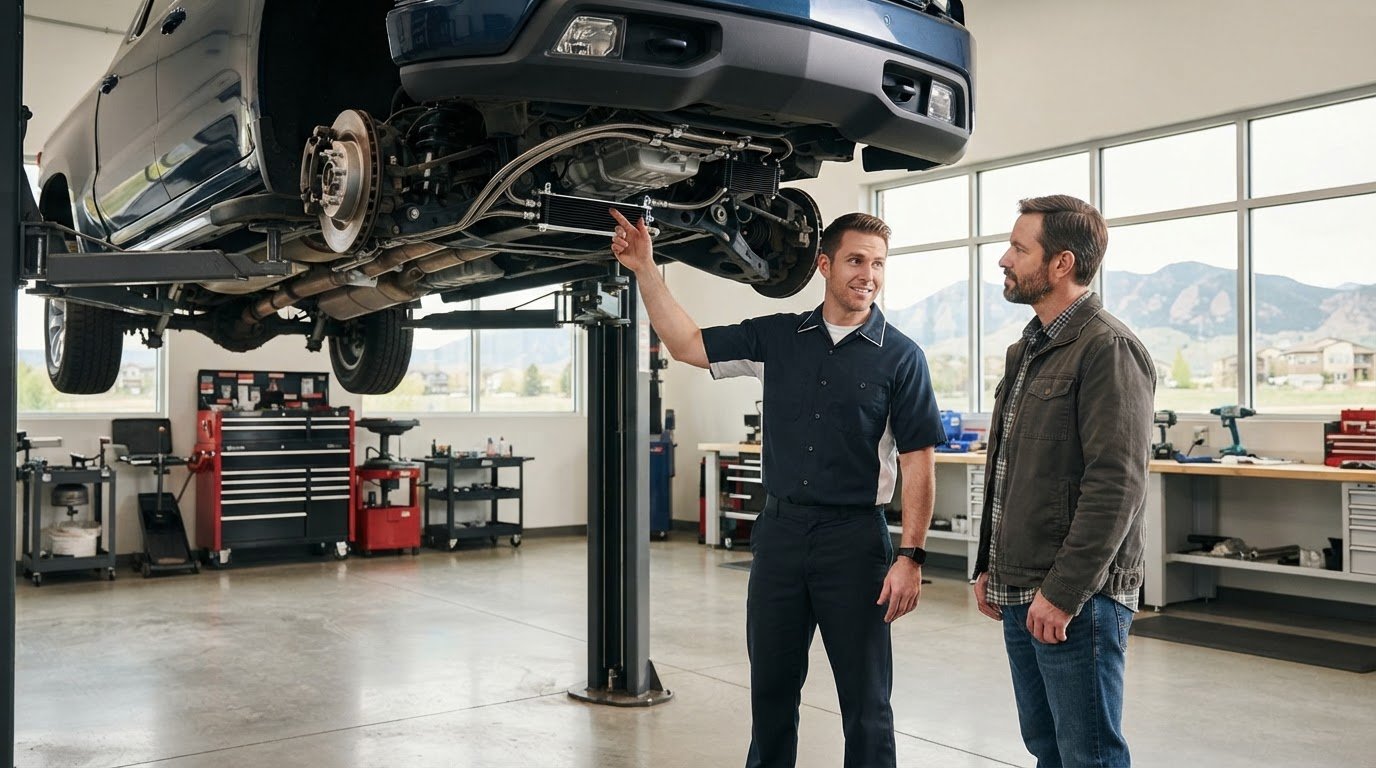
Could adding a transmission cooler be the wrong move for your vehicle? It depends on how the vehicle is designed and used. For some drivers, towing or climbing steep grades can make extra cooling worth discussing. For others, the factory setup may suit their needs. Transmission cooler installation Parker drivers consider should be based on vehicle compatibility and real driving demands, not a one size fits all recipe.
It’s reasonable to have questions about cooler types, fitment, and how added lines connect with existing components. A setup that doesn’t suit the vehicle, or is routed poorly, may not cool effectively and could create leak concerns. This guide explains why auxiliary coolers are used, how common designs differ, and which details about your vehicle and driving habits can shape the decision. You’ll also learn what installation considerations to discuss, so you can weigh the options with a clearer picture. If you’re noticing transmission concerns, diagnosis can help clarify whether cooling is part of the issue or whether another repair approach makes more sense.
Key Takeaways
- A transmission cooler is a vehicle specific choice. Your vehicle’s design and how you use it help determine whether an additional cooler makes sense.
- Factory, auxiliary, and replacement cooler arrangements involve different fitment, mounting, and routing considerations.
- For a transmission cooler installation Parker discussion, bring your vehicle details, symptoms, towing habits, and relevant repair records.
- Installation planning generally considers vehicle configuration, cooler fitment, line routing, and operation checks. This overview is not a vehicle specific do it yourself procedure.
- Transmission diagnostics can help put fluid or cooling concerns in context and guide the next repair conversation.
Why consider transmission cooler installation for your vehicle?
Transmission cooler installation is a vehicle specific decision, not a universal upgrade. A transmission cooler is a component that helps manage heat carried by transmission fluid. Whether adding one makes sense depends on the vehicle’s existing cooling design and how it’s used, including whether it regularly tows or handles other demanding work.
For drivers weighing transmission cooler installation Parker options, the useful first question is not simply which cooler to buy. It’s whether the vehicle’s current setup and operating demands call for a change. A cooler that suits one vehicle may not suit another, so vehicle specific assessment matters before choosing an approach.
What does a transmission cooler do?
Transmission fluid moves through the transmission as it operates, carrying heat away from components. A cooler gives that heat a place to transfer, much like a small radiator. Depending on the vehicle and cooler design, heat may transfer to air or to another part of the vehicle’s cooling system.
The fluid also helps lubricate and support the transmission’s operation, so its condition and temperature matter. The Automatic Transmission Fluid overview explains some of the fluid’s roles. A cooler manages heat, but it is not the transmission itself and does not repair a mechanical fault.
There isn’t one temperature benefit that applies to every vehicle. The result depends on the factory design, the added component if one is appropriate, and the conditions in which the vehicle operates. A cooler should be considered as part of the full system, not as a stand alone fix for shifting concerns or other symptoms.
When might a driver consider an additional cooler?
Regular towing, hauling, or other demanding use can be a reason to discuss transmission cooling. These conditions may ask more of a transmission than ordinary driving. They don’t automatically mean an auxiliary cooler is needed, however. Factory equipment and vehicle design matter, and some vehicles already manage transmission heat through an integrated arrangement.
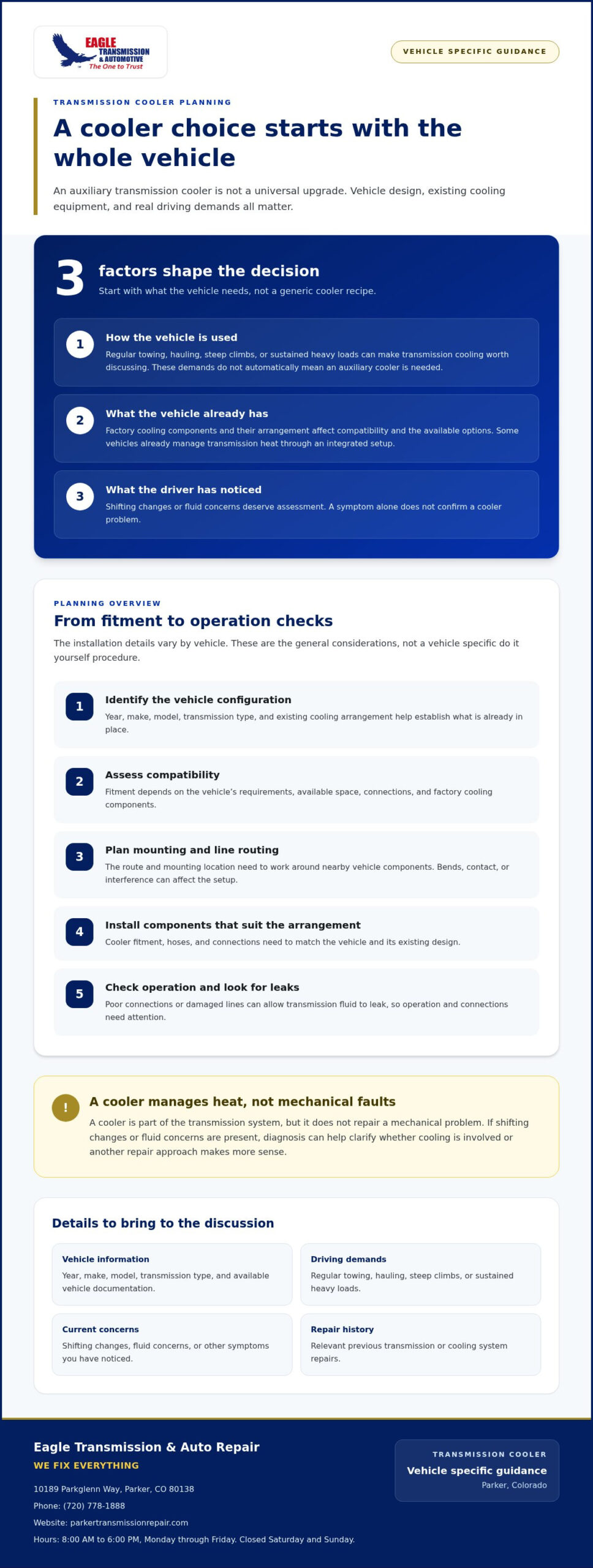
Consider the whole picture before making a decision:
- How you use the vehicle: Note regular towing, hauling, steep climbs, or sustained heavy loads.
- What the vehicle already has: Factory cooling components and their arrangement affect compatibility and the options available.
- What you’ve noticed: Shifting changes or fluid concerns deserve assessment. A symptom alone does not identify a cooler problem.
Correct fit and integration matter as much as choosing a cooler. An added component must work with the vehicle’s existing design, and installation details can vary. A dashboard warning light alone also cannot confirm a cooler issue. If a check engine light is on, check engine light diagnosis can help assess that warning separately from a cooler question.
The right next step is a vehicle specific discussion based on the vehicle’s configuration, use, and symptoms. That helps distinguish a possible cooling need from a transmission concern that calls for diagnosis or repair instead.
How transmission cooler installation works, from fitment to routing
Transmission cooler installation generally follows a sequence: identify the vehicle configuration, assess whether a cooler fits its existing design, plan the hose route and connections, install the components, then check operation. The details vary from one vehicle to another. This is an overview of the considerations involved, not a vehicle specific do it yourself procedure.
Cooler fitment must follow the vehicle’s requirements, because connections, available space, and factory cooling components differ. A setup that appears straightforward on one vehicle may not translate to another. Hose paths, mounting locations, and nearby parts all affect the plan, so a generic installation recipe can miss important fitment issues.
What vehicle details affect cooler fitment?
Start with the vehicle’s year, make, model, transmission type, and existing cooling arrangement. These details help establish what components are already in place and what kind of connections and installation requirements apply. Vehicle documentation can help identify the correct configuration, rather than relying on a cooler or fitting simply because it looks similar.
Before an installation discussion, gather the owner’s manual or other vehicle documentation if available, and note any previous transmission or cooling system repairs. The goal is to understand the vehicle as it is now, including any changes that could affect fitment. There is no universal cooler size or connection that should be assumed to suit every vehicle.
Why do routing and connection checks matter?
Once fitment is understood, the hose route and mounting location need to work with the space around the vehicle’s existing components. Lines should avoid unsuitable bends, contact with other parts, and interference with nearby components. A forum account describing tight bends on one Jeep Cherokee illustrates why routing deserves attention, but that owner’s experience is not a rule for every vehicle.
Connections also need to suit the vehicle and cooler arrangement. A poor connection or damaged line can allow fluid to leak. Because transmission fluid is needed for the transmission to operate, a leak is a concern to take seriously. Checking for leaks and confirming operation are general considerations after installation, though the exact checks depend on the vehicle and its setup.
For a clearer picture of how installation questions relate to broader transmission concerns, Eagle Transmission & Auto Repair provides transmission repair and service. If you’d like to discuss cooler fitment alongside a transmission concern, get directions to Eagle Transmission & Auto Repair.
Factory cooler or auxiliary cooler: compare the options carefully
Factory integrated, auxiliary, and replacement arrangements solve different problems, so the labels alone don’t determine which is suitable. A factory setup is part of the vehicle’s original design. An auxiliary cooler adds a separate component, while a replacement approach addresses an existing cooler component. The condition of the current system and the reason for considering a change help shape the comparison.
| Arrangement | General description | Questions to consider |
|---|---|---|
| Factory integrated | Cooling is built into or connected with an existing vehicle component. | Is the original arrangement intact, and does it suit the vehicle’s use? |
| Auxiliary | A separate cooler is added to the vehicle’s existing arrangement. | Can it be accommodated without conflicting with existing components or routing? |
| Replacement | An existing cooler component is replaced with a compatible part or arrangement. | Is replacement addressing a fault, and does the proposed part match the vehicle? |
How does an integrated cooler differ from an auxiliary cooler?
An integrated cooler belongs to the vehicle’s original cooling design. An auxiliary unit is an additional component, so its placement and connections must be considered alongside what is already there. A replacement, by contrast, focuses on changing an existing component rather than simply adding another one. These broad categories don’t reveal the exact layout on a particular vehicle, and they aren’t instructions to alter factory connections.
Which factors make one arrangement more suitable?
Look beyond the cooler itself. A useful comparison considers the existing equipment, available space, the vehicle’s intended use, and whether the proposed parts and connections suit its configuration. The reason for the work matters too: addressing a damaged component is different from considering added cooling for demanding use. Vehicle documentation and inspection findings help make those distinctions concrete.
It can also help to consider how a proposed arrangement relates to the rest of the vehicle. Does it preserve access to existing components? Does the plan account for the vehicle’s established fluid path? Are the recommendation and its purpose clearly explained? These questions keep the discussion focused on fit and function, not on choosing the most elaborate sounding option.
For transmission cooler installation Parker drivers are comparing, another vehicle’s arrangement is only a reference, not proof of compatibility. Even vehicles that appear similar may have differences in equipment or configuration that change what fits. A decision should be based on the vehicle in front of the technician, not copied from a photo or an unrelated installation story.
No arrangement is automatically superior. The sensible choice is the one supported by the vehicle’s design, condition, and intended use. If the existing cooler has a fault, replacement may be the relevant question. If the system is intact but the vehicle’s use raises a cooling concern, an auxiliary option may be part of the discussion. Assessment helps separate those situations.
How to prepare for transmission cooler installation in Parker
A useful cooler discussion starts with details about the vehicle and how you use it. For transmission cooler installation Parker drivers can prepare by noting any symptoms, towing or hauling habits, past repairs, and vehicle information. These details don’t diagnose a problem on their own, but they help frame an assessment around the actual vehicle rather than a generic installation example.
Symptoms alone cannot determine cooler fitment or the condition of a transmission. A leak, warning indicator, or shifting change may have more than one possible cause. The vehicle’s condition and diagnostic findings help determine whether the next step involves cooler fitment, transmission service, or another repair.
What should you note before arranging an assessment?
Write down what you’ve noticed and when it happens. Does a shift feel different during ordinary driving, after towing, or on a long climb? Note whether the concern is consistent or occasional, and whether a warning light appeared. These observations can help describe the issue clearly, without assuming the cooler is responsible.
Gather the vehicle’s year, make, model, and transmission details if you have them. Also bring relevant vehicle documentation and a record of previous transmission or cooling system repairs. Mention any fluid leak you’ve seen, where it appeared, and whether a warning indicator is present. Avoid trying to identify a fluid or diagnose the cause from appearance alone.
- Vehicle details: Year, make, model, and transmission information.
- Use: Towing, hauling, steep climbs, or other demanding driving.
- Symptoms: What you noticed, when it occurs, and any warning indicators.
- History: Previous repairs and relevant vehicle documents.
How can you evaluate a local installation recommendation?
A useful recommendation should connect the proposed arrangement to your vehicle configuration and stated driving needs. It should account for the factory cooling components, compatibility, mounting considerations, fluid routing, and relevant inspection findings. If the explanation relies only on a setup used on another vehicle, ask how that example relates to your vehicle’s own design.
It’s also reasonable to understand whether the concern is about an existing component, a possible need for added cooling, or a separate transmission symptom. Those are different questions. Vehicle documentation and diagnostic findings can help clarify which issue is being addressed, while avoiding assumptions based on a warning light or a single driving symptom.
Colorado driving plans may include towing or demanding routes, so describe your usual use and upcoming needs as accurately as you can. Eagle Transmission & Auto Repair provides transmission service for Colorado driving conditions, which can be relevant when discussing fluid concerns alongside cooler questions.
Bring your vehicle information and symptom notes to Eagle Transmission & Auto Repair for a transmission assessment and cooler fitment discussion. Get directions to the Parker shop.
Transmission cooler installation in Parker: get vehicle specific guidance
A cooler question can be part of a broader transmission concern, but it doesn’t explain the cause by itself. Eagle Transmission & Auto Repair provides transmission diagnostics and repair, so drivers can discuss cooler concerns alongside symptoms or fluid issues. The goal is to understand what the vehicle needs, rather than treating an added component as the answer to every transmission problem.
When should cooler concerns be assessed with transmission symptoms?
Consider an assessment if you notice a leak, a change in shifting, or operation that feels unusual for your vehicle. These signs can have several possible causes. For example, a fluid spot may come from a transmission line or connection, but its location alone may not identify the source. A shifting change could also involve components unrelated to a cooler.
It helps to distinguish a preventive cooling question from a repair concern. If the vehicle is operating normally and you’re considering a cooler because of how you use it, the discussion can focus on whether a change suits the vehicle. If there’s a leak or a change in operation, diagnosis can help identify whether a fault needs attention first. The two questions may overlap, but they aren’t interchangeable.
Symptoms that continue, return, or become more noticeable deserve attention rather than guesswork. The transmission repair guide can help you recognize concerns worth discussing. An inspection is still needed to determine what’s happening with a particular vehicle. Eagle’s transmission repair service connects those concerns with diagnostic and repair support.
What is the next step for Parker drivers?
Bring the vehicle in for a diagnostic or repair consultation if you’re unsure whether a cooler concern is connected to a transmission symptom. Be ready to describe what changed and how the vehicle is used. That context, paired with an assessment, can help separate a cooling question from a fluid leak or another issue requiring repair.
For transmission cooler installation Parker drivers can discuss their vehicle’s needs with Eagle Transmission & Auto Repair. The right recommendation should make sense for the vehicle’s condition and intended use, and explain whether the focus is diagnosis, repair, or a cooling decision. Eagle also provides cooling system repair, which can be relevant when the concern involves more than the transmission alone.
To arrange a conversation about your vehicle, visit parkertransmissionrepair.com, then get directions to Eagle Transmission & Auto Repair. Bring your questions, and take the next step with a clearer understanding of what your vehicle needs.
Make your next cooler decision with a clear plan
A cooler isn’t a shortcut around diagnosing a transmission concern. Treat it as one part of a larger decision: understand the vehicle’s existing setup, explain how you use it, and consider what an inspection shows before choosing a change. That way, transmission cooler installation Parker drivers consider can be guided by the vehicle’s needs rather than a setup that happened to work elsewhere.
If you’re ready to talk through cooler fitment or a related transmission concern, bring your vehicle information and notes about what you’ve noticed. Eagle Transmission & Auto Repair can help you discuss a vehicle specific next step, whether the question involves cooling or another transmission issue.
Get directions to Eagle Transmission & Auto Repair in Parker and take the next step toward a plan that fits your vehicle. A clear conversation starts with the details you’ve gathered, and you don’t have to sort through the options alone.
Frequently Asked Questions
Does every vehicle need an auxiliary transmission cooler?
No. An auxiliary cooler isn’t a routine add on that every owner needs. It also shouldn’t be treated as a substitute for addressing a fault in the original cooling arrangement. If you’re considering one as preventive equipment, first check the vehicle’s maintenance information and note any existing transmission or cooling concerns. That helps keep an upgrade discussion separate from repairs the vehicle may need.
Can a transmission cooler be installed on any vehicle?
No. A cooler must be appropriate for the vehicle’s transmission and cooling system, and some vehicles may not use the same type of arrangement. Don’t choose parts based only on a model name or a photo of a similar vehicle. For a transmission cooler installation Parker drivers are considering, bring the vehicle identification details and any documentation about prior modifications so the assessment starts with the specific vehicle.
Can a transmission cooler leak cause transmission fluid loss?
Yes. A leak from a cooler or its connected lines can reduce the amount of fluid in the transmission. A stain or spot beneath the vehicle doesn’t confirm the source, though, since other fluids can also leave marks. Note where you see it and whether it appears again after parking. If transmission operation changes at the same time, share both observations during an inspection.
Does towing mean I should install an additional transmission cooler?
Not by itself. Before discussing an added cooler, describe the trailer or load you typically tow, how often you tow, and the kinds of routes involved. Also mention whether the vehicle has factory towing equipment or has been modified. Those details make the conversation more specific than simply saying the vehicle tows. A diagnostic assessment can help separate a cooling question from a current transmission symptom.
What affects the cost of transmission cooler installation?
The vehicle, compatible parts, labor, and any related repair needs can affect the total. The work may differ if an existing component needs attention or if the installation requires changes to the current arrangement. Diagnostic findings also matter, since a cooler installation may not address the actual concern. An accurate quote requires inspection and a clear understanding of the proposed work.