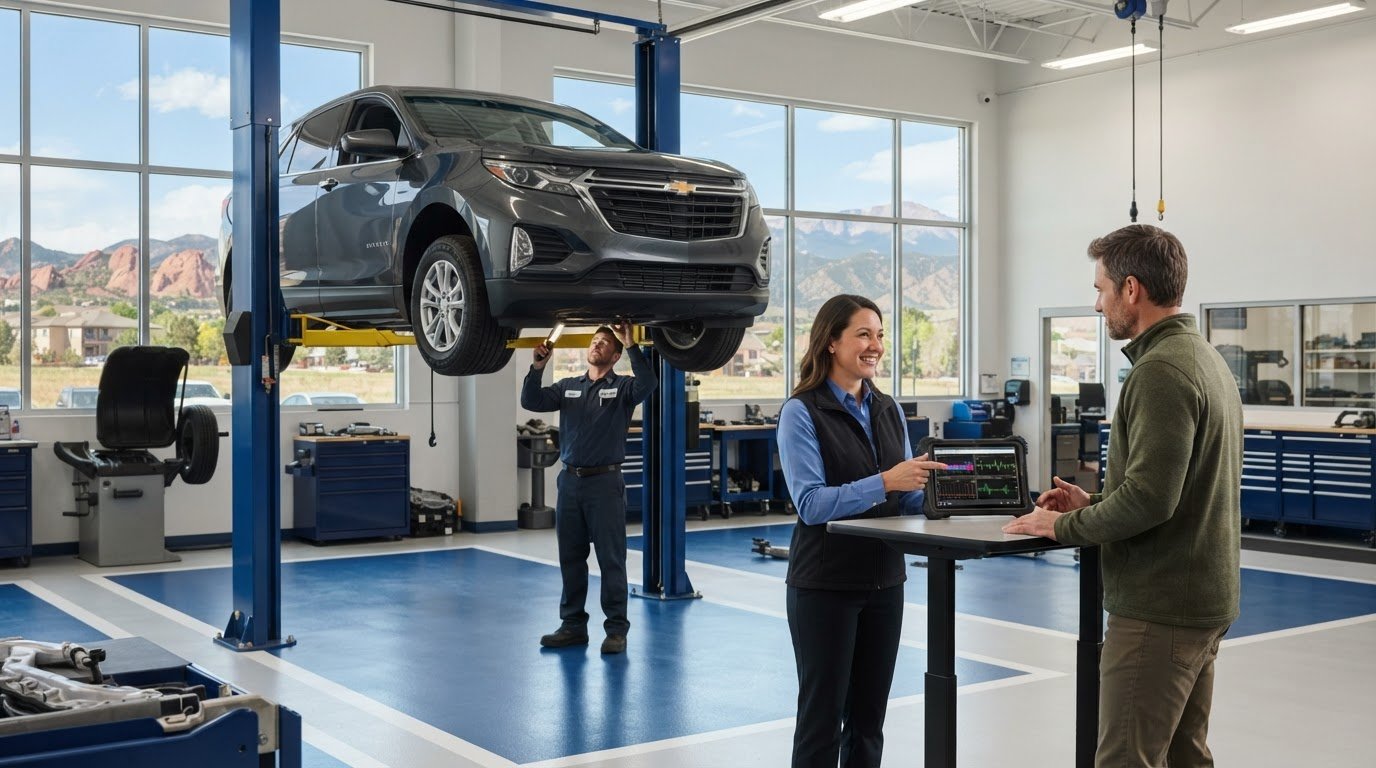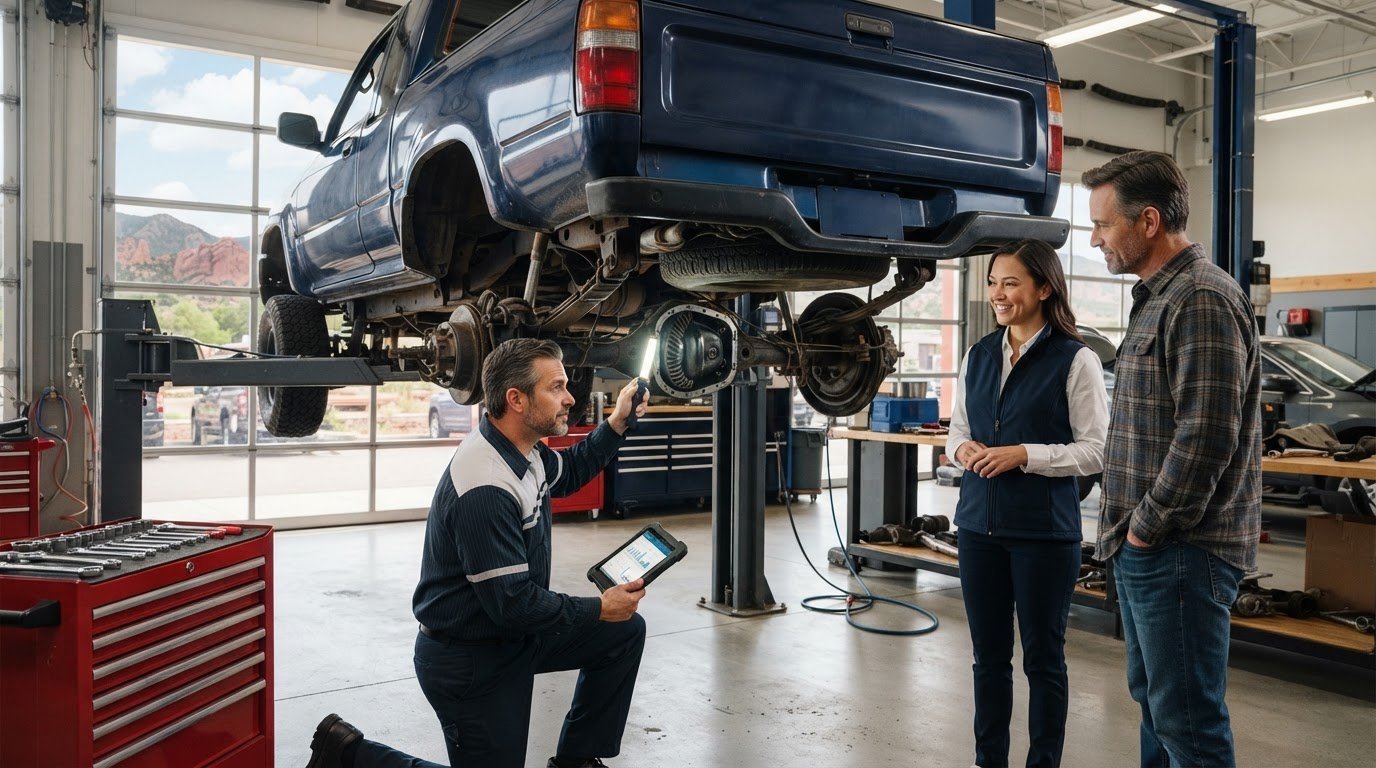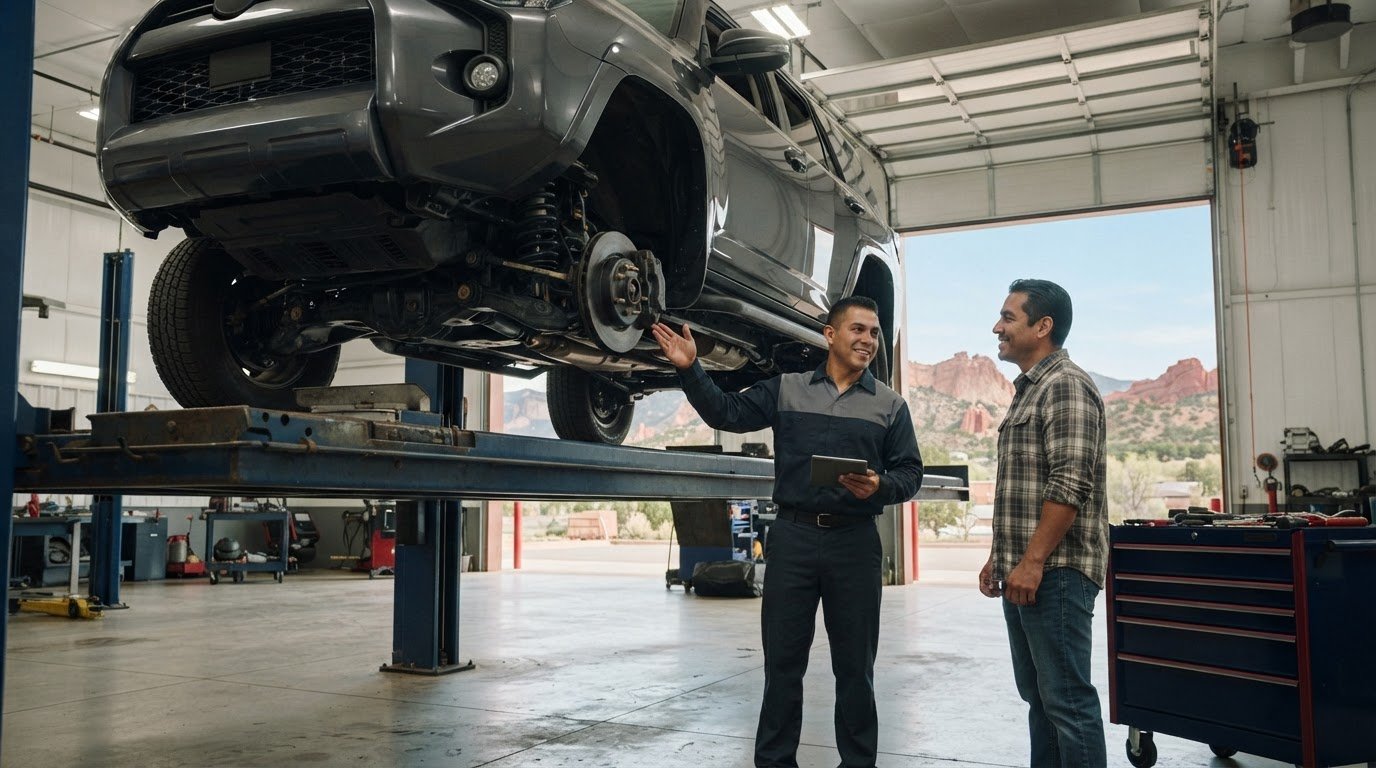
What if a clunk or vibration you notice in four wheel drive doesn’t point to the component you first suspect? A sound or change in how your vehicle responds can leave you wondering whether it’s related to the 4WD system, another drivetrain part, or something else. For 4WD service Castle Rock drivers can use, the useful first step is to describe what the vehicle is doing, not guess at the repair.
It’s also easy to mix up 4WD and AWD, especially when both involve power reaching more than one axle. Their designs and service needs can differ by vehicle. Understanding a few basic distinctions can help you share clearer information when arranging an inspection and make the next conversation feel less technical.
This guide explains the drivetrain components that may be involved, how 4WD and AWD differ in broad terms, and what details are helpful to have on hand before discussing a concern. It also outlines where Castle Rock drivers can find relevant service from Eagle Transmission & Auto Repair, located in Parker. You don’t need to diagnose the problem yourself. A clear description and an inspection can help establish what needs attention.
Key Takeaways
- Unusual noise, vibration, or a change in how your vehicle responds can be a clue, but one symptom alone cannot identify the cause.
- Learn how transfer cases and differentials contribute to power delivery in 4WD vehicles.
- Understand the broad differences between 4WD and AWD, and why your vehicle’s design matters when arranging service.
- For 4WD service Castle Rock drivers can describe when a symptom occurs and what seems to affect it to help explain the concern.
- Eagle Transmission & Auto Repair serves Castle Rock drivers from its Parker location with transfer case, differential, and drivetrain services.
4WD Service Near Castle Rock: Signs Your Drivetrain May Need Attention
4WD service can address transfer case, differential, and related drivetrain concerns. A new sound, vibration, or change in how your vehicle moves can be a reason to arrange an inspection, but none of those clues identifies a failed part by itself. For 4WD service Castle Rock drivers can start by describing what they notice and the conditions around it. That gives the inspection useful context without turning a guess into a diagnosis.
A four wheel drive setup connects components that work together to deliver power to the wheels. That doesn’t mean every system is built the same way. The linked overview of Four-wheel drive (4WD) systems offers background on the different designs. For your vehicle, its make, model, and configuration matter more than a general description of 4WD.
What 4WD drivers may notice
Listen for a clunk, hum, grinding sound, or repeated clicking. You might feel a vibration through the seat, floor, or steering wheel, or notice a change in how the vehicle responds as you accelerate or turn. Those descriptions are more useful than deciding in advance that a transfer case or differential is at fault. Similar sensations can have different explanations.
Pay attention to timing and pattern. Does the sound happen only while turning, during acceleration, at a particular speed, or over a certain road surface? Does the concern appear once in a while or continue on each drive? You don’t need to reproduce it intentionally. Simply note what you observed and whether anything about the vehicle’s behavior has changed.
Why one symptom cannot identify the repair
Drivetrain components are only some of the possible sources of a noise or vibration. Tires, suspension parts, steering components, and other vehicle systems can create sensations that seem similar from inside the cabin. For example, a vibration felt through the steering wheel doesn’t prove the problem is in the front drivetrain. A sound during a turn doesn’t automatically mean a differential needs repair.
Inspection and testing are needed to narrow down which system is involved. An accurate assessment considers the vehicle’s configuration and the circumstances in which the symptom occurs. That helps distinguish a transfer case concern from another drivetrain issue or a problem elsewhere on the vehicle. Eagle Transmission & Auto Repair serves Castle Rock drivers from its Parker location and handles relevant drivetrain and auto repair concerns.
If an unfamiliar symptom is new, keeps returning, or changes over time, arrange an inspection and share what you’ve noticed. You don’t need to know the technical name for a component. A straightforward description of the sound or feel, when it appears, and whether it comes and goes can help guide the next step without assuming the cause.
How 4WD Systems Work: Transfer Cases, Differentials, and Power Delivery
Four wheel drive, or 4WD, describes a drivetrain arrangement that can send power to all four wheels. The label gives you a useful starting point, but it doesn’t tell the whole story: manufacturers use different layouts, controls, and components. Knowing the basic jobs of the transfer case and differentials can help you understand which parts may come up during an inspection, without assuming every 4WD vehicle works alike.
Picture engine power traveling along a route toward the wheels. The transmission sends power into the drivetrain, and other components help direct it toward the axles and manage how the wheels turn. The vehicle’s configuration determines how this route is arranged. That’s why the owner’s manual and vehicle details matter when identifying components or discussing 4WD service Castle Rock drivers may need.
What the transfer case does in a 4WD vehicle
The transfer case is a drivetrain component that helps route power from the transmission toward the axles. In a 4WD layout, it may help deliver power to both the front and rear axles. Its specific design and operation vary by vehicle, so the name alone doesn’t tell you which parts, controls, or service requirements apply.
Transfer case service can include a fluid change, repair, rebuild, or replacement. Which option makes sense depends on the vehicle and inspection findings. Fluid type and maintenance guidance are also vehicle specific, so don’t apply another vehicle’s specifications or schedule by assumption. The owner’s manual is a useful reference for the manufacturer’s guidance, while an inspection can assess a reported concern.
How differentials relate to 4WD service
A differential helps manage the difference in wheel speed that occurs as a vehicle turns. The outside wheel follows a longer path around a turn than the inside wheel, so they need to rotate at different speeds. The differential accommodates that difference within the drivetrain. Its job is distinct from the transfer case, though both are part of the broader system that delivers power to the wheels.
The number and placement of differentials depend on the vehicle’s configuration. Service may involve fluid service, gear repair, rebuild, or replacement, but a 4WD label doesn’t mean every differential needs attention. Eagle Transmission & Auto Repair provides differential service and repair, including rear differential repair.
Because transfer cases and differentials perform different jobs, identifying the affected component matters before choosing a repair. A symptom or drivetrain label alone can’t establish whether service is needed, which component is involved, or whether repair, rebuild, or replacement is appropriate. The vehicle’s manufacturer design and diagnostic findings guide that decision.
4WD or AWD Service in Castle Rock: Understand the Difference Before Choosing a Repair
Four wheel drive and all wheel drive both describe ways a vehicle can deliver power to its wheels, but the terms don’t guarantee the systems are built or serviced the same way. If you’re arranging 4WD service Castle Rock drivers should identify the vehicle’s actual drivetrain rather than rely on a badge or guess from a symptom. The owner’s manual and vehicle identification details can help clarify its configuration.
How 4WD and AWD differ in general
At a high level, 4WD and AWD are different drivetrain approaches. Their components and operation vary by make and model, so broad labels are useful starting points, not a full description of what’s under the vehicle.
| Drivetrain label | General description | What to keep in mind |
|---|---|---|
| 4WD | A system that can send power to all four wheels, depending on the vehicle’s design and operation. | Configuration and controls differ across vehicles. Check the manual for the system description. |
| AWD | A different approach to delivering power among the wheels, with design varying by vehicle. | Do not assume its components or service needs match those of a 4WD system. |
This comparison is intentionally broad. It doesn’t determine how a particular vehicle behaves or which component may need attention. Neither label means a vehicle is universally better, and the drivetrain name alone can’t identify a repair.
What to establish before arranging 4WD service
Have the vehicle’s make and model handy, along with the drivetrain wording shown in the owner’s manual or vehicle information. If you’re unsure whether the vehicle is 4WD or AWD, say so rather than guessing. This helps keep the discussion grounded in the vehicle’s configuration.
Then describe what you observed separately from what you think may have failed. For example, report a vibration during acceleration, a noise while turning, or a change in response. Don’t label it a transfer case or differential problem before inspection. Similar symptoms can have different causes, and the right next step depends on testing and the specific vehicle.
Transfer case and differential service needs depend on the drivetrain layout and diagnostic findings. A 4WD badge doesn’t establish that a transfer case is the source of a concern, nor does AWD rule out differential or other drivetrain involvement. The vehicle’s design and evidence gathered during inspection guide the service decision.
Eagle Transmission & Auto Repair serves Castle Rock drivers from its Parker location. For context on the shop’s Parker based 4WD and drivetrain service, including relevant truck work, see its service information. Sharing your vehicle details and symptom helps connect the concern to the right system without assuming 4WD and AWD are interchangeable.

Preparing for 4WD Service Near Castle Rock: Details That Help Explain the Problem
A clear description helps an inspection focus on what your vehicle is doing, without asking you to diagnose the cause yourself. For 4WD service Castle Rock drivers can prepare by noting the vehicle details, the symptom, and the conditions around it. A few observations can make it easier to explain what changed and when you first noticed it.
What to note before your visit
Use this checklist to organize the details. You don’t need to recreate a noise or attempt a repair. Describe only what you’ve observed.
- Identify the vehicle. Note its make and model, and check the owner’s manual or vehicle information for how the drivetrain is described, such as 4WD or AWD.
- Describe the symptom. Say whether you hear a clunk, hum, grinding sound, or another noise, or feel a vibration or change in response. Use everyday words.
- Record when it happens. Note whether it appears during a turn, acceleration, or another driving condition. Include whether it happens consistently or only sometimes.
- Share what has changed. Mention when you first noticed the concern and whether its frequency or feel has changed. Keep this separate from guesses about which part may be involved.
For instance, “I feel a vibration when accelerating, and it happens intermittently” is more useful than deciding in advance that a specific component has failed. If you’re uncertain about the drivetrain label, say so and provide the vehicle details you have. The manual can help identify its configuration, but there’s no need to interpret every technical term before arranging an inspection.
What a useful diagnosis should clarify
The purpose of diagnosis is to narrow down which system is involved before a repair is recommended. A symptom may have more than one possible source, so a recommendation should be based on inspection and diagnostic findings, not just the name of the vehicle or a sound described over the phone.
Ask for an explanation of what system the findings point to, what repair is being recommended, and why that repair addresses the concern. If the findings don’t yet establish a clear cause, it’s reasonable to ask what remains uncertain. These questions help you understand the connection between the observed symptom and the proposed work without needing to use technical language.
An accurate repair recommendation and pricing depend on the inspection and its findings. A preliminary description is useful for arranging service, but it can’t establish which component needs repair or what work the vehicle requires. Eagle Transmission & Auto Repair offers free diagnostics, always, including a computer scan, road test, and leak check. Those checks help investigate the concern, but they don’t guarantee a particular diagnosis or repair.
Bring your notes when arranging an inspection, and get directions to Eagle Transmission & Auto Repair in Parker for help with a drivetrain concern.
Eagle Transmission & Auto Repair: 4WD Service for Castle Rock Drivers
Eagle Transmission & Auto Repair serves Castle Rock drivers from its Parker location. If your four wheel drive has an unfamiliar noise, vibration, or change in operation, an inspection can help identify which part of the drivetrain may be involved. 4WD service Castle Rock drivers arrange through Eagle can include work on transfer cases, differentials, and related drivetrain concerns.
Transfer case and differential services for local drivers
A transfer case is part of the drivetrain that helps direct power toward the axles. Depending on the vehicle and inspection findings, transfer case service may involve a fluid change, repair, rebuild, or replacement. The appropriate option depends on the component’s condition and the vehicle’s configuration, so a symptom alone can’t determine the work required.
Differential concerns may call for a different type of service. Eagle handles differential service and repair, including fluid service, gear repair, rebuild, and replacement. These components work within the larger drivetrain, but they aren’t interchangeable with a transfer case. Inspection findings help establish which system is involved and what repair may be appropriate.
Castle Rock drivers can learn more about 4WD and drivetrain service for Castle Rock drivers through Eagle’s local service information. The shop’s service location is in Parker, and its relevant work includes 4×4 transfer case service, differential service, and drivetrain repair.
Diagnostics are always free and include a computer scan, road test, and leak check. These checks help investigate the reported concern. They don’t guarantee a particular diagnosis or determine a repair before the vehicle is assessed. The recommendation depends on the inspection and diagnostic findings.
A clear next step for Castle Rock vehicle owners
When arranging service, share the vehicle’s make and model and describe what you noticed, such as when the noise occurs or whether the vehicle’s response has changed. You don’t need to name a failed part. That distinction gives the inspection a useful starting point while leaving the diagnosis to the vehicle’s condition and test results.
If your 4WD vehicle needs attention, contact Eagle Transmission & Auto Repair to arrange a diagnostic or repair consultation. For 4WD service Castle Rock drivers can reach Eagle at its Parker location. Get directions to Eagle Transmission & Auto Repair.
Eagle Transmission & Auto Repair
10189 Parkglenn Way, Parker, CO 80138
Phone: (720) 778-1888
Website: parkertransmissionrepair.com
Hours: 8:00 AM to 6:00 PM, Monday through Friday. Closed Saturday and Sunday.
Take the Next Step Toward Confident 4WD Driving
A drivetrain concern doesn’t have to leave you guessing. Once you’ve noted what the vehicle is doing, the next step is to have the concern assessed and discuss the findings before deciding on a repair. That way, the conversation can focus on what your vehicle actually needs, rather than assumptions based on a noise or vibration alone.
For 4WD service Castle Rock drivers can contact Eagle Transmission & Auto Repair in Parker to arrange an inspection or repair consultation. Bring the vehicle details and your notes about when the symptom appears. If you’re ready to plan your visit, get directions to Eagle Transmission & Auto Repair for 4WD service. A clear next step can make a confusing drivetrain concern easier to address, and you don’t need to diagnose it yourself before asking for help.
Frequently Asked Questions
Can a 4WD noise come from something other than the transfer case?
Yes. A noise may involve the differential, tires, suspension, another drivetrain component, or a different vehicle system. For example, a sound that changes during a turn or acceleration offers useful context, but it doesn’t identify the faulty part. Note when the noise occurs, whether it comes and goes, and your vehicle’s make and model. Inspection and testing are needed to narrow down the possible cause.
What is the difference between 4WD and AWD service?
4WD and AWD use different approaches to deliver power, and the exact design varies by vehicle. That means a service recommendation for one vehicle may not apply to another, even if both carry a similar drivetrain label. Check your owner’s manual or vehicle identification details, then describe the concern you’ve noticed. The vehicle’s configuration and diagnostic findings help determine what service is appropriate, not an assumed universal procedure or interval.
Does 4WD service include transfer case and differential repair?
It can involve either component, but a 4WD concern doesn’t automatically mean both need work. The transfer case and differential are distinct parts, and inspection findings help identify which system, if any, needs attention. Eagle Transmission & Auto Repair offers 4×4 transfer case service, including fluid change, repair, rebuild, and replacement, along with differential service and repair. The appropriate option depends on the vehicle and the findings.
Where can Castle Rock drivers get 4WD service?
For 4WD service Castle Rock drivers can contact Eagle Transmission & Auto Repair, which serves the area from its Parker location at 10189 Parkglenn Way, Parker, CO 80138. Relevant services include 4×4 transfer case service, differential service, and drivetrain repair. Share your vehicle’s make and model and describe what you’ve noticed when arranging an inspection. The findings guide the repair recommendation.