Dark brake fluid can catch your eye, but color alone can’t tell you whether it needs replacement. For a brake fluid change in Centennial, follow your vehicle manufacturer’s maintenance schedule. Brake fluid may last two to five years, depending on the vehicle and its requirements.
It’s reasonable to wonder what happens when brake fluid gets old or absorbs moisture. Moisture in brake fluid can contribute to corrosion inside brake components. A visual check is one clue, not a verdict.
This guide explains warning signs to watch for, why a fluid test can be more useful than judging color, and how a flush differs from bleeding. You’ll also learn what a technician typically checks and how those findings help determine the right next step for your brakes.
Key Takeaways
- Use your vehicle’s maintenance schedule to guide replacement timing, rather than relying on a single rule for every car.
- Dark fluid can be a clue, but color alone can’t establish whether the fluid needs replacement.
- Moisture contamination can affect fluid performance and contribute to corrosion inside brake components.
- A fluid test can help assess condition, while a full brake inspection looks for issues the test can’t detect.
- Flushing replaces old fluid throughout the system; bleeding removes trapped air and may be needed after fluid loss or brake work.
How do I know when my brake fluid should be replaced?
Start with your owner’s manual: its maintenance schedule is the best guide for your vehicle. Brake fluid may last two to five years, but the correct interval depends on the vehicle and its manufacturer’s instructions. For a brake fluid change in Centennial, follow that schedule rather than treating one interval as right for every car.
Check the manual’s maintenance section and note the recommended brake fluid type and replacement timing. If it gives no replacement schedule, monitor the reservoir level and have the fluid tested with routine maintenance. A calendar reminder can help you track service, but it doesn’t replace your vehicle’s specific instructions or a condition check.
Fluid condition matters because glycol based DOT 3 and DOT 4 absorb moisture over time. The National Highway Traffic Safety Administration’s standard sets a minimum boiling point of 140 degrees Celsius for wet DOT 3 brake fluid. According to the National Highway Traffic Safety Administration (NHTSA), new DOT 3 brake fluid must have a boiling point of at least 205 degrees Celsius. According to the National Highway Traffic Safety Administration (NHTSA), new DOT 4 brake fluid must have a boiling point of at least 230 degrees Celsius.
Use these observations as prompts for inspection, not as a complete diagnosis:
- A level close to the master cylinder reservoir’s minimum mark may signal service is needed. A low level can also relate to worn brake pads or a leak, so identify the cause before adding fluid.
- A spongy pedal or a change in braking response deserves prompt attention. A dropping level, changed pedal feel, or dashboard brake light can point to a leak.
- Medium brown or darker fluid on a white towel can be a clue, but color alone doesn’t determine replacement timing.
- A puddle of clear, amber, or brown fluid where the car was parked may indicate a leak. Don’t treat topping up as a substitute for finding its source.
Brake inspections and fluid replacement are related, but they follow different schedules. A Centennial brake service page recommends a brake check with every tire rotation, typically every 5,000 to 7,500 miles. Follow your owner’s manual for your vehicle’s inspection schedule, too. For example, the Ram owner’s manual maintenance schedule calls for checking brake master cylinder fluid levels once a month.
Where can I get a brake fluid change in Centennial, Colorado? Look for an auto repair shop that explicitly offers brake fluid service and can assess fluid condition alongside the brake system.
Which auto repair shops in Centennial offer brake fluid service? Choose a shop that lists brake fluid service and can explain whether your vehicle needs testing, replacement, or leak diagnosis.
Do Centennial repair shops offer brake fluid change coupons or specials? Offers and terms can vary. Compare what an advertised offer includes with the service your vehicle needs.
Brake fluid flushes and exchanges
A brake fluid exchange is a controlled sequence, not simply a reservoir refill. Fluid is drawn from the system at each wheel while fresh fluid is supplied at the master cylinder. The work needs to reach all wheel circuits, and the reservoir must stay supplied throughout. If it runs empty, air can enter the system and require additional bleeding.
One described procedure starts by removing fluid from the master cylinder reservoir, but not emptying it. It recommends drawing fluid to within about 1/8 inch of the bottom before adding fresh fluid. That measurement belongs to this particular procedure, not every vehicle’s service method. The key point is to avoid exposing the system to air while preparing the exchange.
During wheel-by-wheel service, the person performing the exchange watches the fluid leaving each bleeder and keeps the reservoir replenished. A vacuum bleeding procedure calls for a helper to ensure the master cylinder reservoir does not drop below half-full. This helps prevent air from entering the hydraulic circuit during the process.
- Prepare fresh fluid in the specification required for the vehicle.
- Remove some reservoir fluid without draining the reservoir completely.
- Add fresh fluid, then service the wheel circuits while monitoring the reservoir.
- Continue at each wheel until clean fluid appears at the bleeder.
- Check the pedal and reservoir level after the exchange.
Bleeder screws need careful handling. One described vacuum bleeding procedure recommends opening each screw about 1/3 to 1/2 turn. The exact method depends on the vehicle and equipment used, so these values shouldn’t be treated as universal instructions. A screw opened too far or handled incorrectly can complicate the service or damage the fitting.
Freshness matters, too. Brake fluid in a container that has been open for a few months shouldn’t be used for a flush, because it may have absorbed moisture. Keep the container sealed until service and use fluid that matches the vehicle specification. A flush can also require additional equipment on vehicles whose anti-lock or stability control systems need activation during service.
Afterward, pedal feel and reservoir level provide useful checks, but they don’t replace a brake inspection. A pedal that feels soft or a level that falls after service warrants further attention. For brake service in Parker, get directions to the repair shop.
Brake fluid moisture contamination
Glycol based DOT 3 and DOT 4 brake fluids absorb moisture over time. Water can enter through the reservoir vent, flexible hoses, and seals, even when the system appears closed. This gradual change is easy to miss because the fluid may still look usable in the reservoir. Moisture can affect fluid performance and contribute to corrosion inside metal brake components.
The federal motor vehicle brake fluid standard defines “wet” fluid as a specific test condition. According to the National Highway Traffic Safety Administration (NHTSA), wet brake fluid contains 3.7 percent water by weight. That definition provides a standardized reference for evaluating performance. It does not say that every vehicle’s fluid contains that amount or that service should wait until it does.
Moisture matters partly because water lowers brake fluid’s boiling point. Braking creates heat, and fluid that reaches its boiling point can form vapor. Unlike liquid, vapor compresses, which can interfere with the hydraulic pressure needed to apply the brakes. According to the National Highway Traffic Safety Administration (NHTSA), wet DOT 3 brake fluid must have a boiling point of at least 140 degrees Celsius. According to the National Highway Traffic Safety Administration (NHTSA), wet DOT 4 brake fluid must have a boiling point of at least 155 degrees Celsius.
Those figures describe minimum performance under the standard’s wet condition, not a prediction for a particular vehicle. Actual condition depends on exposure and service history. A vehicle used regularly and one driven occasionally can have different fluid conditions, even if they share a model and age. The owner’s manual remains useful because it connects fluid service to that vehicle’s maintenance requirements.
Moisture exposure also matters beyond boiling behavior. Internal corrosion can affect metal components that aren’t visible during a quick look at the reservoir. A brake system may therefore need attention even when no external leak is obvious. Conversely, a fluid moisture result doesn’t identify which component may be affected or prove that corrosion is present.
- Use the vehicle’s stated fluid specification, since the wrong product can damage seals.
- Consider test results alongside maintenance history, not as a standalone verdict.
- Remember that a fluid test doesn’t assess brake lines and hoses or identify contamination from the wrong product.
- Have changed pedal response, a falling reservoir level, or a brake warning light assessed promptly.
A moisture meter estimates water content by measuring the fluid’s electrical properties. Its reading can help inform a service decision, but it describes the sampled fluid, not the entire brake system. A separate physical inspection is needed to assess lines, hoses, and other components. Keeping those findings distinct helps identify whether the concern involves fluid condition, a system component, or both.

Flushing and bleeding the brake system
Choosing between bleeding and flushing starts with the reason for service. A pedal that became spongy after fluid loss points toward air in the lines, while scheduled fluid replacement calls for an exchange. If a leak caused the loss, that source must be addressed as part of the repair. The service choice depends on the vehicle’s history and current symptoms.
How long does a brake fluid change take? There isn’t one duration for every vehicle. The service method, brake system design, and need to activate anti-lock or stability control components with a scan tool affect the work. A leak that needs diagnosis also changes the scope.
Bleeding focuses on removing air from the hydraulic lines and restoring proper pressure with fluid. It may be appropriate after brake work that opened the system, or after fluid loss when the cause has been corrected. A soft pedal after bleeding means the result needs reassessment, rather than assuming the process removed all air.
A flush replaces fluid throughout the system. During service, fluid is moved through each wheel circuit, and the reservoir must be monitored so the system doesn’t draw in air. Some vehicles require a scan tool to cycle parts of the anti-lock brake or stability control system. That vehicle-specific step affects how the procedure is performed.
The service decision can be organized around a few questions:
- Did recent brake work open a hydraulic connection? Bleeding may be needed to clear introduced air.
- Did the fluid escape through a leak? Locate and repair the source before treating pedal feel as an air only issue.
- Is fluid replacement due under the vehicle’s maintenance schedule? A flush addresses the system’s old fluid rather than only air.
- Does the vehicle’s electronic brake system require scan tool activation? Include that procedure when its design calls for it.
After service, the pedal should be assessed for consistent firmness and the reservoir level checked. A pedal that remains spongy, or fluid that continues to fall, calls for further diagnosis. These checks help distinguish an incomplete bleed from an unresolved leak or another brake concern. The repair decision should follow those findings, not the service label alone.
Bleeding and flushing aren’t interchangeable instructions for every situation. A vehicle that needs air removed may not need a full fluid exchange, while an exchange may require bleeding at each wheel. For braking concerns, describe when the pedal changed, whether fluid was lost, and what brake work happened recently. Those details help narrow down the appropriate next step.
Brake fluid color and testing
Color can offer a clue, but it can’t tell the whole story. A useful assessment combines a visual check, a fluid test, and your vehicle’s maintenance requirements.
Fluid Color and Condition Testing
Fresh brake fluid is often clear to amber, and it can darken as it ages. Medium-brown or darker fluid on a white towel may indicate service is due, but shade alone doesn’t establish its condition. Samples with similar color can differ in moisture content, so don’t use appearance as the only replacement test.
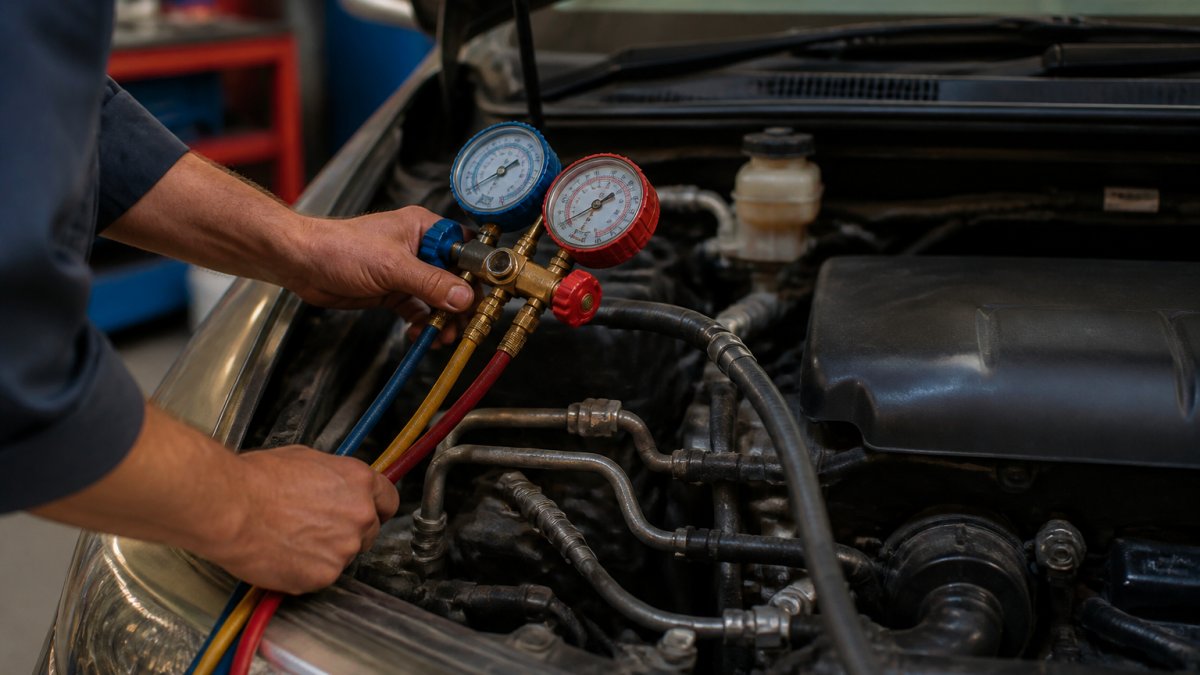
A moisture meter estimates water content by measuring the fluid’s electrical properties. Brake fluid test strips work differently: they indicate depletion of corrosion inhibitors rather than directly measuring water. A fluid test can take two minutes, but it cannot assess brake lines or hoses or reveal contamination from the wrong product. Pair test results with a physical inspection.
Required Fluid Type and Checking
What type of brake fluid does my vehicle require, and how can I check? Read the brake fluid specification on the master cylinder reservoir cap or in the owner’s manual. Use the specification for your vehicle, not a guess based on color or another car’s requirements. The wrong fluid type can damage seals, so match the product label to the vehicle’s stated specification.
Check the manual’s maintenance section for the recommended fluid care cycle. If the cap and manual give different details, rely on the vehicle’s service information to identify the correct specification. Keep the reservoir clean while checking, and don’t let dirt or debris fall inside. Have the cause of a low level assessed before topping up, since worn pads or a leak may explain it.
Think of the checks as answering different questions. Color shows what the fluid looks like; a meter estimates moisture; a test strip indicates inhibitor condition; and an inspection evaluates visible brake components. For example, a favorable fluid reading cannot rule out a damaged hose. Likewise, a dark sample doesn’t by itself prove the fluid has reached its replacement point.
Use these practical steps when reviewing test results:
- Compare the result with the vehicle’s maintenance schedule and fluid specification.
- Ask whether the reading came from a moisture meter or a corrosion inhibitor test strip.
- Have lines, hoses, and other brake components checked separately from the fluid test.
- Arrange an inspection if pedal response changes, the brake warning light appears, or fluid is visibly leaking.
For a visual check or brake fluid test in Parker, get directions to the repair shop.
Eagle Transmission & Auto Repair: Transmission Repair
Eagle Transmission & Auto Repair handles transmission repair and service for drivers dealing with shifting concerns or other transmission problems. Brake fluid concerns belong to the braking system, so they’re separate from transmission work. If your vehicle also slips between gears, shifts harshly, or has another transmission symptom, keep those concerns distinct when describing what you’ve noticed.
Transmission symptoms can have more than one possible cause. Diagnosis helps identify whether the concern involves the transmission or another system before repair options are considered. Eagle also offers engine repair, manual transmission repair, and clutch replacement.
For information about transmission repair, visit parkertransmissionrepair.com or contact Eagle Transmission & Auto Repair.
Make brake care part of your next service plan
Keep a note of brake work alongside your regular vehicle maintenance records. Recording the service date and specified fluid helps you track future care and gives the next inspection useful context. If you’re arranging a brake fluid change in Centennial, bring your vehicle’s maintenance information so service can be considered alongside its broader brake needs.
Eagle Transmission & Auto Repair offers brake repair and replacement. If your vehicle needs attention beyond fluid service, a brake inspection can help identify whether other brake components also need repair. The goal is to match the next step to your vehicle’s condition, not rely on fluid appearance alone.
For a convenient next step, get directions to Eagle Transmission & Auto Repair and discuss your brake service needs. A clear maintenance record and a focused inspection can help you plan your vehicle’s care with confidence.
Frequently Asked Questions
What happens when you have old or contaminated brake fluid?
Old or contaminated fluid can absorb moisture, which may reduce its ability to withstand heat and contribute to corrosion inside brake components. Under hard braking, heat builds in the system, and reduced fluid performance can affect hydraulic pressure. You may notice a change in pedal feel, but that symptom alone doesn’t identify the cause. Fluid condition and the rest of the brake system need separate assessment.
Can I just top up the reservoir instead?
Topping up raises the level, but it doesn’t renew the fluid already in the lines and calipers. A low reservoir can also reflect worn brake pads or fluid loss from a leak. If the level has dropped since your last check, adding fluid without investigating can hide a problem that needs attention. Identify why the level is low before adding the specified fluid.
How can I tell if my brake fluid is leaking?
Look for a falling reservoir level, a spongy pedal, changed braking response, or an illuminated brake warning light. A puddle of clear, amber, or brown fluid under a parked vehicle can also signal a leak. The location of a spot doesn’t identify which component is leaking. If you notice fluid loss or braking changes, arrange a brake inspection promptly rather than relying on topping up.
How does air get into your brake lines?
Air can enter the hydraulic system when fluid is lost through a leak or when a brake component is opened for repair. It can also remain in the lines if bleeding doesn’t fully remove it after service. Because air compresses differently from liquid, the pedal may feel spongy and braking response can change. The cause needs to be addressed, followed by correct bleeding.
Is a brake fluid flush worth it on an older truck?
A truck’s age alone doesn’t decide whether a flush is useful. Compare its maintenance schedule with fluid condition, test results, and any recent brake repairs. An older pickup used for towing, for example, may need its brakes assessed as a complete system, not just judged by fluid appearance. A flush replaces old fluid; worn parts, leaks, or damaged lines need their own repair.
What does it mean to bleed brake fluid?
Bleeding means removing trapped air from brake lines while moving fluid through the system. It’s commonly needed after fluid loss or work that opens hydraulic components. The process differs from a full flush: bleeding targets air, while flushing exchanges old fluid throughout the system. Some vehicles with anti-lock brakes or stability control require a scan tool to cycle system components during service.
How often should brake fluid be changed, and what interval do manufacturers recommend?
Use the interval in your vehicle’s owner’s manual, because manufacturers set maintenance schedules for specific vehicles. Brake fluid may last two to five years, but that broad range isn’t a substitute for your manual. Find the brake fluid maintenance entry and follow its timing. If the manual provides no replacement cycle, have fluid condition monitored alongside routine vehicle maintenance.
What are the signs that brake fluid needs to be changed?
Possible clues include fluid that tests for moisture or contamination, a level near the reservoir’s minimum mark, or fluid that appears medium-brown or darker on a white towel. None of those signs alone confirms the right service. A low level can point to worn pads or a leak, while color can’t establish fluid condition. Combine testing with the manual’s maintenance schedule.