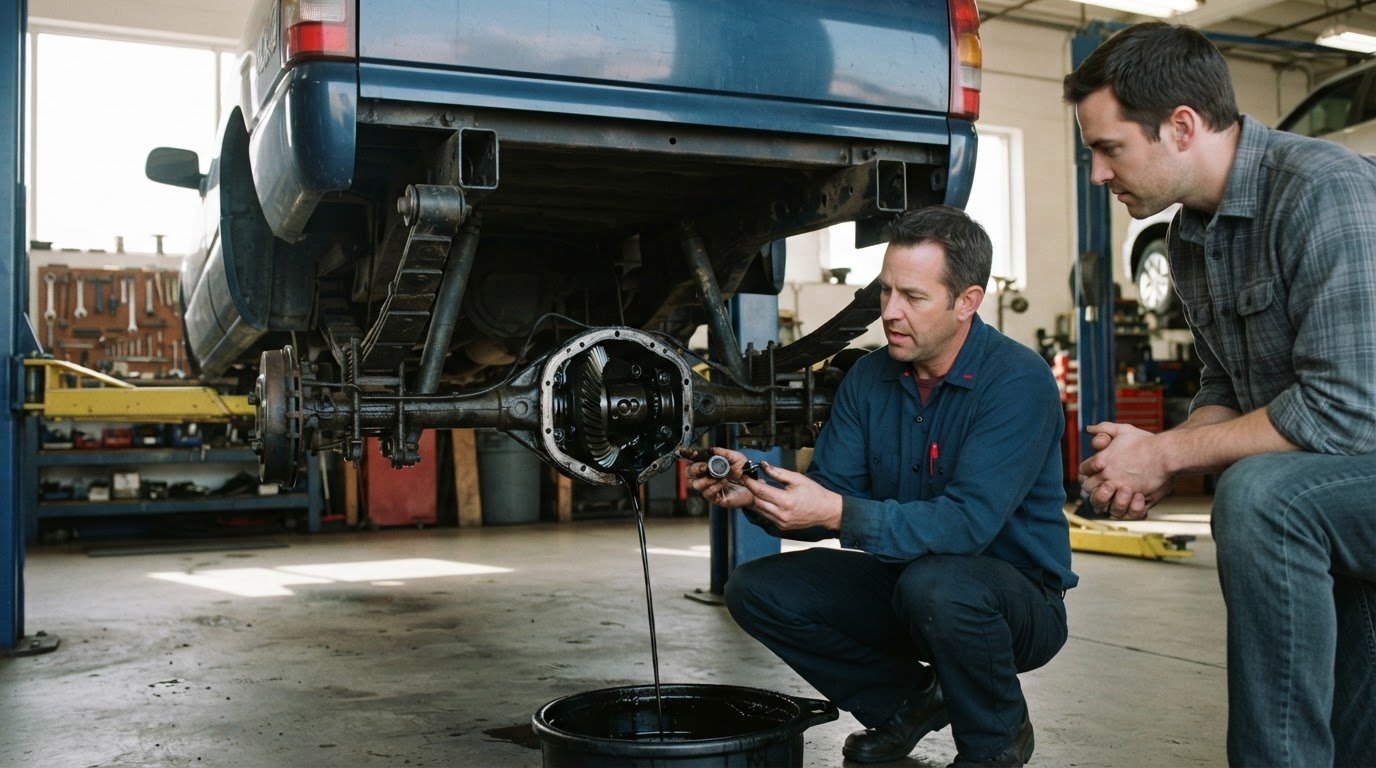
A differential fluid leak means gear oil is escaping from the housing that sits between your wheels, usually through a worn seal or a tired gasket. Most of these leaks are small, and they are far easier to fix early than late. The right move is to have a technician find the exact source, repair it, and refill the fluid to the correct level. At Eagle Transmission & Auto Repair, every job starts with a free diagnostic, so you can learn what is leaking before you spend anything. You can reach us at (720) 778-1888.
Key Takeaways
- Differential oil leaks most often from the pinion seal, the axle seals, the cover gasket, or a clogged vent. Each one is a different repair.
- A thin, damp film is called seepage and can be watched. Pooling or dripping fluid is a leak and should be looked at soon.
- Topping off low fluid without fixing the source only delays the problem. The leak gets repaired first, then the fluid is refilled to the right level.
- Oil on the inside of a wheel can reach the brakes, so get that checked promptly.
- Eagle Transmission & Auto Repair offers a free diagnostic with a road test and computer scan, and repairs only start with your approval.
Table of Contents
- What the differential does and why its fluid matters
- How to tell if your differential is leaking
- Where differentials usually leak
- Leak or seepage: what is the difference?
- Why the wet spot is not always the source
- Is it safe to keep driving?
- How a shop repairs a differential leak
- What affects the cost of differential leak repair
- How often should differential fluid be changed?
- Get it checked at Eagle Transmission & Auto Repair
- FAQ
- Sources
What the differential does and why its fluid matters
When you turn a corner, the outside wheel has to travel farther than the inside wheel, so the two wheels must spin at different speeds. The differential is the gearbox that makes that possible while still sending engine power to both wheels. Rear wheel drive trucks and SUVs have one in back. Four wheel drive and all wheel drive vehicles often have one in front too.
Inside the housing, a ring gear and a smaller pinion gear mesh together, and bearings support them. All of it runs in thick gear oil. That oil cools the parts and keeps metal from grinding on metal. If enough oil escapes, the gears and bearings run hot and wear faster, and a small seal job can turn into a much bigger repair.
That is why a leak deserves attention even when the vehicle still drives normally. It is also why we like to catch them early.
How to tell if your differential is leaking
Gear oil has a look and smell that sets it apart from other fluids. Fresh gear oil is usually amber to dark honey in color, and older oil is darker and can smell strongly of sulfur, according to a drivetrain diagnosis guide. Here is what drivers in Parker, Castle Rock and Aurora tend to notice:
- Dark, oily spots under the rear of the vehicle. Oil on the ground is the clearest sign, as How a Car Works explains.
- A wet, grimy area around the differential housing. Training material for technicians says rear axle lubricant often shows up as a dark, dirty patch below the pinion or carrier, or on the inside of a wheel.
- A strong, sharp smell near the rear of the vehicle after a drive.
- A new hum, whine or growl from the back that changes when you accelerate or let off the gas. Our page on signs of a failing differential walks through these in more detail, and our page on rear differential noise diagnosis covers what the sounds mean.
One simple thing you can do is look at the wet spot and smell it. Gear oil is thick and has a distinct odor, and the same training material notes that touching and smelling the fluid helps separate an axle seal leak from a brake fluid leak. If you are not sure what you are looking at, that is a good moment to call us rather than guess.
Where differentials usually leak
A differential has several places where oil can get out. Carsymp’s inspection guide lists the common ones, and they match what we expect to find on trucks and SUVs around Douglas County.
| Leak point | Where it is | What it looks like |
|---|---|---|
| Pinion seal | Front of the differential, where the driveshaft connects | Oil around the driveshaft yoke, sometimes flung onto nearby parts |
| Axle seals | Left and right sides, where the axle shafts leave the housing | Oil toward the inside of a wheel or brake area |
| Cover gasket or sealant seam | The cover on the back of the housing | A wet line around the cover edge |
| Fill or drain plug | The plugs used to add or drain fluid | A wet ring around the plug |
| Vent or breather | A small vent that lets pressure out of the housing | Oil seeping past seals when a blocked vent builds pressure |
The cover seam deserves a quick explanation. Many housings are sealed with a gasket, or with RTV, a rubbery sealant that hardens into a gasket. Over many heating and cooling cycles it can dry out and let go.
The vent is easy to overlook. It is a tiny breather that lets air in and out as the housing heats and cools. If it clogs, pressure builds and can push oil out past seals that were otherwise fine. A manufacturer service bulletin on NHTSA’s site describes a case where a confirmed breather vent source called for replacing the rear differential cover, gasket and vent together.
Leak or seepage: what is the difference?
Not every damp spot is an emergency. A manufacturer service bulletin posted by NHTSA separates the two clearly. A leak is pooling fluid with formed droplets or dripping. Seepage is a thin film or coating, and that kind of residue may simply be documented and rechecked.
In practical terms:
- Seepage: the housing is slightly damp or dusty with oil, but nothing drips. A technician may recommend watching it and checking the fluid level.
- A leak: you see drops, a puddle, or oil streaks that keep coming back after cleaning. That needs a repair plan.
A technician can tell the difference by looking at the fluid level, the condition of the oil, and how fast the wetness returns after the housing is cleaned.
Why the wet spot is not always the source
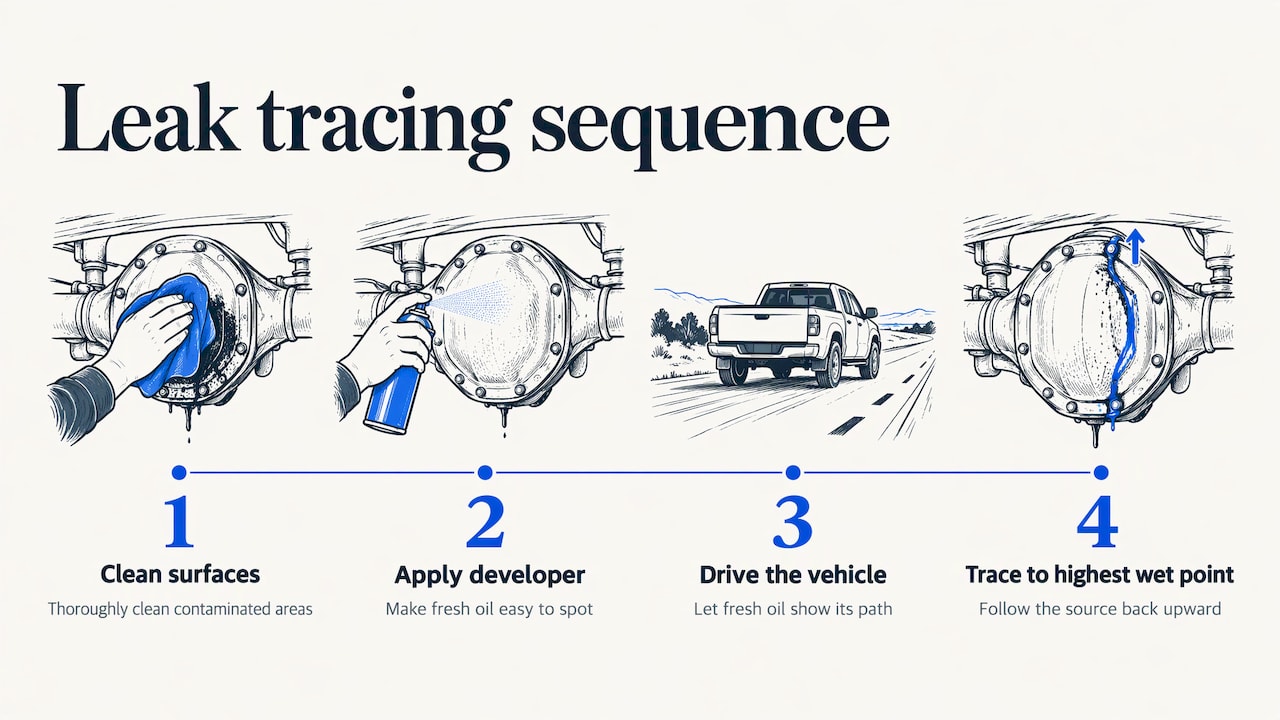
This surprises people. A differential spins, and spinning parts sling oil. The place where the oil ends up is often not the place where it came from. Carsymp notes that oil shows up at the lowest point but usually starts higher, and airflow while driving can streak it backward along the underside.
So a drip near the rear cover could really be a pinion seal leak that traveled. A wet inside wheel could be an axle seal, or it could be a hub seal. That is why a good shop does not just wipe things down and top off the oil. The service bulletin above says leak tracing should begin by thoroughly cleaning the contaminated surfaces and applying a developer, a product that makes fresh oil easy to spot. Then the vehicle is driven, and the source is followed back to its highest wet point.
Some hidden seams are hard to see with the naked eye. For tight spots, a small camera on a flexible probe can help, and this videoscope leak detection guide explains how that kind of inspection finds the source of a leak.
Is it safe to keep driving?
The honest answer depends on how much is leaking and where. A slow seep with the fluid level still good is a different situation from a steady drip. We would still rather you book a visit soon than drive for weeks and hope.
Two points matter for safe use:
- Keep the fluid at the right level. Gears and bearings need oil. Low fluid leads to heat and wear.
- Watch for oil near the brakes. Oil that reaches the brake parts can reduce braking, a point How a Car Works makes as well. If you see oil on the inside of a wheel, or the brakes feel different, have the vehicle looked at before more driving.
In rarer cases the housing itself is cracked. A recall notice hosted by NHTSA describes a cracked differential housing that can leak oil and affect rear wheel drive power, and says the vehicle should not be driven until repaired. If you hear a sudden loud noise or feel a change in how the rear of the vehicle drives, stop somewhere safe and call for a tow. Our emergency towing is there for that situation.
Colorado driving adds some load. Long climbs toward Castle Rock, towing on I-25, steep mountain trips and winter roads all work the drivetrain harder. Fluid and seals that were fine on flat commutes can show their age after a season of that.
How a shop repairs a differential leak
You do not need to know how to do this yourself. It helps to know what a sound repair looks like, so you can follow along when a technician explains it. A good sequence goes like this:
- Check the fluid level and condition. Low but clean fluid can mean a seal or cover leak was caught early. Dark, burnt fluid with a fine metallic paste points to heat and wear. Visible chips or flakes suggest gear or bearing damage, as the diagnosis guide describes.
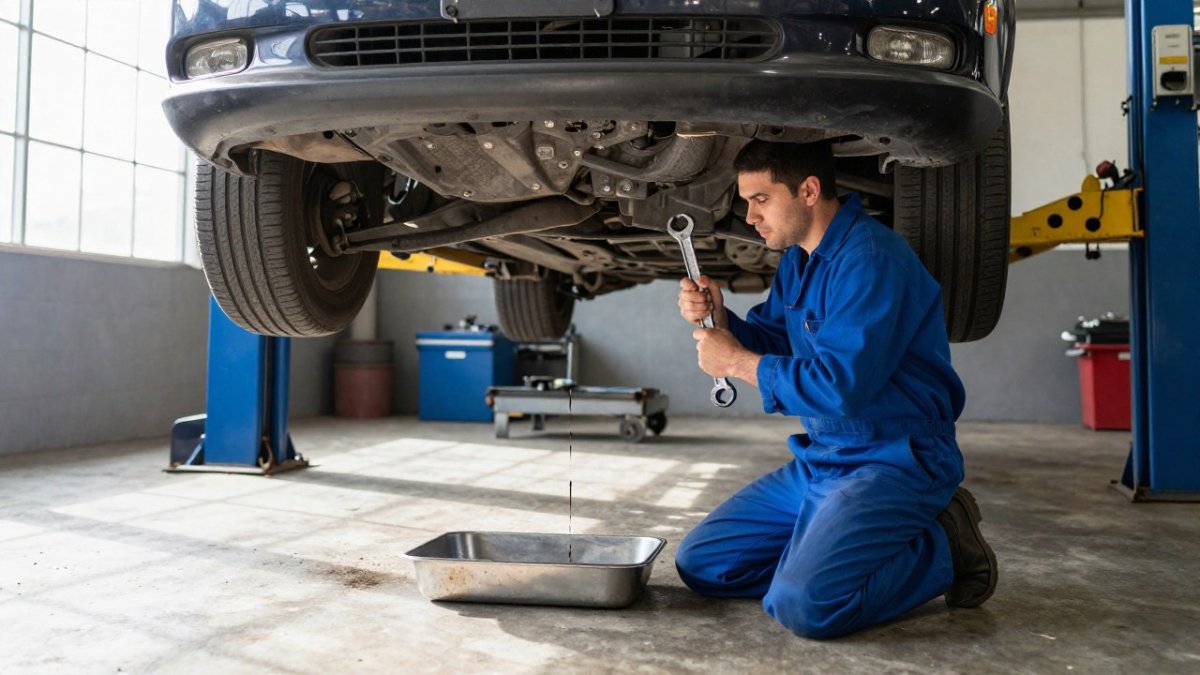
- Clean and trace the leak. The housing is cleaned, and the vehicle is test driven so fresh oil shows the true source.
- Repair the source. That might be a new cover gasket or sealant, a pinion seal, an axle seal, or a vent. The sealing surfaces are cleaned and prepped first, as the NHTSA service bulletin describes.
- Refill to the correct level. A Honda service procedure says if the level is low, find and fix the leak before refilling, with the fluid at the bottom of the filler opening.
- Test drive and recheck. The same bulletin finishes with a drive and a leak check.
A seal job and a cover gasket job are common, smaller repairs. Damage to gears or bearings, or to the housing, is a larger one. That is why the diagnosis comes first: you want to know which of those you are dealing with before anyone picks up a wrench.
What affects the cost of differential leak repair
We do not quote prices in articles, because the right number depends on your vehicle. What moves the price is fairly predictable:
- Which part is leaking. A cover gasket is a different job from a pinion seal, and both differ from a damaged housing.
- Your vehicle. Make, model and how much has to come apart to reach the seal all change the labor.
- Differential type. Open, limited slip and locking differentials use different fluids and parts.
- How long it has leaked. If the fluid ran low and the gears or bearings were affected, there is more to repair.
For a closer look, our page on differential repair costs in Parker explains what goes into an estimate, and how long differential repair takes covers timing. If the leak was caught early, the repair is usually simpler, which is the main reason to act when you first spot oil.
How often should differential fluid be changed?
It varies by vehicle, and your owner’s manual gives the interval for yours. Towing, hauling, off road use and mountain driving usually call for the shorter end of what the manual lists. Fresh fluid helps protect the gears and gives a technician a clean look at the oil’s condition. Our differential gear service page explains what a fluid and gear service involves, and the front differential service page covers four wheel drive vehicles.
Get it checked at Eagle Transmission & Auto Repair
We are a full service repair shop, and differential work sits alongside transmission repair, rebuilds and replacement, fluid service, clutch repair, brakes, diagnostics and general auto repair. We also handle fleet service for local businesses.
Every job starts with a free diagnostic, including a road test and a computer scan, before you spend anything. Repairs happen only with your approval, and our technicians are ASE certified. Repairs are backed by a warranty, and we explain the work with clear quotes and no surprise charges. Local towing is complimentary with a repair, and we offer ride service while your vehicle is with us.
If you have spotted a stain under your truck or SUV, our rear differential repair page shows how we approach it. You can also see all of our drivetrain and transmission services. If you are not sure whether the fluid is coming from the differential or the transmission, our page on where transmission fluid leaks from can help you sort it out.
Eagle Transmission & Auto Repair
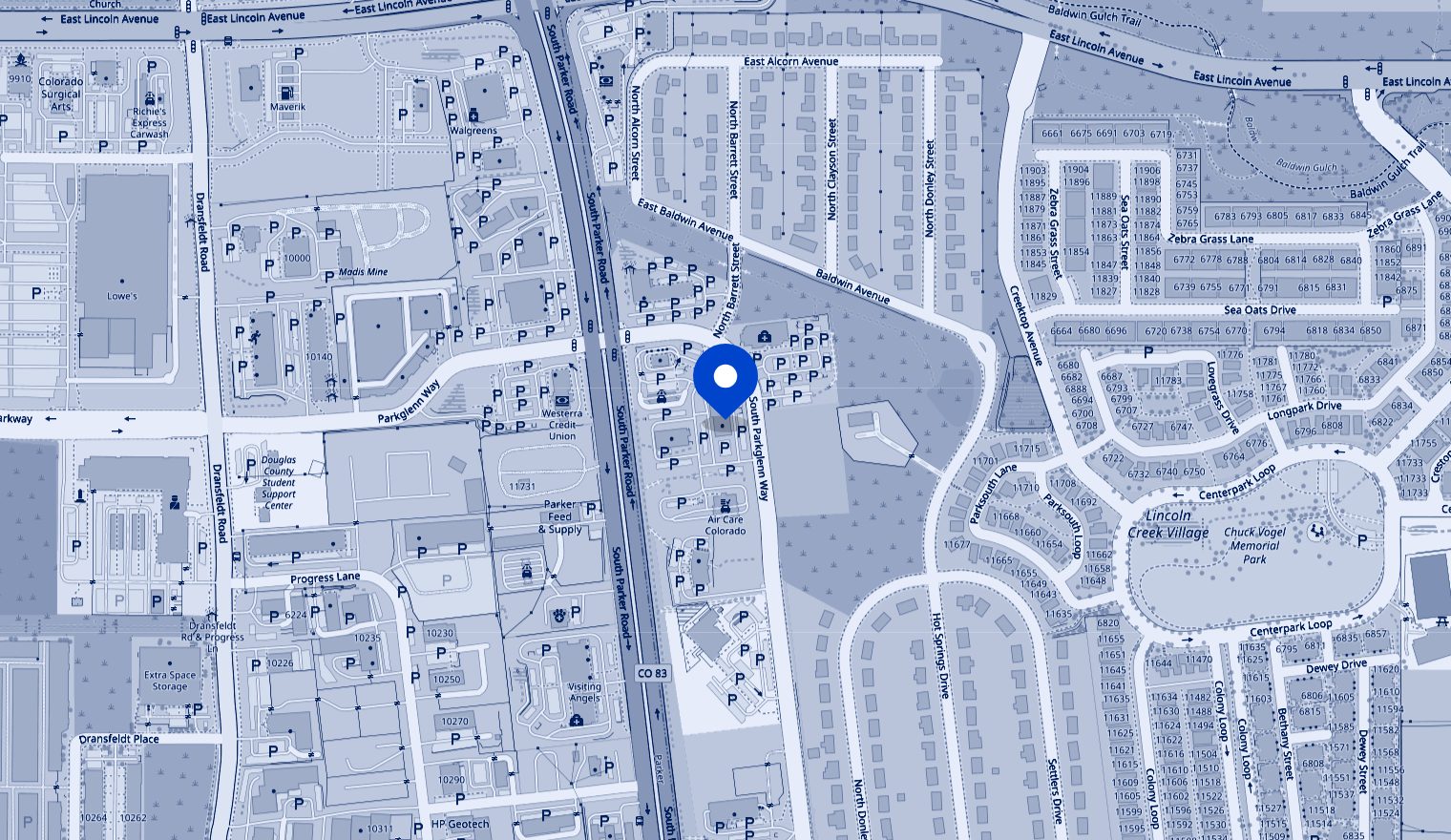
10189 Parkglenn Way, Parker, CO 80138
Phone: (720) 778-1888
Hours: Monday to Friday, 8am to 6pm, closed weekends
We serve drivers in Parker, Lone Tree, Castle Rock, Castle Pines, Highlands Ranch, Centennial, Aurora, Franktown and Elizabeth.

FAQ
How bad is a leaking differential?
It depends on how much oil is escaping and where it is coming from. A slight seep is a small repair, and a steady drip can lead to low fluid, heat and gear wear. If oil is reaching the brakes, have the vehicle looked at promptly.
Can I just add more fluid and keep driving?
Topping off only buys time. The leak keeps going, and the cause stays unrepaired. The sound approach is to repair the source first and then refill to the specified level, as the Honda procedure above shows.
What causes a rear differential to leak?
The usual causes are a worn pinion seal, worn axle seals, a dried out cover gasket or sealant, a loose or worn plug seal, or a clogged vent that builds pressure. A technician traces the oil back to find which one it is.
Is a leak the same as seepage?
No. Seepage is a thin film of oil on the housing, while a leak shows pooling or dripping fluid. Seepage can sometimes be watched and rechecked, but a leak needs a repair plan.
What should I do if I see oil under my vehicle?
Note where it is and what color it is, then call us at (720) 778-1888 or schedule a free diagnostic. There is no pressure, and we will explain what we find before any repair begins.
Sources
- Oil Leak Diagnosis and Repair, NHTSA service bulletin
- Service bulletin on rear differential breather vent, NHTSA
- Rear axle recall notice, NHTSA
- Rear Differential Fluid Inspection and Replacement, Honda Pilot
- Checking the rear axle for leaks, How a Car Works
- Automotive Technology, Chapter 62: Differentials and Rear Drive Diagnosis
- Differential fluid leak and condition checks, Carsymp
- How to Diagnose Differential Problems