Can you keep driving with a bad rear differential? If you notice symptoms of a bad differential, such as a growing whine, burning smell, or fluid leak, limit driving and arrange an inspection. Continued use can worsen internal damage, and a severely failing differential can fail while you’re on the road.
It’s reasonable to wonder whether a new noise is serious or whether you can reach your destination. These signs offer useful clues, but they don’t confirm that the differential is the cause. A wheel bearing, driveshaft, or another drivetrain part can create similar sounds, so pay attention to the pattern.
This guide explains what different noises, smells, and fluid changes may indicate, what can contribute to differential trouble, and how to think about driving when symptoms appear. You’ll also learn how a prompt diagnosis can clarify whether the problem involves the differential or another part of the drivetrain.
Key Takeaways
- Notice whether a vibration changes with speed or acceleration, since that pattern can help narrow down the source.
- Pay attention to when drivetrain noises occur, such as during turns, acceleration, or deceleration.
- A burning odor or leaking fluid can signal a lubrication problem that deserves prompt attention.
- Fluid appearance and texture offer clues, but they cannot confirm the cause on their own.
- If symptoms are worsening or the vehicle is difficult to steer, arrange an inspection instead of relying on guesswork.
1. What is a Differential and How Does It Work in Your Vehicle?
A differential transfers torque from the engine to the wheels while allowing wheels on the same axle to turn at different speeds. This matters in a turn: the outside wheel travels farther around the bend, so it must rotate faster than the inside wheel. Without this action, the tires can resist the turn, scrub against the road, or make the vehicle feel unusually stiff.
The differential’s location depends on the drivetrain. In most rear wheel drive vehicles, it sits between the rear wheels and redirects power across the rear axle. A front wheel drive vehicle uses a transaxle beside the transmission, while four wheel drive vehicles have two differentials, one at the front and one at the rear. Open, limited slip, and locking differentials handle traction in different ways.
A vehicle pulling to one side can point to a differential concern, but wheel alignment can also cause a pull. Uneven tire wear may provide another clue, although it doesn’t confirm the differential is at fault. A pull combined with vibration, unusual sounds, or resistance during tight turns gives a mechanic more context than one symptom alone. Brake concerns can also affect how a vehicle feels while slowing; Parker drivers can find information about brake replacement in Parker.
Vibration patterns can help narrow down the possibilities. A steady shake that increases with vehicle speed may come from worn U-joints or an unbalanced driveshaft, not just the differential. Vibration during acceleration can point to damaged differential gears or an axle problem. If the shaking changes with throttle input, note when it starts and whether it continues at a steady speed.
How can you distinguish differential problems from transmission or wheel-bearing problems? Differential symptoms often follow vehicle speed, turning, or acceleration, while transmission trouble may be tied to gear changes. A wheel bearing can rumble during a turn, so sound alone can’t identify the failing part.
How do mechanics diagnose a failing differential? They compare when sounds and vibrations occur, inspect the drivetrain for leaks or looseness, and assess the differential fluid. They may also check related parts, including the driveshaft, U-joints, axle, and wheel bearings, because each can produce similar symptoms.
Common symptoms of a bad differential include pulling, speed-related vibration, or difficulty turning, but none proves the cause on its own. Recording whether the vehicle is accelerating, coasting, or turning when a symptom appears gives the mechanic a useful starting point for diagnosis.
2. Whining, humming, clunking, grinding, and popping noises
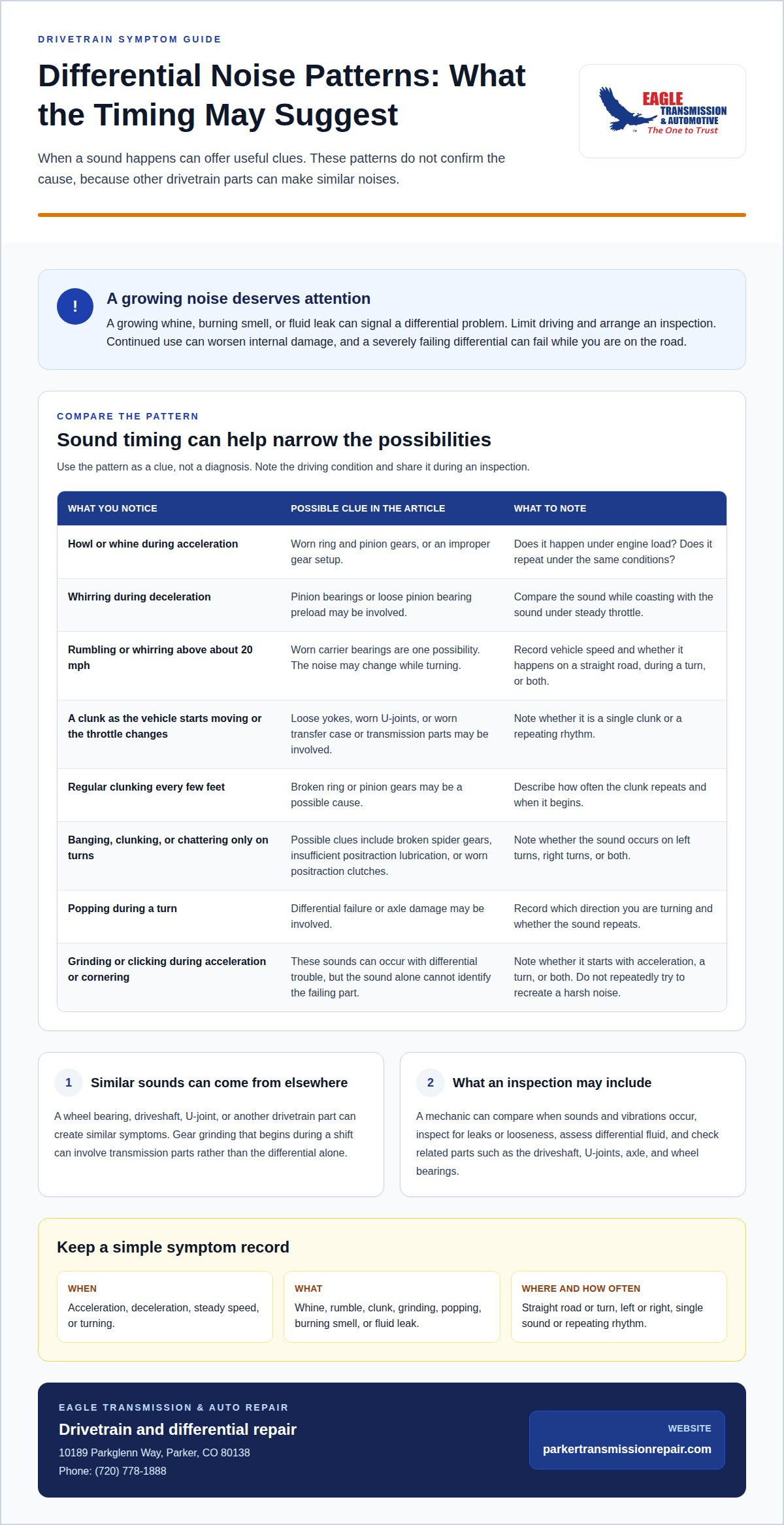
When a noise occurs can offer more information than how loud it is. A differential sound may change with acceleration, deceleration, vehicle speed, or cornering. For example, a whine under engine load differs from a sound that begins when you lift off the accelerator. Notice whether the sound repeats under the same conditions.
A howl or whine during acceleration can point to worn ring and pinion gears or an improper gear setup. These gears mesh to transfer power through the differential. A whirring sound during deceleration may involve pinion bearings or loose pinion bearing preload. Comparing the sound under steady throttle with the sound while coasting helps describe the pattern without guessing which part has failed.
Rumbling or whirring above about 20 mph can indicate worn carrier bearings, and the noise may change while turning. A hum that rises with road speed can also come from other rotating parts, so the vehicle’s speed and direction of travel matter. Record whether the sound occurs on a straight road, during a turn, or in both situations.
Clunks can have several causes. A clunk as the vehicle starts moving or the throttle changes may involve loose yokes, worn U-joints, or worn transfer case or transmission parts. Regular clunking every few feet may indicate broken ring or pinion gears. Note whether it’s a single clunk or a repeating rhythm, as that detail is useful to report.
Pay particular attention to sounds while turning. Banging, clunking, or chattering only on turns may relate to broken spider gears, insufficient positraction lubrication, or worn positraction clutches. Popping during a turn may point to differential failure or axle damage. Note whether the sound occurs on left turns, right turns, or both.
Grinding or clicking can occur during acceleration or cornering, while howling may become noticeable at higher speeds. Gear grinding that begins during a shift can involve transmission parts rather than the differential alone. Avoid repeatedly trying to recreate a harsh noise. Driving with a failing differential can worsen internal damage, especially if the sound grows louder or more frequent.
Before an inspection, remember the sequence: when the sound starts, what the vehicle is doing, and whether the noise changes. For example, report a whine under acceleration separately from a clunk when changing throttle. If a new drivetrain noise persists, arrange an inspection and share those details. A clear description helps narrow down which components need attention and what repair may be appropriate.
3. Burning smell from overheated differential fluid
A burning smell near the axle can point to overheated differential fluid. This fluid lubricates and cools the internal gears and bearings as the wheels turn. If the level is low or the fluid is contaminated, it may not protect those components effectively. The odor is a warning clue, not a diagnosis by itself, since other vehicle parts can also produce burning smells.
Look for other signs alongside the smell. A whining sound from the drivetrain, a fluid leak near the differential, or an odor that appears after driving can help describe what’s happening. Low fluid may result from a leak, while contaminated fluid may not protect moving parts effectively. A strong burnt odor from differential fluid indicates severe overheating and calls for prompt inspection.
Smoke near the rear axle needs careful interpretation. Smoke alone doesn’t identify the differential as the source, and a burning smell may come from another component. Note where the smoke appears, whether the odor is strongest near a wheel or the axle housing, and whether you also hear whining. These observations can help distinguish a differential concern from another source.
Don’t treat a burnt odor as a routine fluid-change signal without assessing the cause. If a leak lowered the fluid level, replacing the fluid alone won’t stop the leak. A worn or dried-out gasket can allow fluid to escape, while overheated or contaminated fluid may point to internal stress. The repair depends on whether the problem involves a seal, the fluid, or internal differential parts.
Fluid condition adds another useful clue. Dark fluid with a burnt smell may need replacement, but that appearance doesn’t establish whether gears or bearings are damaged. Inspection can assess the level, leak points, and fluid condition together. Differential fluid service addresses the lubricant, while signs of overheating or internal wear call for a broader assessment.
If the burning odor grows stronger, smoke appears, or whining develops, don’t treat the vehicle as though nothing has changed. Continuing to drive with insufficient lubrication can cause differential components to grind against one another. The potential damage depends on fluid loss and the condition of the gears and bearings. A prompt inspection can help identify the source before a repair is chosen.
When describing the issue, include when the smell starts, whether it follows driving or turning, and whether fluid is visible near the axle. This timeline gives a mechanic practical clues. A burning odor, leak, and new whining sound together deserve more attention than an odor with no other observed changes. Keep your description specific and have the differential inspected to determine which component needs attention.
4. Discolored or contaminated differential fluid
Differential fluid lubricates gears and bearings and helps carry heat away from them. Its appearance can offer clues about its condition, but color alone can’t confirm a failing differential. Fluid may look red or brown and is typically thicker than engine oil. The right comparison is the fluid specified for the vehicle, not the color of transmission fluid or motor oil.
Dark or gritty fluid raises concern because it can reflect thermal stress or contamination. A metallic appearance or smell may point to internal wear. Fine particles can result from contact between moving parts, while obvious debris calls for a closer assessment. Fluid condition matters because reduced lubrication can increase friction inside the differential while driving and accelerating.
Milky or frothy fluid may indicate water contamination. Water can change the fluid’s texture and interfere with lubrication, leaving gears and bearings less protected. A vehicle driven through water or exposed to a damaged seal may need closer inspection, but the appearance alone doesn’t identify how moisture entered. The fluid and housing should be assessed together.
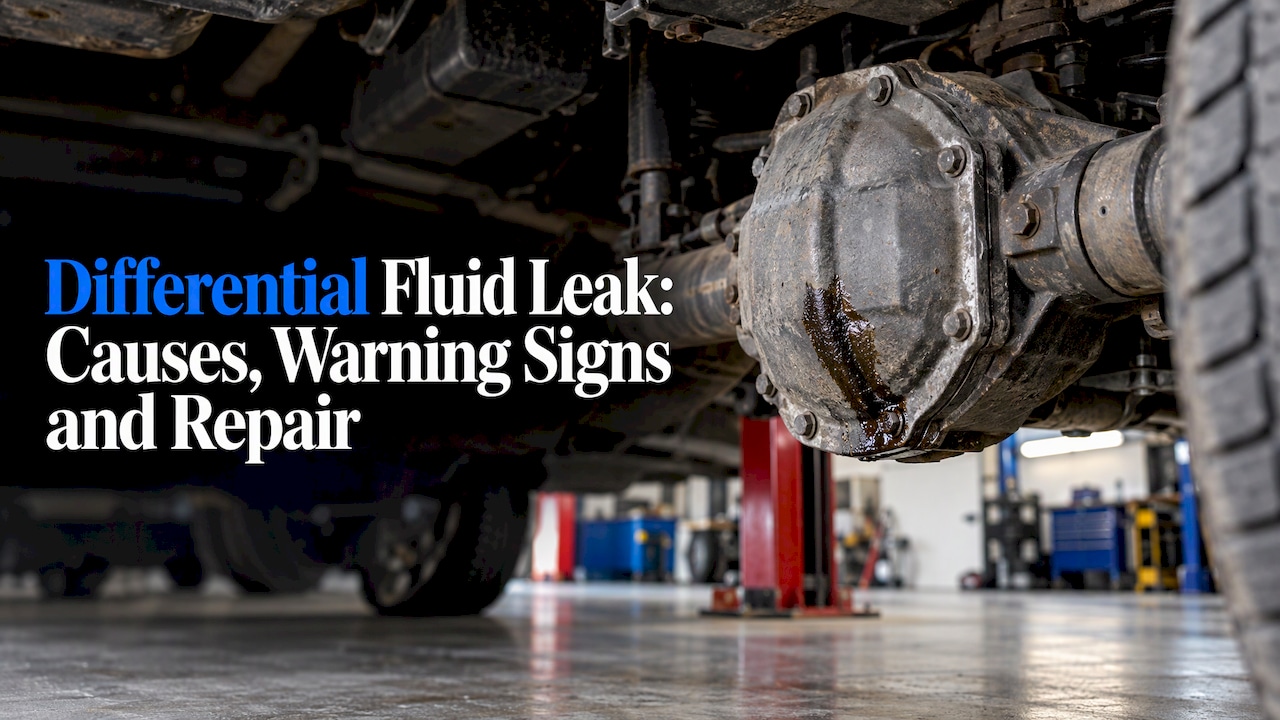
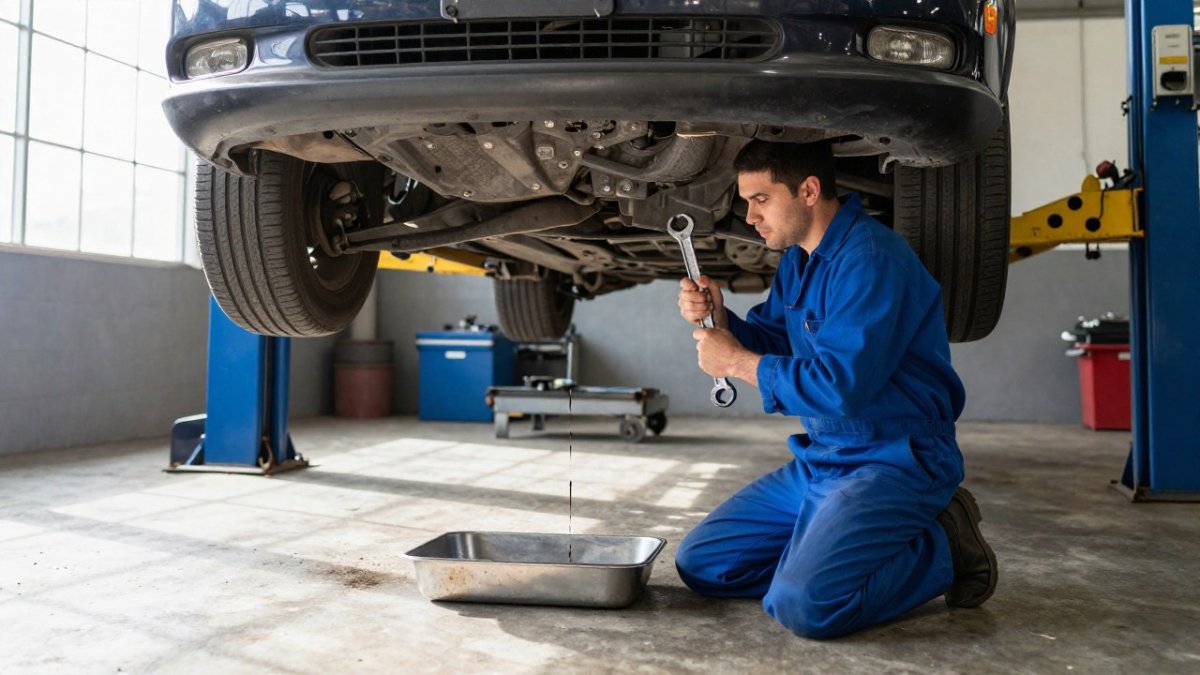
What causes differential fluid leaks, and how can they be identified? A worn or dried-out gasket can let fluid escape from the differential housing. A mechanic can look for fresh wetness or residue around the housing and gasket, then assess the fluid level and condition.
A stain beneath a vehicle can help locate a leak, but fluid color on pavement isn’t a reliable way to identify it. Engine oil, transmission fluid, and other fluids can leave similar-looking marks. Note where the stain sits in relation to the vehicle, and have the source inspected rather than assuming it came from the differential.
Fluid level is just as important as appearance. A leak can reduce the amount available to lubricate and cool the gears, allowing damaging contact between internal components. The right fluid type matters, too. Using the wrong lubricant can impair protection and contribute to overheating, so fluid selection should follow the vehicle’s specifications.
Change intervals vary by vehicle and application, so follow the maintenance guidance in the owner’s manual. If the fluid is dark, gritty, metallic, milky, or below the proper level, an inspection can determine whether service, a gasket repair, or internal repair is needed. Addressing a leak early may help limit further wear, but fresh fluid isn’t a complete fix if the leak remains.
5. Causes of differential failure
Differential failure often develops as lubrication or internal wear worsens over time. Differential fluid reduces friction and helps cool the gears and bearings. A leak can lower the fluid level, leaving internal parts with less protection as they rotate. Even a small leak matters if it continues unnoticed during regular driving.
Incorrect fluid can create a similar problem. Differential fluid must match the vehicle manufacturer’s specifications because the wrong lubricant may provide inadequate protection. Using an unsuitable type during a fluid change can contribute to poor lubrication and overheating. The required specification depends on the vehicle, so guessing based on color or thickness is no substitute.
Heat and drivetrain stress also matter. Driving at high speeds for long stretches, hauling heavy loads, or spinning the wheels can make a differential overheat. These conditions increase demands on the gears and bearings, especially when fluid is low. A truck working under load may experience different stress from a passenger car on ordinary roads.
Delayed maintenance can allow wear to build. Bearings and other internal components often deteriorate gradually rather than failing all at once. A light whine that gets louder or a vibration that changes during acceleration may indicate developing wear. The specific pattern helps describe the issue, but can’t identify the failed part on its own.
Driving habits can add strain, too. Repeated wheel spin puts sudden stress on the axle and differential gears. Heavy hauling and sustained high speeds can raise operating temperatures, while low fluid limits cooling and lubrication. These factors can combine: a leaking seal followed by loaded driving, for example, may leave components increasingly exposed.
Notice changes early and record when they happen. A sound during acceleration, difficulty making a tight turn, or a new vibration at certain speeds gives a mechanic useful context. These symptoms can also come from a driveshaft, axle, wheel bearing, or another drivetrain part. Inspection can distinguish those possibilities and identify whether fluid loss, bearing wear, gear damage, or another cause needs attention.
The repair depends on what an inspection finds. A leak may call for a gasket or seal repair, while worn bearings or damaged gears can require internal work. If the differential is severely damaged, rebuilding or replacement may be considered. Prompt attention to a leak or changing noise can help limit additional wear, though it can’t reverse damage already present.
If you notice a leak, growing noise, or vibration under load, schedule a differential inspection in Parker to identify the cause and discuss the appropriate repair.
Eagle Transmission & Auto Repair: Drivetrain and Differential Repair
Eagle Transmission & Auto Repair provides drivetrain and differential repair for drivers noticing drivetrain noise, fluid leaks, burning odors, or vibration. These signs can point to differential trouble, though similar symptoms may come from other parts, including the transmission or driveshaft.
Arrange an inspection when a new sound persists, fluid appears near the axle, or turning becomes difficult. The appropriate repair depends on the cause, whether the concern involves fluid loss, a seal, bearings, or gears. Identifying the source helps determine whether drivetrain and differential repair or another repair is needed.
For differential concerns in Parker, Colorado, contact Eagle Transmission & Auto Repair to discuss an inspection or drivetrain and differential repair.
Choose a Clear Next Step for Your Drivetrain
Vehicle symptoms can overlap, so a careful assessment helps distinguish a drivetrain concern from a transmission or engine issue. Eagle Transmission & Auto Repair also provides Transmission Repair, Transmission Service, and Engine Repair when those systems need attention.
Share what you’ve noticed and discuss what inspection makes sense for your vehicle. Contact Eagle Transmission & Auto Repair to take the next step toward understanding the concern and deciding how to move forward.
Frequently Asked Questions
Can you drive with a bad rear diff?
Driving with a suspected rear differential problem can worsen wear, so avoid unnecessary trips and arrange an inspection. A faint, occasional noise differs from severe grinding, repeated clunks, a fluid leak, or difficulty steering, but none should be ignored. If the sound or handling changes suddenly, pull over somewhere safe and seek assistance rather than continuing to drive. The source needs to be identified before deciding what to do next.
What causes a differential to fail?
Low fluid, a continuing leak, incorrect lubricant, heat, and gradual wear can all contribute to differential failure. Heavy loads, extended high-speed driving, or spinning wheels can add stress, especially when lubrication is already poor. Internal gears and bearings may wear over time rather than fail all at once. Following the vehicle’s owner’s manual for fluid maintenance supports lubrication and cooling, but can’t undo damage that has already developed.
What does a bad differential sound like?
A failing differential may produce a whine, hum, rumble, clunk, grinding sound, or pop. The timing helps distinguish possibilities: a whine under acceleration differs from one heard while coasting, and a pop during a turn may involve an axle or differential component. Other drivetrain parts can make similar sounds, so describe the driving conditions and sound pattern during an inspection rather than naming a part based on noise alone.
What does it mean if my differential fluid smells burnt?
A burnt odor from differential fluid can mean the fluid has overheated, often because its level is low or it’s contaminated. Overheating reduces the fluid’s ability to protect and cool internal parts. A leak, dark fluid, or new whining noise makes the concern more urgent to assess. A fluid change alone may not resolve the cause if a leak or internal wear remains, so have the differential inspected to determine the appropriate repair.
What is a differential and how does it work in your vehicle?
A differential transfers engine torque to the wheels and lets wheels on the same axle rotate at different speeds. For example, during a left turn, the right outside wheel travels farther than the left inside wheel and needs to rotate faster. This lets the vehicle turn without forcing both wheels to cover the same distance. Differential placement varies by drivetrain, and some vehicles use a transaxle that combines transmission and differential functions.
What are the common symptoms of a bad differential?
Common symptoms of a bad differential include a new whine or rumble, vibration, fluid leakage, burning odor, uneven tire wear, or difficulty making tight turns. A vehicle that pulls to one side can also have an alignment or other issue, so that sign alone doesn’t identify the differential as the cause. Pay attention to whether symptoms happen during acceleration, coasting, or turning, and share that pattern during diagnosis.
What noises indicate a failing differential, and when do they occur?
A howl or whine during acceleration can point to gear wear or an improper gear setup. A whirring sound while slowing down can involve pinion bearings, while repeated clunks may suggest damage or looseness elsewhere in the drivetrain. Chattering or banging only during turns can involve differential parts. Wheel bearings, U-joints, and transmission components can make similar sounds, so timing and operating conditions matter.
Can a bad differential cause vibration, shaking, or difficulty turning?
Yes. Differential or axle damage can cause vibration, especially during acceleration, and a malfunctioning differential can make tight turns difficult. But an unbalanced driveshaft or worn U-joint can also cause vibration, while alignment problems can make a vehicle pull. Note whether the shake changes with speed, throttle, or turning. A mechanic can compare those conditions and inspect related drivetrain components to locate the source.