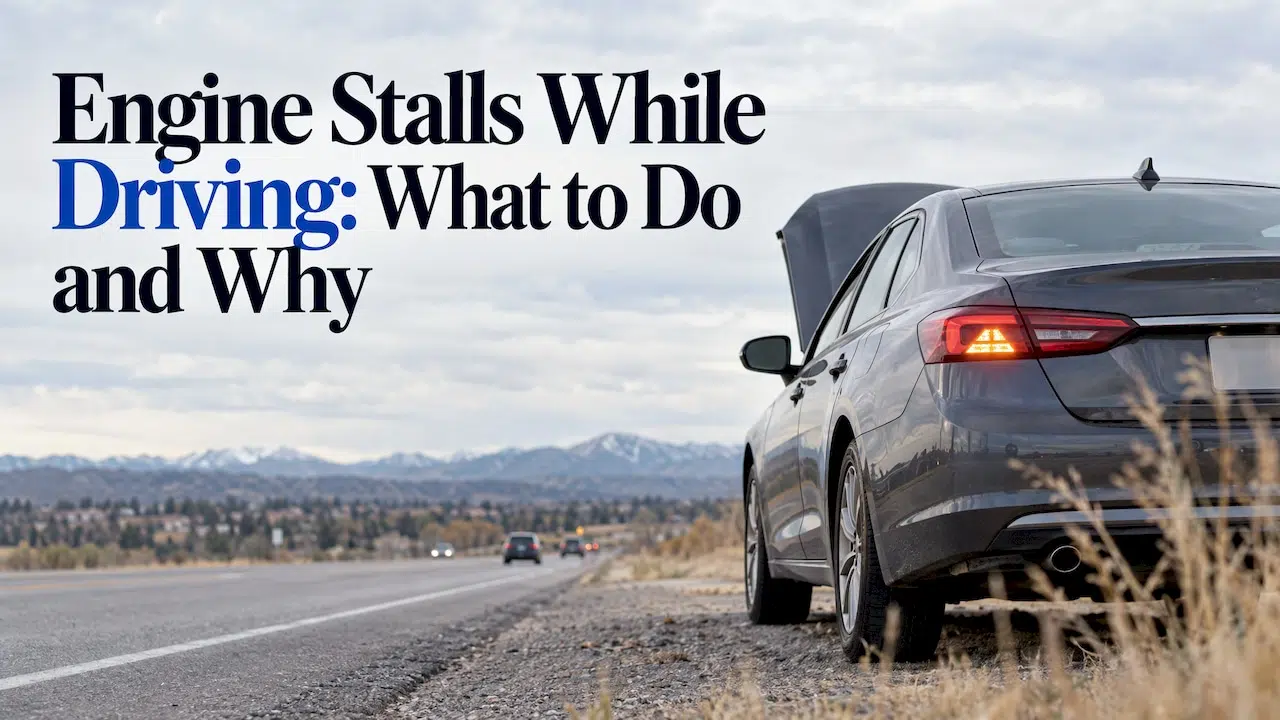
What if an overheating engine is less about one dramatic failure and more about a small cooling system problem that went unnoticed? A car overheating diagnosis in Parker can help identify causes such as low coolant, a leak, a faulty thermostat, a radiator issue, a failing water pump, or a cooling fan problem. A rising temperature gauge, a sweet smell under the hood, or visible coolant may be signs that the system needs attention.
It makes sense to wonder whether a warning light or a puddle can wait. If the temperature gauge spikes, pull off the road safely and turn off the engine, since continued driving can lead to further engine damage. This guide explains common causes, signs of coolant leaks, and how a technician typically narrows down the problem. You’ll also learn how regular fluid checks, prompt attention to leaks, and sensible driving habits can help reduce the chance of overheating.
Key Takeaways
- Overheating can stem from several cooling system problems, so the temperature gauge alone cannot identify the cause.
- Notice how coolant leaks, low fluid, or contamination can interfere with the system’s ability to carry heat away from the engine.
- Recognize warning signs such as a rising temperature gauge, a sweet smell, or visible fluid, and know when to stop driving.
- Learn how mechanics narrow down the issue by checking the radiator, thermostat, water pump, cooling fan, and head gasket.
- Understand how routine fluid checks and attention to cooling system concerns can help reduce the risk of overheating.
What Causes a Car to Overheat?
A vehicle overheats when its cooling system cannot carry enough heat away from the engine. A problem with the thermostat, radiator, water pump, cooling fan, hoses, or coolant can disrupt that process.
Common Cooling System Failures
A cooling system fault can slow coolant flow, reduce heat transfer, or let coolant escape. A stuck thermostat can restrict circulation, while a leaking radiator or hose can lower coolant levels. A failing water pump may leak or make a whining noise, and a cooling fan problem can reduce airflow through the radiator.
These faults can raise engine temperature even when the vehicle still starts and runs. A gauge above its usual range, a sweet smell under the hood, or fluid beneath the vehicle can signal trouble. If the gauge spikes, pull over safely and turn off the engine immediately.
Diagnosis and repair time depend on the cause, access to the affected part, and whether testing reveals additional damage. A hose leak may require different work from a thermostat, water pump, or head gasket problem, so the necessary checks and repairs determine the timeline.
Hot weather and mountain driving around Parker can add cooling demand, especially on steep climbs or under heavy engine load. Elevation alone does not identify a fault, but challenging driving conditions can make an existing cooling problem more noticeable.
Testing Cooling System Components
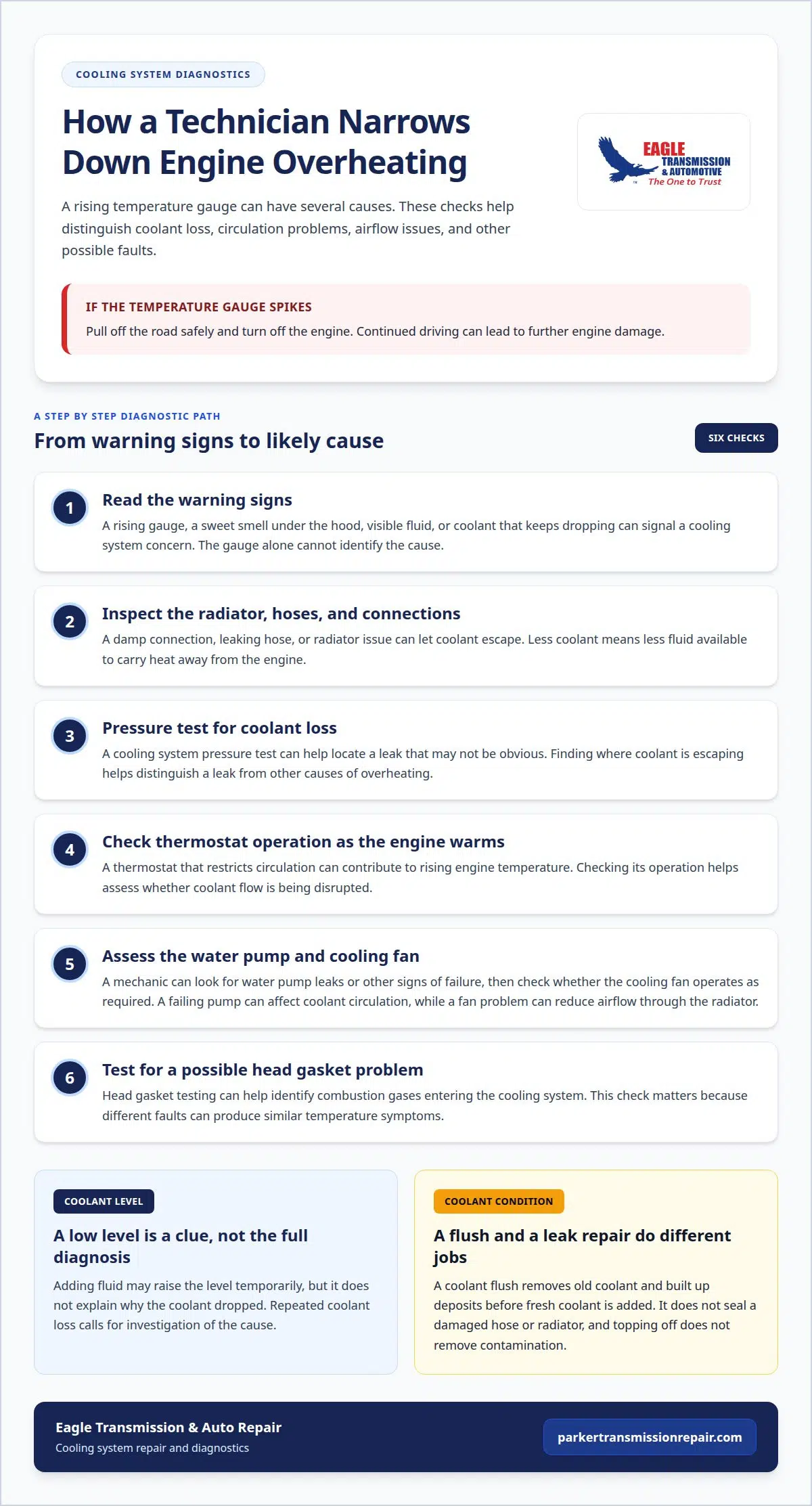
Component testing helps distinguish a circulation problem from a leak or airflow issue. A mechanic may inspect the radiator and hoses, then pressure test the cooling system to find coolant loss. They can assess thermostat operation as the engine warms and check the water pump for leaks or other signs of failure.
The cooling fan can be checked to see whether it operates as required, and head gasket testing can help identify combustion gases entering the cooling system. These checks matter because similar temperature symptoms can come from different components. According to AAA, a normally functioning car engine runs at about 195 to 220 degrees Fahrenheit.
Cooling System Diagnostics and Maintenance
Cooling system diagnostics are appropriate when a temperature warning appears, the gauge rises, coolant repeatedly drops, or a leak or sweet smell is present. According to AAA, vehicle fluid levels should be checked once a month between oil changes. A water pump may also wear with use; according to AAA, most car water pumps last about 60,000 to 100,000 miles.
Coolant condition matters as well as its level. Rust, corrosion, and debris can reduce cooling efficiency or clog narrow passages. A coolant flush removes old coolant and built up deposits before fresh coolant is added. Coolant service is separate from a transmission fluid flush versus drain and fill, which concerns a different vehicle system.
Low coolant and coolant leaks
Coolant circulates through the engine and radiator, carrying heat away so the engine can regulate its temperature. It is a mixture of water and other components, and both its level and condition matter. If coolant escapes through a radiator, hose, or connection, less fluid remains to carry heat. A car overheating diagnosis in Parker can help connect coolant loss with the warning signs and determine what needs testing.
A low reservoir level can point to a leak, though visible evidence may be subtle. A damp hose connection, colored fluid beneath a parked vehicle, or a sweet smell can help indicate where coolant is escaping. A temperature gauge that rises as coolant levels fall gives a mechanic another useful clue.
Coolant loss can compromise the system’s ability to prevent overheating. Insufficient coolant may also trigger a dashboard warning light or, in some cases, an engine shutdown. Adding fluid may raise the level temporarily, but it won’t explain why the coolant dropped. The leak’s location and the condition of the remaining fluid both matter.
Contamination creates a separate concern. Rust, corrosion, and debris can build up in coolant, reduce its efficiency, and clog narrow passages. Topping off replaces some lost fluid but does not remove that buildup. Contaminated coolant can still affect circulation and heat transfer.
A professional coolant flush removes old coolant and built-up rust or scale, then adds fresh coolant. In Parker, this service addresses contaminated fluid throughout the cooling system rather than simply raising the reservoir level. A flush and leak repair are different: fresh coolant does not seal a damaged hose or radiator.
During a car overheating diagnosis in Parker, a mechanic can assess the fluid and check for leaks before determining whether the vehicle needs a repair, a flush, or both. The findings help distinguish a leak that needs repair from contamination that calls for flushing. Neither service should be assumed from a low level alone.
Regular fluid checks can help reveal a falling level before an overheating warning appears. AAA recommends checking vehicle fluid levels once a month between oil changes. If coolant keeps dropping, investigating the cause is more useful than repeatedly topping it off, because ongoing loss can reduce the system’s ability to carry heat away.
Rust, corrosion, and debris can reduce coolant efficiency and clog narrow passages, so raising the fluid level alone may leave harmful buildup in the system. A complete system flush addresses that accumulation. The two actions serve different purposes: topping off restores fluid, while flushing targets contamination. Keeping the distinction in mind helps match the response to the problem, rather than treating a corrected level as a solution for buildup.
Overheating symptoms and warning signs
Watch how the temperature gauge changes, not just where it sits at one moment. A needle that climbs gradually during a drive tells a different story from a sudden jump. Note whether the change happens after startup, in traffic, or during steady travel. That pattern gives a mechanic useful context beyond the warning itself.
A dashboard warning may appear before obvious steam or a strong smell. Some vehicles show a temperature icon, while others display a text message. The display varies by vehicle, so note the symbol or wording and whether it stayed on, disappeared, or returned. That sequence helps distinguish a recurring alert from a brief reading.
Cabin heat can change alongside engine temperature. For example, the heater may blow cooler air while the gauge climbs, or its output may vary during the same trip. Note when the change occurs and whether it continues after the vehicle has been moving. This combination is a symptom to report, not proof of a particular failed part.
Pay attention to sounds and smells around the front of the vehicle. A sweet odor can be associated with coolant, while a whining sound near the engine can point to a possible water pump concern. Note where and when you notice them, and whether the sound changes as the engine runs. These details are more useful than simply saying the vehicle sounds unusual.
Steam or vapor under the hood is another visible symptom, but its appearance alone does not identify the source. You may notice it after parking, during a drive, or near the radiator. Note where it appeared and whether the temperature gauge changed at the same time. Avoid touching hot components while observing the vehicle.
A temperature warning can also appear alongside changes in how the vehicle runs, such as reduced engine performance or an unexpected shutdown. Insufficient coolant may trigger a dashboard warning and can potentially lead to engine shutdown. These signs deserve attention as part of the full symptom picture, especially if they occur with a changing gauge.
For a useful report, describe the order of events: for example, the gauge rose first, then the heater output changed, followed by a warning. Include whether the vehicle was idling, climbing, or traveling steadily. Specific observations help connect separate signs without treating one smell, sound, or dashboard message as a complete diagnosis.
How do mechanics safely diagnose an overheating car?
A safe diagnosis starts with the vehicle stopped and the engine allowed to cool. If overheating begins on the road, pull away from moving traffic when possible. A mechanic will ask what the temperature gauge showed, whether a warning appeared, and when the problem started. These details help frame a car overheating diagnosis in Parker before testing begins.
Driving conditions can help narrow the investigation. For example, overheating during a climb may differ from a gauge that rises while the vehicle sits in traffic. The mechanic may also ask whether the heater changed output, coolant was added, or the warning returned while driving.
After the engine cools, a mechanic can inspect the coolant level and look for leaks around hoses, the radiator, and connections. A hot cooling system can contain pressurized fluid, so opening its cap before it cools can cause burns. The inspection may also reveal damaged hoses, residue, or fluid beneath the vehicle.
Testing helps narrow the cause instead of replacing parts based on one symptom. A cooling system pressure test can reveal leaks that are difficult to spot visually. A scan tool can retrieve diagnostic trouble codes from the vehicle computer, adding information about temperature readings or related faults.
If the initial checks don’t explain the rising temperature, the mechanic can assess how the system behaves as the engine warms. This may include comparing temperature readings, checking coolant circulation, and observing fan operation. The results can help distinguish a circulation problem from a leak or an electrical control concern.
Before a road test, the mechanic considers whether the vehicle can be operated without risking further overheating. A vehicle that quickly reaches an unsafe temperature should not be driven for testing. If conditions allow, a controlled test can help show whether the issue appears at idle, during acceleration, or under added engine load.
Diagnosis can also include checking whether overheating affected other engine parts. A mechanic may look for combustion gases in the cooling system or unusual contamination in engine fluids. These findings can guide further testing rather than assuming the thermostat or radiator is responsible.
Once tests point to a likely cause, the mechanic can explain the findings and recommended repair. For example, a pressure test may reveal a leak, while temperature readings may point to a circulation problem. A car overheating diagnosis in Parker connects test results with the vehicle’s symptoms, helping keep the repair focused on evidence.
How do mechanics test the radiator, thermostat, water pump, cooling fan, and head gasket?
Mechanics use several checks because a rising temperature gauge can have more than one cause. Testing the radiator, thermostat, water pump, cooling fan, and head gasket helps connect the symptom to a specific fault. The sequence depends on what the vehicle shows during inspection.
Radiator: A mechanic inspects the radiator for damage, leaks, and signs of restricted cooling. A cooling system pressure test can help reveal leaks that are not obvious while the vehicle is parked. Hoses are also checked for bulges, swelling, cracks, or collapsed areas that may affect coolant flow.
Thermostat: The thermostat controls coolant flow as the engine warms. A mechanic can monitor temperature changes during warm-up and compare them with coolant circulation through the system. If the engine temperature rises while circulation appears restricted, the thermostat is one component to evaluate, not an automatic diagnosis.
Water pump: The mechanic checks the pump area for coolant leaks and listens for unusual noise, including whining. A coolant puddle or noise near the pump can guide further inspection, but neither sign alone proves pump failure. Testing the rest of the cooling system helps distinguish a pump issue from a leaking hose or radiator.
Cooling fan: The fan is checked to determine whether it operates as expected and moves air through the radiator. A mechanic may observe the fan as the engine warms or assess its electrical controls if it does not engage. This helps distinguish an airflow problem from restricted coolant circulation.
Head gasket: A head gasket seals the engine’s combustion chambers from its coolant passages. Mechanics can test for combustion gases in the cooling system and look for related evidence, such as unexplained coolant loss or overheating that continues despite other checks. Additional engine tests can help determine whether the gasket is leaking between passages.
Each result needs context. For example, a radiator pressure test may identify a leak, while a separate fan check can reveal an airflow concern. A mechanic compares these findings with the vehicle’s symptoms before recommending a repair. Replacing a thermostat based only on a high temperature gauge could miss a leaking radiator or another cause.
Component tests can also show whether overheating may have affected the engine itself. If head gasket testing indicates a problem, further evaluation can clarify the repair needed. A clear diagnosis connects test results to the symptoms, rather than treating every overheating vehicle as though it has the same failed part.
Eagle Transmission & Auto Repair
Eagle Transmission & Auto Repair in Parker provides professional automotive diagnosis and Engine Repair for overheating concerns. Because different faults can cause a temperature warning, the right repair depends on identifying the source rather than guessing from one symptom. If testing points to engine damage, the team can discuss the appropriate repair.
Useful details include when the gauge began rising, whether a dashboard warning appeared, and whether the vehicle lost coolant. Note whether the symptoms occurred in traffic, during a climb, or after the vehicle had been parked. These observations provide helpful context when discussing the problem and its possible causes.
Safety comes first. If the temperature gauge spikes, pull over safely and turn off the engine. Continued driving with an overheating engine can lead to further damage. A vehicle that has overheated should not be treated as ready for normal use simply because its temperature later appears lower.
Professional diagnosis matters because a radiator leak, thermostat issue, water pump fault, cooling fan problem, and head gasket concern can produce similar warning signs. The findings determine whether the next step involves a cooling component, an engine concern, or another repair. A symptom alone cannot establish which part has failed.
When discussing the vehicle, be ready to describe what happened and any changes you noticed. For example, mention a rising gauge, coolant loss, a sweet smell, or steam. If the vehicle has overheated more than once, that pattern is useful context. Clear observations help focus the discussion on the issue that prompted the visit.
Eagle Transmission & Auto Repair’s automotive services include Engine Repair, making the shop a fit when diagnosis points to an engine concern. The specific repair depends on the inspection findings and affected components. An overheating event does not automatically mean the engine needs repair, so testing should guide that decision.
There’s no need to guess at the cause from a dashboard warning alone. A professional assessment can clarify what the signs mean and which repair path fits the vehicle. If an engine temperature warning appears or overheating returns, arrange an inspection before continuing regular driving.
For help with an overheating concern or a possible engine repair, contact Eagle Transmission & Auto Repair in Parker, Colorado.
Frequently Asked Questions
What Should You Do If Your Car Starts Overheating?
Move out of traffic safely, stop, and turn off the engine if the temperature gauge spikes. Once stopped, note whether a warning light appeared, whether you noticed steam or a coolant smell, and whether overheating began while idling, climbing, or driving normally. Those details help describe the conditions surrounding the problem. A gauge that falls after stopping doesn’t establish that the vehicle is ready for normal driving, so arrange a professional assessment.
What are common causes of a car overheating in Parker, Colorado?
Common causes include a coolant leak, restricted flow from a thermostat problem, a radiator issue, a failing water pump, or a cooling fan fault. Driving around Parker, Centennial, Douglas County, Lone Tree, and Aurora can make a cooling concern more noticeable in hot weather or on a mountain climb, when the engine is under added demand. Those conditions don’t identify a failed part by themselves. A mechanic needs to test the vehicle to connect its symptoms with the cause.
What should I do immediately if my car overheats while driving?
Signal and pull off the road away from traffic if you can do so safely. The California Department of Motor Vehicles advises moving away from traffic when stopping because of vehicle trouble, if possible. If the temperature gauge spikes, turn off the engine once stopped. Don’t focus on reaching your destination; the priority is getting out of moving traffic and preventing further engine damage. Note the warning signs and conditions for the mechanic.
How long does an overheating diagnosis and cooling-system repair take?
Repair time depends on the cause, access to the affected part, and whether testing finds additional damage. A hose leak may require different work from a thermostat, water pump, or head gasket problem.