A transmission diagnostic isn’t the same as a transmission repair, and the cost depends on what the vehicle needs to be tested. If you’re asking how much a transmission diagnostic costs in Parker, the answer depends on factors such as the vehicle, its symptoms, and whether further testing is needed to narrow down the cause. An accurate quote requires an inspection.
It’s understandable to want a clear number before booking. A slipping gear, delayed shift, warning light, or unusual noise can point to different problems, so the diagnostic work needed can vary from one vehicle to another. The findings also help separate a sensor or control issue from a problem inside the transmission.
This guide explains what can affect diagnostic costs, what a professional inspection may involve, and how diagnostic findings help shape the next step. You’ll also learn what details about your vehicle and its symptoms can help the technician assess the concern.
Key Takeaways
- A diagnostic charge covers investigation, while repair charges cover the work needed to address the identified problem.
- Whether a diagnostic fee is credited toward a repair depends on the shop’s billing policy, so treat it as a separate charge unless stated otherwise.
- A useful inspection goes beyond a warning code and may include follow up tests to narrow down the cause.
- If you decline a recommended repair, the diagnostic work already completed may still be billed separately.
- Before approving work, understand what the inspection covers and how its findings connect to the proposed repair.
Factors affecting transmission repair costs
Transmission repair costs depend on what has failed, which parts are involved, and how much work the repair requires. A slipping gear, delayed shift, or fluid leak can have different causes, so the symptom alone cannot identify the necessary repair. A diagnostic inspection helps connect the complaint to a specific component before repair options are considered.
The vehicle itself matters. Its make, model, transmission type, age, and parts requirements can affect the work involved. A manual transmission concern, for example, may point toward clutch components, while an automatic transmission issue may involve hydraulic, electrical, or internal mechanical parts.
The cause can also change the scope of work. Shifting problems may involve a valve body, shift solenoid, vehicle speed sensor, throttle position sensor, or transmission control module. Testing helps determine whether the problem is limited to a control component or involves internal transmission damage.
- Parts: The specific component, its availability, and whether related parts need attention affect the estimate.
- Labor: Access to the failed part and the steps needed to remove or replace it influence the amount of work.
- Damage extent: A localized fault differs from wear or damage affecting multiple internal components.
- Diagnostic findings: Test results help define the repair scope instead of relying on symptoms alone.
For example, replacing a shift solenoid is a different repair from addressing a damaged valve body or rebuilding a transmission. The number and configuration of shift solenoids vary by transmission, so a technician needs to identify the faulty component before estimating the work.
Warning lights and stored fault codes can add useful clues, but a code does not automatically prove that a particular part has failed. A transmission control issue may create shifting symptoms, while an engine or sensor concern can affect how the vehicle behaves. A check engine light diagnosis can help clarify whether a warning relates to the transmission or another system.
A repair estimate should distinguish diagnostic work from the repair itself and describe the parts and labor involved. If testing points to internal damage, the work may be broader than a sensor or solenoid replacement. Review the findings and available repair options in light of the vehicle’s condition and identified fault.
Is a transmission diagnostic fee applied toward the repair cost?
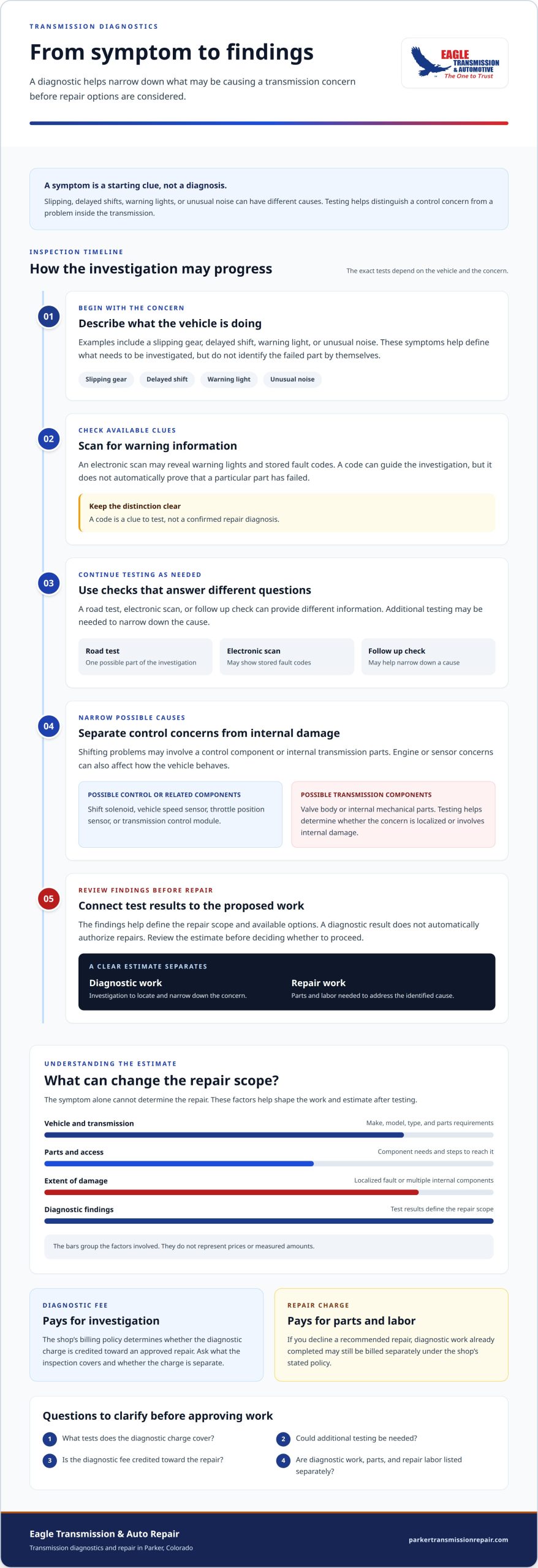
A shop’s policy determines whether a diagnostic fee is applied toward an approved repair. Ask whether the inspection charge will be deducted before authorizing work, and whether the estimate will show the diagnostic separately or credit it toward the repair total.
A diagnostic fee covers investigating a concern. Repair charges cover the parts and labor needed to address its cause. These are separate services, even when the inspection leads directly to a repair.
For example, a vehicle that shifts harshly may need testing to distinguish a control issue from internal wear. If testing identifies a faulty sensor, the repair may differ considerably from work involving transmission components. The inspection provides information to guide your decision, whether or not you proceed with a repair.
A clear estimate should explain how the diagnostic charge is treated. Look for these details before deciding:
- Credit terms: Does the shop deduct the diagnostic charge if you approve the recommended repair?
- Separate line items: Is the inspection listed apart from parts and repair labor?
- Scope: What tests does the diagnostic charge cover, and what additional testing could be needed?
- Approval: Will the shop explain the findings and estimate before beginning repair work?
These details help you compare the estimate with the proposed work, rather than comparing a single total without context. If a fee is credited, the estimate should show the adjustment. If it is not credited, the diagnostic remains a separate charge for locating the fault.
A diagnostic result does not automatically authorize repairs. You can review the findings, understand the proposed work, and decide whether to proceed. If you decline, the inspection already completed may still be billed under the shop’s stated policy.
Ask about billing before testing begins, especially if the inspection may require multiple steps. A road test, electronic scan, or follow up check can answer different questions. Clarifying what the initial charge covers helps prevent confusion if further diagnosis is recommended.
If you’re discussing a transmission concern in Parker, ask for the diagnostic and repair charges to be explained separately. To discuss your concern, get in touch with the shop.
Diagnostic fee policies can vary by shop. Ask the shop to confirm its policy and show any credit on the estimate. The key is to understand whether the fee will be applied to the repair before you authorize the work.
When reviewing the proposal, make sure you understand whether the diagnostic amount remains payable if you authorize the repair and how the balance changes if it is credited. If the shop applies it, the revised total should show the repair charges and adjustment clearly. If the shop does not, you can decide with the full separate amount in view. Getting that answer before authorizing work keeps the billing expectation clear and leaves the repair decision with you.
What is included in a transmission diagnostic inspection?
A transmission inspection starts with your specific complaint, such as slipping, delayed engagement, or a harsh shift. The technician uses that description to guide testing, since the same symptom can have several causes. Details such as when it happens, whether the vehicle is hot, and which gear is involved can help focus the assessment.
Next, the technician checks for clues that connect the symptom to a system or component. Electronic fault codes can help direct testing, but a code alone does not prove a part has failed. A shift concern, for example, may involve a solenoid, sensor, valve body, or transmission control module.
Depending on the symptoms, a diagnostic inspection may include these steps:
- Review the complaint: Identify the conditions linked to the concern, such as shifting after startup or during acceleration.
- Check electronic information: Read relevant fault codes and data to identify clues that need further testing.
- Inspect related areas: Look for visible signs, such as a fluid leak, that may relate to the reported problem.
- Evaluate operation: Reproduce the symptom when appropriate, including during a test drive.
- Plan additional tests: Use the initial findings to narrow down which system or component needs closer examination.
A test drive can show whether the transmission shifts differently under particular driving conditions. For example, a delayed shift during acceleration may not appear while the vehicle is stationary. The technician compares your description with the vehicle’s behavior during testing.
Some inspections take several hours, especially when a test drive is needed or the transmission must cool before further tests. Those steps can matter because a symptom may change with operating conditions. The inspection’s scope depends on what the first findings reveal, not just the warning light or shift complaint.
If initial checks do not identify the cause, further testing may be needed. A technician may investigate a valve body, which directs fluid through the transmission, or evaluate a speed sensor that reports vehicle movement. The goal is to distinguish a control or sensor issue from a mechanical concern before recommending repairs.
The findings should explain what the tests showed and what remains uncertain. For example, an electronic code can point toward a circuit, while additional checks help determine whether the sensor, wiring, or another related part is responsible. That distinction gives the repair estimate a clearer basis than replacing parts based on a code alone.
For a more involved concern, the diagnostic stage may identify the need for further inspection before the full repair scope is clear. The technician can explain which findings support the next step, such as testing a particular component or inspecting the transmission further.
Can an auto repair shop charge a diagnostic fee if I decline repairs?
A shop may charge for diagnostic work even if you decline the recommended repair. The charge covers time spent investigating the concern, rather than the parts or labor needed to fix it. Whether it applies depends on the billing terms explained before testing begins, not on whether you approve the repair afterward.
For example, a technician may investigate a delayed shift, read fault information, and perform additional checks. If the findings point to a sensor issue, you can decide whether to authorize that repair. Declining it does not undo the diagnostic work already completed.
Separate permission for inspection from permission for repair. Before the vehicle is tested, clarify the agreed diagnostic scope and how any additional testing is handled. Then, before repair work starts, review the findings and approve or decline the proposed work.
These points make the arrangement clearer:
- Diagnostic charge: Ask what inspection or testing the initial charge covers.
- Further testing: Find out whether the shop will pause for approval before expanding the diagnostic scope.
- Repair authorization: Confirm that repair work requires your approval after the findings are explained.
- Declining repairs: Ask how the shop bills completed diagnostic work if you choose not to proceed.
A written estimate can help distinguish the diagnostic findings from the repair recommendation. For instance, investigating a shifting concern does not automatically mean you have approved replacement of a transmission component. The estimate should make clear what repair work is proposed.
There is also a difference between an initial inspection and a deeper investigation. A fault code may lead a technician to check a related circuit or component. If more testing is needed, the shop can explain what the next step involves before continuing, according to the terms discussed with you.
If you decide not to proceed with repairs, ask for the inspection findings and recommended next step. An explanation of a suspected sensor, valve body, or control module concern can help you understand what the diagnostic established. It should distinguish confirmed test results from areas that would require further examination.
In Parker, the practical answer is to clarify the fee and authorization before the diagnostic begins. Ask whether declining repairs leaves the completed inspection charge payable, and whether any additional tests require separate approval. That way, your decision about the repair does not get confused with payment for diagnostic work already performed.
How can I find transmission diagnostic prices in Parker?
Start by asking what a transmission diagnostic includes, not just requesting a single number. In Parker, the scope may depend on the vehicle, the symptoms, and whether follow up testing is needed. An accurate quote requires an inspection and depends on the vehicle and diagnostic findings.
Give the technician useful details about your vehicle and concern. Share its make, model, transmission type if known, and symptoms such as slipping, delayed shifting, or a warning light. Explain when the issue occurs, such as after startup or during acceleration. Those details help frame the diagnostic.
Ask whether the quoted diagnostic charge covers only initial checks or additional testing too. For example, reading a fault code may lead to circuit testing or a road test. If the initial findings do not isolate the cause, ask how the shop handles further diagnostic work and whether it will discuss that step first.
Use a short checklist when requesting an estimate:
- Scope: Which inspection steps are included for the symptoms described?
- Additional testing: How will further testing be explained and authorized?
- Fee treatment: Is the diagnostic charge separate, or applied toward an approved repair?
- Written findings: Will the results and recommended next step be explained?
These details clarify what a diagnostic involves. A basic scan and a broader investigation are not necessarily the same thing. A harsh shift, for instance, may require more than reading an electronic code to identify the cause.
When asking about transmission diagnostic cost, keep in mind that an accurate quote requires inspection. The amount depends on the vehicle and diagnostic findings. If repairs are recommended, ask for an estimate that describes the proposed work and its associated parts and labor.
Online listings can help identify businesses in Parker, but a displayed price may not explain the inspection scope. Contact the shop directly with the vehicle details and symptom. Ask whether the amount applies to your specific concern, especially if the shifting issue happens only under certain conditions.
Before approving testing, confirm the diagnostic scope and how added steps will be handled. Before approving repairs, review the findings and proposed work. For a transmission concern in Parker, request a quote for diagnostic service with your vehicle details and symptoms.
Eagle Transmission & Auto Repair
Eagle Transmission & Auto Repair helps drivers in Parker and surrounding communities understand transmission concerns and the diagnostic findings behind recommended next steps. Transmission repair or transmission service may address an identified transmission problem. If symptoms point to another cause, engine repair is also available.
For a manual vehicle with shifting concerns, Eagle Transmission & Auto Repair provides transmission repair. Explore the transmission services available in Parker to learn more about the related work.
Have questions about an inspection or a transmission concern? Contact Eagle Transmission & Auto Repair to discuss the next step.
Choose a Clear Next Step for Your Vehicle
Use the diagnostic findings to make a decision based on your vehicle, not a budget guess. Share the symptoms and ask how the inspection results connect to the recommended work. A vehicle-specific estimate can then reflect the identified issue and repair scope.
Eagle Transmission & Auto Repair offers transmission repair and transmission service when the findings point to transmission work. If testing indicates the concern comes from the engine instead, engine repair is also available. The next step should match what the inspection identifies.
If you’re still asking how much a transmission diagnostic costs, the most useful next step is to discuss your vehicle’s symptoms and arrange an assessment. Contact Eagle Transmission & Auto Repair to discuss your transmission concern. A clear conversation can help you move forward with confidence.
Frequently Asked Questions
What is the average cost of a transmission diagnostic in the United States?
There isn’t one nationwide average that applies to every vehicle and inspection. The diagnostic scope and shop billing policy affect what a driver is quoted. For Parker area drivers, the most useful estimate is one based on the vehicle’s make, model, and specific concern. A general figure may not reflect the testing needed for an intermittent symptom or a vehicle with a particular transmission design.
How much do dealerships charge for a transmission diagnostic?
Dealership diagnostic charges vary, so contact the dealership with your vehicle information and symptoms for its current terms. Explain whether the concern happens during startup, acceleration, or a particular shift. Ask whether the quoted diagnostic covers the steps needed to investigate that situation. A quote tied to your specific concern is more useful than a general advertised amount.
How much do independent auto repair shops charge for a transmission diagnostic?
Independent shops set their own diagnostic policies, and their quotes can depend on the vehicle and concern. To compare estimates, describe the same symptom and vehicle details to each shop. Ask what the quote covers and whether it applies to an intermittent problem. That helps distinguish comparable inspections from offers that include different testing or services.
How much does a transmission scan tool diagnostic cost?
A scan tool reads electronic information, but that reading alone may not identify the cause of a shifting problem. A stored code can point toward a system or circuit for further investigation.
What factors affect the cost of a transmission diagnostic?
The vehicle’s transmission design, symptoms, and whether the concern is consistent or intermittent can shape the testing needed. For example, a fault that appears only after driving may need a different assessment than one present at startup. Vehicle details and a clear description of when the issue occurs help focus the diagnostic.
For help discussing a transmission concern, contact Eagle Transmission & Auto Repair in Parker, Colorado.
Eagle Transmission & Auto Repair
10189 Parkglenn Way, Parker, CO 80138
Phone: (720) 778-1888
Website: parkertransmissionrepair.com
Hours: 8:00 AM to 6:00 PM, Monday through Friday. Closed Saturday and Sunday.