Tackling the steep climb along I-25 quickly exposes a tired manual drivetrain. If your engine revs while your vehicle struggles to accelerate up an incline, simply replacing a worn friction disc won’t solve the underlying issue. For vehicle owners exploring clutch replacement Castle Rock options, durable performance requires treating the clutch assembly as a complete, matched friction system rather than patching over individual parts.
It is frustrating to deal with a spongy pedal, stiff shifting, or vague repair quotes that fail to explain which components actually need attention. You shouldn’t have to wonder whether the issue stems from a failing hydraulic cylinder, a grooved flywheel, or the transmission itself, especially when daily commutes between Castle Rock and Denver demand absolute reliability.
This guide explains how to identify early warning signs, evaluate necessary replacement components, and select a qualified manual drivetrain specialist near you. Here is everything you need to know to diagnose drivetrain troubles and keep your vehicle shifting cleanly on Colorado roads.
Key Takeaways
- Learn how to tell the difference between hydraulic fluid leaks and worn friction discs so you can address shifting trouble early.
- Understand why a lasting repair requires replacing the full clutch kit, including the pressure plate and release bearing, rather than just the disc.
- Discover why steep Front Range grades accelerate friction wear and when to plan for clutch replacement Castle Rock motorists need for reliable highway driving.
- Compare standard organic friction kits with heavy-duty upgrades to match your vehicle’s daily towing and commuting demands.
- Find out what happens during a professional manual drivetrain inspection, from hydraulic line checks to precise flywheel resurfacing.
Warning Signs Your Vehicle Needs a Clutch Replacement
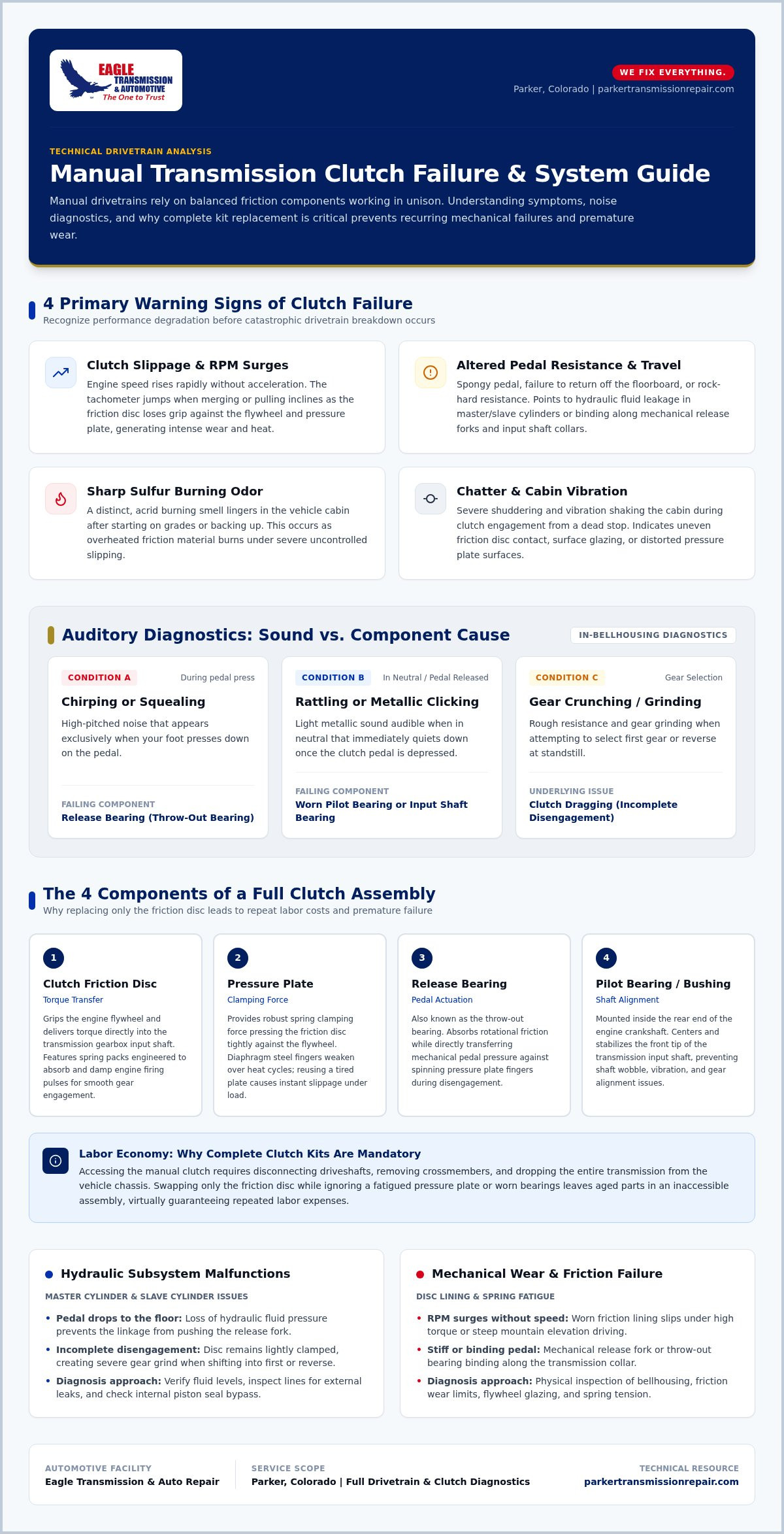
A failing manual drivetrain rarely gives out without drops in performance first. Because your engine relies on friction to transfer power to the wheels through a manual transmission, mechanical degradation shows up directly in how the car feels and responds. Drivers in Douglas County seeking reliable clutch repair often report several unmistakable symptoms before total failure occurs:
- Clutch slippage: Engine speed rises rapidly without a corresponding acceleration in vehicle speed.
- Altered pedal resistance: The pedal feels spongy, requires excessive leg effort, or remains stuck to the floor.
- Unpleasant odors: A sharp, sulfur-like burning smell lingers after starting on an incline or backing up.
- Chatter and vibration: Shuddering shakes the vehicle cabin as you release the pedal from a dead stop.
Recognizing Clutch Slippage and RPM Surges
Clutch slippage happens when the friction disc loses its grip against the engine flywheel and pressure plate. You might notice the tachometer needle jump suddenly while merging onto highways or hauling loads up steep grades, yet your car does not pick up momentum. Ignoring this slippage generates intense heat, accelerating wear until the disc completely loses traction, stranding you unexpectedly on the road.
Diagnosing Clutch Pedal Resistance and Travel Issues
Pedal feel issues stem from distinct mechanical or hydraulic causes. A pedal that drops to the floorboard and fails to return usually points to fluid loss in the master cylinder or slave cylinder. Conversely, a rock-hard pedal indicates bind-up along the mechanical release fork or binding on the transmission input shaft collar. When hydraulic pressure drops, the disc fails to disengage fully from the engine, making it stubborn or nearly impossible to select first gear or reverse at an intersection.
Auditory Clues: Grinding, Rattling, and Squealing
Unusual noises provide clear clues about which internal component is struggling inside the bellhousing:
- Chirping or squealing: A high-pitched squeal that appears only while your foot presses the pedal indicates a failing release bearing (throw-out bearing).
- Rattling in neutral: A light metallic clicking or rattle that quiets down once the pedal is pushed often traces back to a worn pilot bearing or worn input shaft bearing.
- Gear crunching: Grinding sounds when selecting a gear point to a clutch dragging against the flywheel rather than internal gear damage.
Because multiple worn parts can generate similar sounds, obtaining a comprehensive inspection for a clutch replacement Castle Rock drivers can trust ensures an accurate mechanical diagnosis before components suffer permanent damage.
What Components Are Included in a Complete Clutch Job?
Replacing only the friction disc is a shortcut that almost always leads to repeat labor costs. Because accessing the clutch assembly requires dropping the driveshafts, crossmembers, and the transmission itself, a lasting repair treats every internal contact part as a unified mechanical system. Understanding the basics of clutch operation helps clarify why professional drivetrain technicians always replace matched components together rather than swapping a single piece.
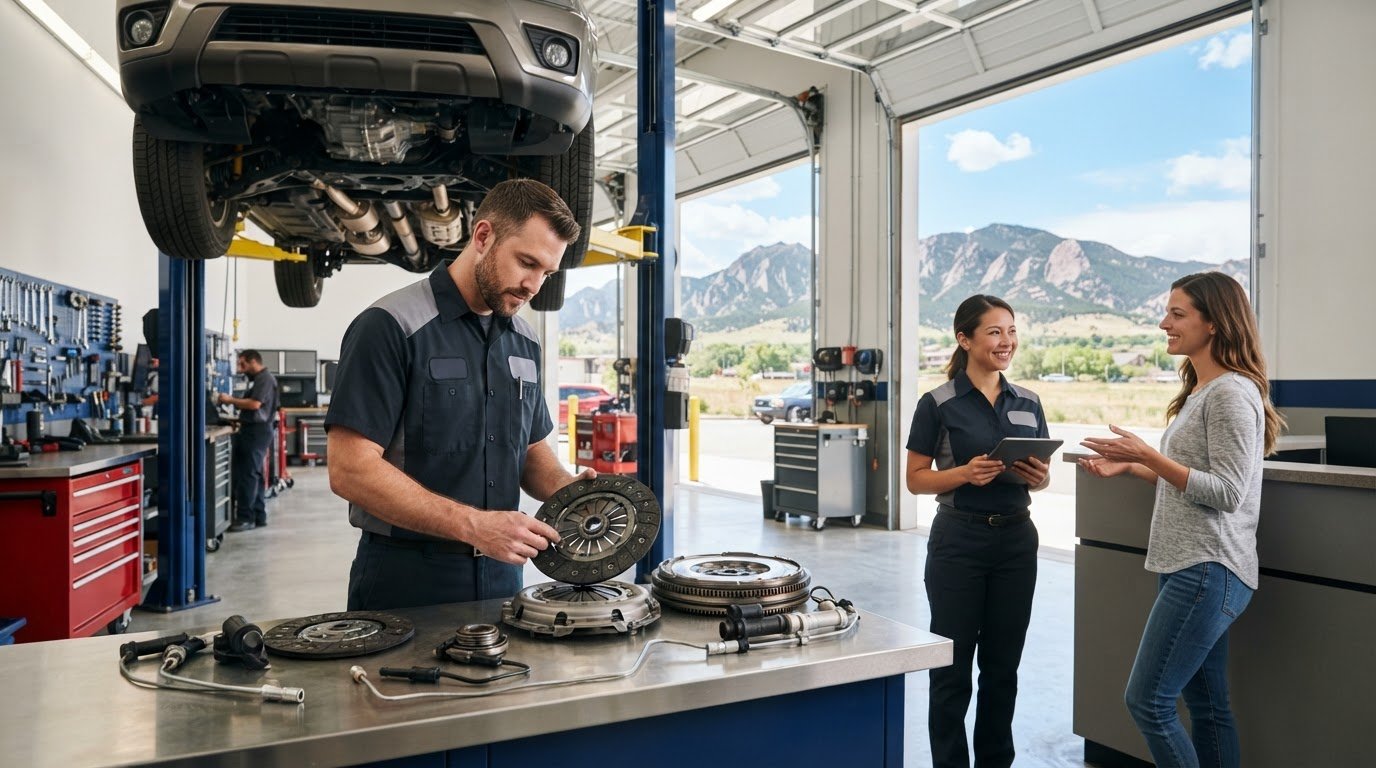
A comprehensive clutch job includes several critical wear items:
- Clutch friction disc: Grips the flywheel and transmits rotating engine torque into the gearbox input shaft.
- Pressure plate: Provides strong spring clamping force to press the disc tightly against the flywheel.
- Release (throw-out) bearing: Absorbs rotational friction while transferring pedal pressure against the spinning pressure plate fingers.
- Pilot bearing or bushing: Centers and stabilizes the front tip of the transmission input shaft inside the rear of the crankshaft.
The Core Assembly: Disc, Pressure Plate, and Bearings
The friction disc features spring packs engineered to damp engine firing pulses so shifting feels smooth. Over miles of driving, friction linings wear thin while the steel diaphragm fingers on the pressure plate lose spring tension from endless heat cycles. Putting a fresh disc against a tired, heat-weakened pressure plate prevents full clamping force. That oversight causes immediate slippage under load.
Flywheel Service: Resurfacing vs. Replacement
The flywheel serves as the vital counter-friction surface for the disc. Heavy friction exposure creates hard blue heat spots, micro-cracking, and uneven glazing across the metal face. Bolting a brand-new disc against an unmachined surface creates harsh pedal chatter upon engagement. While standard solid flywheels can often be precision-machined flat on a specialized lathe, modern dual-mass flywheels feature internal damping springs that wear out and cannot be resurfaced, requiring full component replacement.
Hydraulic System Inspection: Master and Slave Cylinders
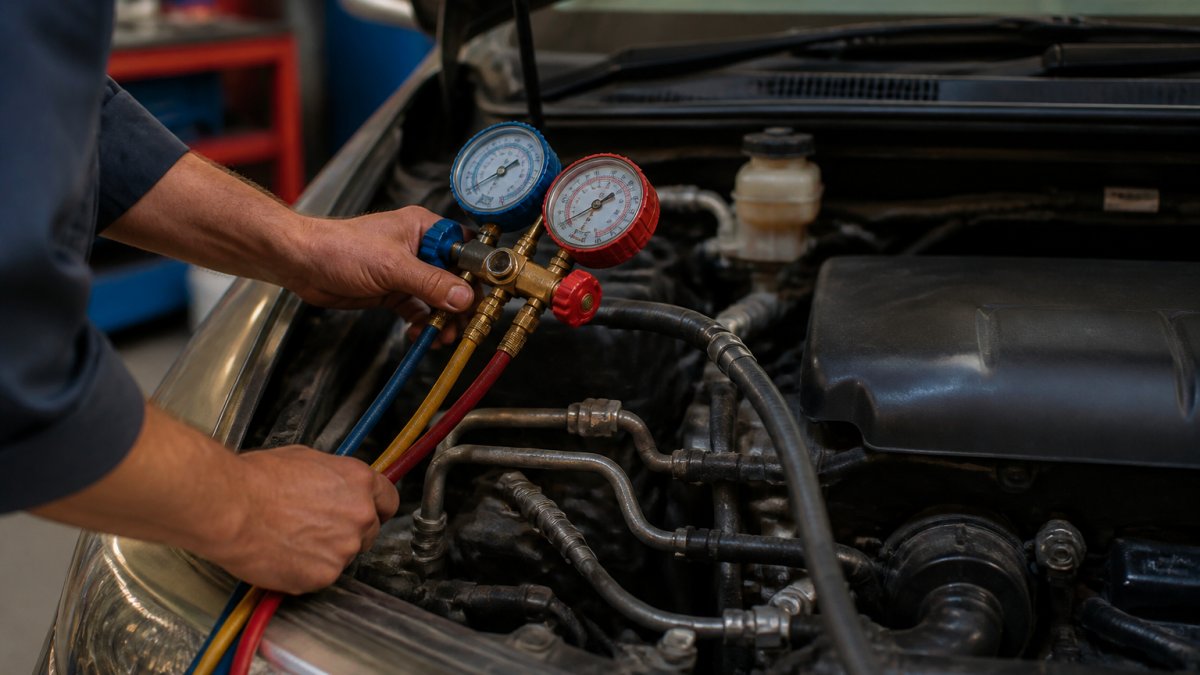
Modern manual transmissions rely on hydraulic fluid rather than steel cables to move the clutch fork. Internal rubber seals within the clutch master cylinder can bypass fluid under pressure without leaking externally, producing an inconsistent engagement bite point. Contaminated fluid also ruins the seals inside the concentric slave cylinder. Addressing these cylinders guarantees consistent pedal pressure for drivers needing dependable transmission repair near Castle Rock.
If your manual vehicle is showing signs of friction slip or release problems, you can get directions to our Parker shop for a thorough drivetrain evaluation before choosing a complete clutch replacement Castle Rock motorists depend on for tough daily commutes.
Colorado Driving Factors That Accelerate Clutch Wear
Operating a manual vehicle along the Front Range places distinct physical stresses on friction components that flatland driving never creates. While a standard clutch assembly often lasts between 60,000 and 100,000 miles under mild highway use, local elevation changes and stop-and-go commuting along the I-25 corridor wear down friction material much faster. Understanding these regional stresses helps you recognize why your vehicle may require clutch replacement Castle Rock services sooner than expected.
Incline Starts and Mountain Grade Demands
Holding a manual vehicle stationary on an incline by slipping the clutch burns away organic friction material in seconds. Drivers navigating steep town intersections or congested highway ramps often ride the pedal unintentionally, generating surface temperatures above 500 degrees Fahrenheit. Using the parking brake to secure the vehicle until the clutch begins to bite prevents this continuous slipping. Higher elevations also mean thinner air and lower engine torque at low engine speeds, leading motorists to feather the throttle and clutch pedal longer simply to get moving.
Towing and Heavy Payload Strains
Hauling heavy loads across Douglas County demands enormous clamping force from your drivetrain. Pulling horse trailers, flatbeds, or weekend campers up prolonged grades puts severe thermal strain on the pressure plate diaphragm springs:
- Friction breakdown: Heavy cargo magnifies rotational drag, causing the friction disc to glaze over and lose friction grip.
- Torsional shock: Hauling trailers over uneven foothill terrain stresses internal damper springs, eventually causing them to pop loose or rattle.
- Drivetrain wear: Extreme towing stresses do not stop at the bellhousing, making complementary differential gear service essential to protect axle gears and bearings from premature breakdown.
Sub-Zero Temperatures and Hydraulic Fluid Viscosity
Freezing Colorado mornings impact the hydraulic fluid operating your clutch release system. Brake fluid used in clutch circuits attracts atmospheric moisture over time, lowering its boiling point and thickening dramatically in sub-zero temperatures. Cold, sludgy fluid causes the pedal to return sluggishly, which allows the release bearing to ride against the spinning pressure plate long after your foot lifts. Frigid weather also hardens internal rubber cup seals inside the concentric slave cylinder, leading to slow leaks and sudden hydraulic pressure drop. Periodic fluid exchanges keep pedal response sharp and safeguard your entire drivetrain during winter months.
Comparing Clutch Replacement Options for Your Vehicle
Every vehicle operates under different working conditions. A compact commuter car navigating neighborhood streets has completely different friction needs than a heavy-duty truck hauling livestock trailers. When planning a clutch replacement Castle Rock drivers should match the friction disc compound, pressure plate clamping force, and flywheel configuration directly to how they use their vehicle each day.
OEM Replacement Kits vs. Heavy-Duty Performance Clutches
Standard OEM-style clutch packages utilize organic friction facings composed of woven phenolic resins and copper wire. These kits provide smooth, progressive engagement and light pedal effort, making them ideal for everyday stop-and-go driving. If you don’t tow heavy trailers, an organic kit delivers factory-like drivability and quiet operation.
Working trucks and fleet vehicles often require heavy-duty organic or ceramic-blend friction upgrades. Ceramic compounds withstand extreme operating temperatures without glazing under load, delivering superior torque hold. The trade-off is engagement feel: heavy-duty clutches grab much more abruptly and require stiffer pedal pressure to operate.
Single-Mass vs. Dual-Mass Flywheel Conversion
Many modern passenger vehicles and light trucks come equipped from the factory with dual-mass flywheels. These designs feature internal springs positioned between two separate plates to dampen engine vibration before it travels into the gearbox. While they deliver exceptional cabin comfort, dual-mass units cannot be resurfaced and require total replacement when worn.
Converting to a single-mass solid flywheel eliminates internal moving parts and significantly lowers future repair expenses. However, solid flywheels don’t absorb rotational vibration as thoroughly as dual-mass designs, which can introduce mild gear rollover rattle while idling in neutral.
Evaluating Independent Specialists vs. Dealership Service
Dealership service departments often carry long booking delays and tend to treat clutch jobs as routine parts-swapping routines. A dedicated drivetrain specialist looks at the broader mechanical picture, checking input shaft play, bellhousing alignment, and hydraulic pressure balance to ensure the entire system functions properly together.
Eagle Transmission & Auto Repair provides dedicated manual drivetrain service backed by our commitment that WE FIX EVERYTHING. Get directions to our shop just off Parker Road to evaluate the ideal clutch replacement Castle Rock vehicle owners depend on for long-term reliability.
What to Expect During Professional Clutch Service at Eagle Transmission
A dependable clutch repair involves far more than simply bolting new parts into the bellhousing. Because manual drivelines require exact mechanical tolerances, proper service follows an orderly diagnostic and installation process. Knowing the procedural steps helps vehicle owners feel confident when scheduling a clutch replacement Castle Rock drivers can trust for daily commuting and towing.
Comprehensive Pre-Repair Diagnostics
Before any major disassembly begins, technicians perform a detailed mechanical evaluation. We inspect external hydraulic cylinders for fluid bypass, test pedal linkage bushings for binding, and confirm that oil leaks from valve covers aren’t contaminating the friction plate. If gear selection remains difficult even with proper pedal travel, we determine whether internal synchros require dedicated manual transmission repair before recommending a new clutch assembly.
Meticulous Tear-Down, Resurfacing, and Installation
Once diagnostics confirm the clutch assembly is at fault, technicians systematically disconnect driveshafts, support the crossmember, and remove the transmission casing:
- Seal inspection: We check the engine’s rear main crankshaft seal and transmission input shaft seal for minor weeping that could soak a brand-new friction disc.
- Cavity detailing: Technicians clean built-up abrasive friction dust and road grime from the entire bellhousing interior and pivot ball.
- Precision alignment: Using specialized pilot alignment tools, we center the disc perfectly against the flywheel before torquing the pressure plate bolts in a star pattern to exact factory torque values.
Bleeding, Reassembly, and Road Verification
Reassembling the drivetrain requires the same careful attention to detail. After remounting the transmission, crossmembers, and driveshafts, the hydraulic release system undergoes pressurized bleeding to eliminate microscopic air pockets that cause pedal sponginess. Technicians then take the vehicle on a structured road test, verifying clean engagement bite points, smooth deceleration, and effortless shifts through every forward gear and reverse.
Our team treats manual drivetrains with complete mechanical focus, ensuring you drive away with smooth, dependable shifting. Whether you manage a work truck or a daily runabout, our philosophy remains clear: WE FIX EVERYTHING. Visit Eagle Transmission & Auto Repair along Parker Road to get your manual drivetrain properly inspected and restored.
Restore Confident Shifting to Your Manual Drivetrain
Driving along the Front Range requires complete confidence in your vehicle’s mechanical grip. When your manual clutch begins slipping under acceleration, dropping to the floorboard, or emitting sharp burning odors, delaying service risks leaving you stranded on busy foothills highways. A lasting repair always treats the friction disc, pressure plate, release bearing, and flywheel as a unified assembly rather than patching over individual wear items.
At Eagle Transmission & Auto Repair, our technicians utilize specialized diagnostic tools to pinpoint whether your shifting difficulties stem from failing hydraulics, internal synchros, or worn friction facings. We take pride in delivering comprehensive automotive care for commuter cars, fleet vans, and heavy-duty trucks under our guiding motto: WE FIX EVERYTHING.
You don’t have to navigate inconsistent pedal feel or frustrating gear grinds any longer. When you need dependable clutch replacement Castle Rock drivers can rely on for years to come, our shop is conveniently located just a short trip away off Parker Road. Get directions to Eagle Transmission & Auto Repair and let our dedicated drivetrain technicians get your vehicle shifting smoothly today.
Frequently Asked Questions
How many miles does a standard manual vehicle clutch typically last?
Most clutches last between 60,000 and 100,000 miles, though gentle highway driving can stretch that lifespan beyond 150,000 miles. However, stop-and-go driving, high altitudes, and frequent incline starts along the Front Range accelerate wear. If you tow trailers or haul heavy gear through Douglas County, friction linings can degrade much sooner. Regular inspections help catch thinning friction discs before you end up stranded.
Can I drive my vehicle if the clutch begins slipping on local roads?
You should avoid driving a vehicle with a slipping clutch except to carefully transport it to a repair facility. Slipping friction material generates extreme surface heat that rapidly grooves the flywheel and warps the pressure plate. What starts as a simple disc replacement can quickly destroy the flywheel and input shaft seal. Scheduling clutch replacement Castle Rock drivers count on early prevents costly collateral drivetrain damage.
What is the difference between a clutch master cylinder and a slave cylinder?
The clutch master cylinder creates hydraulic pressure, while the slave cylinder uses that pressure to disengage the clutch. When you press the pedal, the master cylinder pushes brake fluid through a hydraulic line directly into the slave cylinder. The slave cylinder extends its rod against the release fork or bearing to unclamp the disc. If either cylinder develops an internal seal leak, the pedal drops and shifting locks up.
Why is my manual car suddenly difficult to shift into reverse or first gear?
Difficulty getting into first or reverse usually indicates the clutch is dragging rather than fully disengaging. This resistance often stems from low hydraulic fluid, air trapped in the clutch line, or a warped pressure plate that fails to release its grip on the spinning flywheel. Because reverse lacks a synchronizer in many transmissions, a dragging disc forces gear teeth to clash violently rather than slide smoothly into place.
Do I always need to replace or resurface the flywheel during a clutch service?
Yes, the flywheel must always be resurfaced or replaced whenever a new clutch disc is installed. Mating fresh friction material against an unmachined flywheel causes violent pedal chatter, uneven bedding, and premature slipping. Solid steel flywheels can typically be machined flat on a lathe, while modern dual-mass flywheels containing internal damping springs must be replaced entirely to ensure smooth power transfer.
How long does a professional clutch replacement take from drop-off to pickup?
A complete clutch replacement typically requires between four and eight hours of dedicated labor, meaning most jobs wrap up within one to two business days. Technicians must remove driveshafts, support crossmembers, and drop the transmission casing before machining the flywheel and bleeding the hydraulic lines. When booking a clutch replacement Castle Rock vehicle owners can expect thorough road testing to verify seamless shifting before pickup.