A grinding noise when braking in Centennial can point to worn brake pads, debris near a rotor, or rotor wear. It may also signal reduced braking performance. If the sound continues, limit driving until the brakes can be inspected.
It’s tempting to hope the noise is just a small stone or brief scrape, but grinding can mean brake parts are rubbing together. Continuing to drive may damage the rotors and reduce the brakes’ ability to slow the vehicle effectively.
This article explains how trapped debris, worn pads and rotors, and other brake problems can cause grinding, what other signs to notice, and why reduced stopping performance matters. You’ll also learn what an inspection can reveal and how to approach driving until the cause is addressed.
Key Takeaways
- Grinding during a stop can point to brake pads worn through, but the sound alone can’t identify the exact cause.
- Rocks or other debris near the caliper and rotor may create scraping sounds, even when you aren’t pressing the brake pedal.
- Rotor wear and uneven contact can affect how smoothly the brakes work; rotors below recommended thickness need replacement rather than resurfacing.
- Limit driving while the brakes grind, since continued use can damage rotors and reduce braking performance.
- An inspection can help distinguish debris from worn pads, rotor problems, or caliper and brake hardware issues.
Why Are My Brakes Grinding and Making Noise?
A grinding sound during a stop can mean worn pads, trapped debris, or contact between brake parts. The sound alone can’t identify which component needs attention.
Brake Pad Wear During Stops
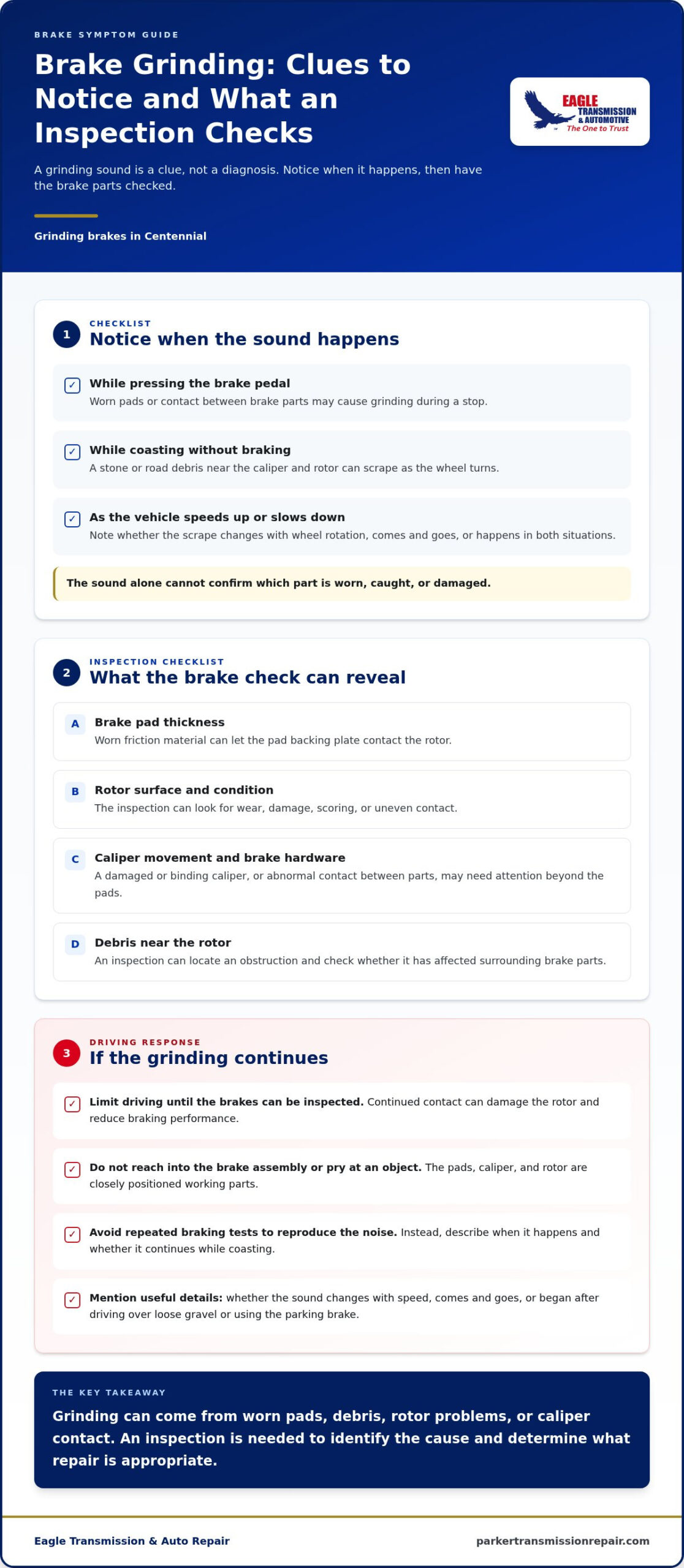
Brake pads press against the rotor to slow a moving vehicle. As the friction material wears away, the backing plate can contact the rotor and produce a harsh grinding sound during braking.
Squealing may happen before grinding, but sound doesn’t tell you how much pad material remains. A noise each time you stop deserves attention even if the vehicle still slows down. Continued contact can score the rotor, turning a pad repair into work on another brake component.
Contact Among Brake Components
The brake rotor, also called the disc, turns with the wheel, while the caliper holds the pads against it during braking. A sharp grinding sound can occur when the disc and caliper rub against each other.
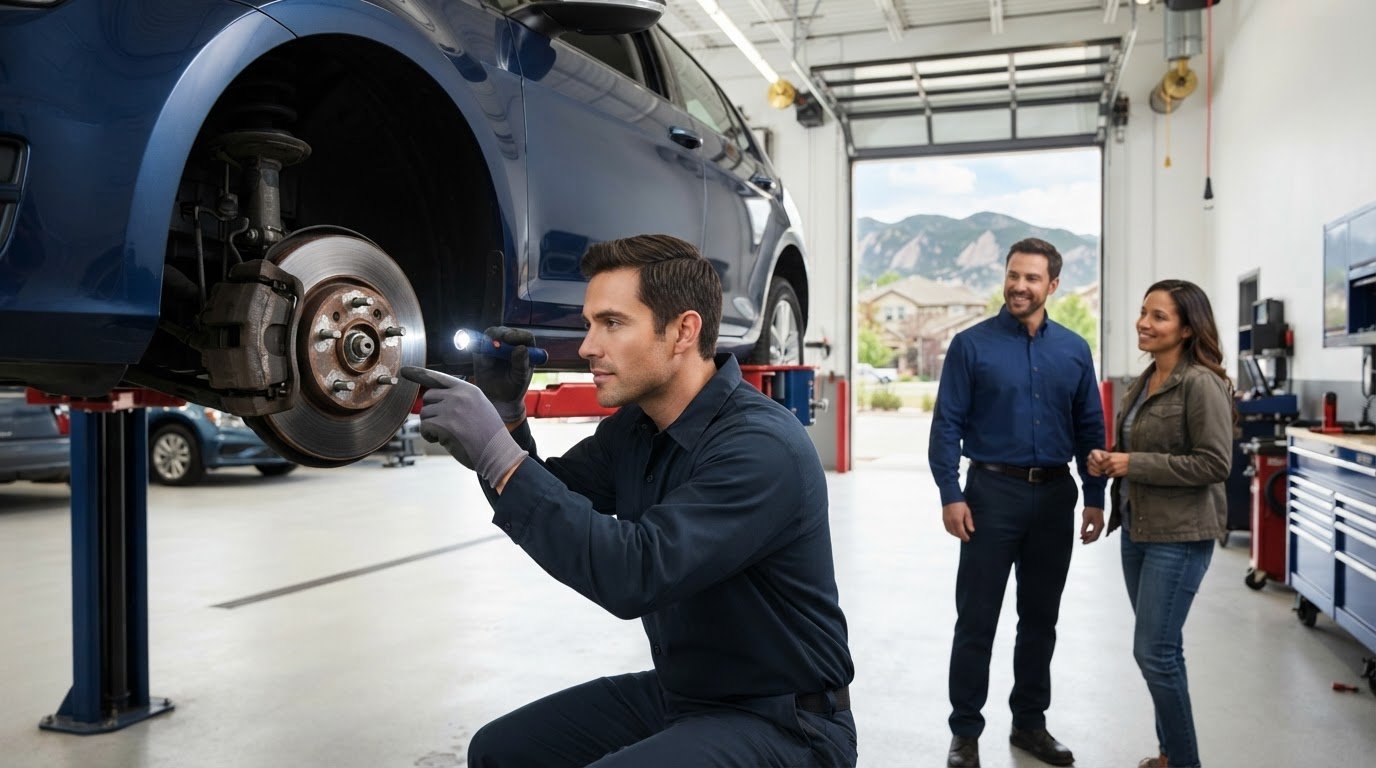
That contact may point to severely worn pads or a caliper problem, rather than ordinary brake noise. A technician can check pad thickness, the rotor surface, and caliper movement to locate the contact. Replacing pads alone may not address a damaged rotor or a caliper that continues to bind.
Stones and Debris in the Brakes
A small stone or piece of road debris can lodge between the caliper and rotor, causing scraping or grinding. Unlike worn pads, debris may make noise while driving at a steady speed, even when you aren’t pressing the brake pedal.
The sound may change as the wheel turns or the vehicle slows. Don’t reach into the brake assembly or try to dislodge an object without suitable maintenance experience. Prompt removal can help prevent further damage, while an inspection can distinguish trapped debris from worn or contacting parts.
Repair Urgency and Part Replacement
Intermittent grinding still needs prompt attention because changing contact as the wheel turns can make the noise come and go. Drivers in Centennial and nearby communities should treat it as a brake issue, rather than wait for a scheduled inspection to reveal a problem.
How can you tell whether pads, rotors, or calipers need replacement? An inspection checks pad thickness and rotor condition, and looks for caliper damage or abnormal contact. Pads may need replacement when worn through; a damaged rotor or faulty caliper may need separate repair. Sharp grinding alongside other braking noise makes timely inspection especially important.
Driving a long distance with the parking brake engaged can overheat the brakes and wheel end, causing excess wear or damage. If the grinding began after using the parking brake, mention that detail during inspection. For a separate maintenance question, a transmission flush versus drain and fill concerns the transmission, not the brakes.
Debris lodged between the caliper and rotor
A small stone or road fragment can become wedged near the brake caliper and rotor. Since the rotor turns with the wheel, the object may scrape against it as the vehicle moves. This can produce a steady or intermittent sound, including while you’re coasting without pressing the brake pedal.
Pay attention to how the sound changes. A scrape that follows wheel rotation may become faster as the vehicle speeds up, then slow as you decelerate. If it occurs only while pressing the brake pedal, worn pads or another contact issue may be involved. These clues help describe the symptom, but they can’t confirm what is caught or damaged.
Debris can shift as the wheel turns, so the noise might fade briefly and return. A quiet stretch doesn’t prove the object is gone. A small stone, for example, may move away from the rotor’s contact area, then scrape again as the wheel rotates. Repeated contact can mark the rotor surface.
Don’t reach behind the wheel or try to pry an object from the brake assembly without maintenance experience. The caliper, pads, and rotor are closely positioned working parts. An inspection can locate debris and check whether it has affected the rotor or other components. Any necessary repair depends on what the inspection finds.
When describing the problem, note whether it happens while coasting, during braking, or in both situations. Mention if the sound changes with speed, starts after driving over loose gravel, or comes and goes during one trip. These observations can help narrow the possibilities, but they can’t replace examining the brake assembly.
Prompt removal matters because debris left in contact with the rotor can cause further surface damage. A technician can check the space around the caliper and rotor, remove an obstruction, and assess the surrounding brake parts. If damage requires replacement, this brake replacement information relates to the repair options.
If grinding continues, limit driving until the brakes can be inspected. The sound may change without the underlying contact being resolved, and continued friction can affect brake performance. Avoid repeated braking tests to reproduce the noise. Instead, share what you noticed, including whether the sound continued while coasting.
For an inspection, get directions to the brake inspection location. A clear description of when the scraping occurs can help start the conversation and focus attention on the brake concern.
Rocks or debris lodged between the brake caliper and rotor can cause grinding while driving at a steady speed. A sharp grinding sound while braking can indicate that the brake disc and caliper are rubbing against each other.
When brake grinding occurs alongside sharp braking noise, replacing the brake pads immediately is recommended, and the discs or rotors may also need replacement.
Rotor wear, runout, and resurfacing
The rotor is the flat metal disc the brake pads press against to slow a wheel. As it wears, develops uneven areas, or becomes damaged, pad contact can change and create noise or vibration during a stop. Brake rotors are designed to last between 30,000 and 70,000 miles, but premature or uneven wear can shorten their useful life.
Runout means a rotor doesn’t track evenly as it turns. Instead of rotating smoothly, it can shift slightly from side to side, changing how the pads meet its surface. You may feel a pulsation through the brake pedal or notice vibration while slowing. These clues help describe the problem, but an inspection is needed to identify the cause.
Rotor wear doesn’t always look or sound the same. A rough surface, for example, may cause scraping, while uneven contact may cause vibration under braking. Rust or corrosion can also contribute to grinding. Because pad wear, debris, caliper issues, and rotor condition can create similar sounds, noise alone can’t confirm rotor damage.
Resurfacing removes a thin layer of rotor material to create a smoother braking surface. It’s an option only if the rotor will remain within its recommended thickness afterward. A rotor already below its recommended thickness should be replaced, not resurfaced. It needs enough material to perform its braking role.
An inspection compares the rotor’s surface and thickness with the requirements for that component. The technician also checks whether it turns evenly and whether the pads make consistent contact. If the rotor is too thin, badly worn, or damaged, replacement may be appropriate. If its surface can be corrected while retaining adequate thickness, resurfacing may be considered.
The decision isn’t simply “noise means new rotors.” A grinding sound could come from another part touching the rotor, while a rotor may show wear without causing the reported noise. Looking at the pads and caliper alongside the disc helps connect the sound to a specific source. For an overview of the related repair, see this information about brake replacement.
If grinding returns after a brief quiet period, note whether it happens during every stop, only at low speed, or with pedal vibration. That description gives the inspection a useful starting point. Addressing confirmed rotor wear or damage promptly can help prevent continued contact from worsening connected brake parts.
Debris lodged between pads and rotors
A stone or other road debris can become trapped where a brake pad meets the rotor. Because the rotor turns with the wheel, the object may scrape its surface as the vehicle moves. This can create a grinding sound even when you aren’t pressing the brake pedal.
The sound may change as the wheel rotates or the object shifts. You might hear repeated scraping while coasting, for example, then notice a different sound while braking. That pattern can suggest something is caught near the pads, but it doesn’t confirm debris. Worn pads, rotor damage, or a caliper problem can cause similar noises.
Location matters. Debris near the pad and rotor can interfere with their contact, while a stone near the caliper may scrape against the rotor as it spins. Either way, repeated contact can mark or damage the rotor. A persistent grinding noise deserves attention, even if it temporarily fades during the drive.
Debris lodged in the brakes should be removed promptly to help prevent further damage. An inspection can check around the pad, rotor, and caliper, then assess whether the object affected those components. A technician can also distinguish a trapped stone from worn friction material or uneven rotor contact.
If you lack car maintenance experience, seek professional help rather than reaching into the brake assembly. The pad and rotor are closely positioned working parts, and an object may not be accessible from outside the wheel. Trying to dislodge it without proper experience can leave it in place or disturb brake hardware.
Notice when the grinding occurs and share those details during an inspection. Does it continue at a steady speed, happen only during a stop, or occur in both situations? A sound that follows wheel rotation without pedal pressure differs from noise heard only while braking. These observations help narrow the possibilities, but they can’t replace examining the brake parts.
If the noise returns after seeming to disappear, don’t assume the debris has cleared. Its position may have shifted, changing the sound without resolving the contact. Continued driving can allow rotor damage to progress, and grinding can reduce braking performance. Use the vehicle as little as possible until the brakes are inspected or repaired.
After debris is removed, the rotor and pads still need attention if they show damage or abnormal wear. An inspection can determine whether removing the obstruction addresses the issue or whether another brake component needs service. That distinction matters: a stone, worn pad, and damaged rotor can sound similar but need different repairs.
Reduced braking performance
Grinding brakes can reduce braking performance, so a familiar stop may feel different. Is it safe to drive with grinding brakes? Use the vehicle as little as possible until the brakes are inspected or repaired. A grinding noise when braking in Centennial can signal abnormal contact between brake parts, and continued use may worsen damage or stopping ability.
Notice how the vehicle responds. It may take longer to slow, the pedal may feel different, or the sound may grow louder during a stop. These signs don’t identify one failed part, but they help describe brake behavior. Don’t judge stopping ability by sound alone.
Grinding can damage the rotor, the disc the pads press against. If its surface is damaged, pad contact may become less even, affecting the friction used to slow the vehicle. Continued grinding can lead to more serious trouble, including brake failure. That risk makes prompt inspection important, even if the vehicle still stops.
One exception is ABS activation during a sudden stop. The anti-lock braking system helps prevent wheel lockups and skids through rapid changes in brake pressure, supporting stability and control. When it engages, you may hear grinding and feel pedal rumbling. If those sensations occur during a sudden stop, they may reflect ABS operation, but other grinding still needs attention.
Compare the sound’s timing with the vehicle’s response. Grinding during ordinary stops, a change in pedal feel, or weaker stopping calls for prompt inspection. If a vehicle has sat for more than a month, its brakes should also be inspected for rotor rust that could interfere with proper operation. A parked vehicle may look unchanged while corrosion develops on brake surfaces.
Until the cause is addressed, avoid unnecessary trips and don’t test the brakes with repeated hard stops. If the pedal response changes sharply or the vehicle struggles to slow, stop somewhere safe and arrange professional help. A brake inspection can assess pad contact, rotor condition, caliper operation, and overall braking performance.
For Centennial drivers, a grinding noise while braking deserves attention even if it comes and goes. Inspection can determine whether stopping ability has been affected and what repair is needed. Plan a route for a brake inspection if grinding or weaker stopping has appeared.
Brake hardware should be replaced every time brake pads are changed to help secure the pads and reduce noise-causing vibrations. When a repair involves new pads, the hardware should therefore be part of the work rather than treated as an unrelated detail. Securing the pads and reducing vibrations addresses a separate consideration from whether the rotor surface is damaged or whether stopping ability has changed. Ask the repair professional to account for the hardware when discussing pad replacement, alongside the inspection findings. This does not establish that hardware is the cause of every grinding sound or replace the need to assess braking response; it is a maintenance point to include whenever pads are changed. The inspection and repair plan can then address the observed condition and the parts involved.
Eagle Transmission & Auto Repair: Transmission Repair
Eagle Transmission & Auto Repair provides transmission repair and service for shifting, gear engagement, and other transmission concerns. Grinding during braking usually points to the brake system, so the noise alone doesn’t indicate a transmission problem. If your vehicle also has a separate shifting concern, describe when it occurs and how the vehicle responds.
For manual transmission concerns, Eagle also offers manual transmission repair and clutch replacement. Engine repair is available for symptoms traced to the engine rather than the brakes or transmission. Identifying which system is involved helps direct the right repair conversation.
For information about transmission or engine service, contact Eagle Transmission & Auto Repair or visit the Eagle Transmission & Auto Repair website.
Choose a clear next step for your brakes
If you hear a grinding noise when braking in Centennial, note when it happens and whether the vehicle’s stopping response has changed. Those details give a brake inspection a useful starting point, while the condition of the pads, rotors, and calipers helps determine what needs attention.
Since braking affects vehicle control, don’t treat recurring grinding as a sound to monitor indefinitely. If the brakes feel weaker or behave differently, limit driving and arrange an inspection. Eagle Transmission & Auto Repair offers brake repair and replacement, so you can discuss the symptom and the appropriate next step.
Get directions to Eagle Transmission & Auto Repair for a brake inspection, and take the next step toward understanding the noise.
Frequently Asked Questions
What causes a grinding noise when braking?
Possible causes include worn pads, debris, rotor wear, or caliper contact. Notice whether the sound changes with wheel speed, while turning, or only when pressing the brake pedal. That pattern can help describe the symptom, but it can’t identify the failed part by itself.
What should you do immediately if brakes are grinding?
If braking feels different or the vehicle isn’t slowing as expected, pull over somewhere safe. Note any dashboard brake or ABS warning and the conditions when the sound occurred. Share those details when arranging professional attention, and avoid repeated stops just to test the noise.
What are typical brake inspection and repair labor rates in Centennial?
There isn’t one labor rate for every vehicle or repair in Centennial. The estimate depends on the vehicle, inspection findings, parts involved, and whether the work extends beyond pads to rotors or calipers. Ask for an estimate that explains the inspection, parts, and labor before authorizing work.
Where can you get same day brake inspection in Centennial, Colorado?
Eagle Transmission & Auto Repair offers brake repair and replacement. Contact the shop to discuss a brake inspection, and describe when the noise occurs. The shop is in Parker, Colorado, serving Centennial, Castle Rock, Douglas County, Lone Tree, and Aurora.
For help with a grinding brake noise, contact Eagle Transmission & Auto Repair to discuss an inspection.
Eagle Transmission & Auto Repair
10189 Parkglenn Way, Parker, CO 80138
Phone: (720) 778-1888
Website: parkertransmissionrepair.com
Hours: 8:00 AM to 6:00 PM, Monday through Friday. Closed Saturday and Sunday.