Last Updated: November 7, 2026
Quick Summary
Clutch slipping happens when the clutch disc does not grip the flywheel firmly enough to pass engine power to the transmission. The most common sign is engine RPM rising without a matching gain in speed, especially on hills or when merging. Other signs include weak acceleration, a burning smell, hard shifting, and grinding.
- Engine RPM climbs while vehicle speed barely increases, the most common sign of clutch slip.
- Slip often worsens under load, such as climbing hills, merging, or towing.
- A burning smell after hard acceleration or hill driving signals overheating friction material.
- A spongy pedal can indicate air in the hydraulic line or a fluid leak, not just a worn disc.
- A pedal that stays low or sticks means you should not drive until it is checked.
Table of Contents
- What Clutch Slipping Means and How It Happens
- Symptom 1: Engine RPM Rises Without a Matching Gain in Speed
- Symptom 2: Weak Acceleration and a Burning Smell
- Symptom 3: Hard Shifting, Grinding, and Pedal Changes
- How Long a Slipping Clutch Lasts and Whether Driving on It Is Safe
- Booking a Clutch Diagnosis at Our Parker Shop
- Frequently Asked Questions
What Clutch Slipping Means and How It Happens
Clutch slipping happens when the clutch disc does not grip the flywheel firmly enough to pass engine power to the transmission.
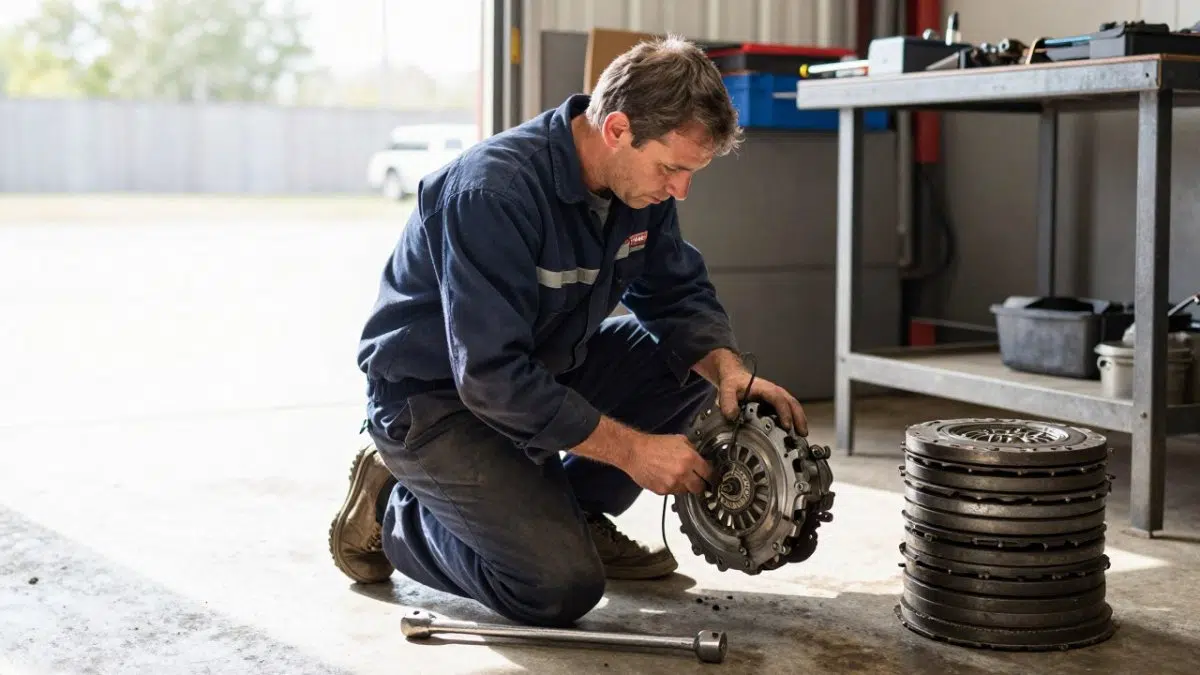
Here is how a clutch normally works. The clutch disc is pressed against the flywheel by a pressure plate.
Over time, the friction material on the disc wears thin. Heat, heavy loads, and frequent stop-and-go driving speed up that wear.
Clutch slip is not always obvious at first. Many drivers notice small changes weeks before the problem gets serious. Knowing the warning signs helps you act early.
Symptom 1: Engine RPM Rises Without a Matching Gain in Speed
This is the most common sign of clutch slip. Compare your car against our clutch warning signs checklist to see whether yours matches. You press the gas, the tachometer climbs, but the car barely picks up speed.
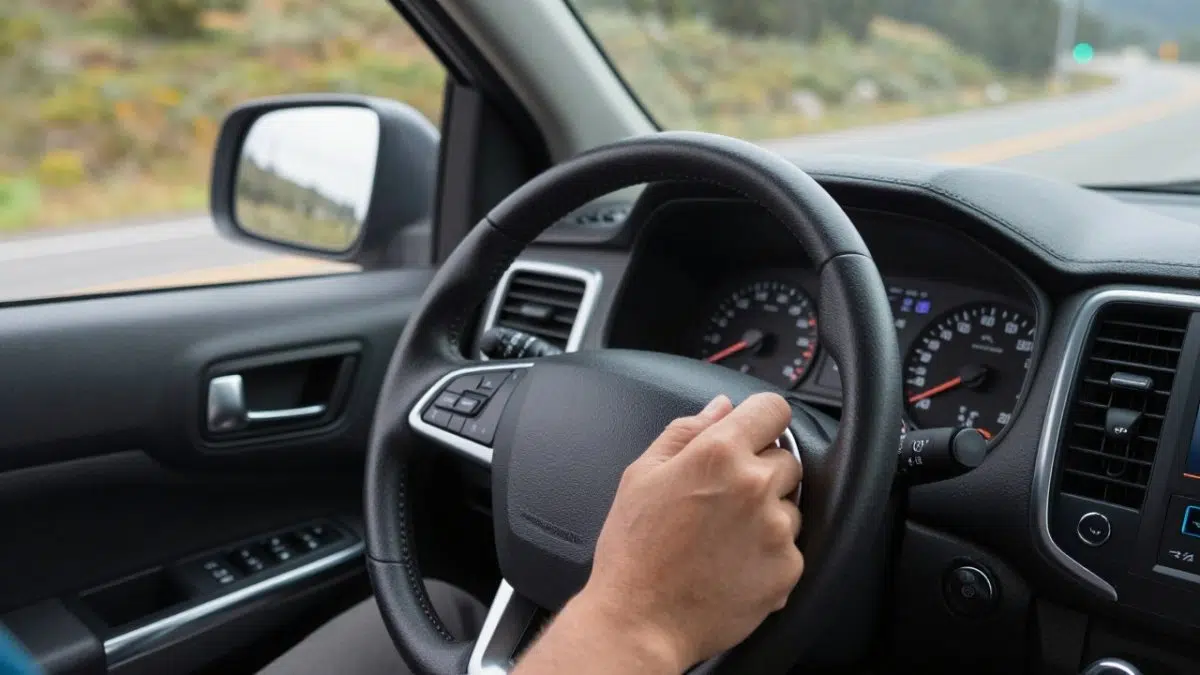
You may notice this most on hills, when merging onto a highway, or when towing. Colorado’s mountain roads and steep grades put extra load on a clutch, so the problem can show up sooner here than in flatter areas.
What to check:
- Does the RPM jump while speed stays flat when you accelerate in a higher gear?
- Does the problem get worse under load, such as climbing a hill?
- Does it happen more on a hot day or after long highway driving?
If you answer yes to these, have the clutch looked at soon.
Symptom 2: Weak Acceleration and a Burning Smell
Weak acceleration usually comes with slip. The car feels sluggish, especially when you try to pull away from a stop or pass another vehicle.
A burning smell is another warning. The friction material on the clutch heats up when it slips. You may notice a sharp, acrid odor, similar to burning carpet or toast, especially after hard acceleration or hill driving.
A burning smell is a sign to stop pushing the car hard. Drive gently, avoid long climbs under load, and schedule an inspection as soon as you can.
Symptom 3: Hard Shifting, Grinding, and Pedal Changes
Clutch problems often show up at the pedal and the gear lever before they show up as obvious slip.
Here is what each sign usually points to:
- Difficulty shifting: The gear lever resists or will not slide into gear cleanly. If it is worst in first and reverse when the car is stopped, the clutch may not be releasing all the way. If it is worst between gears while moving, worn synchronizers or a dragging clutch are both possible.
- Grinding when shifting: A harsh, metallic sound as you move the lever usually means the clutch is still partially engaged when you shift. The gears are trying to mesh while the input shaft is still spinning.
- Spongy or soft pedal: A pedal that sinks or feels mushy often points to air in the hydraulic line, a failing master or slave cylinder, or a fluid leak. This is a hydraulic fault, not necessarily a worn clutch disc.
- Pedal sticking or staying low: A pedal that does not return fully can leave the clutch partially disengaged, which causes slip and heat. This is a drive-nowhere-until-checked symptom.
- High bite point: If the pedal has to come almost all the way up before the car moves, the friction disc is likely worn thin. A bite point that moves higher over weeks is a classic wear indicator.
- Juddering on engagement: A shake or vibration as you let the pedal out can come from uneven friction material, oil contamination on the disc, or worn engine or transmission mounts.
Watch out: A spongy pedal and a low fluid level in the clutch reservoir can be a hydraulic leak.
Pedal and shifting problems can also come from parts outside the clutch itself, including the hydraulic system, the release bearing, the linkage, or the transmission internals. When the transmission itself may be involved, signs of bad transmission fluid can help distinguish a fluid-related problem from a clutch or hydraulic fault.
If you are in Parker or nearby communities and your pedal feel has changed, have it looked at before a hydraulic fault turns into a no-start, no-shift situation in a parking lot or on a shoulder.
The table below sums up the pedal and shifting signs covered in this section and what each one usually points to.
| Sign | What it usually points to | Urgency |
|---|---|---|
| Gear lever resists in first or reverse | Clutch not releasing fully | Schedule soon |
| Harsh metallic grinding when shifting | Clutch still partly engaged during shift | Schedule soon |
| Spongy or soft pedal | Air in line or hydraulic leak | Check promptly |
| Pedal stays low or sticks | Clutch partly disengaged, causing slip and heat | Do not drive until checked |
| Bite point moves higher over weeks | Friction disc worn thin | Schedule soon |
| Shudder when letting pedal out | Uneven disc, oil contamination, or worn mounts | Schedule soon |
How Long a Slipping Clutch Lasts and Whether Driving on It Is Safe
Most drivers want two answers: how long can I keep driving, and when is it no longer safe. The honest answer is that clutch wear is progressive, not sudden. A clutch that slips lightly under hard acceleration may keep working for a while under gentle use, but it will not heal itself, and the rate of wear usually speeds up once slip starts.
A practical way to think about it is by urgency tier:
Tier 1, Monitor and schedule soon. Light slip only under hard acceleration, a slightly higher bite point, or a faint smell after a long climb. The car is drivable, but book an inspection within the next few weeks and avoid towing or heavy loads in the meantime.
Tier 2, Limit driving. Slip during normal acceleration, a burning smell that lingers after you park, or grinding when you shift.
Colorado context matters here. The Parker area sits at a high elevation, and the grades toward the foothills put more load on a clutch than flat commuting does.
Driving on a badly slipping clutch overheats the friction material and can score or crack the flywheel and warp the pressure plate.
If you are unsure which tier you are in, call our Parker shop at (720) 778-1888 and describe what you are feeling.
Booking a Clutch Diagnosis at Our Parker Shop
If you notice any of these five symptoms, we recommend a diagnosis before the problem gets worse. You can see our manual transmission repair and clutch replacement options before you book. At Eagle Transmission & Auto Repair, we start with a road test and computer diagnostics so we can see how the clutch behaves under real driving conditions. We will explain what we find and what your options are before any work begins.
Our shop is located in Parker and serves drivers from surrounding communities. If you are driving in from another town, we can help you plan your visit.
Call us at (720) 778-1888 or visit us at 10189 Parkglenn Way, Parker, CO 80138. Learn more about our Parker clutch repair service for manual transmissions. We are open Monday through Friday, 8:00am to 6:00pm, and closed on weekends. Schedule your clutch diagnosis today so you can drive with confidence.
Frequently Asked Questions
What is the most common cause of a slipping clutch?
The most common cause is wear on the clutch disc, the friction part that grips the flywheel when you engage the pedal. Over time that material thins, and the pressure plate and release bearing can wear too. Driving habits matter as well. Riding the clutch pedal, repeatedly launching from stops on hills, and towing heavy loads all speed up wear. Once the friction material is worn, it cannot hold engine torque reliably, so RPM climbs without the car picking up speed.
Is there a quick fix for a slipping clutch?
No reliable quick fix exists for a worn clutch. Some drivers try clutch additives or adjustments, but these do not restore worn friction material. A slipping clutch needs to be inspected first, because similar symptoms can come from fluid problems, engine issues, or a stuck pedal. Our Parker shop can perform a road test and computer diagnostics to confirm the cause before recommending a repair. You can call us at (720) 778-1888 to schedule that inspection.
How long will a clutch last once it starts slipping?
There is no fixed timeline. Some vehicles drive for weeks or months with mild slipping, while others deteriorate quickly, especially under heavy loads, steep grades, or aggressive launches. Because the rate depends on driving habits and conditions, we recommend having it inspected as soon as you notice symptoms. Waiting can turn a clutch replacement into more extensive damage to the flywheel or other drivetrain parts.
Can you keep driving with a slipping clutch?
You can usually drive short distances carefully, but continued slipping causes heat and accelerates wear. It also reduces your ability to pull away or climb hills, which matters in Parker’s stop-and-go commuting and mountain roads. If you notice a burning smell, a sudden loss of power, or trouble getting the car into gear, stop driving it and call us at (720) 778-1888. We are open Monday through Friday, 8:00am to 6:00pm, at 10189 Parkglenn Way.