Could a ticking sound on a cold start point to more than a loose part? Exhaust manifold leak repair in Parker can involve a gasket, mounting hardware, or a cracked manifold, so the cost depends on the vehicle, labor, parts, and how far the damage extends. An accurate quote requires an inspection.
It makes sense to wonder whether a small leak can wait. Repeated heating and cooling can stress the manifold and contribute to cracks, while exhaust fumes may enter the cabin. Treat an unusual exhaust odor as a reason to have the system inspected promptly.
This guide explains how thermal stress can contribute to leaks, which symptoms to notice, and what affects repair needs. You’ll also learn why a suspected leak deserves attention and how Eagle Transmission & Auto Repair in Parker can help assess engine concerns. The shop serves drivers in Parker, Centennial, and Aurora.
Key Takeaways
- A ticking sound or exhaust odor can point to a leak, but inspection is needed to distinguish a cracked manifold from a gasket or hardware problem.
- Repeated heating and cooling can stress a manifold. The leak’s location and the affected parts help determine the repair approach.
- Exhaust fumes can enter the cabin, so unusual odors deserve prompt attention. If you feel dizzy or disoriented while driving, pull over safely and leave the vehicle.
- Repair estimates depend on the vehicle, access to the manifold, parts, labor, and the extent of damage. Inspection findings clarify which factors apply.
- Learn how service in Parker connects with repair support from Eagle Transmission & Auto Repair.
Causes of manifold cracks
Whether a vehicle registered in Castle Rock needs an emissions inspection depends on its registration and vehicle details. An exhaust leak can affect emissions performance and may contribute to a failed test.
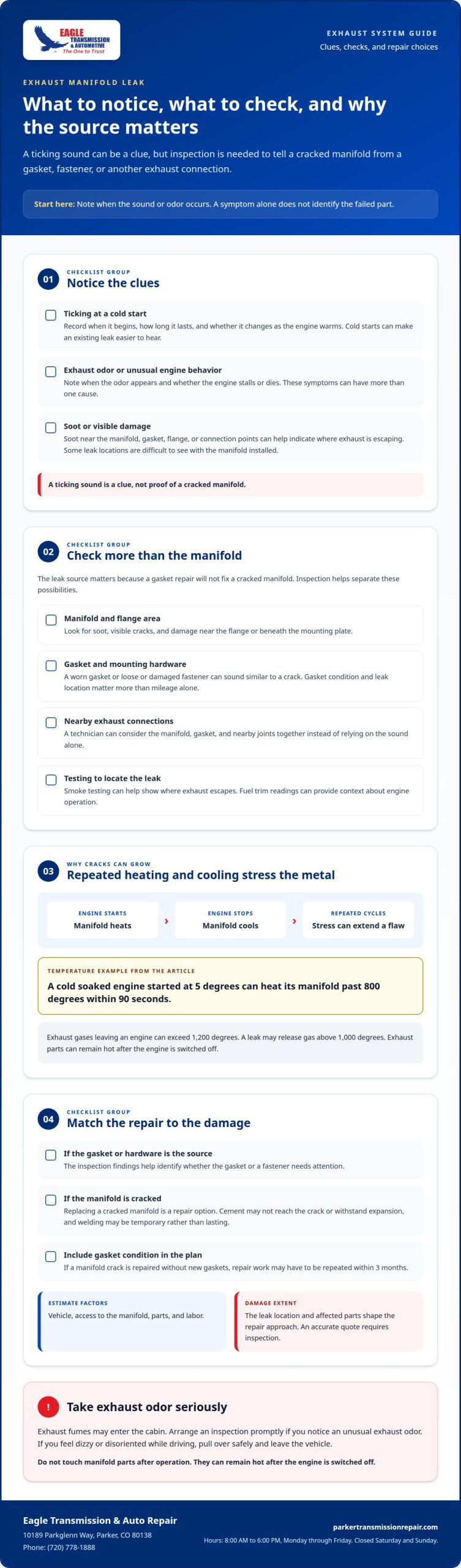
- Inspect the manifold and flange area. Soot marks or visible damage near the manifold, gasket, and connection points can indicate a leak. Cracks that cause ticking may be near the flange, beneath the mounting plate. That spot can be difficult to see with the manifold installed, so a sound alone cannot identify the exact fault.
- Consider repeated heating and cooling. Each engine start heats the manifold, and shutdown lets it cool. These temperature changes stress the metal. A small flaw can gradually develop into a crack as the material repeatedly expands and contracts. Cold starts can make an existing leak easier to hear.
- Check the gasket and mounting hardware. A leak that sounds like a crack may come from a worn gasket or a loose, damaged fastener. Manifold gaskets can wear over time, and the page’s reference point is vehicles approaching 100,000 miles. That figure is not a diagnosis: the gasket’s condition and the leak location matter more than mileage alone.
- Match the sound to the engine layout. A brief ticking sound at startup can be a clue, but it is not proof of a cracked manifold. The Toyota 2UZ engine in a 100 Series was reported to tick for about 1 second during startup. A V8 Chevrolet Silverado has two manifolds, one for each cylinder bank, while a Jeep Wrangler with the 4.0 liter inline six has one.
- Use testing to locate the leak before choosing a repair. A visual check may reveal soot near a crack, gasket, or joint, but some leaks are difficult to see. Smoke testing can help show where exhaust escapes, while fuel trim readings can provide context about engine operation. Locating the leak matters: replacing a gasket will not fix a cracked manifold.
Whether an inspection is required depends on the vehicle’s registration and details. An exhaust leak can affect emissions performance and contribute to a failed test.
If a manifold crack is repaired without installing new gaskets, repair work may have to be repeated within three months. That makes gasket installation relevant when planning work on a damaged manifold, rather than treating the visible crack as the only consideration. The repair decision should account for both the cracked part and whether new gaskets are installed, since leaving them out carries a possibility of repeated work within that period.
Cracked exhaust manifolds and thermal shock
Rapid temperature changes can strain an exhaust manifold and help a small flaw grow. Learn to recognize symptoms, understand testing, and consider repair options before deciding what to do.
-
Recognizing Leak Symptoms
Note when a ticking sound starts, how long it lasts, and whether it changes as the engine warms. A cold start on a 12 degree January morning can make an exhaust leak easier to hear, but ticking alone doesn’t prove the manifold is cracked. An exhaust odor or unusual engine behavior can also signal a leak, so record when each symptom appears.
-
Diagnosing an Exhaust Manifold Leak
Have the exhaust system inspected instead of treating one sound as a diagnosis. A technician can examine the manifold, gasket, and nearby connections, then use smoke testing to help locate escaping exhaust. Fuel trim readings can add context about engine operation. These checks help distinguish a manifold crack from a leaking gasket or another exhaust joint.
- Consider the temperature swing. A manifold expands as it heats and contracts as it cools. A cold soaked engine started at 5 degrees can heat its manifold past 800 degrees within ninety seconds. That fast change puts stress on the metal, especially where heat concentrates or the part is constrained by its mounting points. Repeated cycles can extend a small crack.
- Keep the heat in perspective. Exhaust gases leaving an engine can exceed 1,200 degrees, and a leak may release gas above 1,000 degrees. Those temperatures help explain why a crack can worsen as the engine heats. Avoid touching manifold parts after operation; metal can remain hot after the engine is switched off. A new ticking sound after a cold start deserves attention.
- Choose a repair based on the damage. Replacing a cracked manifold is a repair option because cement may not reach the crack or withstand its expansion. Welding can be temporary, rather than a lasting repair. If a persistent tick or odor needs diagnosis, plan an inspection in Parker to identify the leak source and suitable repair.
A crack can also let outside air in and cause an engine to stall or die. Mention any stalling when arranging an inspection, even if the ticking sound is absent or has changed. Stalling alone does not prove the manifold is cracked, so have the leak source checked before choosing a repair. Explain whether the engine stalled, died, or continued running, and what other symptoms occurred at the same time. Ask that the manifold, gasket, and nearby exhaust connections be considered together to distinguish a crack from another leak. If a crack is confirmed, discuss a repair suited to the damage rather than relying on a symptom disappearing. Until the source is identified, note any recurrence and avoid touching hot exhaust parts. Clear observations can help guide the inspection, but they do not replace it.
Exhaust leaks and cabin exposure to fumes
Delaying exhaust manifold leak repair can allow hot fumes into the cabin and harm occupants. Treat an unusual exhaust odor as a reason to arrange an inspection promptly.
- Respond to exhaust odor promptly. If an unusual smell enters the vehicle, don’t treat it as a minor annoyance. An exhaust leak can release fumes where passengers breathe, and the smell may appear during a drive or while the engine is running. Arrange an exhaust inspection promptly, even if the vehicle seems to run normally.
- Leave the vehicle if you feel unwell. Dizziness, light headedness, or disorientation while driving with a known exhaust leak calls for immediate action. Pull over safely, exit the vehicle, and call a tow truck. Don’t continue driving to see whether symptoms pass, or carry passengers farther in a vehicle with suspected cabin exposure.
- Keep the engine out of an enclosed garage. Never investigate a suspected exhaust manifold leak by running the engine in a closed garage. Exhaust can build up in an enclosed space, even when the leak seems small. Move away from the running vehicle and arrange an inspection in a suitable setting instead of searching for the leak yourself.
- Don’t rely on the cabin smell to measure risk. A noticeable odor is a warning, not a gauge of how much exhaust has entered. Untreated leaks can expose occupants to hot fumes, and a cabin that seems clear does not establish that the exhaust system is sealed. Keep children and other passengers out until the leak has been assessed.
- Pay attention to how the odor changes. Note whether the smell appears after startup, while idling, or during a drive. These details help describe the concern during an inspection. A brief odor still deserves attention if it returns, because an exhaust leak can change as the engine heats and the system operates.
- Understand what delay can affect. Continued leakage lets hot exhaust escape before it follows its intended path through the exhaust system. Fumes can reach the cabin and harm occupants. Consider the leak’s location, the odor, and whether anyone experiences symptoms when arranging an inspection, rather than relying on a single quiet drive.
- Arrange diagnosis rather than attempting a garage test. Describe the odor, when it occurs, and any symptoms such as dizziness or disorientation. A professional inspection can locate the leak and establish the repair needed. An unusual exhaust odor warrants prompt attention; a closed garage with a running engine is not a safe testing environment.
Manifold and repair costs
Repair cost depends on what failed, the vehicle, parts, labor, the extent of damage, and what inspection reveals. An accurate quote requires inspection.
- Identify the failed part before estimating repair scope. A leaking gasket, damaged fastener, and cracked manifold require different repairs. A gasket or hardware issue may be limited to the leaking joint, while a cracked manifold may require replacement. The estimate should reflect the confirmed fault, not just the ticking sound or exhaust odor that prompted inspection.
- Account for access and vehicle layout. Labor depends partly on access around the manifold. A straightforward repair on an accessible manifold differs from work that requires moving or removing other components. Engine configuration, manifold location, and fastener condition can all change the work involved.
- Separate parts from labor. An estimate may include a gasket, mounting hardware, or a replacement manifold, along with labor. The parts needed depend on the leak location and inspection findings. A gasket alone will not address a crack, and replacing a manifold does not automatically mean unrelated exhaust parts need replacement.
- Ask what the diagnosis established. A useful estimate identifies whether the leak comes from the manifold, gasket, or connection, and explains the recommended repair. Testing helps distinguish these faults because similar noises can have different causes. The vehicle, parts, labor, extent of damage, and diagnostic findings shape the quote, so an accurate quote requires inspection.
- Review insurance and warranty language. Don’t assume an exhaust manifold repair is covered because the vehicle has insurance or a warranty. Coverage depends on the terms, eligibility, and stated cause of failure in the applicable policy or contract. Review those documents and contact the insurer or warranty administrator for a coverage decision before authorizing work.
- Compare repair scope, not just the bottom line. Confirm that an estimate addresses the diagnosed leak and lists relevant parts and labor. If a cracked manifold is identified, ask how the proposed repair addresses it. Vehicle condition and access affect the work, so different diagnoses may produce different repair scopes.
Exhaust manifold repair service areas
The work involved in exhaust manifold repair depends on access, diagnosis, parts, and the condition of the fasteners. Confirm the repair location and arrange transportation without assuming when the vehicle will be ready.
- Confirm the repair location before planning your day. Check the appointment details and address so you know where the vehicle needs to go. This helps you plan transportation and avoid confusing a city mentioned in an article with a shop address.
- Ask what the repair estimate depends on. Gasket replacement and cracked manifold replacement involve different parts and labor. Access around the engine, leak location, and mounting hardware condition affect the scope. For example, a fastener that cannot be removed normally may add work beyond replacing a gasket.
- Use inspection findings to plan the schedule. Diagnosis comes before a reliable repair plan because a ticking sound can come from different exhaust components. The technician needs to identify the leak source and determine whether the manifold, gasket, or hardware needs attention. Parts and unexpected complications can also affect the repair plan.
- Share useful details when arranging service. Tell the shop whether you noticed ticking, exhaust odor, or a check engine light, and when each symptom occurs. Mention the vehicle’s make, model, and engine details if available. Those specifics help explain the concern, though they do not replace inspection of the leak.
- Plan transportation around the repair scope. A simple gasket repair may require different work from manifold replacement with restricted access. Seized hardware or additional damage can also affect the job. Ask for an update based on the inspection and parts needed.
- Use location details to make the next step practical. Check the destination details before setting out and plan for your own transportation needs.
Eagle Transmission & Auto Repair
Eagle Transmission & Auto Repair can help assess engine concerns connected with a ticking sound, exhaust odor, or warning light. Its engine repair and general auto repair services provide a place to discuss symptoms and possible diagnostic findings, without assuming one sound points to a specific failed part.
Describe when the noise or odor occurs and whether it changes as the engine warms. That context can help guide the conversation about diagnosis and repair options.
If you have concerns about an exhaust leak, contact Eagle Transmission & Auto Repair to discuss your vehicle’s symptoms.
Make your next repair decision with clarity
Base your decision on the diagnosis, not just the first symptom. Ask which component is leaking, what repair addresses that specific fault, and what findings support the recommendation. Clear answers help you understand the work before deciding how to proceed.
If you’re considering exhaust manifold leak repair, Eagle Transmission & Auto Repair offers engine repair for vehicle concerns that need diagnosis and repair. You can share what you’ve noticed and discuss the next appropriate step without assuming the sound or odor identifies the failed part.
Contact Eagle Transmission & Auto Repair and get directions to discuss your vehicle’s symptoms. A clear conversation can help you move forward with greater confidence.
Frequently Asked Questions
What Is an Exhaust Manifold Leak?
An exhaust manifold leak occurs when exhaust escapes before the gases travel through the rest of the exhaust system. The leak may come from a crack, gasket, or connection. For example, a damaged gasket can leak even when the manifold itself is intact. Inspection helps identify the source and distinguish an exhaust leak from other engine noises.
Should I Replace Just the Gasket or the Whole Manifold?
Repair the part that inspection identifies as faulty. If the manifold is intact and the gasket has failed, replacing the gasket may address the leak. A cracked manifold usually calls for manifold replacement rather than a gasket alone. The repair depends on the leak location and component condition, so a ticking sound by itself is not enough to decide.
How much does exhaust manifold leak repair cost in Parker, Colorado?
There is no single cost that applies to every vehicle. The estimate depends on whether the fault is a gasket, hardware, or manifold, along with parts, labor, vehicle layout, access, and related damage. Inspection findings determine the repair scope and an accurate quote. An estimate should identify the diagnosed failure and explain which parts and labor it includes.
Which auto repair shops in Parker repair exhaust manifold leaks?
Eagle Transmission & Auto Repair is located in Parker and offers engine repair and diagnosis for car and truck concerns. For a suspected manifold leak, those services can help assess the engine symptoms and establish what repair is needed. Check the address before planning your visit.
What factors affect exhaust manifold repair cost, such as parts and labor?
Key factors include the failed component, vehicle design, part selection, access, labor, and the condition of nearby hardware. Replacing a gasket is different from replacing a cracked manifold, for example. Fasteners that are difficult to remove can also affect the work. Diagnostic findings clarify which factors apply to the vehicle.
Can an exhaust manifold leak be repaired, or does the manifold need replacement?
Some leaks can be addressed by replacing a gasket or damaged hardware; a cracked manifold may need replacement. The right approach depends on which part is leaking and its condition. A repair material or weld may not provide a lasting fix if a crack expands with heat. Inspection and testing help establish whether the manifold itself is damaged.
Is it safe to drive with an exhaust manifold leak?
A leak can let hot exhaust and fumes reach the cabin, so take unusual exhaust odors seriously and arrange an inspection promptly. If you feel dizzy, light headed, or disoriented while driving, pull over safely, leave the vehicle, and call a tow truck. Never run the engine in a closed garage to investigate a suspected leak.