Last Updated: November 12, 2026
Quick Summary
The most common signs are a whine or howl that rises with speed, vibration or a rough growl, and dark oily spots under the vehicle. To check how to tell if differential fluid is low, listen while driving, look for leaks after the vehicle sits, and inspect the fluid for milky, gritty, or burnt signs.
- Listen for a steady whine that rises with speed and fades when you lift off the throttle.
- Let the vehicle cool before opening any fill or drain plug, since gear oil can burn skin.
- Milky or coffee-colored fluid means water has gotten in and the fluid needs replacing.
- Do not keep driving on a new or worsening differential noise, because low fluid can wear gears quickly.
- Check your owner’s manual for the recommended differential service interval for your vehicle.
Table of Contents
- Step-by-Step: Spotting the Warning Signs of Low Differential Fluid
- Recognizing a Low Differential Fluid Sound While You Drive
- How Often to Change Differential Fluid and Next Steps at Our Parker Shop
- Frequently Asked Questions
Step-by-Step: Spotting the Warning Signs of Low Differential Fluid
Low differential fluid is one of the easiest drivetrain problems to miss and one of the costliest to ignore, so knowing how to tell if differential fluid is low can save you real money. The differential, the pumpkin-shaped housing at the center of an axle, holds gear oil that keeps the ring and pinion gears cool, coated, and quiet. When the level drops, metal contacts metal, heat climbs, and wear accelerates. Here is how to tell if differential fluid is low, from easiest to most involved.
- Listen for a whine or howl. A steady whine that rises with speed and fades when you lift off the throttle is a classic early clue, usually from the rear and tied to road speed, not engine speed.
- Feel for vibration or a rough growl. Shaking through the floor, seat, or center console, especially under acceleration, can point to low fluid or worn bearings.
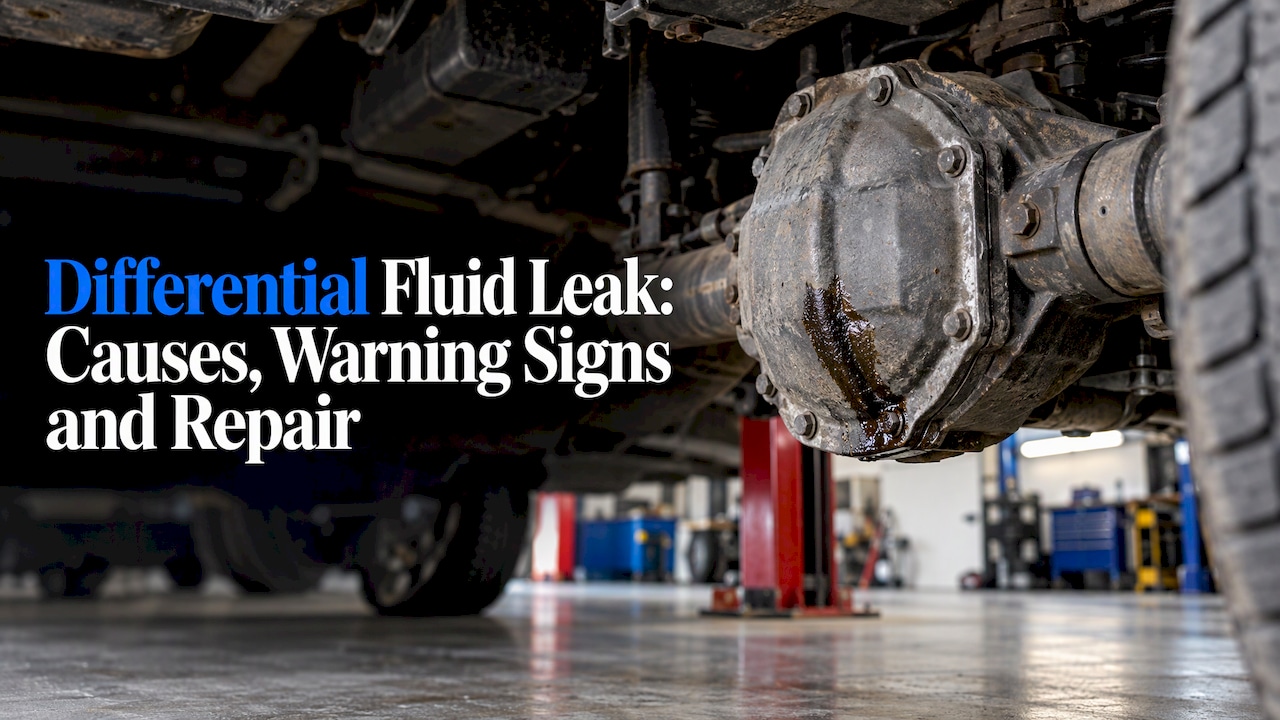
- Look under the vehicle after it sits. Dark, oily spots or a greasy film on the differential cover, pinion seal, or axle tubes suggest a leak. Fresh gear oil has a sharp, sulfur-like smell.
- Check low-speed behavior. Clunking when shifting from drive to reverse, or binding during tight turns, deserves attention, especially on limited-slip differentials.
- Inspect the fluid itself. Milky or coffee-colored fluid has taken on water; black, gritty, or sparkly fluid means wear is underway; a burnt smell points to overheating.
- Know your drivetrain. Rear-wheel-drive vehicles have one differential at the rear axle; four-wheel-drive and all-wheel-drive vehicles usually have a second up front and often a transfer case with its own fluid.
Our differential fluid symptoms and gear grinding guidance explains that low fluid lets gears grind, which can lead to complete differential failure.
Watch out: avoid opening a fill or drain plug right after a drive. Gear oil can be hot enough to burn skin, so let the vehicle cool before working on it.
If you notice any of these signs, symptoms of a bad differential explains what each clue may mean, and our differential fluid leak guide covers where leaks start and how we find the source.
Use this quick reference to check for the most common signs of low differential fluid, from easiest to most involved.
| Warning sign | What it may indicate | Next step |
|---|---|---|
| Whine or howl that rises with speed | Low fluid or gear wear, usually rear-end | Note when it fades and have it checked |
| Vibration or rough growl | Low fluid or worn bearings | Inspect fluid level and condition |
| Dark, oily spots under vehicle | Leak at cover, pinion seal, or axle tubes | Look for the leak source |
| Clunk shifting drive to reverse | Gear or limited-slip wear | Have the differential inspected |
| Milky or coffee-colored fluid | Water contamination | Replace fluid and inspect |
| Black, gritty, or sparkly fluid | Wear underway | Get a professional inspection |
Recognizing a Low Differential Fluid Sound While You Drive
A low differential fluid sound is usually a hum, whine, or howl that tracks road speed rather than engine speed. If the noise rises and falls with the tachometer, you are likely hearing the transmission or engine; if it tracks the speedometer, the differential, wheel bearings, or a driveshaft component is the better suspect.
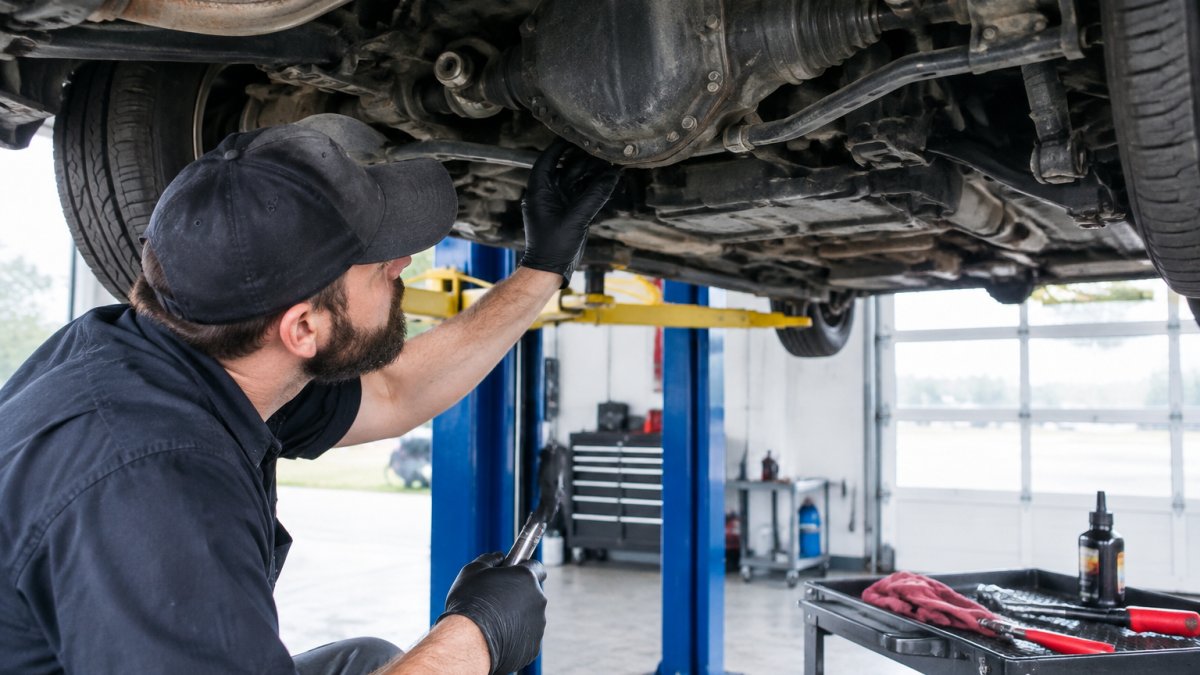
Use these driving tests to narrow it down:
- Acceleration versus coasting. A whine loudest under acceleration that quiets when you lift off often points to gear wear; constant noise regardless of throttle can point to a bearing.
- Speed range. Note the exact speeds where the sound appears and disappears, a narrow band is a useful clue for a technician.
- Turning. A growl that changes through a turn can indicate a worn axle bearing or a limited-slip differential low on the correct fluid.
- Load. Towing or hauling up a grade stresses the gears and often makes a marginal differential announce itself.
Colorado conditions make these sounds easier to notice and harder to ignore. Long climbs, mountain grades, and cold starts load gear oil that is already low, and temperature swings can work the seals, which is one reason a slow leak can go unnoticed for a while.
Watch out: do not keep driving on a new or worsening differential noise to “see if it clears up.” A differential that runs low on fluid can wear quickly and fail. If the sound is new, getting louder, or paired with a vibration, have the fluid level and condition checked soon.
If the sound is new or getting louder, check your fluid level soon. Our transmission fluid color guide can help you tell the fluids apart.
How Often to Change Differential Fluid and Next Steps at Our Parker Shop
Service intervals for differential fluid vary by make and model, so check your owner’s manual for the recommended schedule. Mountain driving, towing, or hauling can justify more frequent checks.
Our team at Eagle Transmission & Auto Repair in Parker can inspect your differential fluid level and condition. Expert differential fluid change in Parker, CO explains our differential service, and our oil change and scheduled maintenance services keep your vehicle on track.
Call us at (720) 778-1888 or visit 10189 Parkglenn Way, Parker, CO 80138. We are open Monday through Friday, 8:00am to 6:00pm.
Frequently Asked Questions
What are the symptoms of low differential fluid?
The most common signs are a whining or howling noise from the rear of the vehicle, especially between about 30 and 60 miles per hour, and grinding or clunking when you accelerate or decelerate. You may also notice vibration or a change in how the vehicle handles. Visible fluid dripping from the axle housing or around the differential cover is another clear sign. Because these symptoms can overlap with other drivetrain problems, a shop inspection is the best way to confirm the cause before you assume the fluid is the issue.
Is it safe to drive with low differential fluid?
Driving short distances with a slightly low fluid level is usually not an immediate emergency, but it is not something to ignore. Low fluid means the gears and bearings have less lubrication, which increases wear and heat. Continued driving can lead to gear damage and, in severe cases, a differential that locks up or fails. If you hear grinding, notice a strong smell, or see fluid leaking, have the vehicle checked soon. Our Parker shop can inspect the differential and recommend the right repair.
How often should differential fluid be changed in Colorado?
The right differential fluid service interval depends on the make, model, and how you drive. Colorado conditions such as mountain driving, towing, and frequent stop-and-go traffic can put extra stress on the differential, so it is worth checking the fluid more often. Your owner’s manual is the best starting point, and our team can review your vehicle’s needs during a visit to our shop in Parker.