A soft brake pedal usually means something has changed inside the hydraulic system that turns your foot’s push into stopping power. The cause is often air in the lines, old brake fluid, a small leak or a tired master cylinder. All of these are fixable once someone finds which one you have. If the pedal sinks toward the floor, needs pumping or comes with a brake warning light, stop driving and get the vehicle looked at. At Eagle Transmission & Auto Repair in Parker, every job starts with a free diagnostic, so you learn what is going on before you spend anything.
Key Takeaways
- A soft, spongy or sinking pedal is a sign the brake hydraulics need attention. It is not just a comfort issue.
- The usual suspects are air in the lines, aging brake fluid, a leaking hose, caliper or line, and a worn master cylinder.
- If the pedal goes to the floor, needs repeated pumping or the brake light is on, park the vehicle and have it towed or inspected where it sits.
- Bleeding the brakes (pushing out trapped air) only lasts when the part that let the air in or the fluid out is repaired first.
- We offer a free diagnostic with a road test and computer scan at 10189 Parkglenn Way, Parker, CO 80138. Call (720) 778 1888.
Table of Contents
- What a soft brake pedal actually means
- Is it safe to drive with a soft brake pedal?
- The most common causes of a soft pedal
- What to do right now
- How a shop finds the cause of a soft pedal
- How the fix depends on the cause
- Colorado driving makes brake health matter more
- Why drivers bring a soft pedal to Eagle Transmission & Auto Repair
- Fleet vehicles and soft pedals
- Where we are and who we serve
- FAQ
- Sources
What a soft brake pedal actually means
Your brakes work by pressure. When you press the pedal, a part called the master cylinder pushes brake fluid through steel lines and rubber hoses to each wheel. Fluid cannot be squeezed, so it moves the brake parts firmly and right away. Air can be squeezed, which is why even a little of it changes how the pedal feels.
There are really two different complaints, and it helps to know which one you have:
- Spongy or mushy. The pedal travels farther than it used to and feels cushioned before the brakes grab. Industry technical training material points to air getting into the system, contaminated fluid, or a part moving beyond its designed range as the usual explanations, according to a brake pedal diagnosis guide from a professional trade publication.
- Slowly sinking. You hold steady pressure at a red light and the pedal creeps toward the floor. That same guide ties this to lost hydraulic pressure, either from a leak outside the system or from a part leaking inside it.
Some drivers describe a third version: the pedal feels firm at the bottom but has a lot of free play at the top. The same source says that pattern usually points to the master cylinder or its pushrod rather than air.
One note for hybrids and electric vehicles. Their pedals can feel different from a regular car’s by design, because the system blends motor braking with the friction brakes. What matters is a change from how your own vehicle normally feels. Your owner’s manual is the place to check what normal looks like for it.
Is it safe to drive with a soft brake pedal?
Be careful here, and keep it simple. A softer pedal can mean longer and less predictable stopping distances. Federal safety recalls describe exactly this problem. One recall notice for a brake hose issue says that increased pedal travel and reduced deceleration may increase crash risk.
Here is a plain way to decide what to do:
- The pedal is a little softer than before, but stops the vehicle normally and stays put under steady pressure. Do not wait. Book an inspection soon, and keep extra space between you and the car ahead until then.
- The pedal sinks, needs pumping, goes to the floor, or the brake warning light is on. Stop driving. Pull over somewhere safe, and have the vehicle towed or inspected where it sits.
That second category is not something to nurse home. We offer emergency towing, and local towing is complimentary when you have the repair done with us. Call us and we can talk through where the vehicle is and how to get it to the shop.
If you want to know what other symptoms deserve attention, our guide to warning signs of brake failure in Parker walks through them in plain language.
The most common causes of a soft pedal
Air in the brake lines
A certified master technician at a major car valuation and advice site says air in the brake line is the most common cause of spongy brakes, and that it can get in through a failed seal. The trade guide above adds that the smallest amount of air trapped anywhere in the hydraulic system has a big effect on pedal feel.
Air often arrives after brake work that was not bled correctly, or after a seal starts to weep. The fix has two parts: find out why air got in, then bleed the system with the right fluid in the right order. If the first part is skipped, the soft feeling tends to return.
Old or contaminated brake fluid
Brake fluid absorbs moisture over time. The same technician notes that brake fluid is very hygroscopic, meaning it pulls water out of the air, and that this water can cause spongy brakes and also corrosion that damages calipers and brake cylinders. He recommends a fluid change every year or two.
This matters in Colorado because we ask a lot of our brakes. Think of the long downhill run out of the foothills, stop and go traffic on I 25 through Lone Tree and Centennial, and cold mornings followed by warm afternoons. Heat and moisture are both hard on fluid. If you are not sure when your fluid was last changed, read our page on brake fluid changes and the signs it is time. Fresh fluid is typically clear to slightly amber. Dark or cloudy fluid is a sign it has aged.
A leak in a hose, line, caliper or wheel cylinder
Brake fluid has to stay inside a sealed circuit. A rubber hose can crack or swell, a steel line can rust through, and a caliper or wheel cylinder seal can wear out. The trade guide advises watching for a brake hose that bulges when the pedal is pressed. A recall notice for one group of vehicles describes brake fluid leaking from the front flexible brake hoses, and says the repair was free of charge for those owners. That shows how seriously regulators treat a leak that lowers pedal firmness.
Signs of a leak include a low fluid level in the reservoir, damp spots on the inside of a wheel, or a pedal that sinks slowly while you hold it. If a caliper turns out to be the culprit, here is what to expect from caliper replacement.
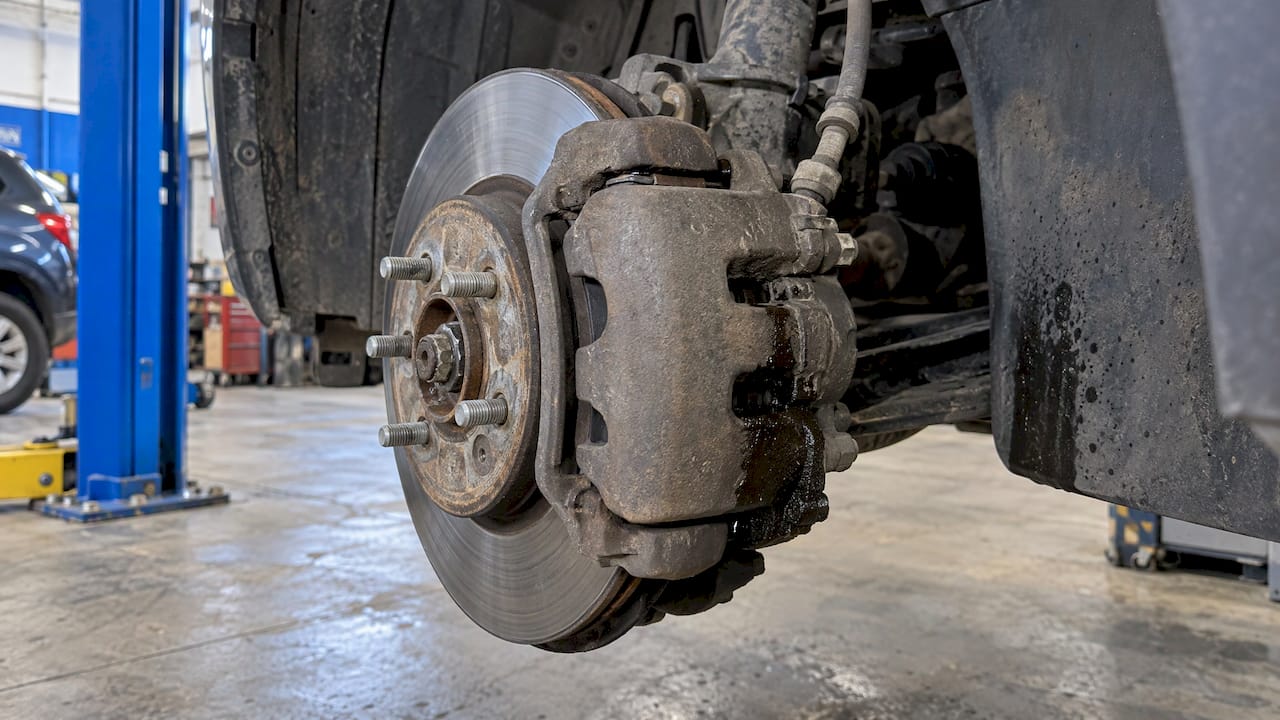
A worn or leaking master cylinder
The master cylinder is the part that makes the pressure. Its internal seals can wear, letting fluid slip past them inside instead of pushing it to the wheels. The result is a pedal that sinks under steady pressure with no visible puddle anywhere.
Federal records show this is a real and documented problem. One safety recall describes a compromised rear seal in a master cylinder that can leak fluid into the brake booster. If the reservoir keeps draining, the driver may notice a change in pedal travel and feel, and the front brakes may work less effectively. The remedy in that recall was replacing the master cylinder, and the booster too if there were signs of a leak.
Brake parts that are out of adjustment or worn
On vehicles with rear drum brakes, the shoes sit a tiny distance from the drum. The trade guide gives the standard clearance as .015 inch and says every thousandth of an inch over that adds pedal travel. Worn pads, rotors and calipers can add travel too. It is a reminder that a soft pedal is not always a fluid problem, and why a proper inspection beats guessing.
What to do right now
You do not need tools for any of this. These are steps for staying safe and giving a technician useful information:
- Stop if the pedal sinks, needs pumping or the brake light is on. Pull over somewhere safe and call for a tow.
- Note when it happens. Is it soft all the time, only the first press, only when hot, or only when you hold the pedal down? Does the vehicle pull to one side, squeal or shake when you brake?
- Note any warning lights. The brake light, ABS light or check engine light all give the technician clues.
- Watch for damp spots near your tires or a puddle under the vehicle after it has been parked.
- Call a shop the same day. Brake feel rarely fixes itself.
A little patience with your own driving helps too. Leave extra following distance and avoid steep descents until the pedal has been checked.
How a shop finds the cause of a soft pedal
A good brake diagnosis is a sequence, not a guess. The usual order moves from the simple and visible to the more detailed:
- Pedal feel and road test. The technician notes how far the pedal travels, whether it firms up when pumped and whether it sinks while held.
- Fluid check. Level and condition tell a lot about leaks and age.
- Visual inspection. Hoses, lines, calipers, wheel cylinders and the master cylinder are examined for dampness, cracks, rust and bulging.
- Computer scan. Modern brakes tie into ABS and stability control, so stored codes and warning lights can point toward the problem.
- Pressure and component testing. This confirms whether the hydraulics hold pressure and which part is letting go.
Our free diagnostic follows this kind of path. Every job begins with a free diagnostic, including a road test and a computer scan, before you spend anything. Repairs are performed only with your approval, by ASE certified technicians, and they are backed by warranty. Quotes are explained clearly, with no surprise charges. You can read more about the free diagnostic visit on our site.
How the fix depends on the cause
The repair matches what the inspection finds. Here is how it usually plays out:
| What the inspection finds | Typical repair |
|---|---|
| Air in the lines after a seal or past service | Fix the entry point, then bleed the system |
| Dark, old or moisture heavy fluid | Fluid service with a full system bleed |
| Cracked or bulging rubber hose | Replace the hose, then bleed |
| Rusted or leaking steel line | Replace the line section, then bleed |
| Leaking caliper or wheel cylinder | Replace the part, then bleed |
| Master cylinder leaking internally | Replace the master cylinder, then bleed |
| Worn pads, rotors or out of adjustment drum brakes | Brake service to restore proper clearance |
Notice that bleeding shows up in almost every row. It is the finishing step, not the cure on its own. Technicians who work on brakes every day stress that bleeding only lasts when the leak, worn seal or damaged part is repaired first. That is why a quick bleed that brings the pedal back for a week is not the same as a fix.
We do not publish prices for brake repair, because the right number depends on your vehicle and on what the diagnostic finds. After the free diagnostic, you get a clear quote and decide whether to go ahead. If you are curious how brake jobs are priced in general, our pages on brake service in Parker and brake service in Castle Rock explain what the work covers.
Colorado driving makes brake health matter more
Front Range driving is harder on brakes than many people realize. Highlands Ranch, Castle Pines and Castle Rock have plenty of hills. Weekend trips to the mountains mean long downhill stretches where brakes heat up. Winter brings snow, ice and cold starts, and a pedal that feels marginal on a dry day can feel much worse when you need to stop on a slick road.
Those conditions are one reason regular fluid service and brake inspections are worth putting on the calendar. Our page on how often brakes should be replaced covers wear and inspection timing, and the list of fluids and parts serviced around 30,000 miles helps you plan maintenance before a pedal ever feels soft.
Why drivers bring a soft pedal to Eagle Transmission & Auto Repair
A soft pedal can have several possible causes, and the answer is rarely visible from the driver’s seat. At Eagle Transmission & Auto Repair we handle brake repair alongside transmission repair, rebuilds and replacement, fluid service, clutch repair, differential work, engine repair, A/C and general auto repair. Because we work across the whole vehicle, the diagnostic can look at the brakes along with any related warning lights or drivability issues you have noticed.
Here is what you can expect from us:
- A free diagnostic with a road test and computer scan before you spend anything
- Repairs only after you approve them
- ASE certified technicians and warranty backed repairs
- Transparent quoting with no surprise charges
- Complimentary local towing with repair, and ride service for convenience
- Emergency towing if the pedal has already gone soft on the road
If you are ready, the free diagnostic is the place to start, and our services overview lists everything we work on.
Fleet vehicles and soft pedals
For local businesses, a driver reporting a soft pedal is a signal to take that vehicle off the road until it is checked. Delivery vans, service trucks and company SUVs stop often and carry weight, which puts steady demand on the hydraulics. We offer fleet service for Parker area businesses, with the same diagnostic first approach. Bring the vehicle in or call and we will work out a plan that keeps your schedule moving.
Where we are and who we serve
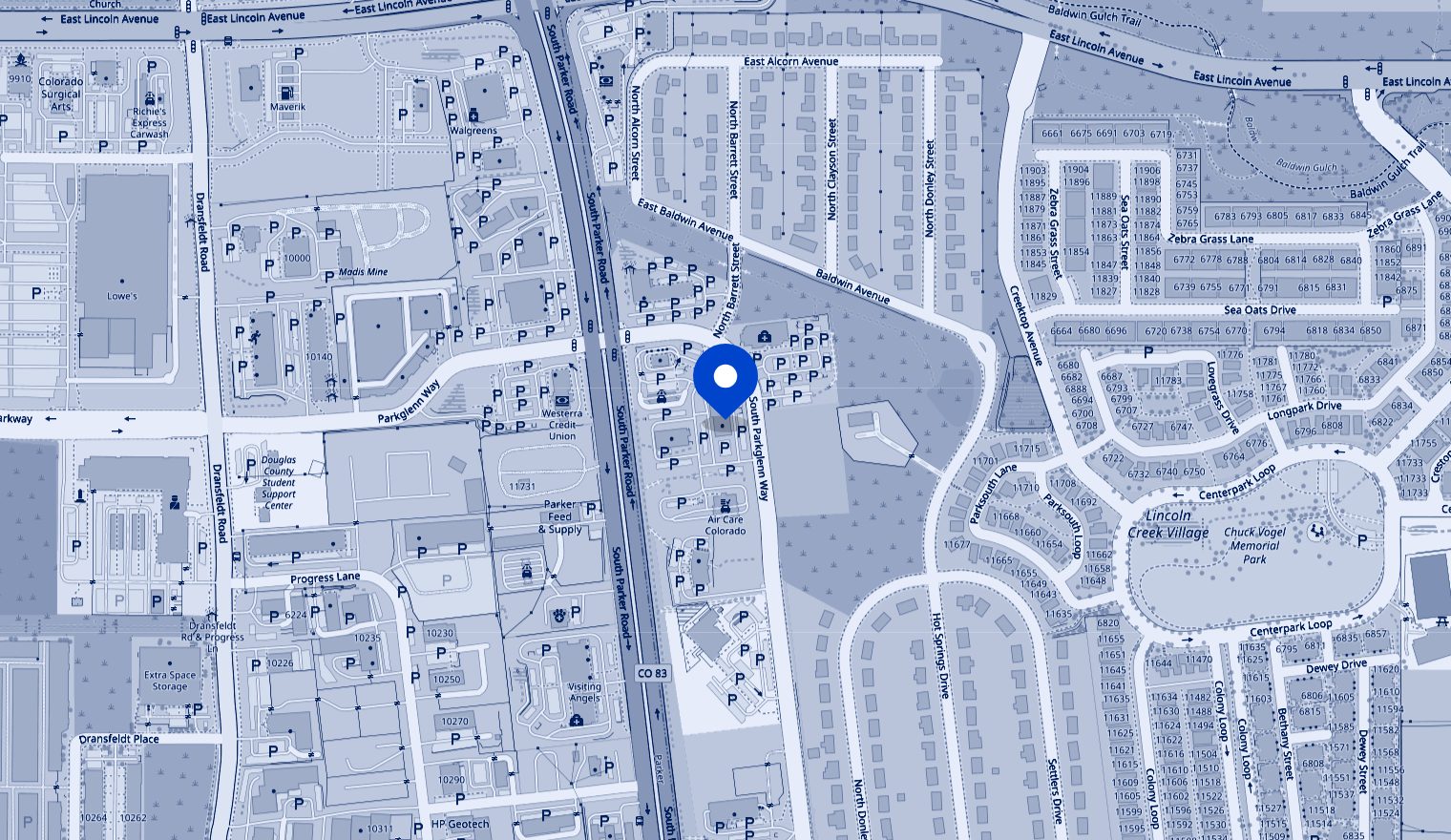
Eagle Transmission & Auto Repair is at 10189 Parkglenn Way, Parker, CO 80138. We are open Monday to Friday, 8am to 6pm, and closed weekends. We serve drivers in Parker, Lone Tree, Castle Rock, Castle Pines, Highlands Ranch, Centennial, Aurora, Franktown and Elizabeth. If you are near Foxfield, our page on brake repair in the Foxfield area has more detail.
If your pedal feels off, there is no pressure to decide anything today. Call us at (720) 778 1888 to talk it through or to schedule a free diagnostic, and we will tell you what we see.
FAQ
Why does my brake pedal go to the floor?
A pedal that keeps moving toward the floor under steady pressure usually means hydraulic pressure is being lost. That can come from a fluid leak at a hose, line, caliper or wheel cylinder, or from a master cylinder that leaks internally. Stop driving and have it inspected where it sits or towed to a shop.
What causes a spongy brake pedal?
The most common cause is air in the brake lines, which can get in through a failed seal or after brake work that was not bled correctly. Old brake fluid that has absorbed moisture, leaking parts and a worn master cylinder are other common causes. A diagnostic tells you which one applies to your vehicle.
Can I just bleed the brakes to fix a soft pedal?
Bleeding removes trapped air, but it lasts only if whatever let the air in or the fluid out has been repaired. A technician checks for leaks and worn parts first, then bleeds the system in the right order with the correct fluid.
Is it safe to drive with a soft brake pedal?
A softer pedal can lengthen stopping distances, so it should be checked promptly. If the pedal sinks, needs pumping or the brake warning light is on, stop driving and arrange a tow. We offer emergency towing, and local towing is complimentary with repair.
Where can I get a soft brake pedal checked near Parker?
Eagle Transmission & Auto Repair at 10189 Parkglenn Way in Parker offers a free diagnostic with a road test and computer scan, Monday to Friday, 8am to 6pm. Call (720) 778 1888 to schedule.
Sources
- Pedal Diagnosis, Tire and Brake Professional trade guide
- Why Do My Brakes Feel Spongy? Kelley Blue Book
- NHTSA safety recall notice for front flexible brake hoses
- NHTSA safety recall 20V332 for brake master cylinder seal