A simple fluid swap for your transfer case is often the only thing standing between a reliable weekend in the Rockies and a replacement bill that can climb as high as $9,000. This isn’t just a routine chore; it’s a specialized reliability audit that’s essential for navigating the high-torque demands of Colorado driving. We know that many drivers in Parker feel a bit of anxiety when the snow starts to fall, wondering if their 4WD will actually engage when they need it most. It’s easy to get confused by different gearbox terms, but your transfer case is the heart of your off-road and winter capability.
At Eagle Transmission & Auto Repair, we believe in keeping your family safe by catching small issues before they become catastrophic failures. You’ll learn exactly how a professional transfer case service protects your drivetrain and how to identify when your system needs expert attention. We’ll walk you through the process so you can avoid expensive repairs and feel completely confident in your vehicle’s reliability. Whether you’re commuting through a blizzard or heading up a mountain pass, we’re here to ensure your vehicle is ready for anything because at our shop, we fix everything.
Key Takeaways
- Understand why the transfer case acts as the “brain” of your drivetrain, managing how power is split between your axles for maximum traction.
- Learn to identify the specific warning signs of failure, including unusual humming noises and delayed 4WD engagement during shifting.
- Discover why a professional transfer case service is essential for preventing fluid oxidation caused by Colorado’s high elevation and steep mountain grades.
- Get a look at the specialized process Eagle Transmission & Auto Repair uses to ensure your drivetrain is safely stabilized and properly serviced.
- Find out how our “WE FIX EVERYTHING” philosophy protects your vehicle by inspecting related components like U-joints and CV axles during every visit.
Understanding the Transfer Case: The Heart of Your 4WD System
Think of your transfer case as the brain of your vehicle’s drivetrain. It’s the specialized gearbox that directs engine power to either the rear wheels or splits it between the front and rear axles. In modern trucks, you’ll usually find chain-driven transfer cases which are designed to be quiet and efficient for daily driving. Heavy-duty rigs might use gear-driven versions, which are the rugged workhorses of the automotive world. Regardless of the type, this component is what makes your 4WD system possible. A professional transfer case service is the best way to ensure these gears stay healthy for the long haul. At Eagle Transmission & Auto Repair, we live by the motto that WE FIX EVERYTHING. This means we don’t just look at one part in isolation. We understand how the transfer case interacts with your transmission and axles to keep your SUV moving safely through a Colorado blizzard. If this system fails, a full replacement can cost as much as $9,000, so staying on top of maintenance is a smart financial move.
Transfer Case vs. Differential: What is the Difference?
It’s common to mix these two up, but they play very different roles in your drivetrain. The transfer case sits in the middle of your vehicle, right behind the transmission, while differentials are located at the front and rear axles. They work together as a team to ensure you have maximum traction on icy Parker roads. While the transfer case splits power between the front and back of the car, the differential splits power between the left and right wheels. If you’re curious about the rest of your drivetrain, we also provide Differential Gear Service to keep every gear turning smoothly. For a more technical look at the internal components, you can research What is a Transfer Case? on Wikipedia.
The Role of Transfer Case Fluid
Fluid is the only thing preventing catastrophic metal-on-metal friction inside that gearbox. This fluid is a multitasking hero that acts as a cooling agent to manage heat and a hydraulic medium that powers the actual gear shifts. Manufacturers use high-pressure additives to protect gear teeth under heavy loads, like when you’re towing a trailer up a steep mountain grade or navigating high-altitude passes. Over time, the fluid undergoes a process called shear. This is when the molecular structure physically breaks down and loses its protective thickness. A regular transfer case service prevents this breakdown from turning into a major mechanical failure. We typically recommend an inspection every 30,000 to 60,000 miles to keep everything in peak condition.
Identifying the Warning Signs: When Your Vehicle Needs Transfer Case Service
Most of us don’t spend much time thinking about the gearbox tucked under our seats until a strange sound interrupts a quiet drive through Parker. Catching these signs early is the difference between a quick fluid refresh and a multi-thousand dollar repair. At Eagle Transmission & Auto Repair, we want you to feel empowered to listen to what your truck is telling you. A proactive transfer case service can save you from a major headache down the road. If you hear a low-frequency hum or a rhythmic growl that changes with your speed, it usually points to worn bearings or gears. A sharp clunking sound when you accelerate often means the internal drive chain has stretched or skipped a tooth.
Delayed engagement is another red flag. If you turn your 4WD dial and the light just blinks indefinitely, your system is “hunting” for a gear it can’t quite find. This often happens because the Transfer Case Fluid has become so contaminated that the internal shift motor or clutches can’t move properly. Never ignore a “Service 4WD” light on your dashboard. Modern vehicles use sensors to monitor drivetrain health, and that light is a direct message from your car’s computer that something isn’t right.
Troubleshooting 4WD Engagement Problems
You can perform a simple check yourself if you suspect an issue. Find a flat, loose surface like a gravel lot or a dirt road near your home. Engaging 4WD on dry pavement can cause “binding” and damage your gears, so stick to surfaces with some give. Switch into 4WD High and drive slowly in a straight line. If you feel a heavy shuddering or “crow-hopping” during a slight turn, the fluid has likely lost its friction modifiers. This is a clear sign you need a professional transfer case service to restore smooth operation and protect your internal clutch packs. It’s a simple way to ensure your vehicle is ready for the next big snowstorm.
Visual Inspection: What to Look for Under the Chassis
If you’re comfortable taking a peek under your vehicle, look just behind the transmission. The transfer case is the metal housing where the front and rear driveshafts meet. Check for “seepage,” which looks like dark, oily dirt clinging to the seals where the shafts exit the case. If you see fresh reddish or amber puddles on your driveway, you have an active leak that needs immediate attention. Remember, a clean exterior doesn’t mean the oil inside is healthy. We often find that fluid can be burnt or full of metal shavings even when the case looks spotless. If you’re worried about a new sound or a leak, stop by our shop for a quick look. Our team believes that WE FIX EVERYTHING, and that starts with an honest, expert diagnosis.

The Step-by-Step Guide to a Professional Transfer Case Service
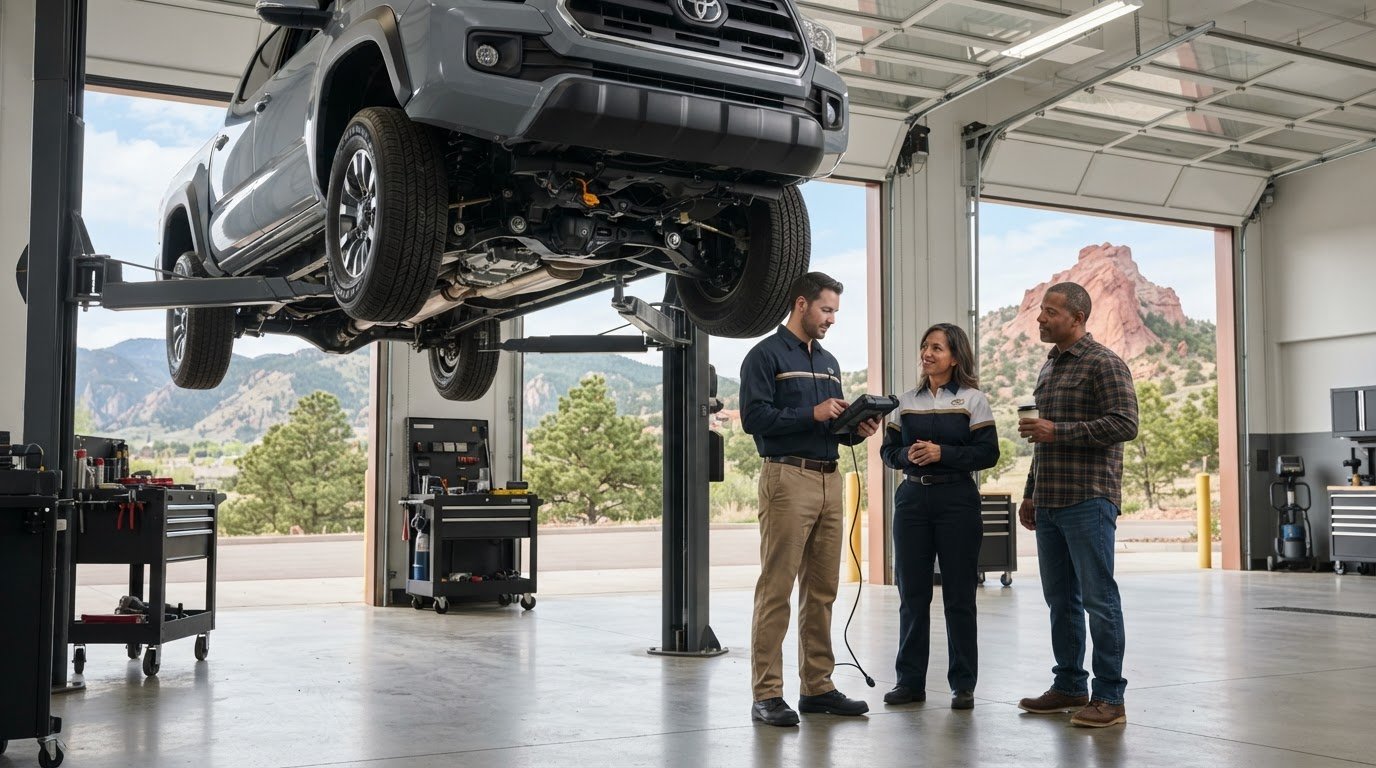
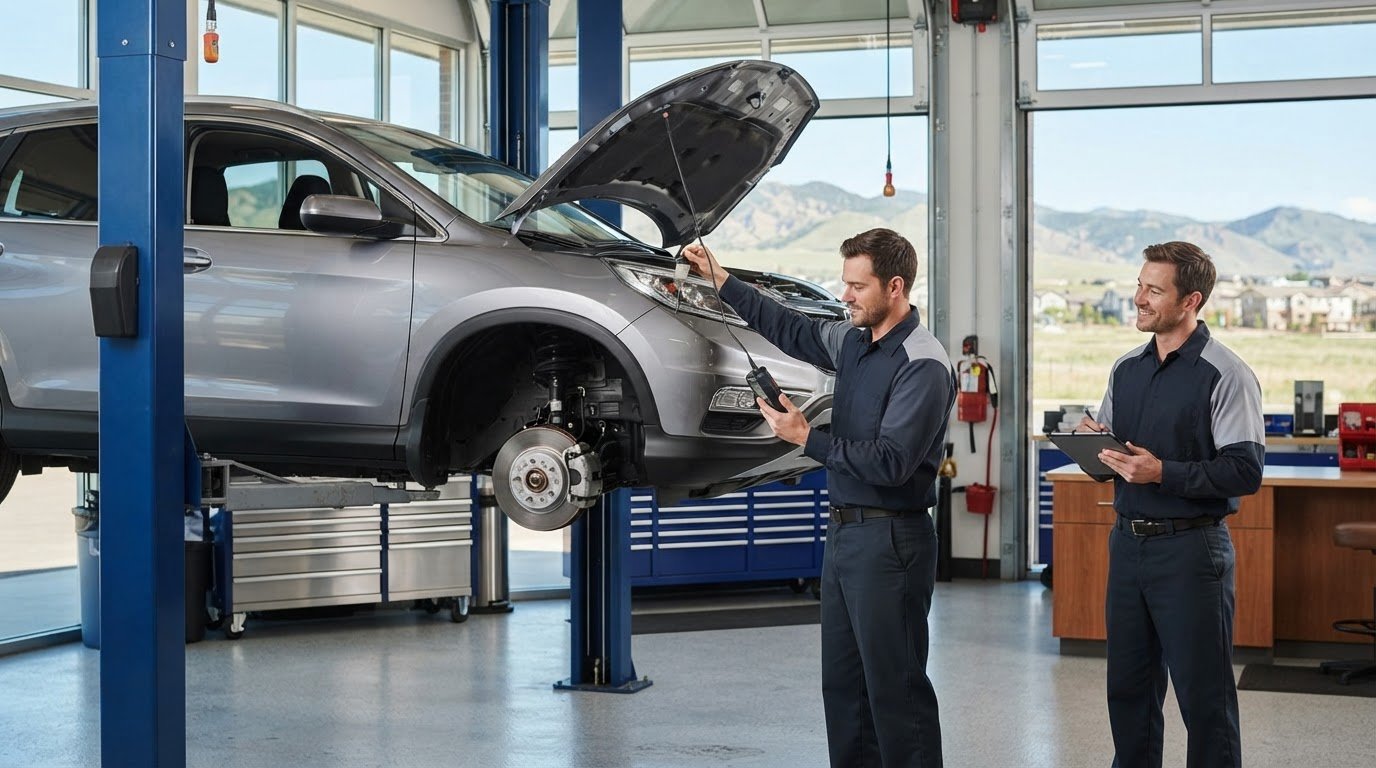
When you bring your vehicle to Eagle Transmission & Auto Repair, we don’t just perform a quick drain and fill. A proper transfer case service is a methodical technical audit designed to ensure your drivetrain is ready for the unpredictable demands of Colorado weather. We follow a precise sequence of steps to guarantee that your vehicle leaves our shop in peak condition. Our team believes that WE FIX EVERYTHING, and that commitment to excellence starts with the very first lift of the vehicle. We begin by securing your truck or SUV on a professional lift to provide clear, safe access to the drivetrain components.
The next step is a pro tip that separate experts from amateurs: we always remove the fill plug before the drain plug. It sounds simple, but if a fill plug is seized and you’ve already drained the fluid, you’re stuck with a vehicle that can’t be driven. Once we’ve confirmed we can refill the unit, we drain the old fluid and carefully inspect the magnetic drain plug. After cleaning the housing, we refill the system with the exact manufacturer-spec fluid required for your specific make and model. We conclude every service with a comprehensive road test, ensuring that your 4WD or AWD system transitions between modes smoothly and quietly.
The Diagnostic Value of the Drain Plug
The fluid we remove tells a story about the health of your internal gears. Our technicians look for “fine metallic dust,” which is a normal sign of wear, versus “large metal flakes,” which indicate a bearing or chain is starting to fail. We also pay close attention to the color and smell of the fluid. If the oil is black or smells burnt, it’s a sign of extreme heat, often caused by heavy towing or high-altitude mountain driving. By identifying these clues early, we can often recommend minor adjustments or repairs that prevent a total drivetrain failure and a multi-thousand dollar repair bill.
Choosing the Right Fluid for Your Make and Model
There is no such thing as a “universal” fluid that works for every vehicle. A Ford F-250 repair Parker CO specialist knows that a Super Duty has different additive requirements than a Jeep Wrangler or a GM SUV. For instance, many GM vehicles specifically require Auto-Trak II, while certain Ford and Jeep models rely on specialized multi-vehicle TCF blends. Using the wrong fluid can lead to clutch chatter, poor shifting, or even internal melting of plastic components. At Eagle Transmission & Auto Repair, we use premium fluids that meet or exceed OEM standards to ensure your vehicle handles the steep grades and high torque loads of the Parker area with ease.
Why Colorado Driving Conditions Demand Faster Service Intervals
Living in Parker means we get to enjoy some of the best views in the country, but those same views come with a hidden cost for your drivetrain. Most vehicle manuals are written for “normal” driving conditions, which usually means flat ground at sea level. Colorado driving is rarely “normal” by manufacturer standards. Between our high elevation and the steep grades of the Front Range, your vehicle is almost always operating under what technicians call “severe service” conditions. A regular transfer case service isn’t just a suggestion here; it’s a necessity for anyone who wants to avoid being stuck on the side of I-70 during a blizzard.
When you’re climbing toward the Eisenhower Tunnel or heading over Kenosha Pass, your transfer case is working overtime. The steep inclines significantly increase the torque load on the internal gears and chain, which generates intense internal heat. If you’re towing a trailer or hauling a heavy load of gear for a weekend in the woods, that heat can quickly reach levels that cook your fluid. Once the fluid is scorched, it can’t lubricate the moving parts, leading to the metal flakes and debris we mentioned previously. At Eagle Transmission & Auto Repair, we see the results of this heat every day, and it’s why we emphasize proactive care.
High-Altitude Heat and Your Drivetrain
At an elevation of over 5,900 feet in Parker, the air is significantly thinner than at sea level. This thinner air is less efficient at drawing heat away from your undercarriage components. While your engine has a radiator and fans to keep it cool, your transfer case relies mostly on the surrounding airflow and the quality of its internal fluid to manage temperatures. When that fluid breaks down due to high-altitude thermal stress, it loses its ability to protect those expensive internal components from friction. Mountain passes put a unique strain on your vehicle that drivers in flatter states simply don’t have to worry about.
The “Severe Service” Schedule for Douglas County
If you look at your owner’s manual, you might see a 60,000-mile interval for drivetrain fluids. However, for drivers in Parker, Castle Rock, and Aurora, we strongly recommend a 30,000-mile transfer case service. The constant 4WD engagement required for Douglas County winters puts immense stress on the seals and clutch packs. A quick check-up before the first snow hits is the best insurance you can buy against a mid-winter breakdown. If you’re ready to ensure your truck is mountain-ready, visit our shop for a professional inspection and drivetrain check-up. We take pride in the fact that WE FIX EVERYTHING, ensuring your family stays safe on every mountain adventure.
Expert Drivetrain Care at Eagle Transmission: More Than Just a Fluid Change
At Eagle Transmission & Auto Repair, we don’t believe in band-aid fixes or “in-and-out” services that ignore the bigger picture. A transfer case service at our Parker shop is a comprehensive health check for your entire drivetrain. When we have your vehicle on the lift, we’re looking at the complex web of components that work together to keep you moving. This holistic approach is why our neighbors trust us; we aren’t just looking at a single gearbox, we’re looking at everything that ensures your wheels turn safely. Our team lives by the motto that WE FIX EVERYTHING, which means we take the time to understand the unique personality of your specific vehicle.
During every service, we pay special attention to your U-joints and CV axles. These parts are the messengers that carry power from the transfer case to your wheels. If a U-joint is seizing or a CV boot is torn, it creates vibrations that can eventually shake your transfer case apart from the inside out. By catching these issues during a routine transfer case service, we save you from a much larger repair bill and the stress of a breakdown. Generic big-box oil change shops often miss these subtle signs because they’re focused on speed rather than the long-term health of your vehicle. We prefer to be the seasoned professionals who catch the small stuff before it becomes a multi-thousand dollar problem.
Comprehensive Drivetrain Health Checks
Sometimes a noise that sounds like a transfer case issue is actually a problem tucked deep within the transmission itself. We integrate our drivetrain care with professional Transmission Repair to provide a complete solution for your truck or SUV. Whether you’re driving a rugged Ford F-250 in Parker CO, a trail-ready Jeep, or a sophisticated European AWD system, our team has the specialized diagnostic tools to handle the job. We’re a neighborly shop that prioritizes your family’s safety because we drive these same icy Douglas County roads every day.
Schedule Your Professional Diagnostic Today
Don’t leave your winter reliability to chance or wait for a “Service 4WD” light to ruin your weekend plans. We invite you to visit our Parker location for a no-guesswork inspection that gives you total peace of mind about your vehicle’s reliability. You can use our Get a Quote tool to see our commitment to transparent pricing before you even walk through the door. We treat every car that enters our bays like it was our own family vehicle, ensuring it’s ready for the high-torque demands of Colorado mountain driving. When we say WE FIX EVERYTHING, we mean we’re your partners in keeping your vehicle on the road for years to come.
Prepare Your Vehicle for the Colorado Roads Ahead
Your 4WD system is exactly what gives you the freedom to explore everything our beautiful state has to offer. By staying ahead of fluid breakdown and listening for those early warning signs we discussed, you protect your vehicle from the high-torque stress of mountain driving. A professional transfer case service is more than just a routine maintenance task; it’s a vital investment in your family’s safety during our unpredictable Colorado winters. We want you to feel confident every time you shift into four-wheel drive, knowing your drivetrain is prepared for the challenge.
Eagle Transmission & Auto Repair has been serving the Parker, Castle Rock, and Centennial communities since 2003. We’ve built our reputation on specialized 4×4 and AWD expertise, treating every truck with the same care we’d give our own family vehicles. We don’t just swap fluids; we audit your entire drivetrain to ensure you’re never left stranded on a mountain pass. If you’re ready for total peace of mind before the next big snowstorm hits the Front Range, Schedule Your Transfer Case Diagnostic at Eagle Transmission & Auto Repair today. Our team is standing by to help because we truly believe that WE FIX EVERYTHING.
Frequently Asked Questions
Is transfer case fluid the same as transmission fluid?
No, transfer case fluid is a specialized lubricant designed for the unique high-torque demands of splitting power between your front and rear axles. While some older vehicles used automatic transmission fluid, most modern 4WD and AWD systems require highly specific synthetic blends with unique friction modifiers. Using the wrong fluid can cause internal clutches to slip or gears to wear prematurely, which is why we always verify your exact manufacturer specifications during every visit.
How often should I have my transfer case serviced in Colorado?
We recommend a transfer case service every 30,000 miles for drivers in the Parker area. While some owner’s manuals suggest a 60,000-mile interval, Colorado’s steep mountain grades and high elevation officially put your vehicle in the “severe service” category. Regular maintenance at this shorter interval is the best way to ensure your 4WD engages perfectly when the first winter storm hits Douglas County.
Can I drive my vehicle if the transfer case is leaking?
You shouldn’t drive with an active leak because the transfer case holds a relatively small amount of fluid compared to your engine or transmission. Even a small puddle on your driveway can mean the internal gears are running dangerously low on vital lubrication. Without enough fluid to keep things cool, the internal components can seize up and turn a simple seal repair into a multi-thousand dollar replacement bill.
What happens if I never change my transfer case fluid?
If you skip this maintenance, the fluid eventually loses its ability to lubricate and cool the internal gears and drive chain. Metal shavings from normal wear will build up in the oil, acting like sandpaper on your bearings and seals. Over time, this leads to a process called fluid shear where the oil becomes too thin to protect the metal, eventually causing a total drivetrain failure.
How much does a typical transfer case service cost at Eagle Transmission?
The cost of this service depends on your vehicle’s specific make and the type of specialized fluid required by the manufacturer. Some systems use standard mineral oils, while others require high-performance synthetic fluids with very specific additives for clutch engagement. At Eagle Transmission & Auto Repair, we provide transparent estimates through our online tools so you know exactly what to expect before we start any work on your vehicle.
Will a transfer case service fix 4WD engagement problems?
A transfer case service can often resolve shifting issues if they are caused by old, thickened fluid that is preventing the internal shift motor or clutch packs from moving smoothly. However, if a mechanical part like the shift actuator or internal chain has already failed, a fluid change alone won’t be enough to fix the problem. Our team uses expert diagnostics to find the root cause of the issue because our promise is that WE FIX EVERYTHING.