Treating your heavy-duty diesel engine like a standard gas vehicle is a fast track to a breakdown on a steep mountain pass. When your Power Stroke, Cummins, or Duramax starts losing power or throws a complex emissions code, you need more than a general mechanic with a basic scanner. You need someone who understands the specific pressure and heat your rig faces while working in the Rockies.
We know how frustrating it is when your work truck sits in a shop bay for days because a generalist can’t pin down a DPF issue or a fuel system glitch. At Eagle Transmission & Auto Repair, we live by the motto “WE FIX EVERYTHING,” and that includes the most complex diesel systems. This guide explains how specialized diesel engine service Centennial owners rely on can restore your fuel efficiency and towing power. We’ll cover everything from modern DEF system complexities to the routine maintenance that prevents major failures before they start. You’ll learn exactly what your engine needs to handle Colorado’s unique driving conditions with total confidence.
Key Takeaways
- Learn why diesel symptoms like power loss require a different diagnostic approach than gasoline engines, particularly regarding your high-pressure fuel system.
- Understand the unique engineering of Power Stroke, Cummins, and Duramax platforms and why specific expertise is vital for a correct diagnosis.
- Discover how Colorado’s altitude and temperature swings affect your fuel quality and why specialized diesel engine service Centennial keeps you running in all seasons.
- Explore how advanced diagnostic tools identify the root cause of complex emissions issues instead of just clearing trouble codes.
- See why a local, independent shop provides a more personal and transparent alternative to the high-priced dealership experience for your work truck.
Identifying Common Diesel Engine Performance Issues
Diesel engines are built for heavy lifting, but they operate by a completely different set of rules than gasoline vehicles. While a gas car uses spark plugs, diesel engine technology relies on extreme compression to ignite fuel. This fundamental difference means that when things go wrong, the symptoms are often much more dramatic. You won’t just feel a minor stumble; you’ll likely see it in the exhaust or feel a sudden lack of pulling power when you’re hauling a load.
Modern trucks rely on high-pressure common rail fuel systems that operate at incredible pressures. Even a tiny amount of contamination or a failing injector can disrupt the entire combustion cycle. Additionally, complex emissions systems like the DPF (Diesel Particulate Filter) are now integral to your truck’s performance. If these systems aren’t breathing correctly, your engine’s reliability drops significantly. Scheduling a regular diesel engine service Centennial truck owners trust ensures these complex systems stay in sync and functional.
Warning Signs You Shouldn’t Ignore
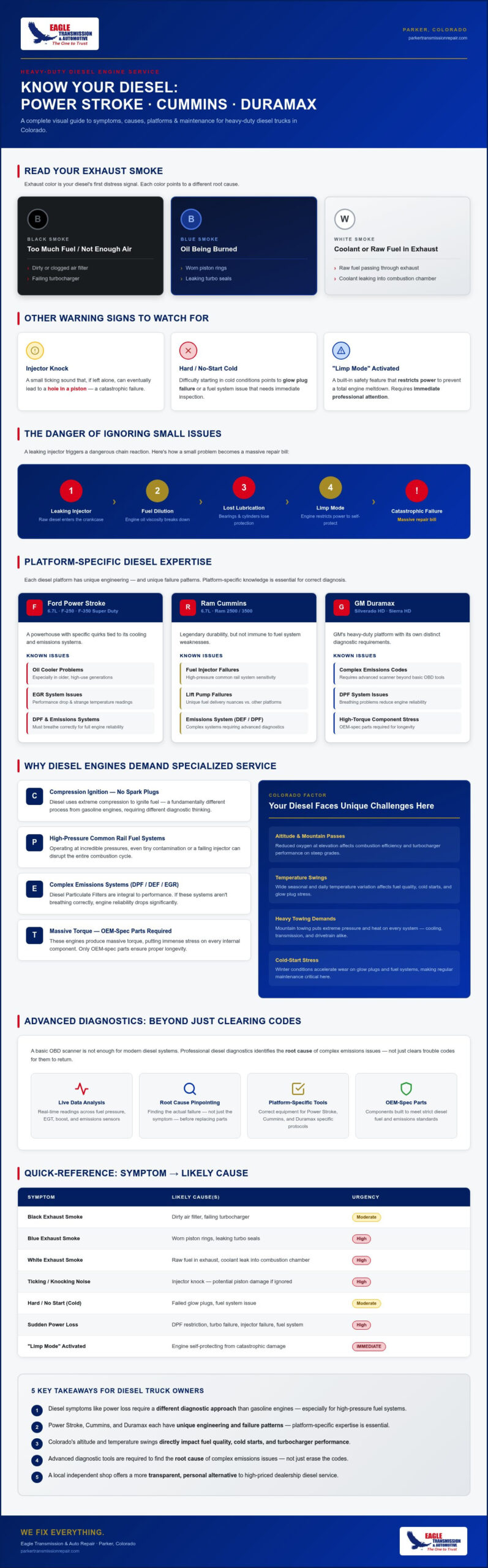
Your truck usually tries to warn you before a major failure occurs. Paying attention to the color of your exhaust can provide a wealth of information about what’s happening inside the cylinders. For example:
- Black Smoke: This usually means the engine is getting too much fuel or not enough air, often pointing to a dirty air filter or failing turbocharger.
- Blue Smoke: This is a clear sign that oil is being burned, which could mean worn piston rings or leaking turbo seals.
- White Smoke: This can indicate raw fuel is passing through the exhaust or that coolant is leaking into the combustion chamber.
Beyond smoke, keep an ear out for new noises. A small ticking sound might seem minor, but it could be “injector knock.” If left alone, that noise can eventually lead to a hole in a piston. Hard starting or a “no start” condition when the engine is cold is another red flag that your glow plugs or fuel system need a look.
The Dangers of Delayed Diesel Service
Ignoring a small issue is a gamble that rarely pays off. For instance, a leaking injector can lead to fuel dilution. This happens when raw diesel enters the crankcase and thins out your engine oil. Once the oil loses its viscosity, it can’t protect your bearings or cylinders, leading to a massive repair bill. If your truck enters “limp mode,” it’s a safety feature designed to protect the engine from a total meltdown. It’s your truck’s way of telling you that it needs professional attention immediately to prevent catastrophic damage.
Specialized Care for Power Stroke, Cummins, and Duramax Engines
Not all diesel engines are created equal. While they share the same goal of moving heavy loads, the engineering behind Ford, Ram, and GM platforms is distinct. A technician who understands the cooling requirements of a Power Stroke might not be as familiar with the specific fuel delivery nuances of a Cummins lift pump. This platform-specific knowledge is exactly what we provide when you need diesel engine service Centennial truck owners can rely on. It isn’t just about turning wrenches; it’s about understanding the unique DNA of your specific rig.
High-quality parts are non-negotiable for these machines. These engines produce massive torque, which puts immense stress on every internal component. Using OEM-spec parts ensures your truck meets the strict diesel fuel and emissions standards while maintaining the longevity you expect from a heavy-duty investment. When we replace a component, we make sure it’s built to handle the heat and pressure of Colorado driving.
Ford Power Stroke Service and Repair
The 6.7L Power Stroke is a powerhouse, but it has its own set of quirks. We often see issues with oil coolers and EGR systems, especially in older generations that have spent years working hard. If you’re noticing a drop in performance or strange temperature readings in your Super Duty, it’s time for a professional look. We provide Expert Ford Truck Repair in Parker to keep your F-250 or F-350 on the road and out of the shop.
Ram Cummins and GM Duramax Expertise
Ram trucks powered by the 6.7L Cummins are legendary for their durability, but they aren’t immune to fuel injector or lift pump failures. Similarly, GM Duramax owners often face challenges with the CP4 high-pressure fuel pump, which can be sensitive to fuel quality. We also focus on the synergy between the Duramax engine and the Allison transmission. This ensures your entire drivetrain can handle the high-torque output without slipping or overheating during a climb. Dealing with these issues early prevents a small fuel system glitch from turning into a total engine failure.
Whether you’re hauling a horse trailer or a flatbed of construction equipment, your truck needs a partner who speaks its language. If you’re noticing a change in how your engine sounds or feels, you can visit our shop in Parker for a thorough evaluation and clear answers.
Essential Diesel Maintenance for Colorado Driving
Living in Colorado is great for us, but it’s undeniably tough on a diesel engine. Between the thin air at 5,000+ feet and temperature swings that can drop 40 degrees in a single afternoon, your truck is constantly adjusting its combustion strategy. These local conditions make a specialized diesel engine service Centennial drivers rely on a necessity for long term longevity. We don’t just look at the odometer; we look at how you use your truck in our specific environment.
One of the biggest local challenges is moisture. Rapid temperature changes cause condensation inside your fuel tank. This is why your fuel water separator is so critical. If water gets past this filter and into your high pressure injectors, it can cause immediate, expensive damage. We recommend draining the separator more frequently during our volatile spring and fall seasons to keep your fuel system dry and functional.
We also have to consider mountain towing. Pulling a heavy trailer up a 6% grade in the Rockies puts your engine oil under extreme thermal stress. While your owner’s manual might suggest long intervals for “normal” driving, most Colorado driving qualifies as “severe.” Shortening your oil change intervals helps prevent oil breakdown and protects your turbocharger bearings from heat related wear. It’s a small investment that prevents a very large repair bill later.
Seasonal Diesel Care in Centennial and Parker
As winter approaches, your glow plugs and block heater become your best friends. Diesel fuel can “gel” in extreme cold, and a weak glow plug system will leave you stranded on a frigid morning. Conversely, our summer heat can overwhelm a cooling system that’s already working hard to manage engine temperatures during a steep climb. Our Reliable Truck Repair for Centennial Drivers ensures your cooling system is pressurized and free of leaks before the summer towing season hits.
Preventative Maintenance Checklist
A little bit of foresight goes a long way with a heavy duty rig. Use this checklist to keep your engine healthy and avoid the dreaded “limp mode”:
- Fuel Filter Replacement: Change these every 10,000 to 15,000 miles to protect your expensive injectors from contaminants.
- Cooling System Flush: This prevents cavitation, which is when tiny bubbles erode the metal inside your engine block over time.
- Turbocharger Inspection: We check for proper boost levels and ensure the variable vanes in your turbo aren’t sticking due to soot buildup.
- DEF and DPF Monitoring: Ensure your Diesel Exhaust Fluid is fresh and your particulate filter is completing its regeneration cycles, especially if you do a lot of short city driving.
At Eagle Transmission & Auto Repair, we understand that your truck is often your livelihood or your ticket to weekend freedom. Keeping up with these specific maintenance tasks ensures it stays ready for whatever the Colorado weather throws your way.
Diagnostic Excellence: Solving Complex Diesel Problems
Many truck owners think a check engine light is solved by a quick scan at a parts store. In reality, a trouble code is just a clue; it tells us which system is unhappy, but it doesn’t explain the “why” behind the failure. For high-quality diesel engine service Centennial drivers trust, we move well beyond simple code reading. We use specialized diesel scan tools that access proprietary data, allowing us to see exactly how your engine is performing in real time.
The Diagnostic Process for Diesel Trucks
Our diagnostic path is thorough and logical. We begin with Check Engine Light Diagnosis in Parker, but digital data is only half the story. We perform physical pressure tests on the fuel rail to ensure your injectors are getting the steady flow they need. Our technicians also check injector balance rates to identify specific cylinders that might be underperforming. We don’t ignore the mechanical side either; we inspect the turbocharger and wastegate for physical wear or soot buildup. This dual approach ensures we don’t just fix a symptom, but solve the root cause of the problem.
Transparency and the ‘WE FIX EVERYTHING’ Approach
We believe that a good mechanic should be a supportive guide through the repair process. Our “WE FIX EVERYTHING” motto means we have the expertise to handle complex engine issues and the drivetrain problems that often follow. We provide the comprehensive diesel engine service Centennial residents need to keep their work trucks and tow rigs in peak condition. We’ll never hide behind confusing jargon or technical posturing. Instead, we’ll explain our findings in plain English and show you exactly what’s happening under the hood.
Before any parts are ordered, we’ll give you a clear roadmap for your repairs. We’ll categorize our findings into what’s urgent for safety or performance and what can be monitored for the future. If a symptom points to multiple potential issues, we’ll discuss the most likely causes and how we plan to narrow them down. We want you to feel like a partner in the process. If your truck is losing power or showing a warning light, schedule a diagnostic appointment with our team to get a clear, honest answer.
Your Local Choice for Diesel Engine Service Near Centennial
Choosing the right shop for your truck often feels like a balancing act. You want the technical mastery found at a dealership, but you probably don’t want the long wait times or the impersonal service that often comes with it. We’ve built our reputation on being the local alternative that offers the best of both worlds. For a comprehensive diesel engine service Centennial residents can trust, we provide specialized knowledge without the “big business” coldness. We’re part of the Douglas County community, and we treat every truck like it belongs to a neighbor.
Our “WE FIX EVERYTHING” motto is especially relevant for heavy-duty diesel owners. These trucks are complex machines where the engine and drivetrain are deeply intertwined. A problem with your turbocharger can affect how your transmission shifts, and a fuel system glitch can put unnecessary strain on your entire drivetrain. Because we understand the whole vehicle, we can identify these connections that a specialized engine-only shop might miss. This saves you time and prevents you from paying for repairs you don’t actually need.
Full-Service Care for Cars and Trucks
Whether you have a single personal truck or a fleet of work vehicles, we focus on keeping you moving. Our Expert Diesel Truck Repair in Parker combines advanced engine diagnostics with our deep roots in transmission and drivetrain repair. This holistic approach means we don’t just fix a single part; we ensure the entire system is reliable for the long haul. We know your truck is an investment, and we’re here to help you protect it so it can continue to work as hard as you do.
Schedule Your Diesel Consultation Today
Getting expert care shouldn’t be a hassle. We’re a short drive away for Centennial truck owners, offering easy access to the specialized service your Power Stroke, Cummins, or Duramax requires. Regular professional inspections are the most effective way to maintain your vehicle’s resale value and avoid the stress of unexpected breakdowns on a mountain pass. If you’ve noticed a change in performance or just want a baseline check to ensure everything is healthy, we’re here to help. Get directions to our shop for your diesel service! and let’s make sure your truck is ready for its next big job.
Keep Your Diesel Ready for the Road Ahead
Your heavy-duty truck is more than just a vehicle; it’s a tool that helps you get the job done and explore everything Colorado has to offer. Whether you’re battling stop-and-go traffic or hauling a trailer up to the high country, your engine deserves specialized attention. By choosing a shop that understands the unique engineering of Power Stroke, Cummins, and Duramax platforms, you ensure your truck gets the precise care it needs. We focus on expert diagnostics to find the root cause of complex symptoms, saving you time and frustration.
Finding a reliable diesel engine service Centennial truck owners can count on shouldn’t be a stressful experience. At Eagle Transmission & Auto Repair, we’re proud to serve Centennial and the broader Douglas County community with transparency and technical mastery. Our goal is to be your partner in maintenance, keeping your rig powerful and efficient for years to come. Schedule your diesel diagnostic or service at Eagle Transmission & Auto Repair today and experience the difference of a local expert who truly speaks your truck’s language. We’re ready to help you get back on the road with confidence!
Frequently Asked Questions
Why is my diesel truck blowing black smoke when I accelerate?
Black smoke usually signals an air-to-fuel ratio imbalance where there’s too much fuel or not enough air. Common causes include a clogged air filter, a failing turbocharger, or worn fuel injectors. It’s essentially unburnt fuel leaving your exhaust pipe. If you notice this frequently, it’s important to have it inspected to avoid clogging your DPF system and causing more expensive repairs down the road.
How often should I change the fuel filters on my Ford Power Stroke?
Ford generally recommends changing fuel filters every 15,000 miles, but Colorado’s unique conditions often require a more proactive approach. Rapid temperature changes in Douglas County can lead to moisture buildup in your fuel tank. For the most reliable diesel engine service Centennial drivers can receive, we suggest inspecting your filters more often if you frequently tow trailers or equipment through the mountains during the winter months.
What causes a diesel engine to have a ‘hard start’ in cold Colorado weather?
Hard starts in cold weather are typically linked to failing glow plugs or batteries that have lost their cranking power. Because diesel engines rely on heat generated by compression to ignite the fuel, they struggle when the block is freezing. Using a block heater and ensuring your glow plugs are in good shape will help your truck fire right up on those frigid Parker mornings without straining the starter.
Is it safe to drive my truck if the ‘Service DEF’ light is on?
You can drive for a short time, but your truck will eventually enter a restricted speed mode if the light stays on. This “limp mode” can limit you to very low speeds to prevent emissions damage. It’s much better to have the system inspected early. Addressing a DEF sensor or pump issue now prevents the frustration of being stuck on the side of the road with a truck that won’t go.
Can a bad transmission feel like an engine problem in a diesel truck?
It’s actually quite common for transmission slips or torque converter shudders to feel like an engine misfire. Since diesel engines produce so much low-end torque, any weakness in the transmission becomes very obvious under load. At Eagle Transmission & Auto Repair, our “WE FIX EVERYTHING” approach allows us to look at the whole vehicle to determine if your performance issue is actually a drivetrain problem rather than an engine failure.
Why does my diesel engine lose power when towing uphill?
Losing power on a climb usually points to a boost leak or a restriction in your fuel delivery system. Colorado’s high altitude means there’s less oxygen available, so your turbocharger has to work much harder. If there’s a small leak in a boot or a clogged filter, your engine won’t get the air or fuel it needs. Professional diesel engine service Centennial technicians can quickly identify and fix these specific high-altitude performance issues.