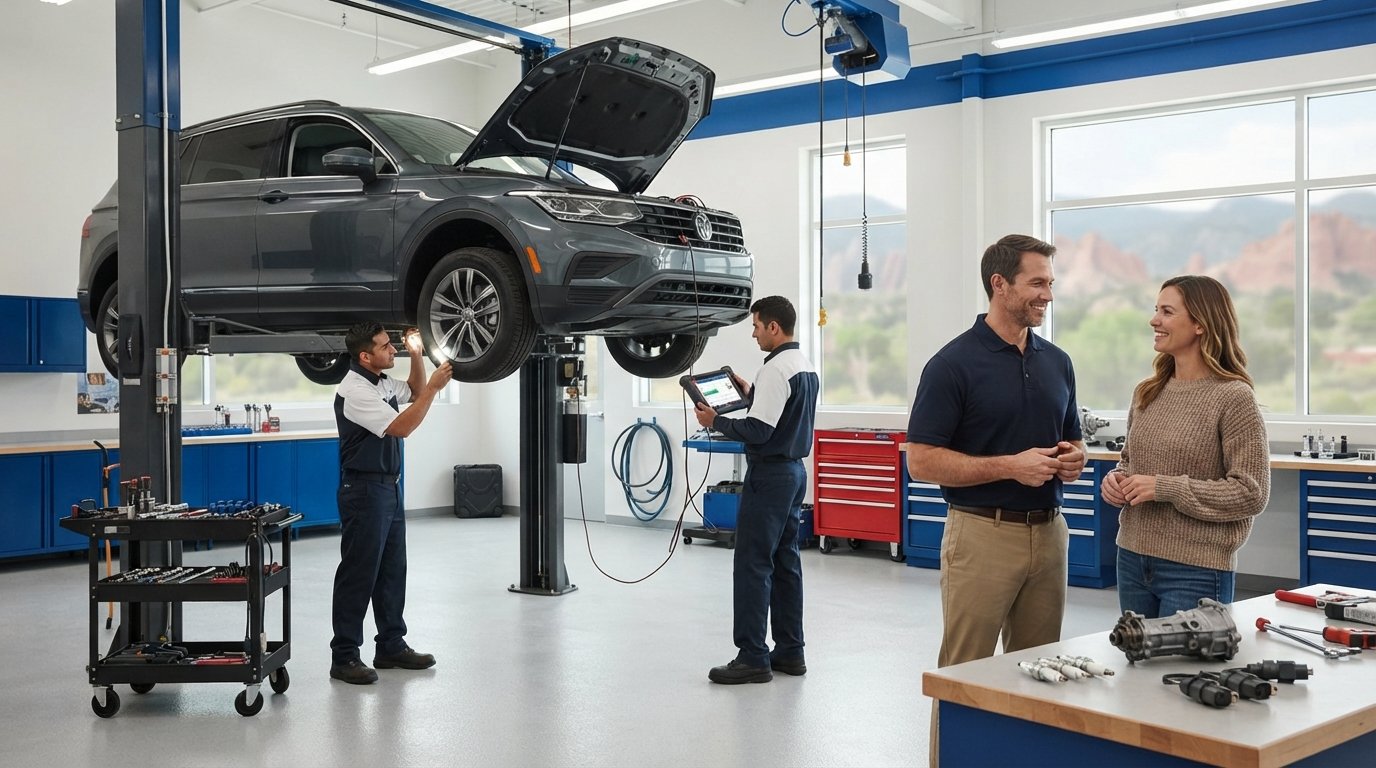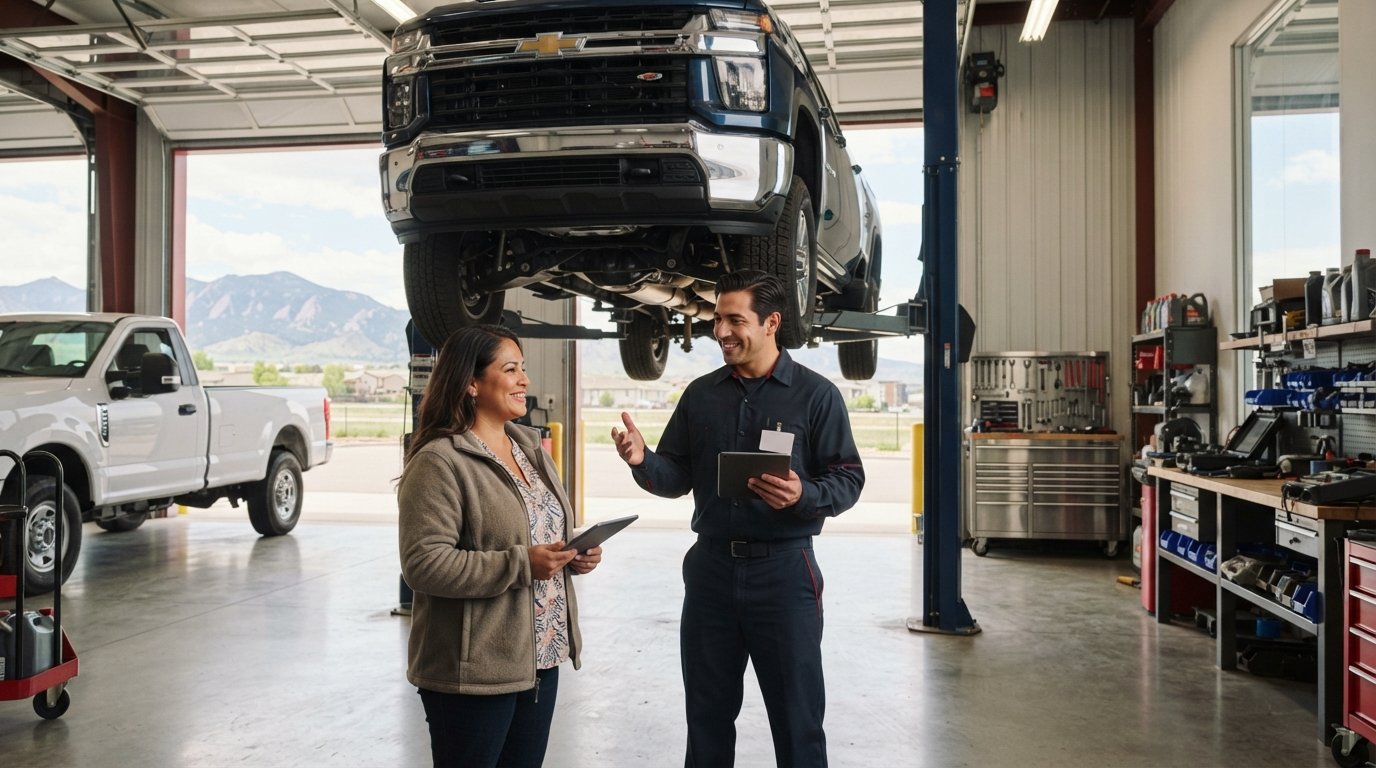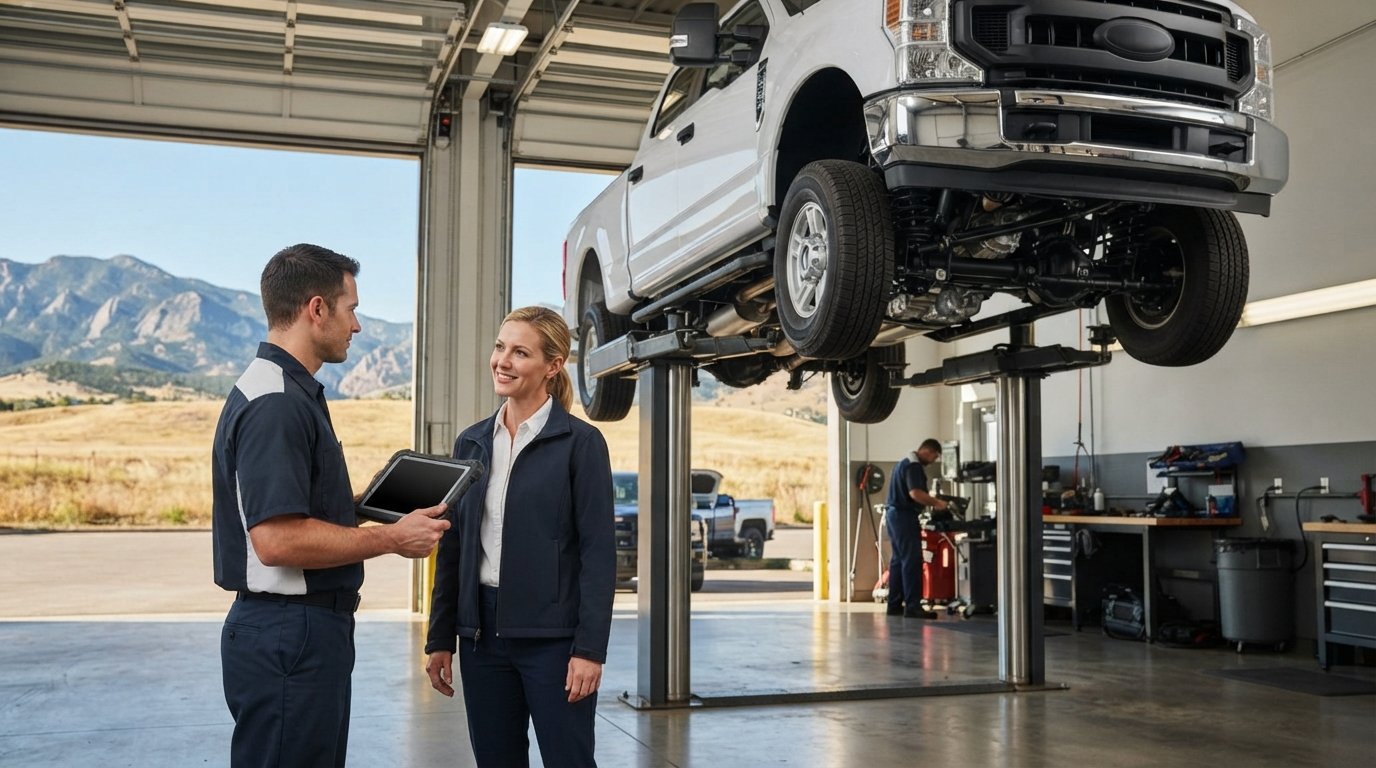
Standard factory maintenance schedules were never built for a loaded commercial rig pulling heavy trailers up the Palmer Divide. When your business depends on daily towing and tough hauling, relying on generic commuter service intervals leads straight to sudden breakdowns and stalled job sites. Prioritizing structured preventative maintenance for work trucks Parker crews operate every day is the single most reliable way to protect expensive transmissions and differentials from premature heat failure. You already know the frustration: an idle truck doesn’t just halt field projects, it burns payroll while deadlines slip away.
Between steep Front Range elevation changes and dusty job sites, Colorado driving pushes work trucks into severe-duty territory much faster than standard highway miles suggest. Discover how a severe-duty maintenance checklist keeps your work trucks running reliably across Parker and Douglas County without the guesswork. Below, we examine practical engine-hour conversions, severe-service drivetrain fluid intervals, and bumper-to-bumper inspection points designed to maximize commercial uptime and extend the working life of your fleet.
Key Takeaways
- Understand why Parker’s 5,900-foot elevation and steep Front Range grades push commercial powertrains into severe-duty operating conditions much sooner than standard trucks.
- Learn how prioritizing preventative maintenance for work trucks Parker businesses depend on safeguards expensive transmissions, differentials, and transfer cases against heat-induced breakdown.
- Identify high-stress chassis checkpoints to catch premature wear across commercial brake, suspension, and steering components before they trigger unexpected job site delays.
- Discover why tracking job site idle hours alongside odometer mileage is critical for setting accurate fluid change intervals on modern gas and diesel work trucks.
- Find out how partnering with an experienced full-service repair team under a comprehensive service approach protects your commercial fleet investment for the long haul.
Why Preventative Maintenance for Work Trucks in Parker Demands a Severe-Duty Approach
Commercial work trucks aren’t typical commuter cars. Carrying heavy tools, lumber, and steel while pulling equipment trailers across Douglas County radically changes the strain placed on internal mechanical systems. When vehicles operate under continuous load, baseline factory maintenance manuals quickly fall short. That’s why consistent preventative maintenance for work trucks Parker contractors rely on requires a strict severe-duty strategy. Scheduling routine fluid changes and safety inspections costs a fraction of an unexpected roadside failure, which instantly stalls field crews, burns billable hours, and triggers costly repairs.
High Elevation and Heavy Hauling Realities
Parker sits at approximately 5,900 feet above sea level. In this thinner air, atmospheric pressure drops roughly 18% to 20% compared to coastal regions. Turbochargers on gas and diesel platforms must spin significantly faster to produce target boost pressures, generating elevated exhaust gas temperatures during acceleration.
When you tow a mini-excavator or fully loaded utility trailer up grades along the Palmer Divide or Highway 83, that thermal stress compounds quickly. The torque converter generates intense friction heat, scorching transmission fluid and degrading its protective lubricating properties. Furthermore, frequent short runs between local job sites prevent crankcase oil from reaching full operating temperature, trapping unburned fuel vapors and moisture inside the engine block rather than burning them away.
Normal Driving vs. Severe-Duty Work Truck Usage
Highway commuters experience consistent airflow and steady cruising speeds that keep mechanical systems at stable operating temperatures. Work trucks face a far harsher reality:
- Constant Stop-and-Go Cycles: Frequent braking and acceleration under maximum Gross Vehicle Weight Rating (GVWR) wear down friction materials and generate high thermal cycling across brake rotors and transmission clutches.
- Job-Site Idling: Running the engine to power inverters, light bars, or hydraulic equipment clocks severe operating hours without registering miles on the odometer.
- Drivetrain Shock Loads: Sudden traction shifts on unpaved construction sites transfer sudden torque spikes directly through transfer cases, universal joints, and differential ring gears.
Protecting commercial vehicles from premature powertrain failure requires adjusting your service approach. Staying proactive with timely transmission service and drivetrain fluid exchanges safeguards your work trucks against the uniquely punishing conditions of the Front Range.
Essential Work Truck Fluid and Drivetrain Maintenance Checklist
A rigorous fluid management schedule forms the backbone of any commercial vehicle inspection. Clean lubricants keep internal components protected against metal-to-metal contact, friction, and extreme operating heat. When commercial rigs haul maximum payloads daily, fluid breakdown happens at double the normal rate. Implementing routine preventative maintenance for work trucks Parker fleet managers oversee ensures every major mechanical system receives the care needed to avoid sudden breakdowns.
Transmission and Transfer Case Fluid Care
High temperatures rapidly shear the protective chemical additives in modern multi-speed automatic transmissions. Under severe load, degraded fluid loses its hydraulic efficiency, resulting in sluggish gear engagement, slipping clutch packs, and burnt internal seals. Inspecting fluid color and smell reveals early warning signs; dark brown fluid carrying an acrid odor means thermal breakdown has already begun.
Transfer case fluid faces identical stress. Engaging four-wheel drive to navigate muddy development sites or snow-packed commercial lots puts significant pressure on the transfer case chain and planetary gears. Scheduling seasonal drivetrain inspections through fleet repair services in Parker, CO ensures your transfer case fluid is refreshed before winter storms hit.
Differential Gear Service for Towing Rigs
Rear differential assemblies absorb tremendous rotational strain when pulling heavy trailers from a dead stop. Hypoid gear sets generate extreme contact friction, shearing the oil and depositing microscopic metal shavings into the housing. Regular inspections should always include pulling the magnetic drain plug to check for heavy metallic sludge. Booking expert differential fluid changes in Parker every 30,000 miles keeps bearings lubricated and prevents costly axle rebuilds.
Cooling System and Engine Oil Safeguards
Cooling system integrity directly dictates engine survival under heavy load. Diesel platforms require routine testing of coolant chemistry to prevent liner pitting caused by cylinder cavitation. Radiator hoses, water pump seals, and serpentine drive belts must also be checked regularly for dry rot and pressure fatigue before summer temperatures climb.
For Power Stroke, Duramax, and Cummins engines, clean oil is critical for protecting turbocharger bearings and high-pressure fuel systems. Partnering with a dedicated shop for expert diesel truck repair in Parker keeps your diesel powerplants running within factory tolerances. If your work truck is overdue for a comprehensive driveline fluid check, you can quickly get directions to our Parker repair shop to have our technicians inspect your commercial fleet.

Critical Chassis Inspections: Brakes, Suspension, and Steering Systems
Commercial service bodies, onboard welders, and heavy ladder racks place an unyielding baseline load on a truck’s running gear. Unlike passenger vehicles that carry significant weight only on weekend outings, commercial rigs operate near maximum axle weight ratings every single working day. According to North American Standard Level 1 inspection data compiled by law enforcement, brake systems and suspension defects account for more than 40% of all commercial vehicle out-of-service violations. That statistic alone underscores why hands-on chassis inspections remain an essential pillar of preventative maintenance for work trucks Parker businesses put to work.
Heavy-Duty Braking Systems Under Load
Holding back a loaded trailer down steep Front Range grades generates intense hydraulic pressure and friction heat. Under these extreme downhill conditions, standard brake pads can quickly glaze over, transferring severe thermal shock into the cast-iron rotors and causing noticeable pedal pulsation.
Hydraulic fluid demands close attention as well. Brake fluid naturally pulls moisture from the ambient air over time, which dramatically lowers its boiling point and can lead to a dangerously spongy pedal during heavy stops. Technicians must also check brake caliper slide pins for road debris buildup, and inspect steel hard lines for pitting caused by winter magnesium chloride de-icers. When stopping performance begins to fade, relying on specialized brake repair and replacement in Parker restores critical braking power before a loaded haul puts your crew at risk.
Suspension, Steering, and Structural Integrity
A loaded work truck chassis endures punishing torsional flex whenever it leaves paved asphalt for uneven construction sites. Over time, that constant twisting leads to metal fatigue across several vital structural components:
- Leaf Spring Packs and Bushings: Look for cracked main leaves, flattened helper springs, and dry-rotted polyurethane or rubber eyelet bushings that cause rear-axle walk.
- Steering Linkages: Check drag links, pitman arms, and tie-rod ends for excess mechanical play, which manifests as loose steering response on the highway.
- Ball Joints and Control Arms: Worn ball joints cause abnormal tire wear patterns and indicate front-end looseness that can compromise steering control.
- Driveshaft Assemblies: Inspect universal joints for missing needle bearings and check center support carrier bearings on two-piece commercial driveshafts for torn rubber isolators that trigger driveline vibrations under load.
Catching these chassis wear points during routine inspections keeps your fleet safe, compliant, and ready for severe duty.
Recommended Maintenance Schedules: Tracking Miles Versus Engine Hours
Odometer mileage tells only half the story for commercial work trucks. While passenger vehicles log almost all engine runtime cruising down the highway, work chassis spend substantial portions of their day idling at job sites or running power take-off (PTO) accessories. Basing service solely on miles driven creates a dangerous blind spot. Aligning preventative maintenance for work trucks Parker companies operate with engine-hour telemetry ensures expensive internal components receive timely care before dirty oil and degraded additives cause permanent mechanical damage.
The Engine Hours Equation for Work Trucks
Commercial equipment guidelines benchmark one engine operating or idle hour as roughly equivalent to 30 to 33 miles of road travel. Stationary idling produces minimal oil pressure compared to highway cruising, while fuel wash from unburned diesel thins out crankcase oil. Additionally, prolonged idling prevents diesel particulate filters (DPFs) from achieving active regeneration temperatures, accelerating soot buildup and exhaust backpressure.
For example, a truck showing just 30,000 miles but 1,500 engine hours has experienced mechanical wear equal to roughly 75,000 highway miles. Setting maintenance thresholds based on runtime rather than odometer readings keeps fleet powertrains running strong.
Severe-Duty Service Interval Milestones
Trade fleets handling heavy towing and local delivery routes benefit from a clear, four-tier preventative maintenance schedule:
- Every 5,000 Miles or 200 Engine Hours: Perform full crankcase oil and filter changes, inspect steering linkage play, check front and rear differential fluid levels, and examine brake pad thickness.
- Every 15,000 to 20,000 Miles: Replace primary and secondary fuel filters to protect common-rail injectors, inspect serpentine accessory drive belts, and test brake hydraulic fluid moisture levels.
- Every 30,000 Miles or 1,000 Engine Hours: Complete full transmission fluid exchanges, drain and refill transfer cases, and service front and rear axle gear lubricants to clear metallic shear debris.
- Seasonal Pre-Winter Prep: Conduct cold-crank load testing on starting batteries, verify coolant freeze protection ratings down to sub-zero temperatures, and lubricate commercial chassis grease zerks.
Complementing this structured schedule with simple daily driver walk-arounds catches minor fluid puddles and damaged fittings before vehicles leave the yard. To review your fleet’s runtime logs and set up a customized severe-duty service plan, visit our commercial truck specialists in Parker today.
Partnering with Eagle Transmission & Auto Repair for Parker Work Truck Care
Managing a commercial fleet takes more than quick oil changes at a corner lube shop. Local trade operations require an experienced automotive partner who understands the mechanical demands placed on hard-working chassis. At Eagle Transmission & Auto Repair, our motto is “WE FIX EVERYTHING.” We approach preventative maintenance for work trucks Parker contractors depend on with the diagnostic depth and mechanical rigor required to prevent catastrophic powertrain failures before they sideline your crews.
Comprehensive Service Under One Roof
Juggling multiple specialty vendors for transmission work, engine diagnostics, and suspension repairs drains valuable administrative time. We eliminate that friction by delivering full bumper-to-bumper repairs in-house. Whether your fleet relies on Ford Super Duty trucks, Chevrolet Silverado 2500 and 3500 platforms, or heavy-duty Ram haulers, our shop has the specialized diagnostic equipment to service them accurately. From computer diagnostics and steering linkages to deep transmission overhauls, we keep your commercial rigs operating without outsourcing components across town.
Streamlined Service to Minimize Fleet Downtime
Unplanned downtime directly hurts your bottom line and damages customer trust. That is why we structure our commercial maintenance programs around prompt turnaround times and clear, honest communication. Every vehicle scheduled for routine care receives a comprehensive commercial inspection covering fluid integrity, driveline play, and structural safety.
Establishing a predictable maintenance schedule keeps your trucks in the field generating revenue rather than sitting in a repair bay. Plan your fleet maintenance today with turn-by-turn directions to Eagle Transmission & Auto Repair at 10189 Parkglenn Way in Parker. Let our team keep your work trucks dependable on every job.
Keep Your Fleet Reliable and Eliminate Costly Job-Site Downtime
Operating commercial work trucks in Douglas County places continuous mechanical demands on transmissions, differentials, and chassis hardware. Waiting for a component to fail turns routine service into crippling downtime and lost job revenue. By shifting to severe-duty maintenance schedules and logging job-site engine run hours, you protect vital powertrain assemblies against the strain of high-altitude towing. Committing to structured preventative maintenance for work trucks Parker businesses operate every day keeps field crews productive, protects payroll, and dramatically extends the working lifespan of your fleet.
At Eagle Transmission & Auto Repair, our technicians provide comprehensive fleet support for commercial gas and diesel platforms. Backed by our core motto, “WE FIX EVERYTHING,” our shop handles everything from electrical diagnostics and heavy-duty brake overhauls to complete drivetrain rebuilds. Get directions to Eagle Transmission & Auto Repair in Parker on Parkglenn Way to schedule a commercial truck evaluation and keep your operations moving forward without interruption.
Frequently Asked Questions
How often should commercial work trucks have their transmission fluid changed in Parker?
Commercial work trucks pulling trailers or hauling heavy equipment should have their transmission fluid serviced every 30,000 to 60,000 miles or every 1,000 engine hours. While passenger vehicles might stretch intervals to 100,000 miles, continuous towing and steep Front Range hill climbs cause fluid to break down much faster. Routine fluid exchanges remove oxidized lubricant and prevent expensive internal clutch slipping.
Why do work trucks in Colorado need a severe-duty maintenance schedule?
High elevation, steep foothill grades, and heavy payload demands classify almost every commercial truck along the Front Range under severe-duty operating parameters. Parker sits near 5,900 feet, which reduces atmospheric pressure and forces turbos and cooling fans to work substantially harder. Integrating rigorous preventative maintenance for work trucks Parker crews rely on counteracts thermal breakdown across commercial transmissions, differentials, and cooling circuits.
What is the difference between tracking engine hours and mileage for fleet maintenance?
Tracking engine hours accounts for stationary idling and auxiliary power take-off runtime that odometer mileage completely misses. Work trucks frequently idle on job sites to run tools or support crews. One stationary idle hour generates internal mechanical wear equivalent to roughly 30 miles of highway driving, thinning crankcase oil and loading exhaust filters while the odometer never moves.
Can regular preventative maintenance prevent diesel engine fuel system failures?
Yes, timely fuel filter replacements and routine fuel-water separator draining protect high-pressure diesel injection systems from catastrophic contamination. Modern common-rail diesel injectors operate under intense pressure with microscopic tolerances. Moisture condensation or fine dirt passing through clogged filters quickly damages costly fuel pumps and injectors. Swapping primary and secondary filters every 15,000 miles keeps fuel delivery clean and dependable.
How does towing heavy trailers impact my truck’s differential service intervals?
Continuous towing cuts standard factory differential service intervals down from 60,000 or 100,000 miles to roughly 30,000 miles. Hauling heavy equipment creates high contact friction and intense shearing forces between the ring and pinion gear teeth. Frequent gear oil changes remove microscopic metallic debris and replenish critical thermal additives, safeguarding heavy-duty axle assemblies against bearing fatigue and premature gear failure.
What should a commercial driver inspect during a daily pre-trip walkaround?
Drivers should check under-hood fluid levels, verify exterior lights, inspect visible suspension leaves, and look underneath the chassis for active fluid puddles before leaving the yard. Catching loose steering components, worn belt tensioners, or low brake fluid before rolling out prevents hazardous breakdowns. Daily checks support the scheduled preventative maintenance for work trucks Parker fleets need to stay safe and productive.