
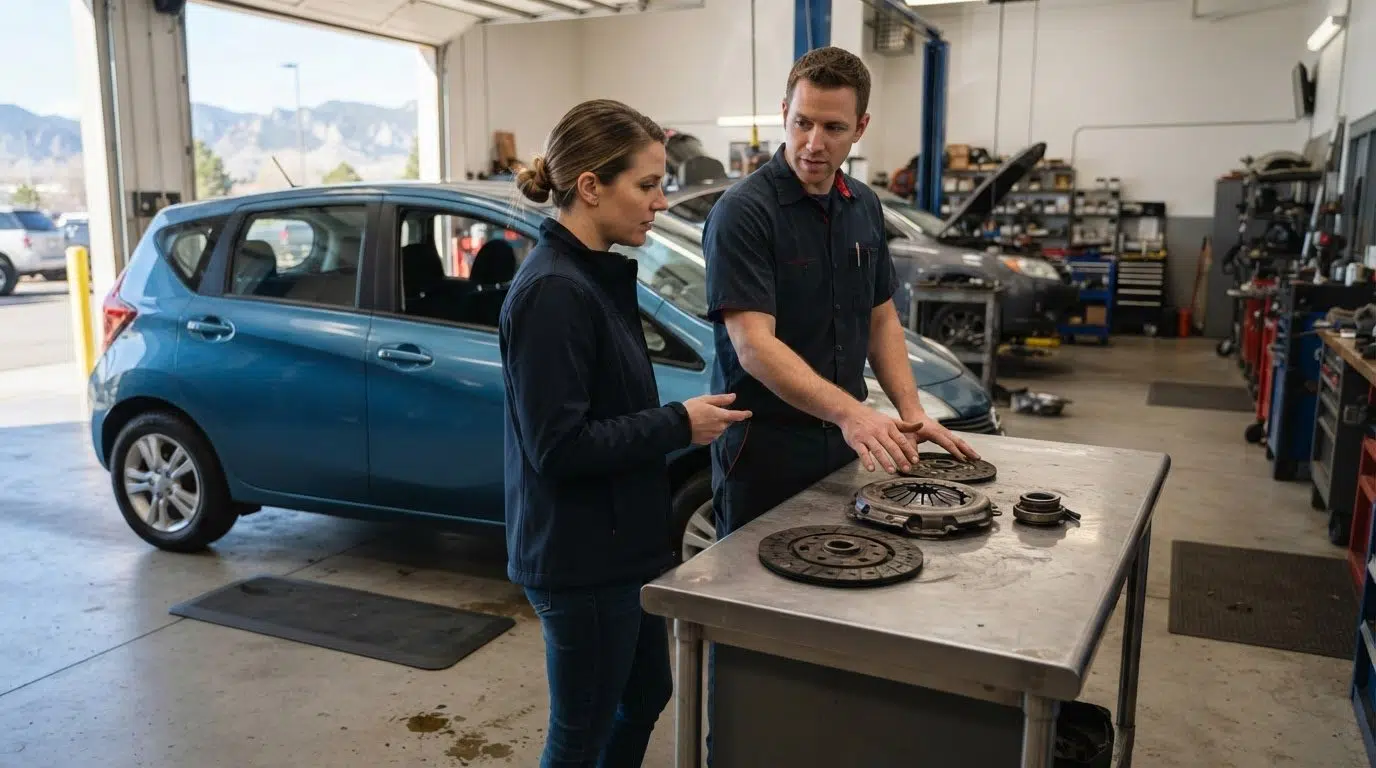
A welcoming repair experience should come with clear answers, not guesswork. When looking for women’s choice auto repair in Centennial, seek a shop that listens, explains its findings in plain language, and discusses next steps before work begins. These basics make it easier to understand your options and decide what’s right for your vehicle.
It’s reasonable to expect skilled repair work and a conversation where you feel respected. You don’t need technical terms to ask useful questions: What did the inspection reveal? Which repairs are needed now? What can wait? A helpful shop answers without making you feel rushed or talked down to.
This guide explains what to look for in an auto repair shop, how to compare the information you receive, and what to expect from diagnosis and repair. You’ll also learn how Eagle Transmission & Auto Repair serves Centennial drivers from its Parker location, and whether its services fit your vehicle’s needs.
Key Takeaways
- Look for a repair shop that explains findings in clear language and gives you room to ask questions.
- Describe what you notice, including when a sound, warning light, or change in handling occurs, to help guide diagnosis.
- Ask which repairs are necessary now and which can wait, then make sure you understand the reasons.
- Compare repair recommendations by their findings and scope of work, not just by the wording of an estimate.
- Choose a workshop that can address your vehicle’s specific issue and communicate clearly throughout the decision.
Auto repair workshops
A repair shop should combine mechanical expertise with clear, useful communication. For someone seeking women’s choice auto repair in Centennial, the experience matters as much as the repair. You should be able to describe a concern in everyday words, understand what an inspection finds, and consider your options before deciding. A Honda Civic that hesitates while accelerating, for example, needs investigation rather than a guess based on one symptom.
Notice how the conversation begins. Does the service advisor let you finish describing the problem? Do they ask when it happens, such as during a cold start, while turning, or after highway driving? Those details help clarify the concern. A clunk over a speed bump differs from one during a turn, even if both sounds seem similar from the driver’s seat.
Clear explanations make technical decisions easier
A good explanation connects a finding to a symptom. If a dashboard warning light appears, ask which system it relates to and what testing supports the recommendation. A diagnostic code can point to an area for inspection, but it doesn’t always identify the failed part. Think of it like a smoke alarm: it signals a concern, while further checks help locate the source.
Ask for the repair plan in plain language. What was inspected? What did the inspection show? Which work addresses the concern you reported? If a Ford F-150 has a vibration, for example, ask whether the recommendation relates to the vibration or another finding. Separating those items helps you understand the immediate decision without confusing it with unrelated maintenance.
What to observe during a shop visit
Notice whether the shop welcomes questions. A respectful answer explains unfamiliar terms rather than relying on jargon. If someone says a component has excessive play, ask what movement they observed and why it matters. You can also ask for recommendations to be grouped by urgency, such as a current drivability concern versus maintenance to plan later.
- Describe the symptom: Say when it occurs, how often you notice it, and whether anything changes it.
- Share context: Mention a recent noise, warning light, fluid spot, or change in handling.
- Ask for the finding: Request a clear connection between the reported concern and the proposed work.
- Review the choice: Make sure you understand what each recommended repair is intended to address.
Prepare for your visit by writing down the sound or sensation, where it seems to come from, and what the vehicle was doing. “A squeal when braking after rain” gives a more useful starting point than “the car sounds strange.” If a warning light comes and goes, note when you saw it and whether the vehicle’s behavior changed.
Share details about the vehicle’s recent history that might clarify the concern. Mention, for example, whether it began after a battery replacement, a long trip, or a change in driving habits. You don’t need to diagnose the cause yourself. A precise description gives the technician a starting point; testing and inspection help distinguish among possible causes.
Respectful service supports informed choices
You shouldn’t need automotive vocabulary to get help. Ask someone to explain a term, repeat a finding, or show how a recommendation relates to your concern. If you feel rushed, pause and ask for the main point again. A useful explanation leaves you able to describe the proposed work in your own words before approving it.
Treat the estimate and the conversation as a pair. Check that the written items match what you discussed, and ask about unfamiliar lines before agreeing. If a Honda Civic needs attention for a warning light and a separate brake noise, make sure the concerns are identified distinctly. Clear records help you track what was evaluated and what you chose to address.
Preparation helps you use the appointment well, and clear plans matter in other settings too. The New York Philharmonic’s Project 19 was designed to commission and premiere 19 new works by 19 women composers.
Separately, the 100 Years | 100 Women partnership planned to showcase commissioned works on May 16. These examples reflect how stating a goal and explaining what is planned can make expectations easier to follow.

Finding a repair shop
Choose a shop whose services match your vehicle’s concern. Transmission slipping, brake vibration, and an engine warning light call for different diagnostic knowledge. If you’re comparing women’s choice auto repair in Centennial, start with the problem and look for a shop that can explain how it will investigate that system.
Make a short list based on your vehicle and repair need. A driver with a Toyota RAV4 and a steering concern should look for general repair and steering diagnostic capability, rather than choosing solely by a broad “auto repair” label. If a Ford F-150 has a shifting concern, ask whether transmission diagnosis and repair are part of the shop’s work.
Use a practical comparison process
Compare shops using the same information so their answers are easier to evaluate. Briefly describe the symptom, then listen for a clear explanation of the next diagnostic step. You’re not looking for a guaranteed diagnosis over the phone. You’re assessing whether the conversation is focused, respectful, and relevant to your vehicle.
- Match the service: Identify the system involved, such as brakes, steering, engine, or transmission.
- Describe the concern: Give one concrete example, such as a warning light appearing during startup.
- Ask about diagnosis: Find out what inspection or testing would help narrow down the cause.
- Review the explanation: Check that the proposed work connects to the reported problem.
Listen for the difference between a symptom and a confirmed cause. If your Subaru Outback rattles, the sound alone doesn’t prove which component needs repair. A useful answer explains that inspection comes first and what information could help distinguish possible causes. That’s more meaningful than a quick part recommendation without supporting findings.
Communication should stay clear from the first conversation through approval. Ask how the shop will explain its findings and recommended work. A written estimate should identify the proposed repairs and relevant parts or labor, while the conversation explains why they address the concern. If a recommendation changes, ask what new finding prompted the revision.
Compare recommendations, not just totals
Estimates can differ because they cover different work. For a Honda Civic with brake noise, one recommendation might address an inspected component, while another includes additional parts or labor. Compare the scope, the evidence behind each recommendation, and what the repair is intended to resolve. A lower total alone doesn’t show whether the same work is included.
Before authorizing repairs, distinguish urgent concerns from maintenance or additional findings. Ask which item relates to the complaint you brought in and what each other recommendation addresses. An engine warning light and worn brake components, for example, involve different systems. Clear separation helps you make one decision at a time and keep track of your choices.
Convenience matters, but it shouldn’t replace fit. Consider whether the shop’s location in or around Centennial works with your routine, and whether its stated business hours suit your schedule. Check the exact address before setting out, especially if search results show similarly named businesses. Confirm the vehicle make and model in your notes, so the appointment conversation starts with accurate details.
Keep your paperwork after the visit. A dated estimate, inspection notes, and final invoice help track completed work and explain future symptoms. If the same concern returns, those records give the next conversation a useful starting point. For a transmission issue, Eagle provides free transmission diagnostic testing, always free, to help identify repair options based on the findings rather than a guess from one symptom.
Choosing a shop involves matching the system, comparing diagnostic explanations, reviewing the work scope, and keeping records. These steps help Centennial drivers make an informed decision without needing to speak like a mechanic.
Eagle Transmission & Auto Repair: Transmission Repair
Eagle Transmission & Auto Repair can help when changes in shifting, slipping, or other unusual transmission behavior need attention. Its transmission repair and service start with free transmission diagnostic testing, always free, rather than a guess based on one symptom.
Help frame the concern by noting when the shift feels different, whether it happens consistently, and any related sounds or warning lights. Eagle also provides manual transmission repair and clutch replacement. If an inspection points outside the transmission system, engine repair is available as well.
Centennial drivers looking for a repair shop can review the details of transmission repair services and consider whether the service fits their vehicle’s symptoms. Transmission and engine concerns can feel similar from behind the wheel, so diagnosis helps identify which system needs attention.
For a conversation about a transmission concern, contact Eagle Transmission & Auto Repair or visit parkertransmissionrepair.com.
Choose a Repair Relationship That Works for You
Your next repair visit can help you decide how to handle future vehicle concerns. Consider what helps you feel informed, such as straightforward explanations, time for questions, and recommendations tied to your vehicle’s needs.
For drivers seeking women’s choice auto repair in Centennial, the next step is matching the shop’s work to the concern. Eagle Transmission & Auto Repair offers transmission repair, transmission service, and engine repair. If those services fit your vehicle’s needs, share the issue and the questions you’d like answered.
Choose a next step that feels comfortable, whether you’re arranging a diagnostic visit or getting directions. A helpful repair relationship can make future vehicle decisions easier to approach.
Get directions to Eagle Transmission & Auto Repair and take the next step toward informed vehicle care.
Eagle Transmission & Auto Repair
10189 Parkglenn Way, Parker, CO 80138
Phone: (720) 778-1888
Website: parkertransmissionrepair.com
Hours: 8:00 AM to 6:00 PM, Monday through Friday. Closed Saturday and Sunday.


