
Last Updated: October 23, 2026
Quick Summary
The main car A/C compressor replacement symptoms are warm air from the vents, weak cooling, rattling or squealing noises, a clutch that won’t engage, oily refrigerant residue, and a cracked or glazed belt. Warm air alone doesn’t prove compressor failure, so gauges and electrical tests are needed to confirm the diagnosis.
- Warm air is the most common sign, but low refrigerant or a bad pressure switch can cause it too.
- Rattling, whining, or grinding noises often mean internal wear or a slipping belt.
- A clutch that never engages is often a low-charge symptom, not a dead compressor.
- A seized compressor pulley can snap the drive belt and leave you stranded.
- Replacement includes flushing the system, replacing the receiver-drier, and recharging with the correct refrigerant.
Table of Contents
- Car A/C Compressor Replacement Symptoms: What to Watch For
- 1. The Air Blows Warm Instead of Cold
- 2. Reduced Cooling and High Cabin Temperatures
- 3. Unusual Noises From the Engine Compartment
- 4. The Compressor Clutch Won’t Engage
- 5. Visible Refrigerant Leaks or Oily Residue
- 6. Pulley, Belt, or Compressor Damage
- Why a Car A/C Compressor Making Noise Shouldn’t Be Ignored
- Car Air Conditioner Blowing Warm Air? Here’s What It Means
- How to Diagnose a Bad A/C Compressor Before You Replace It
- Other Faults That Mimic Compressor Failure
- Can You Drive With a Bad A/C Compressor?
- What Compressor Replacement Involves and How We Help in Parker
- Frequently Asked Questions
Car A/C Compressor Replacement Symptoms: What to Watch For
Your car’s A/C compressor is the heart of the system, and when it starts to fail, the signs show up fast.
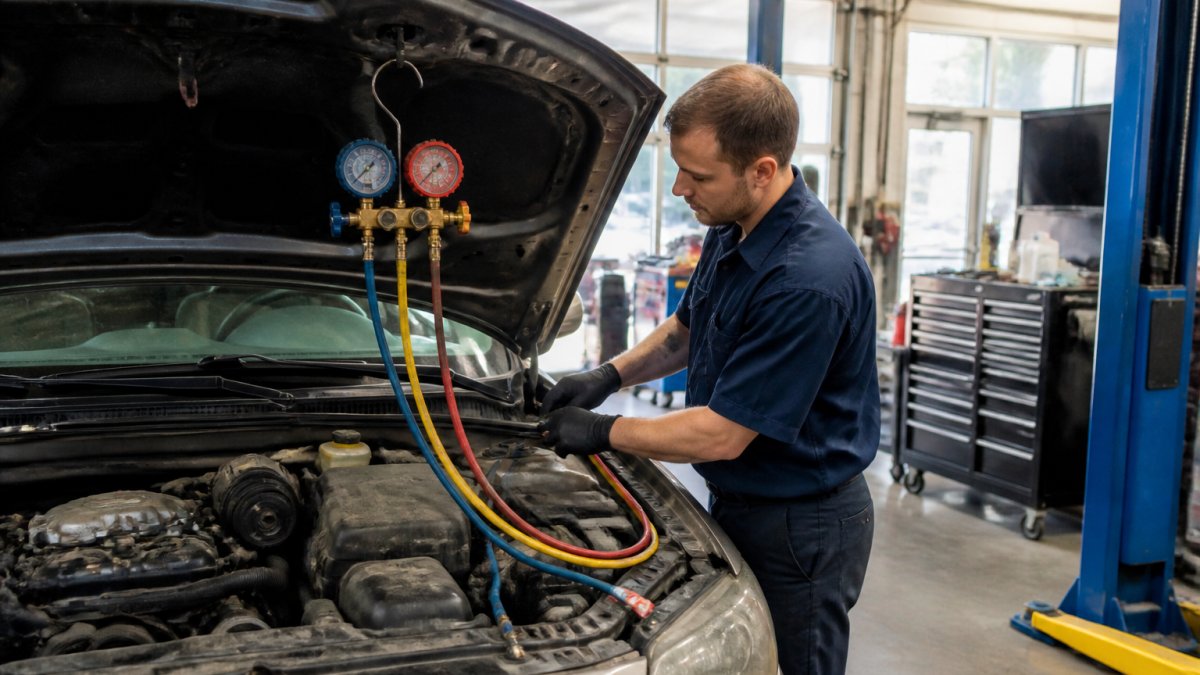
Here’s the short answer: warm air, weak airflow, strange noises, a clutch that won’t engage, oily residue, and belt damage are the top warning signs.
We’ve served drivers in Parker and the surrounding communities for over 40 years, and we know how Colorado heat and stop-and-go commuting stress an A/C system.
1. The Air Blows Warm Instead of Cold
Warm air is the most common sign of a failing compressor. When it stops pumping refrigerant, the air from your vents feels like outside air.
This is one of the clearest car A/C compressor replacement symptoms, but low refrigerant, a bad pressure switch, or an electrical fault can produce the same result. A proper diagnosis tells you which.
2. Reduced Cooling and High Cabin Temperatures
Sometimes the air is cool but not cold, especially on a hot day or long commute. If it works fine in the morning and fades by afternoon, the compressor may be losing its ability to build pressure, an early warning worth checking.
3. Unusual Noises From the Engine Compartment
A car A/C compressor making noise is a red flag. Listen for these sounds when the A/C is on:
- Rattling or clicking at idle
- Whining that rises with engine speed
- Squealing when the compressor kicks on
Squealing often means a slipping belt, rattling can signal internal wear, and grinding may point to seizure.
Ignoring a noisy compressor can turn a contained repair into system-wide damage. A failing compressor can shed metal debris into the refrigerant lines, which then contaminates the condenser and expansion valve.
4. The Compressor Clutch Won’t Engage
The compressor clutch is the electromagnetic hub that connects the compressor to the drive belt. When you turn on the A/C, it should engage with a visible click and start spinning; if it stays still, you get no cooling. Causes range from a blown fuse to a bad clutch coil or low system pressure, and a technician can test engagement quickly with a gauge set and multimeter.
5. Visible Refrigerant Leaks or Oily Residue
Refrigerant carries lubricating oil, so a leak usually shows up as a dark, wet patch on hoses, fittings, or the compressor itself. Watch for greenish UV dye stains, greasy buildup near connections, or a hissing sound while the system runs. Any visible leak needs attention, a low charge accelerates compressor wear.
6. Pulley, Belt, or Compressor Damage
Inspect the compressor pulley and drive belt for cracks, glazing, or fraying. A worn belt can slip and squeal, and a seized pulley can snap the belt entirely. Cracks or dents on the compressor housing are a strong sign replacement is near.
| Symptom | What It Often Means | Urgency |
|---|---|---|
| Warm air from vents | Compressor not pumping | High |
| Reduced cooling | Weak pressure | Medium |
| Rattling, whining, squealing | Internal wear or belt slip | High |
| Clutch won’t engage | Electrical or pressure fault | Medium |
| Oily residue | Refrigerant leak | High |
| Belt cracks or glazing | Pulley or belt wear | Medium |
Why a Car A/C Compressor Making Noise Shouldn’t Be Ignored
Noise is your earliest and cheapest warning. A car A/C compressor making noise usually means something inside is wearing out. Catch it early and you may only need a clutch or belt. Wait, and you risk a full compressor replacement plus a system flush.
Metal debris from a failing compressor travels through the condenser, expansion valve, and evaporator, and cleaning that out costs more than the compressor itself.
Car Air Conditioner Blowing Warm Air? Here’s What It Means
Car air conditioner blowing warm air means the system isn’t moving refrigerant the way it should, the compressor may have failed, or the system may be low from a leak. Don’t assume the worst: a low charge, a faulty pressure switch, or a clogged expansion valve can all cause warm air, and only a proper diagnosis with gauges tells you which.
How to Diagnose a Bad A/C Compressor Before You Replace It
Most guides jump from “warm air” straight to “replace the compressor,” but that order is backwards.
A safety note first: the A/C system holds refrigerant under high pressure, and venting it is dangerous and regulated under federal refrigerant-handling rules.
Step 2, Watch the clutch. With the engine running and the A/C on max, look at the compressor hub. The outer plate should pull in and spin with the pulley, and you should hear or feel a click. Three outcomes matter:
- Clutch engages and the hub spins, the electrical circuit and pressure switch are likely working. Move on to pressures.
- Clutch never engages, check the A/C fuse and relay first, then the pressure switch. A system with too little refrigerant will keep the clutch off on purpose to protect the compressor, so a non-engaging clutch is often a low-charge symptom, not a dead compressor.
- Clutch engages and slips or chatters, the air gap on the clutch plate may be out of spec, or the clutch coil is weak. This is a clutch repair, not necessarily a compressor replacement.
Step 5, Read the gauges. This is where the diagnosis actually separates. A technician compares high-side and low-side readings against the spec for your vehicle and the ambient temperature. Common patterns:
- Low on both sides, undercharge or a leak, not a failed compressor.
- High on both sides, overcharge, restricted airflow across the condenser, or a condenser fan fault.
- Low side too high, high side too low, the classic sign of a worn compressor that can no longer build pressure.
That’s why a gauge set matters more than a visual inspection, two vehicles with identical symptoms can need completely different repairs.
Step 6, Check the electrical side. Test the pressure switch, clutch coil, and relay.
If you only do one check yourself, do Step 2. Watching whether the clutch engages tells you which half of the system to investigate and can save you from authorizing a compressor you don’t need.
If the gauges point to a weak compressor, our team in Parker can run the full sequence, clutch, belt, pressures, and electrical, and explain what we find before any repair is approved. If you’d like a second opinion on a diagnosis you’ve already received, bring it in and we’ll walk through the readings with you.
Other Faults That Mimic Compressor Failure
A compressor is easy to blame and expensive to replace.
| Look-alike fault | Why it feels like a bad compressor | The clue that separates it |
|---|---|---|
| Low refrigerant charge from a slow leak | Warm or weak air, clutch may not engage | Both gauge readings run low; oil residue or dye at fittings |
| Failed pressure switch | Clutch never engages, no cooling at all | Clutch engages when the switch is bypassed for testing; circuit tests bad |
| Clogged expansion valve or orifice tube | Poor cooling, sometimes frost on one line | High side climbs, low side drops; the restriction shows up as a temperature split across the device |
| Weak condenser fan or blocked condenser | Cooling fades at idle and returns at speed | Airflow problem, not a pressure problem; condenser fins packed with debris |
| Electrical fault in the clutch circuit | No clutch engagement, intermittent cooling | Blown fuse, bad relay, or open coil; the compressor itself may be fine |
| Restricted cabin air filter or blend door fault | Weak airflow or air that never gets cold | Vent temperature is cold but volume is low, or temperature doesn’t change with the controls |
| Seized compressor pulley bearing | Belt squeal, burning rubber smell | Pulley drags or grinds with the engine off; belt may be damaged |
A few of these deserve a closer look because they are the ones most often misdiagnosed.
Low charge versus a weak compressor. Both leave you with warm air, but the gauges tell them apart.
A restriction versus a worn compressor. A blocked expansion device or plugged condenser restricts flow, so the compressor works hard but can’t move refrigerant where it needs to go.
Replacing a compressor on a system that is low on charge, restricted, or electrically faulty is one of the most common ways to waste money on an A/C repair. The new part inherits the old problem and can fail the same way. Diagnose the whole system, not just the part that looks guilty.
If you’ve been told you need a compressor and want to be sure, our Parker shop can verify the diagnosis with gauges and electrical tests before anything is ordered. We serve drivers from Castle Rock, Centennial, Aurora, Lone Tree, Highlands Ranch, Franktown, and Elizabeth, and we’ll explain what the readings show so you can decide with confidence.
Can You Drive With a Bad A/C Compressor?
You can often drive with a bad A/C compressor, but it comes with risks. The engine will still run, and the car will still move. The A/C just won’t cool.
The bigger concern is the belt. A seized compressor pulley can snap the drive belt, which may also run the alternator or water pump, turning a comfort issue into a breakdown.
A bad compressor is rarely an emergency on its own, but a seized pulley can strand you. If the belt squeals or the pulley locks up, park the car and call for service.
What Compressor Replacement Involves and How We Help in Parker
Compressor replacement is more than swapping a part. A proper job includes:
- Recovering and recycling refrigerant safely
- Flushing the system to remove metal debris
- Replacing the receiver-drier or accumulator
Refrigerant handling is regulated, so this isn’t a DIY job.
Colorado’s temperature swings and mountain driving put extra strain on A/C systems. Cold starts and rapid heat cycles wear seals and belts faster.
We aim for same-day service on most repairs and offer complimentary Uber or Lyft rides so your day isn’t derailed. Our diagnostics are free, and you’re never locked in.
Frequently Asked Questions
How would I know if my A/C compressor is bad in my car?
Watch for warm air from the vents, reduced cooling, unusual noises like rattling or squealing, a compressor clutch that won’t engage, or oily residue near A/C lines. These A/C compressor symptoms often overlap with other faults, so a proper diagnosis matters. Our Parker shop can road-test and inspect your system to confirm whether the compressor is the real problem before recommending replacement.
What noises can a failing car A/C compressor make?
A car A/C compressor making noise may rattle, click, whine, or squeal. Rattling can point to internal wear, clicking often relates to clutch engagement, and squealing may involve the drive belt or pulley. Because belt wear and pulley damage can sound similar, a technician should inspect the engine compartment and confirm the source before parts are replaced.
Can you drive with a bad A/C compressor?
In many cases you can drive with a bad A/C compressor, but it depends on the symptom. If the pulley seizes or the drive belt fails, the vehicle may not be safe to operate. Continued operation can also spread metal debris through the A/C system. If you notice loud noises, a burning smell, or belt damage, stop driving and arrange service.
How do mechanics diagnose a faulty A/C compressor?
Diagnosis starts with verifying cooling performance and checking system pressures with gauges. We inspect the compressor clutch, pulley, drive belt, and wiring, then look for refrigerant leaks and oily residue. Comparing readings to vehicle service information helps rule out the condenser, expansion valve, pressure switch, or an electrical fault before confirming compressor replacement is needed.
If your A/C is blowing warm or making noise, don’t wait for a small fix to become a big one. Contact Eagle Transmission & Auto Repair in Parker for a free road test and computer diagnostic. Our ASE-certified team will pinpoint the problem, explain your options, and get your cooling back before the next hot commute. Schedule service with us and drive away with confidence.