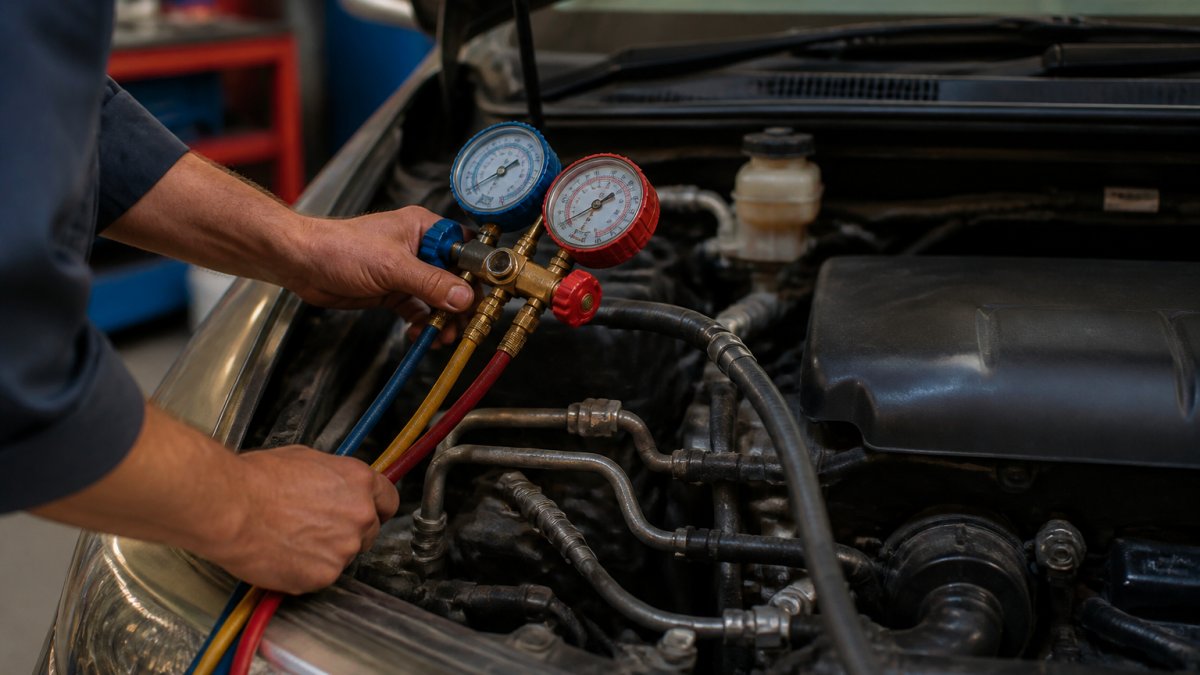
You shouldn’t have to choose between a mechanic who understands your heavy-duty diesel and one who can handle your daily gas-powered pickup. In a town like ours, your truck is more than just a ride; it’s your office, your tow rig, and your family’s safety net. When you’re searching for reliable truck engine repair Parker CO, you’re looking for more than a quick fix. You’re looking for a partner who won’t blink at a complex diagnostic code or a rough idle. We know the stress of wondering if a repair will actually stick or if you’ll be back in the shop next week facing another massive bill. It’s frustrating to feel like a “test case” for a mechanic who isn’t quite sure how to handle modern emissions systems.
We agree that you deserve total transparency and a permanent solution every time you hand over your keys. That’s why we’ve mastered the WE FIX EVERYTHING approach. In this guide, we’ll show you exactly how we diagnose and resolve engine issues for both gas and diesel trucks while navigating the 2025 Colorado diesel emissions opacity standards. You’ll learn how to spot early warning signs of trouble and understand the steps we take to minimize your downtime. We’re pulling back the curtain on how we ensure your truck stays road-ready, whether you’re heading up a mountain pass or just across town.
Key Takeaways
- Learn how Parker’s high altitude and shifting temperatures impact your engine’s combustion efficiency and seal longevity.
- Understand why a specialized approach to truck engine repair Parker CO is vital for correctly maintaining both gas and diesel powerplants.
- Identify the critical warning signs of engine misfires and coolant leaks to prevent minor hiccups from becoming major failures.
- Discover our comprehensive diagnostic strategy that pairs digital scanning with old-school visual inspections to ensure nothing is missed.
- See how our “WE FIX EVERYTHING” commitment provides a reliable, team-based alternative to the long wait times and high costs of the dealership.
Why Truck Engine Repair in Parker, CO Demands a Specialized Approach
In Parker, we don’t just drive trucks; we rely on them for our livelihoods and our weekend adventures. Whether you’re hauling a horse trailer through Douglas County or managing a fleet of delivery vehicles, your engine is fighting a battle that sea-level trucks never face. We call it the “Colorado Tax.” It’s the physical toll that our unique environment takes on every internal combustion engine. Because our air is thinner and our weather is unpredictable, standard truck engine repair Parker CO requires a deeper level of expertise than just reading a digital code on a screen.
Extreme temperature swings are a way of life here. It isn’t uncommon to see a forty-degree drop in a single afternoon. This constant expansion and contraction puts immense stress on engine seals and gaskets, leading to leaks that might not happen in milder climates. We’ve seen how these environmental stressors can turn a minor issue into a major breakdown if they aren’t handled by someone who understands the local terrain.
Altitude and Combustion: The 5,869-Foot Challenge
Why does the altitude matter so much? At nearly 6,000 feet, there’s significantly less oxygen available for your engine to breathe. In non-turbocharged engines, this thinner air messes with the air-fuel ratio, often causing the engine to work harder just to maintain highway speeds. Even with a turbocharger, your cooling system is under massive pressure when you’re climbing steep grades. This is why we tell our neighbors that “standard” maintenance schedules found in the owner’s manual don’t always apply here. We’ve found that oil breaks down faster and cooling systems fail sooner because of the constant struggle for oxygen and efficient combustion.
Understanding how diesel engines work at high altitude is a core part of our technical mastery. Since diesel relies on compression ignition, that thinner air can lead to incomplete combustion and increased soot buildup. We don’t just fix the symptom; we look at how the elevation is stressing the entire system. Our team is trained to adjust our approach based on these specific Colorado variables, ensuring your truck performs as well at the top of a mountain pass as it does in the driveway.
The Stress of Towing and Hauling
Towing a heavy load in Parker isn’t like towing on a flat highway in the Midwest. Every hill is a test for your engine bearings and gaskets. When your engine is under constant load, heat builds up in places you can’t see. We prioritize drivetrain-wide inspections during any engine service because we know that engine health and transmission longevity go hand-in-hand. If your engine is struggling to pull a load, your transmission is likely feeling the heat too. Our “WE FIX EVERYTHING” promise means we look at the whole picture to keep your work truck on the road instead of on a lift. We’re committed to keeping the local workforce moving with heavy-duty solutions that actually last.
Gas vs. Diesel: Navigating the Core Differences in Truck Engine Care
Most shops force you to choose. Are you looking for a diesel specialist or a general auto repair guy? We don’t think that’s helpful for Parker families who might have a heavy-duty work truck and a gas-powered F-150 in the same driveway. Our “WE FIX EVERYTHING” approach means we’ve mastered the distinct personalities of both platforms. Gas and diesel engines might look similar from the outside, but they operate on entirely different principles. Think of a gas engine like a campfire that needs a match (the spark plug) to get going. A diesel engine is more like a pressure cooker; it uses intense heat and compression to ignite the fuel. Because these systems are so different, you need a team that understands the specific needs of each when you’re looking for truck engine repair Parker CO.
Choosing between a gas V8 and a turbo-diesel usually comes down to how you live and work. Gas engines are fantastic for daily commuting and moderate hauling because they’re generally lighter and warm up much faster. Diesel engines are the marathon runners of the truck world. They’re built for the long haul and heavy towing, but they require a much stricter maintenance diet. This is especially true when it comes to filtration and oil quality. We cross-train our team so that whether you’re bringing in a family SUV or a commercial hauler, you’re getting expert-level care that keeps you on the road.
Gas Engine Essentials: From F-150s to Silverados
For many of our neighbors, a gas truck is the ultimate multi-tool. As these trucks hit higher mileage, we often see ignition coils and spark plugs start to get tired. This usually shows up as a slight stutter when you’re accelerating or a dip in your fuel economy. Modern gas engines also use direct injection, which is great for power but can lead to carbon buildup on your valves over time. We treat your daily driver with the same precision we’d use on a massive commercial rig. If your engine isn’t breathing right, it isn’t working right. We focus on keeping these systems clean to prevent expensive internal damage down the line.
Diesel Performance and Durability
Diesel trucks are legendary for their longevity, but Colorado winters can be tough on them. When the temperature drops in Douglas County, your glow plugs have to work overtime to get that engine warm enough to start. We also pay close attention to fuel-water separators. Diesel fuel can hold moisture, and if that water freezes in your lines, you aren’t going anywhere. We also handle the high-tech side of things, like turbocharger health and those pesky Diesel Exhaust Fluid (DEF) sensor failures that can put your truck into “limp mode” at the worst possible time. If you’re noticing a loss of boost or a strange light on the dash, our comprehensive approach to diesel engine repair in Parker CO can help you identify the root cause before it becomes a costly breakdown. It might also be time to stop by our shop and let our specialists take a look.

Identifying the 5 Most Common Truck Engine Failure Points
When you’re out on the road, your truck usually tries to tell you something is wrong before it actually quits. We’ve spent decades listening to those hints. In our experience with truck engine repair Parker CO, most major breakdowns start as small, manageable symptoms. Ignoring a slight vibration or a faint smell of burnt syrup is how a simple fix turns into an expensive engine overhaul. Because we live and work in the same thin air you do, we’ve identified the five most frequent ways truck engines fail in our corner of Colorado.
When a Misfire Becomes a Major Repair
That rhythmic stutter you feel when you’re idling at a stoplight on Mainstreet isn’t just a quirk; it’s a misfire. This happens when one or more cylinders fail to fire correctly, usually due to an ignition, fuel, or compression issue. If you’re wondering is your engine misfiring, you need to know the difference between a worn-out spark plug and a serious loss of internal compression. We don’t guess which cylinder is the culprit. We use advanced digital diagnostics to pinpoint the exact location of the fault, saving you time and money on unnecessary parts. We’ve seen how a single bad coil can mimic a transmission failure, so we always verify the data before we start turning wrenches.
The Danger of Cooling System Neglect
Colorado’s dry climate is notoriously hard on anything made of rubber or plastic. Over time, the hoses and reservoirs in your cooling system become brittle and prone to hairline cracks. If your coolant levels are dropping without a visible puddle, you might be facing a head gasket issue. Our “WE FIX EVERYTHING” approach to cooling means we don’t just patch a leak. We pressure test the entire system, from the radiator to the water pump and thermostat. Proactive testing prevents warped heads and cracked blocks, which are the silent killers of high-mileage truck engines. We believe in being thorough because a cooling failure on a steep grade is a recipe for disaster.
Beyond misfires and cooling, we frequently see these three critical issues:
- Oil Consumption and Pressure Drops: A small oil leak might seem minor, but our steep Parker hills demand perfect lubrication. Low oil pressure can starve your engine bearings in seconds, leading to catastrophic internal damage.
- Turbocharger Lag or Whining: If your diesel truck sounds like a whistling jet engine or feels sluggish when you hit the gas, your turbo might be failing. Catching this early prevents metal shards from entering your engine’s intake.
- Sensor Malfunctions: Modern trucks are basically computers on wheels. When an oxygen or mass airflow sensor fails, your truck might enter “limp mode” to protect itself, cutting your power significantly and ruining your schedule.
We pride ourselves on solving the root cause, not just clearing a code and hoping for the best. If your truck is acting up, we have the tools, the team, and the grit to get it back to peak performance.
The Diagnostic Process: From Check Engine Lights to Full Overhauls
We don’t believe in guessing. When you bring your vehicle in for truck engine repair Parker CO, you aren’t just getting a technician with a code reader. You’re getting a systematic approach designed to find the truth. Our diagnostic process is the heartbeat of our “WE FIX EVERYTHING” philosophy. It’s how we ensure that when we fix a problem, it stays fixed. We’ve developed a five step method to remove the mystery from engine repair:
- Step 1: Digital Scanning. We start by hearing what your truck’s onboard computer has to say. This gives us a starting point, but it’s never the final answer.
- Step 2: Visual and Mechanical Inspection. A computer can’t see a frayed wire, a cracked hose, or a leaking gasket. We get under the hood to see the physical reality of your engine.
- Step 3: Transparent Consultation. We sit down and explain the “why” behind the “what.” You’ll understand exactly what’s wrong before we ever pick up a wrench.
- Step 4: Precision Execution. We use high quality parts that meet or exceed OEM specifications. We don’t cut corners on the components that keep your truck running.
- Step 5: Rigorous Road Testing. We don’t just rev the engine in the bay. We take your truck out on the Douglas County terrain to ensure it performs under real world conditions.
Cracking the Code: Professional Engine Light Diagnosis
Many people head to a parts store for a “free” scan, but those basic tools often lead to unnecessary parts swapping. A code for an oxygen sensor doesn’t always mean the sensor is bad; it could mean your engine is running lean because of a vacuum leak. If you have a check engine light on in Parker, Colorado, you need a professional action plan. Our expert diagnostics save you money by finding the root cause the first time, preventing you from throwing money at parts that aren’t actually broken.
Engine Overhaul vs. Targeted Repair
Deciding between a targeted repair and a full engine overhaul is a big financial choice. We help you look at the math. If your truck has a healthy bottom end but needs top end work, a targeted repair is often the smartest move. However, if there’s internal damage to the block or crankshaft, an overhaul might be the only way to guarantee reliability. Our “WE FIX EVERYTHING” promise means you’re getting quality you can trust for the long haul. We provide clear timelines so your work or family schedule isn’t disrupted. If your truck isn’t performing at its peak, bring it to our Parker shop for a definitive diagnosis.
Why Parker Fleet Owners and Truck Drivers Choose Eagle Transmission
Choosing a shop for truck engine repair Parker CO shouldn’t feel like a gamble. We know that when your truck is down, your life or your business is on hold. That’s why we don’t just assign a single mechanic to your vehicle; we deploy a specialist squad. Our team-based approach ensures that multiple sets of expert eyes review your engine’s health. We collaborate to find the most efficient and permanent solutions, moving far beyond the surface-level fixes offered by less experienced shops. We’re proud to be the team that other mechanics call when they’re stumped by a complex diesel issue or a stubborn check engine light.
Our commitment is rooted in the Reliable Engine Repair in Parker, CO: The WE FIX EVERYTHING Promise. To us, those aren’t just words on a sign. They represent a “can-do” attitude that defines every repair we perform. We don’t shy away from massive engine overhauls or intricate sensor failures. Whether you’re driving a personal pickup or managing a commercial fleet, we provide direct, authoritative communication. We keep you in the driver’s seat of the repair process, explaining every step so you can make informed decisions about your vehicle’s future.
Specialized Ford and Fleet Support
We see a lot of F-150s and F-250s on the roads in Douglas County. We’ve mastered the specific needs of these Ford powerplants, from their ignition systems to their heavy-duty turbochargers. For our local business owners, we offer comprehensive Fleet Repair Services in Parker, CO: Reliable Commercial Maintenance & Repair. We understand that downtime equals lost revenue. We prioritize efficient scheduling and rapid turnarounds to ensure your work trucks spend more time on the job site and less time on our lifts. We take the stress out of fleet management by providing a single, reliable point of contact for all your engine needs.
Your Trustworthy Local Expert
We aren’t a cold, corporate chain. We’re your neighbors. Our roots in the Parker community drive our obsession with safety and excellence. We treat every truck as if our own family were riding in it. When you walk into our shop, you’ll find a team that speaks your language. We skip the technical posturing and focus on clear, human communication. We’ve evolved over decades to meet the needs of Colorado drivers, but our core values remain the same: honesty, transparency, and technical mastery. Don’t let engine trouble slow you down. Schedule your truck engine diagnostic with the Eagle team today!
Ready to Restore Your Truck’s Power?
Navigating the thin air and steep grades of Douglas County is tough on any engine. We’ve shown you how our unique climate demands specialized care, from managing cooling systems to mastering complex diesel emissions. When you need truck engine repair Parker CO, you deserve a partner who understands the local terrain. At Eagle Transmission, we don’t just treat the symptoms; we use comprehensive diagnostics to find the root cause of every issue. Whether you’re driving a specialized Ford F-Series pickup or managing a commercial fleet, we have the expertise to keep you moving. We are deeply rooted in the Parker community and take immense pride in being the shop that neighbors trust with their most important vehicles.
Our “WE FIX EVERYTHING” approach means we never shy away from a challenge, no matter how complex the engine failure might seem. You deserve a partner who speaks your language and provides permanent solutions rather than temporary patches. It’s time to stop worrying about your check engine light and start driving with confidence again. Get your truck back on the road with the WE FIX EVERYTHING team and experience the difference of local expertise. We’re here to help you tackle the road ahead with a truck that’s as ready for the mountains as you are.
Frequently Asked Questions About Truck Engine Care
How often should I change the oil in my truck if I live in Parker, CO?
You should generally change your oil every 3,000 to 5,000 miles because of Parker’s high altitude and steep grades. While some manuals suggest longer intervals, our thin air and frequent towing put extra stress on your engine. This “severe service” schedule helps prevent sludge buildup and keeps your internal components lubricated. It’s a small investment that prevents a major truck engine repair Parker CO down the road.
What are the signs that my truck engine is failing?
Look for blue or black exhaust smoke, knocking sounds, or a sudden drop in power as clear warning signs of engine trouble. You might also notice metal flakes in your oil during a change or a persistent “sweet” smell that indicates a coolant leak. If your truck feels sluggish or makes sounds it didn’t make last month, don’t ignore it. Catching these failure points early can save you from a total breakdown.
Is it worth repairing a truck engine with over 150,000 miles?
It is absolutely worth repairing a high-mileage engine if the rest of the truck is in good mechanical shape. In today’s market, rebuilding an engine is significantly more cost-effective than taking on a new truck payment. We’ve seen many trucks with over 150,000 miles run for another decade after a professional overhaul. We’ll help you look at the whole vehicle to ensure the investment makes sense for your budget.
Why does my diesel truck struggle to start on cold Colorado mornings?
Your diesel truck likely struggles in the cold because of failing glow plugs or fuel that has begun to “gel” in freezing temperatures. Diesel engines rely on heat from compression to ignite fuel, and Colorado’s winter mornings make that process much harder. We often find that weak batteries or clogged fuel-water separators are the culprits. A quick diagnostic check can ensure your truck starts reliably even when the temperature drops below zero. For a deeper look at what’s behind these cold-weather challenges, our local owner’s guide to diesel engine repair in Parker CO walks you through the most common causes and how to stay ahead of them.
How long does a typical truck engine repair take in your Parker shop?
Most minor engine repairs take between one and three business days, while complex overhauls can take a week or more. We prioritize getting your vehicle back on the road because we know you have work to do. Once we complete our digital diagnostic scan, we provide a clear timeline so you can plan your schedule. Our goal is always to provide a permanent fix in the shortest time possible without cutting corners.
Can Eagle Transmission handle repairs for commercial fleet trucks?
What is the difference between an engine tune-up and an engine repair?
An engine tune-up is preventative maintenance, while an engine repair fixes a component that has already failed. Think of a tune-up as a “health check” where we replace spark plugs, filters, and fluids to keep things running smoothly. Repair involves diagnosing a specific problem, like a blown head gasket or a faulty sensor, and restoring it to working order. We perform both services to ensure your truck stays in peak condition for the Colorado roads.
Why is my check engine light flashing while I am driving?
A flashing check engine light indicates a severe engine misfire that could cause immediate damage to your catalytic converter. You should pull over and stop driving as soon as it is safe to do so. Unlike a steady light, a flashing light means the problem is happening right now and needs urgent attention. Continuing to drive can turn a simple ignition fix into a very expensive repair bill that could have been avoided.