Have you ever felt that heart-sinking moment when you’re accelerating up a steep Colorado incline, but your engine revs while your speed stays exactly the same? It’s a classic sign of a slipping clutch. In our neck of the woods, this isn’t just a minor nuisance; it’s a safety concern. Whether you’re commuting through town or heading into the high country, your vehicle needs to respond instantly when you shift gears.
We understand the anxiety that comes with manual transmission issues. You’re likely worried about how long your truck will be out of commission or if a shop will use confusing jargon to pad a bill. At Eagle Transmission & Auto Repair, we live by the motto “WE FIX EVERYTHING,” and that starts with being a neighborly guide you can trust. We prioritize clear communication and high-quality parts that stand up to our rugged environment.
This guide helps you master the essentials of clutch replacement Parker CO residents rely on for mountain safety. You’ll discover why our high elevation puts extra stress on your drivetrain and how precision care ensures your vehicle handles steep grades with ease. We’ll preview the signs of failure and the specific steps we take to get you back on the road safely.
Key Takeaways
- Understand how Parker’s high elevation and steep hills accelerate friction and heat, causing manual transmissions to wear out faster than they would at sea level.
- Learn to identify common warning signs of a failing clutch, like a slipping sensation during acceleration or a distinct burning smell when shifting gears.
- Discover why a professional diagnosis is vital so you don’t pay for a full clutch replacement Parker CO if the issue is just a simple hydraulic leak.
- Explore the components of a standard clutch kit and why resurfacing or replacing the flywheel is essential for long-term durability on Colorado roads.
- See how our “WE FIX EVERYTHING” approach ensures specialized care for heavy-duty Ford trucks, diesels, and 4×4 vehicles facing rugged mountain conditions.
Why Clutches Fail in Parker: Colorado Driving and High Elevation
Your clutch is essentially the handshake between your engine and your wheels. It’s the critical component that allows you to swap gears and manage power delivery. While a manual transmission offers a level of control that many Parker drivers love, our local environment puts that handshake to a rigorous test. At Eagle Transmission & Auto Repair, we see firsthand how the rolling hills of Douglas County and the steep grades of the Rockies can turn a standard maintenance item into a premature repair need. When it’s time for a clutch replacement Parker CO vehicle owners often find that our unique geography is the primary culprit behind the wear.
Driving in Parker isn’t like driving in the Midwest. We deal with constant elevation changes that require frequent shifting. Every time you push that pedal, friction material rubs against the flywheel to synchronize speeds. In flatter states, you might stay in top gear for hours. Here, you’re constantly working the drivetrain to stay in the power band, especially if you’re navigating stop-and-go traffic on Parker Road or climbing toward Castle Rock. This repetitive engagement creates a cycle of friction and heat that eventually thins the clutch disc beyond its useful life.
The Role of Friction and Heat at High Altitudes
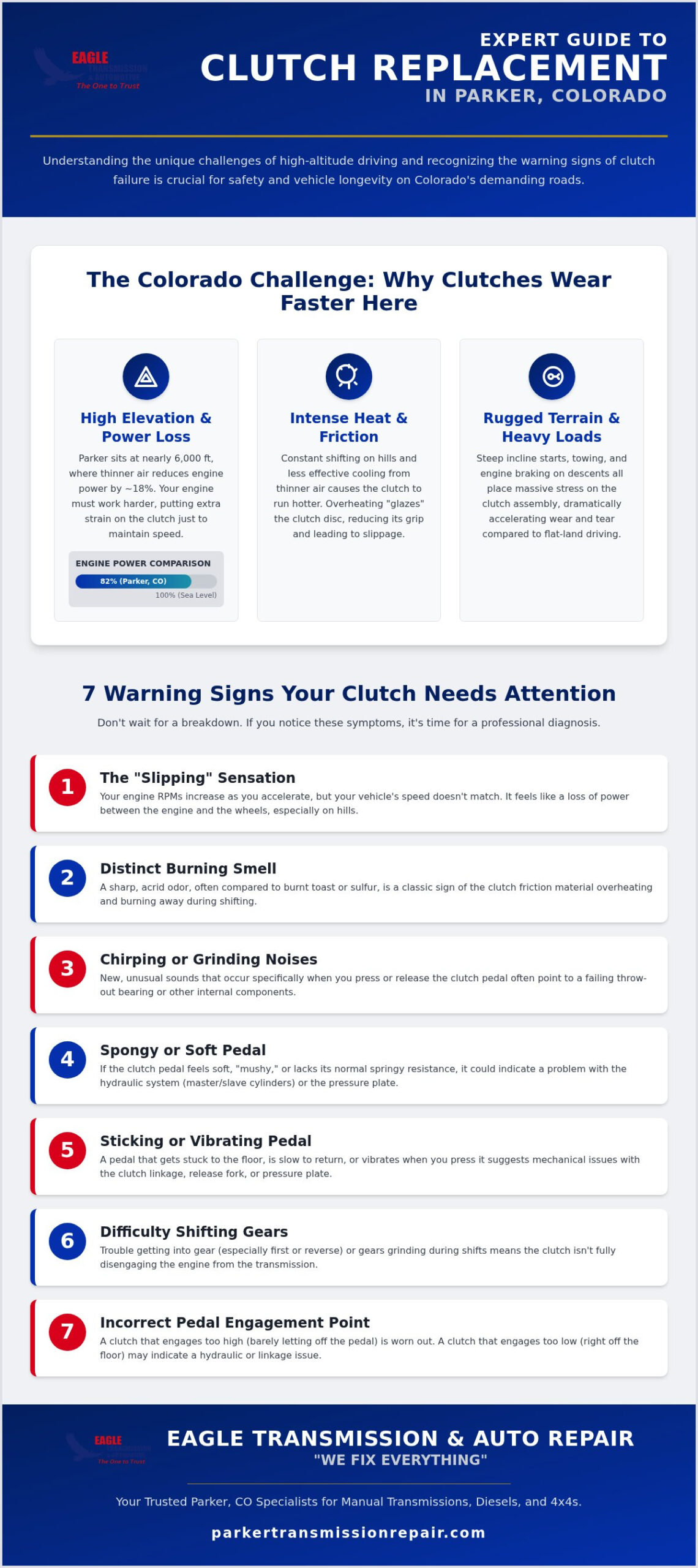
Parker sits at an elevation where the air is noticeably thinner. Research shows that an engine loses roughly 3% of its power for every 1,000 feet of elevation gain. This means your engine has to work harder and spin at higher RPMs to maintain speed on an incline. Because thinner air is also less effective at dissipating heat, your transmission components can run significantly hotter than they would at sea level.
“Think of your clutch like the brake pads for your engine’s power; it uses high-pressure friction to grab energy and send it to your tires.” When that friction material overheats during a steep climb, it can “glaze,” becoming smooth and losing its ability to grip. This leads to the slipping sensation many drivers notice before they realize they need a clutch replacement Parker CO service.
Mountain Driving: A Test of Your Manual Transmission
If you frequently head west on I-70 or tow trailers for weekend camping, your clutch is under even more pressure. Many local drivers use “engine braking” to save their actual brakes on long descents. While this is a smart driving technique, it puts the burden of the vehicle’s weight directly on the clutch and drivetrain. If you want to learn more about how we handle these complex systems, check out our guide on Professional Transmission Repair Parker CO.
- Heavy Loads: Towing puts massive torque through the clutch disc, accelerating wear.
- Incline Starts: Starting from a dead stop on a hill requires more “slip” to get moving, which generates instant, intense heat.
- Traffic Habits: “Riding the clutch” in heavy traffic prevents the system from cooling down, leading to rapid failure.
At Eagle Transmission & Auto Repair, we remind our neighbors that “WE FIX EVERYTHING” from the simplest adjustment to the most complex diesel clutch systems. Understanding these local stressors is the first step in keeping your vehicle safe and reliable on Colorado’s demanding roads.
7 Signs Your Clutch Needs Replacement vs. Simple Adjustment
It’s easy to feel a bit of panic when your car starts acting up. Is it a minor fix or a major overhaul? Sometimes, what feels like a total failure is just a hydraulic leak or a cable that needs a quick tweak. Other times, your vehicle is giving you clear warnings that it’s time for a professional clutch replacement Parker CO drivers can count on to keep them safe. Understanding these seven signs helps you catch problems before they leave you stranded.
- The “Slipping” Sensation: Your engine revs up, but your speed doesn’t increase.
- Burning Smells: A distinct, acrid odor similar to burnt toast or sulfur.
- Chirping or Grinding: New noises that happen specifically when you use the pedal.
- Spongy Pedal: The pedal feels soft or lacks its usual springy resistance.
- Sticking Pedal: The clutch stays on the floor or is slow to return after you let off.
- Vibrating Feel: You feel a pulsation or “chatter” through your foot.
- Hard Shifting: Fighting the gear lever just to get into first or reverse.
Slipping Gears and Loss of Power
The most common red flag is slipping. Imagine you’re trying to merge onto I-25 or E-470. You press the gas to match traffic speed, and your engine roars. The needle on your tachometer climbs fast, but your actual vehicle speed barely moves. This happens because the friction material is so worn it can’t grab the flywheel properly. It’s essentially “sliding” instead of “locking.”
If you suspect this is happening, you can perform a safe “parking lot test.” Find a flat, empty area and put the car in fourth gear while moving at a very low speed. Gently let out the clutch. If the engine doesn’t stall immediately and instead keeps running or struggles, your clutch is definitely slipping. This is a clear sign that the internal components can no longer handle the torque of your engine.
Physical Clues: Pedal Vibration and Hard Shifting
Pay close attention to how the pedal feels under your foot. A vibrating or pulsating pedal often points to a warped pressure plate or a flywheel that has seen too much heat. This “chatter” is your car’s way of telling you the parts aren’t meeting evenly anymore. Difficulty getting into first gear or reverse is another major red flag. If you’re wrestling with the shifter at every stoplight in Parker, the clutch may not be fully disengaging.
Sometimes these symptoms overlap with other drivetrain issues. For a broader look at what might be going wrong under the hood, you can check out our guide on 5 Common Signs Your Transmission Needs Repair. Catching these signs early often prevents more expensive damage to your gearbox. If your car is acting out, you can always swing by our shop for a professional opinion to see if a simple adjustment will do the trick.
Clutch Replacement Cost Factors and Component Options
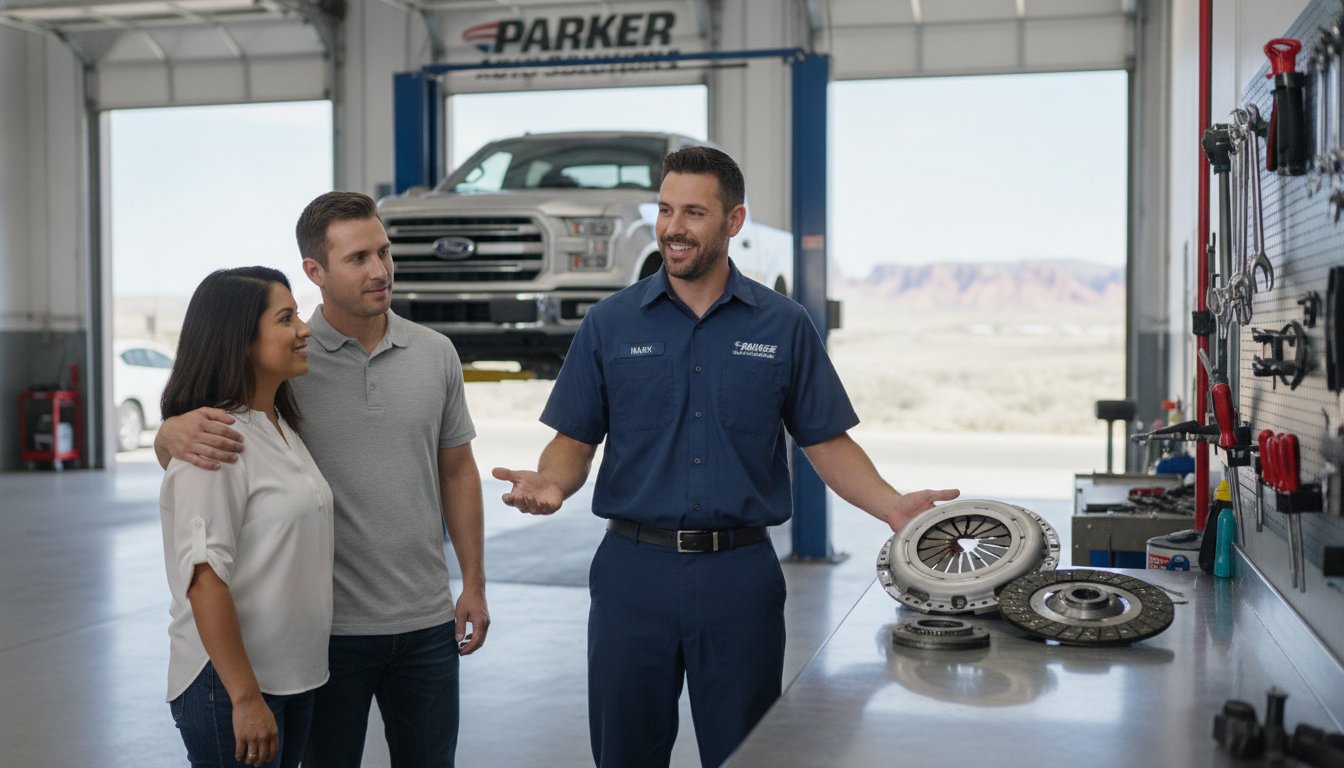
When you’re looking into a clutch replacement Parker CO service, it’s common to feel a bit overwhelmed by the different parts and options. A “clutch” isn’t just one single piece of metal. It’s a synchronized system designed to handle the heavy torque of Colorado driving. We believe in transparency, so we want you to know exactly what goes into a professional repair. A standard “clutch kit” typically includes the clutch disc, the pressure plate, and the throw-out bearing. Replacing these as a set is vital because they wear down together. If you only replace one, the older parts will likely fail soon after, forcing you to pay for the same labor all over again.
The labor involved is often the most significant part of the investment. Unlike a simple oil change, replacing a clutch requires our team to safely “drop” or remove the entire transmission to access the bell housing. This is a specialized, heavy duty task that requires precision tools and experienced hands. While the transmission is out, we also inspect the hydraulic system, including the master and slave cylinders. If these components are leaking or “spongy,” your new clutch won’t feel right, no matter how high the quality of the friction material.
OEM vs. Performance Clutch Kits for Trucks
If you’re driving a standard sedan around town, a factory-spec (OEM) kit is usually perfect. However, many of our neighbors in Parker drive hardworking Ford F-150s or heavy diesel rigs. For these vehicles, we often recommend upgraded performance kits. These kits use advanced friction materials that can withstand the intense heat generated when you’re towing a boat or hauling gear up to the Continental Divide.
Diesel truck owners especially need a clutch that can handle high-torque output without glazing. For those driving heavy duty rigs, our guide on Ford F-250 Transmission Repair dives deeper into Super Duty needs. Choosing the right kit ensures your truck stays reliable for years, not just months.
Why the Flywheel Matters in High-Torque Situations
The flywheel is the large metal disc that the clutch actually grabs onto. Over time, the heat from Colorado’s hills can cause “hot spots” or warping on this surface. If we install a brand-new clutch disc against a warped flywheel, you’ll experience “chatter,” which is a distracting shuddering sensation every time you take off from a stoplight.
Flywheel resurfacing is the process of machining the metal surface to remove heat spots and grooves, ensuring it’s perfectly flat for the new clutch disc to grab. In many cases, especially with modern dual-mass flywheels, a full replacement is the safer bet for long-term durability. At Eagle Transmission & Auto Repair, we’ll give you a clear diagnosis of your flywheel’s condition so you can make the best choice for your budget and your safety.
The Clutch Replacement Process: What to Expect at Eagle Transmission
We know that handing over your keys can be stressful. You want to know exactly what’s happening behind the shop doors while your vehicle is on the lift. At Eagle Transmission & Auto Repair, we treat your car or truck with the same care we’d give our own family’s vehicle. When you come in for a clutch replacement Parker CO service, we don’t just start tearing things apart. We begin with a conversation and a methodical check to ensure we’re fixing the right problem the first time.
Step-by-Step: From Diagnosis to Delivery
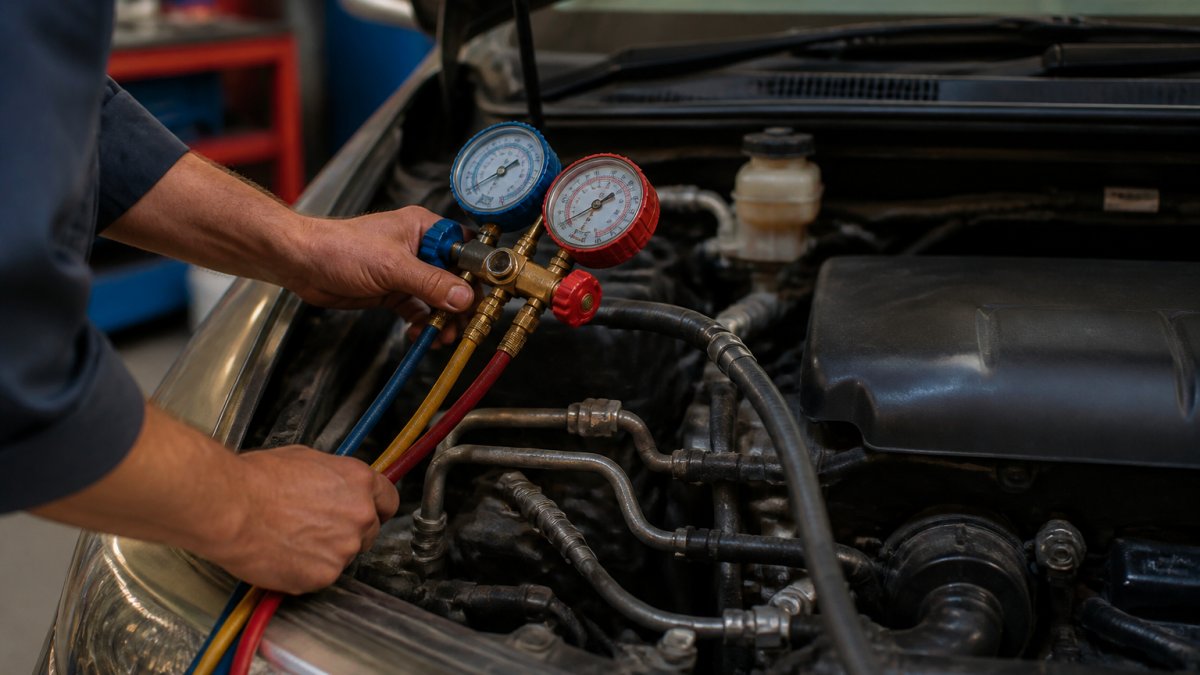
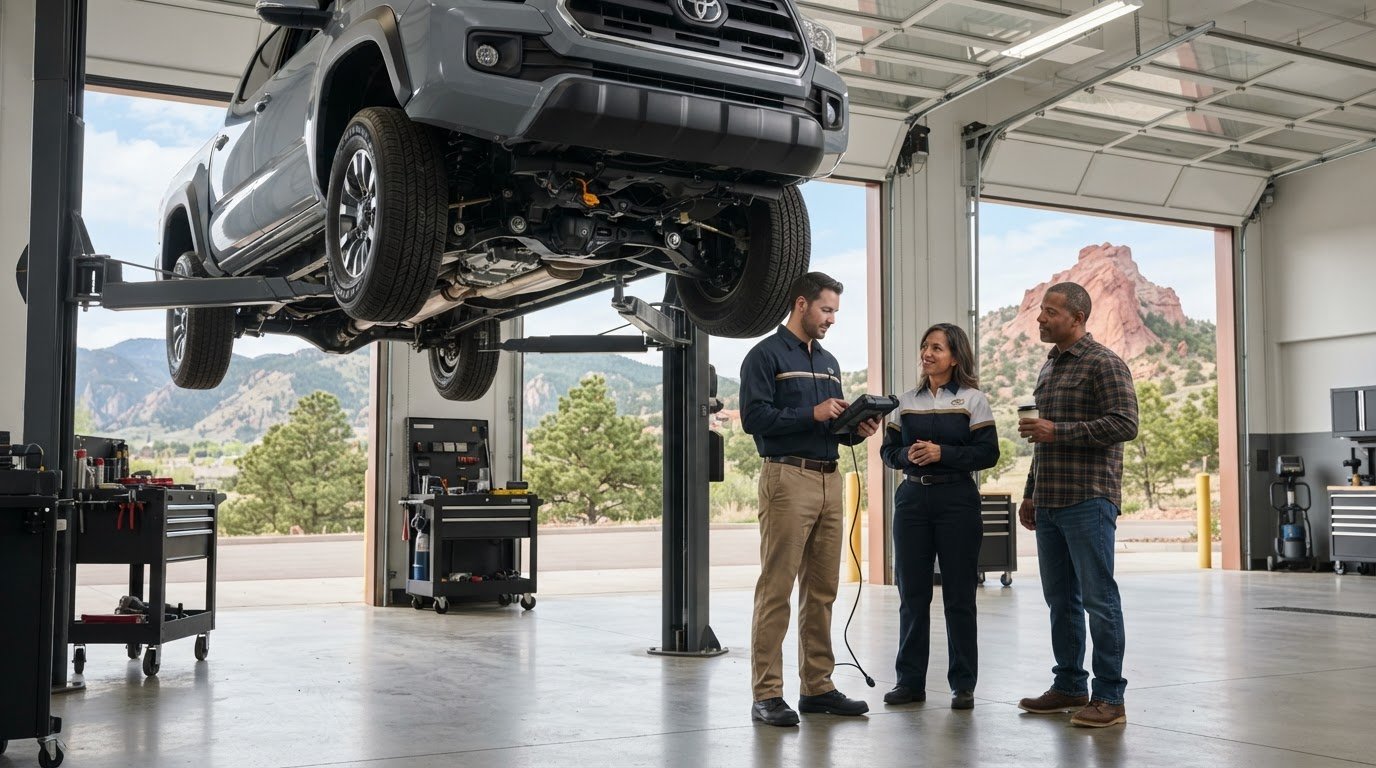
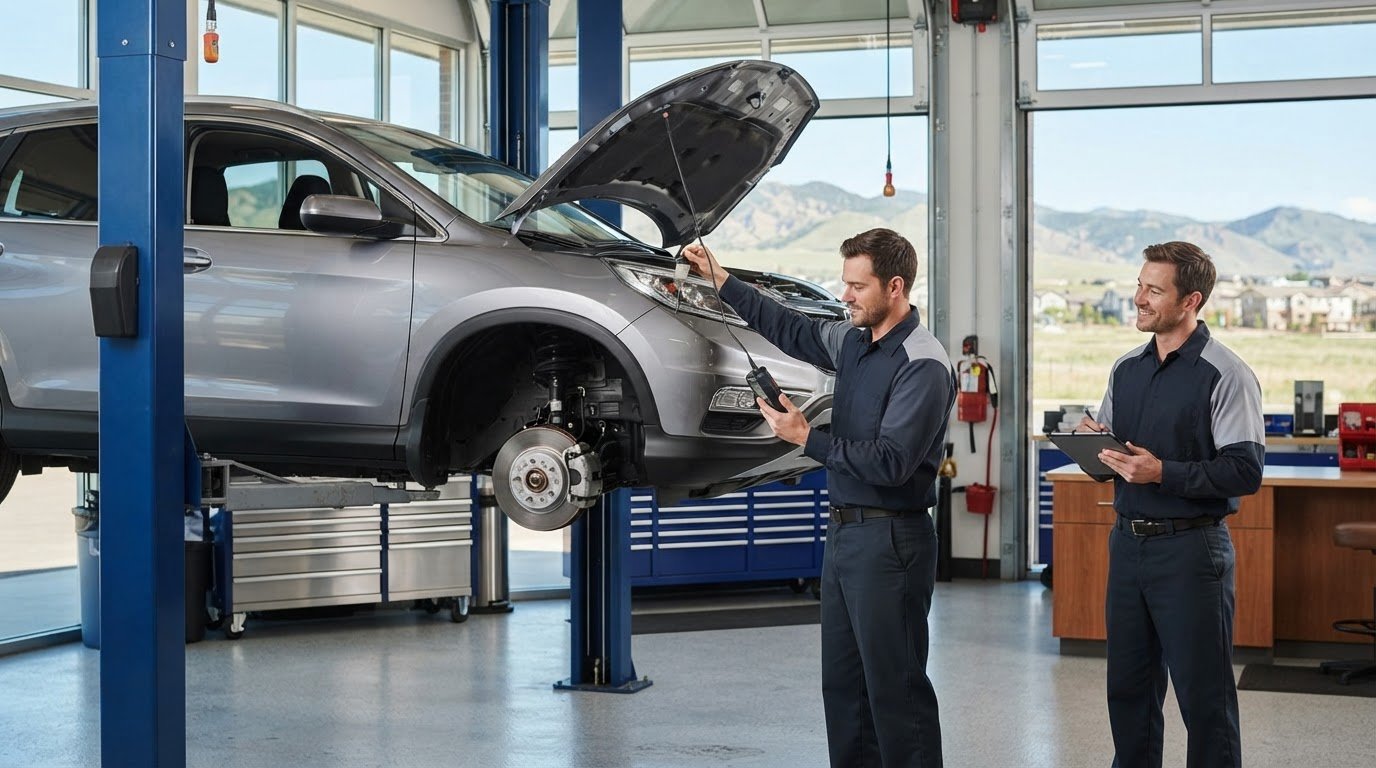
Our process starts with a comprehensive drivetrain diagnosis. We use professional diagnostic tools to rule out engine issues or sensor failures that might mimic transmission trouble. We also check the hydraulic fluid levels and the condition of the clutch cables. If it’s just a simple hydraulic leak, we’ll tell you. If a full replacement is necessary, our technicians safely remove the transmission unit to access the bell housing and the worn components inside.
While the transmission is out of the vehicle, we perform a detailed inspection of the surrounding parts. We evaluate the rear main seal for oil leaks and inspect the input shaft for any signs of wear. We also take the time to clean and lubricate the input shaft splines, which is a small step that makes a huge difference in how smoothly your gears shift. Once the new components are in place, we use specialized alignment tools to ensure perfect engagement before bleeding the hydraulic system and making final adjustments to the linkage.
The “WE FIX EVERYTHING” Quality Standard
Our motto, “WE FIX EVERYTHING,” isn’t just a catchy phrase; it’s our commitment to drivetrain safety. Every bolt is tightened to exact factory torque specifications to ensure your vehicle can handle the vibrations and stresses of Colorado driving. This precision is especially vital for the heavy-duty trucks and 4x4s that frequent our shop. Our deep expertise in Parker Transmission Repair serves as the foundation for every manual transmission service we perform.
The final step in our process is the road test. We take your vehicle out on local Parker roads and inclines to validate that the clutch engagement is crisp and the power delivery is smooth under load. We want you to feel 100% confident when you pull out of our parking lot. If you’re ready for an honest, professional diagnosis, you can visit our shop on Parkglenn Way to get started with an inspection.
Why Eagle Transmission is Parker’s Trusted Choice for Manual Repairs
Choosing a shop for a clutch replacement Parker CO shouldn’t feel like a gamble. We’ve spent decades working on manual transmissions that face the specific rigors of Colorado driving. From the heavy duty demands of a diesel truck hauling equipment to the daily commute of a family SUV, we understand the local terrain. Our shop is a hub for neighbors in Centennial, Castle Rock, and Aurora who want specialist expertise without the intimidating atmosphere of a corporate dealership. We’re part of this community, and we treat every vehicle that enters our bays with the respect it deserves.
We believe in transparent communication, which means we explain the “why” before we do the “what.” If we find that your pressure plate is warped but your hydraulic slave cylinder is still in great shape, we’ll show you exactly what we see. This honest approach builds the long term trust that defines our business. Because we specialize in complex systems like 4×4 transfer cases, diesel performance, and specialized Ford repair, we have the diagnostic depth that general “lube and tune” shops simply don’t possess. When we say “WE FIX EVERYTHING,” we mean we have the tools and the talent to handle the jobs others turn away.
Specialized Care for Cars, Trucks, and Fleets
Whether you drive a compact commuter car or manage a line of commercial work trucks, we have the capacity to help. General repair shops often struggle with the specialized equipment and heavy lifts needed for a heavy duty clutch replacement Parker CO. Our team thrives on these challenges, ensuring that every gear synchronization is perfect. For local business owners, we offer dedicated Fleet Repair Services Parker CO to keep your team on the road and your operational downtime to a minimum.
Schedule Your Clutch Inspection in Parker Today
Don’t wait until you’re stuck on the shoulder of I-25 with a pedal that won’t move. A slipping clutch doesn’t just make driving difficult; it puts extra heat and stress on your entire drivetrain, including your engine and differential. Bringing your vehicle in for a professional diagnosis now can save you from more expensive repairs down the road. We’re here to be your friendly guide through the repair process, making sure you feel confident and safe every time you shift gears. You can schedule your professional clutch replacement consultation at Eagle Transmission today to ensure your vehicle is ready for the next mountain pass.
Drive Safely Across the Front Range
Your manual transmission is the heart of your driving experience, especially when navigating the steep inclines around Douglas County. We’ve seen how the combination of high altitude and mountain grades can wear down even the toughest drivetrain. By catching signs like slipping or unusual smells early, you protect your vehicle from more expensive damage and ensure your family stays safe on the road.
Our specialized manual transmission technicians have been serving this community for decades. We stand by our “WE FIX EVERYTHING” promise, whether you’re driving a commuter car, a heavy-duty diesel truck, or a 4×4 built for the backcountry. You don’t have to navigate complex transmission terminology alone. We’re here to provide a clear diagnosis and the precision care your vehicle deserves to handle Colorado’s rugged terrain.
When you’re ready for the reliable clutch replacement Parker CO drivers trust, we’re just around the corner. Get a Professional Clutch Replacement Quote in Parker by visiting our shop today. We look forward to getting you back on the road with a smooth-shifting vehicle that’s ready for your next adventure.
Frequently Asked Questions
How much does a clutch replacement cost in Parker, CO?
Costs vary based on your vehicle’s make, model, and the complexity of its drivetrain. Since labor can account for half or more of the total cost of this specialized job, the time required to safely drop the transmission is a major factor. The best way to get an accurate number for a clutch replacement Parker CO is through a professional diagnosis. We’ll evaluate your flywheel and hydraulic system to provide a clear and fair estimate.
How long does it take to replace a clutch in a manual transmission?
Most clutch replacements are completed within one to two business days. The process is labor-intensive because it requires our technicians to safely remove the transmission to reach the internal components. For standard passenger cars, the job is often quicker, but larger Ford trucks or complex 4×4 vehicles may take longer due to the extra drivetrain components involved. We always aim to get you back on the road as quickly and safely as possible.
Can I drive my car with a slipping clutch?
You should avoid driving with a slipping clutch as it can lead to total vehicle breakdown and more expensive repairs. When a clutch slips, it generates extreme heat that can warp your flywheel or damage the transmission input shaft. This is especially dangerous on Colorado’s steep grades where you need consistent power delivery. If you notice your engine revving without a gain in speed, it’s time to schedule an inspection at Eagle Transmission immediately.
Do I always need to replace the flywheel when I get a new clutch?
Not always, but it’s often recommended to at least resurface the flywheel to ensure a smooth mating surface for the new clutch disc. If the flywheel has deep grooves, hot spots, or significant warping from mountain driving, a full replacement is necessary for long-term durability. At Eagle Transmission, we inspect every flywheel during a clutch replacement Parker CO service to determine the safest and most cost-effective path for your specific car or truck.
Is a burning smell always a sign that my clutch is failing?
A burning smell, often compared to burnt toast or sulfur, is a very strong indicator of an overheated or glazed clutch disc. This happens when the friction material is sliding against the flywheel rather than grabbing it. While it could occasionally be related to your brakes or an oil leak, a persistent smell after shifting gears usually means your clutch is failing. Our “WE FIX EVERYTHING” approach ensures we find the exact source of that odor.
Does Eagle Transmission offer warranties on clutch replacements?
Yes, we provide professional warranties on our parts and labor to give you peace of mind on the road. We use high-quality clutch kits designed to withstand the unique stresses of high-elevation driving and rugged mountain passes. When you choose us for your repair, you’re getting the backing of a local shop that has served the Douglas County community for decades. We’ll discuss specific warranty terms with you during your diagnostic appointment.
What is the difference between a clutch repair and a full replacement?
A clutch repair might involve fixing a hydraulic leak or adjusting a cable, while a full replacement involves swapping out the entire clutch kit. Most modern vehicles use self-adjusting systems, so if the clutch is slipping, a full replacement of the disc, pressure plate, and throw-out bearing is usually the only permanent fix. We always perform a thorough diagnosis first to see if a simpler, less expensive repair is an option for your vehicle.
How can I make my new clutch last longer in Colorado mountains?
You can extend the life of your clutch by avoiding riding the pedal and using proper gear selection on steep grades. In Parker’s hilly terrain, try to minimize slipping the clutch during hill starts and avoid using the clutch to hold your vehicle steady on an incline. Regular maintenance of your transmission and hydraulic system also helps. These small habits prevent excessive heat buildup, which is the primary cause of premature wear in high-altitude environments.