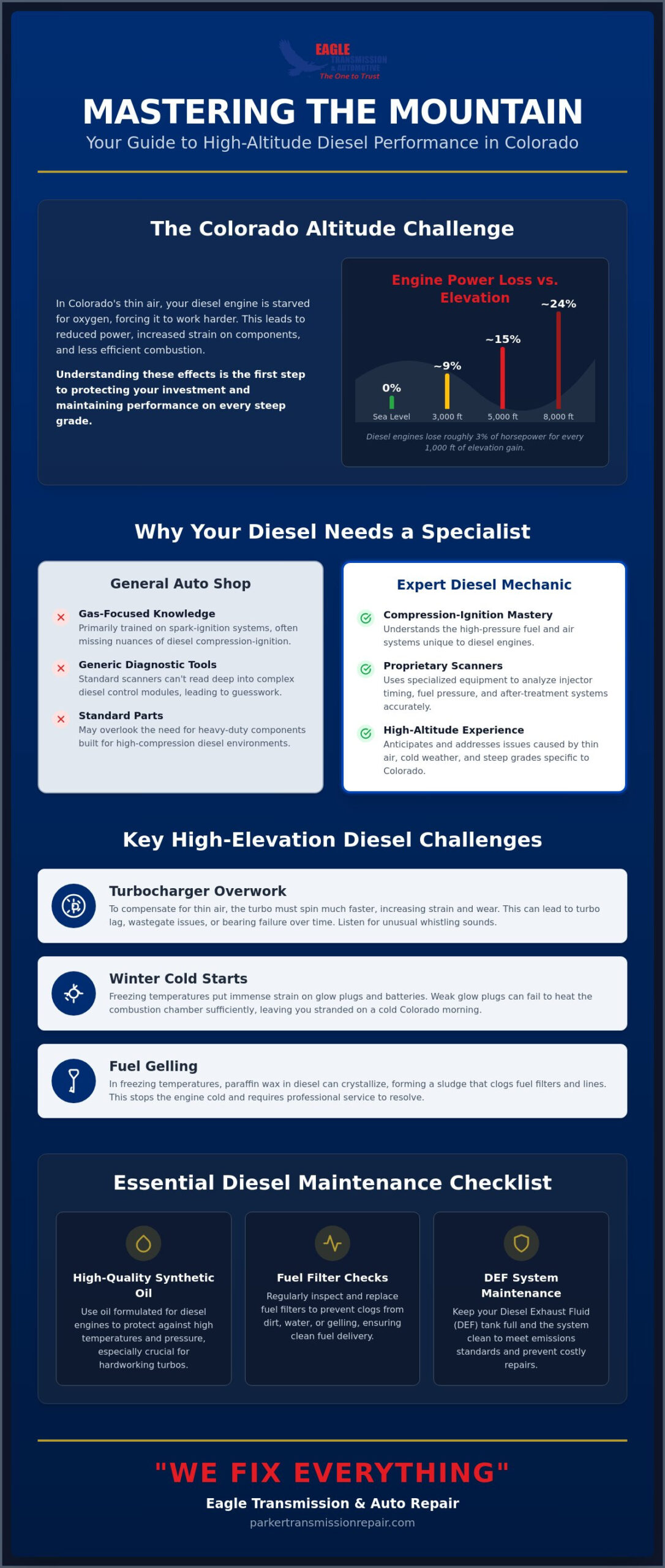
Did you know your diesel engine loses roughly 3% of its power for every 1,000 feet you climb toward the Continental Divide? If you are searching for a diesel mechanic Centennial neighbors trust, you likely already feel that sluggishness during your morning commute or weekend mountain haul. It is frustrating when a shop treats your heavy-duty rig like a standard sedan, especially when you are dealing with the specialized costs of diesel components and the unique demands of Colorado’s thin air.
At Eagle Transmission & Auto Repair, we understand that your truck needs a specialist who speaks its language. We agree that finding transparent, expert care shouldn’t feel like an uphill battle. This 2026 guide will show you exactly how to shield your engine from altitude-related wear and maintain reliable performance on every steep grade. From navigating the latest 20% opacity emissions limits to optimizing turbocharger efficiency, we are here to prove why we say “WE FIX EVERYTHING” for our local community.
Key Takeaways
- Learn how Colorado’s 5,000+ foot elevation specifically strains your turbocharger and what steps you can take to prevent power loss on steep mountain grades.
- Discover why a specialized diesel mechanic Centennial drivers trust is essential for handling complex fuel injection systems that standard gas engine shops might overlook.
- Understand the critical differences in diesel oil chemistry and fuel filtration that keep your engine running smoothly and protect your investment.
- Get a practical maintenance schedule that covers everything from monthly DEF checks to high-quality synthetic oil changes for your light or heavy-duty rig.
- See how the expert team at Eagle Transmission & Auto Repair uses specialized Ford PowerStroke knowledge to ensure we live up to our promise that “WE FIX EVERYTHING.”
What Makes a Diesel Mechanic in Centennial Different from General Repair?
A standard gasoline engine uses spark plugs to ignite a mixture of air and fuel. In contrast, a Diesel engine relies on compression-ignition. This means the air is compressed so tightly that the resulting heat causes the fuel to ignite spontaneously. Because of this high-pressure environment, the components in your truck are built much heavier and tougher than those in a sedan. If you take your rig to a shop that primarily handles gas cars, they might miss the subtle signs of wear that a dedicated diesel mechanic Centennial drivers trust would spot immediately.
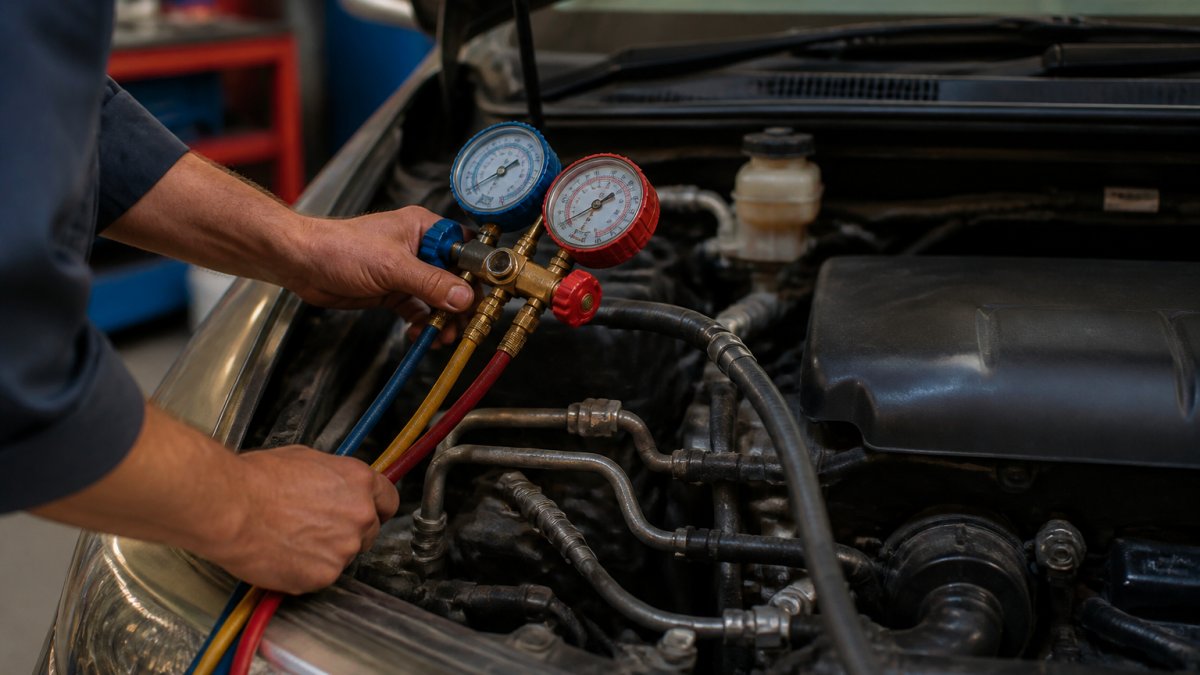
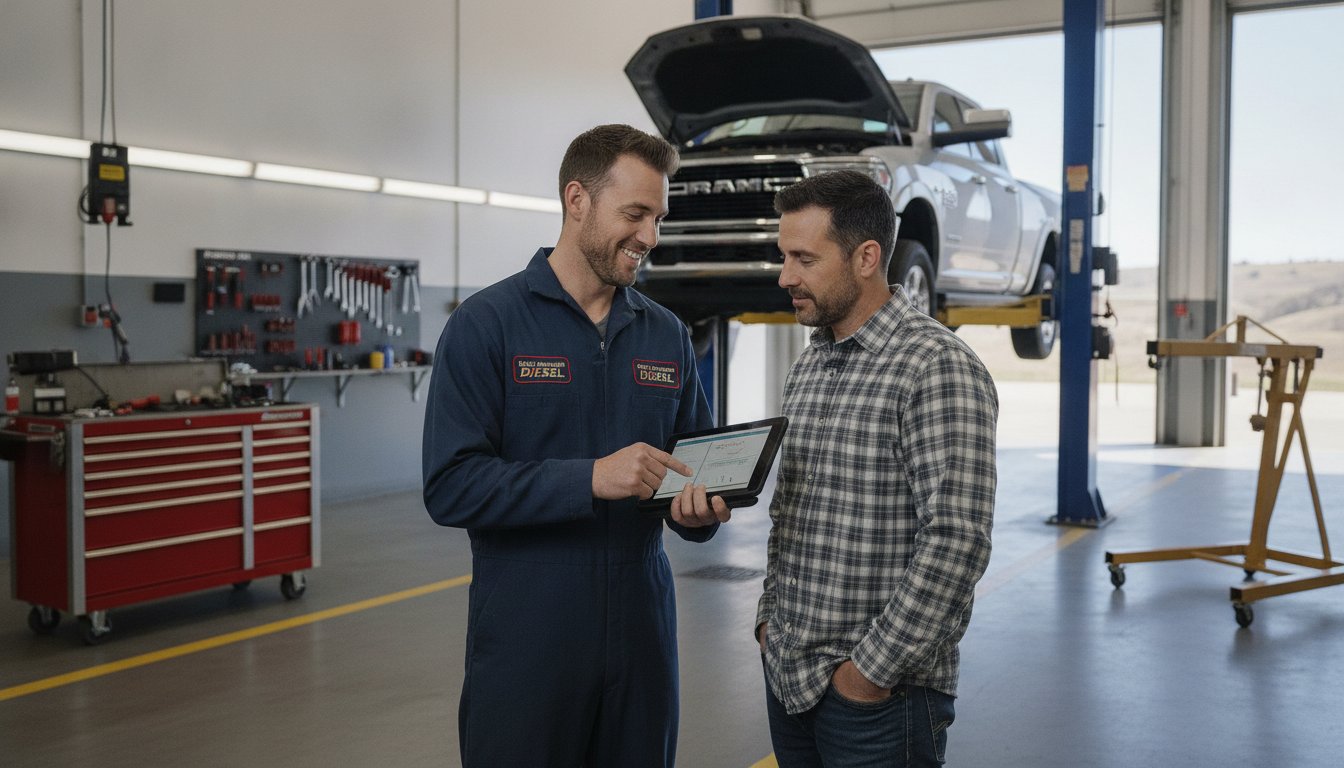
Specialization isn’t just a buzzword; it’s about having the right tools for the job. Modern diesel systems require proprietary diagnostic scanners that can read deep into the engine’s control module. These tools help us monitor fuel pressure, injector timing, and exhaust after-treatment systems in real time. Without this specific gear, a mechanic is basically just guessing. At Eagle Transmission & Auto Repair, we look for ASE certifications in medium and heavy-duty repairs because we know that working on a Ford F-250 is a completely different world than working on a small car. For drivers who also maintain a high-performance import, CJ Auto Services LLC allows you to explore European Cars and see how specialized diagnostics are equally vital for luxury vehicles.
The Complexity of Modern Diesel Systems
Today’s High-Pressure Common Rail (HPCR) fuel systems are marvels of engineering, but they’re incredibly sensitive. The tolerances in these systems are measured in microns. Even a tiny speck of dirt or a slight timing error can lead to a catastrophic engine failure. This is why “close enough” simply isn’t an option for us. Our “WE FIX EVERYTHING” philosophy means we don’t shy away from these complex diagnostics. We take the time to ensure every injector and sensor is calibrated perfectly to handle the demands of your daily drive.
Why Local Expertise Matters in Douglas County
Living in Centennial or Parker means your vehicle faces challenges that drivers in flatter, lower states never encounter. The proximity of Centennial to Aurora and Parker creates a unique community of commuters who rely on their diesel trucks for both work and play. Eagle Transmission & Auto Repair has built long-term trust by understanding how our local weather patterns, like sudden temperature drops and high-altitude air, affect your engine’s health. Cold starts in a Colorado winter put immense strain on your glow plugs and batteries. Having a local diesel mechanic Centennial specialist who anticipates these seasonal needs keeps your family safe and your truck on the road longer.
Common Diesel Engine Challenges at Colorado’s High Elevations
Driving a diesel in Centennial is a completely different experience than driving one at sea level. At 5,000 feet and above, the air is significantly thinner, which creates unique challenges at Colorado’s high elevations. Your engine needs a very specific air-to-fuel ratio to run efficiently. When there is less oxygen available, the combustion process becomes less efficient, often leading to increased exhaust smoke and a noticeable drop in power. As a specialized diesel mechanic Centennial drivers rely on, we often see trucks struggling with these atmospheric shifts during the transition from summer to fall.
Winter brings its own set of hurdles, specifically regarding cold starts. Your glow plugs are responsible for heating the combustion chamber enough to ignite the fuel. In our freezing Douglas County winters, weak glow plugs will leave you stranded in your driveway. You also have to watch out for fuel gelling. Fuel gelling is a frustrating condition where the paraffin wax naturally present in diesel fuel crystallizes in freezing temperatures, creating a waxy sludge that clogs your fuel filters and stops your engine cold. If you’re concerned about your truck’s winter readiness, you can visit our shop in Parker for a system check.
Turbochargers and Altitude Compensation
Your turbocharger works overtime to compensate for the thin mountain air. It has to spin much faster to provide the same amount of boost it would at lower elevations. This extra strain often results in more “turbo lag,” that annoying delay between hitting the pedal and feeling the power kick in. Over time, this increased workload can lead to wastegate issues or even bearing failure. If you hear an unusual whistling sound or feel a sudden loss of acceleration, Eagle Transmission & Auto Repair provides Professional Engine Repair to diagnose and fix turbocharger wear before it leaves you stuck on a mountain pass.
Emission Systems: DPF and EGR Issues
The heavy traffic on I-25 and E-470 is tough on modern diesel emission systems. Your Diesel Particulate Filter (DPF) needs high heat and consistent speeds to perform a regeneration cycle, which burns off accumulated soot. High-altitude driving often produces more soot, which can lead to rapid carbon buildup in your EGR valve. When these components get too dirty, your truck might fall into “limp mode,” a safety setting that drastically reduces engine power. We use our “WE FIX EVERYTHING” approach to clean and maintain these systems, helping you avoid the high cost of a total DPF replacement while keeping your truck compliant with Colorado’s 20% opacity limits.
Diesel vs. Gasoline Maintenance: Why Specialization is Non-Negotiable
Many drivers think an oil change is just an oil change. If you own a diesel, that assumption could cost you thousands in the long run. Unlike a gas car that might take five quarts of standard oil, your diesel requires a massive volume of specialized fluid designed to suspend heavy soot particles and resist high-heat breakdown. A general shop might not stock the specific heavy-duty synthetic blends required for your engine’s longevity. This is why finding a diesel mechanic Centennial residents trust is about more than just convenience; it’s about protecting a major investment with the right chemistry. Protecting that investment also requires sourcing precision-engineered components; for instance, those managing heavy-duty industrial engines often rely on Representaciones BURG SpA for critical spare parts for brands like Perkins and Caterpillar.
The technical standards set by the ASE Education Foundation highlight the vast difference in training required for compression-ignition engines. At Eagle Transmission & Auto Repair, we follow these rigorous standards because we know that a “cheap” oil change at a general facility often skips critical steps. They might not check your fuel-water separator or inspect for signs of turbo leaks, leading to problems that stay hidden until you’re halfway up a mountain pass with a heavy trailer. We believe in doing the job right the first time, which is a core part of our commitment to the community.
The Critical Role of Fuel Filtration
Gas cars can often go years without a fuel filter change. In a diesel engine, your fuel filters are your primary line of defense against catastrophic failure. Diesel fuel is naturally prone to water contamination, especially with the extreme temperature swings we see in Parker and Centennial. Modern systems use specialized water separators to prevent moisture from reaching the injectors. This is vital because diesel fuel acts as a lubricant for the injectors, and water destroys that lubrication instantly. If your mechanic doesn’t understand the nuances of these multi-stage filtration systems, your high-pressure fuel pump is likely on borrowed time.
Cooling Systems and Cavitation
Towing a camper or a work trailer up to the high country puts incredible heat stress on your engine. While gas engines mostly worry about the needle on the temperature gauge, diesel engines face a hidden threat called cavitation. This occurs when tiny air bubbles form and collapse against the engine’s cylinder liners, eventually pitting the metal until coolant leaks into the oil. To prevent this, we use Supplemental Coolant Additives (SCAs) that create a protective layer on the metal surfaces. Our “WE FIX EVERYTHING” approach means we don’t just look at the fluid level; we test the chemistry of your coolant to ensure your engine is protected during those grueling mountain climbs. We want you to feel confident every time you hook up the trailer, knowing your cooling loop is ready for the task.
Essential Diesel Maintenance Checklist for Centennial Drivers
Preventative care is the secret to a diesel engine that lasts for decades. While these trucks are built to be rugged workhorses, they require a disciplined approach to maintenance to stay reliable in our high-altitude environment. As a diesel mechanic Centennial neighbors have trusted for years, we recommend a simple but effective schedule to keep your rig out of the shop and on the road. Taking twenty minutes to look over your vehicle once a month can save you thousands in emergency repairs later.
- Monthly: Check your Diesel Exhaust Fluid (DEF) levels and take a quick peek under the chassis for any fresh leaks. Catching a small oil or coolant drip now prevents a major headache on the side of I-25.
- Every 5,000 to 7,500 Miles: Schedule a high-quality synthetic oil change and tire rotation. Synthetic oil is vital for protecting your turbocharger from the extreme heat generated during mountain driving.
- Every 15,000 Miles: Replace both your primary and secondary fuel filters. Fresh filters are your best insurance policy against the fuel contamination issues common in our variable climate.
- Seasonally (Pre-Winter): Have our team test your glow plugs, battery health, and coolant freeze point before the first big Douglas County snow hits.
Preparing Your Diesel for Colorado Winters
When the temperature in Centennial drops below 20°F, your engine needs a little extra help. We strongly recommend using engine block heaters to keep the oil and coolant warm enough for a smooth start. It’s also the time to switch to a winter-blend fuel or use high-quality additives to prevent the gelling issues that can stall your morning commute. Don’t forget to check your battery’s Cold Cranking Amps (CCA). Diesel engines require a massive amount of energy to turn over in the cold, and an older battery will likely fail just when you need it most.
Fleet Maintenance for Centennial Businesses
If you run a local business, a truck in the shop is money out of your pocket. The team at Eagle Transmission & Auto Repair provides specialized Fleet Repair Services in Parker, CO that are designed to minimize downtime through proactive scheduling. Whether you have two vans or twenty heavy-duty trucks, our “WE FIX EVERYTHING” promise means we take the stress of maintenance off your plate so you can focus on your customers. If you want to ensure your work vehicles are ready for the upcoming season, stop by our Parker location for a comprehensive fleet inspection.
Why Eagle Transmission & Auto Repair is Centennial’s Diesel Solution
Choosing a diesel mechanic Centennial drivers can rely on means finding a team that respects the complexity of your rig. We aren’t just a general repair shop that happens to work on trucks; we’ve spent decades mastering the nuances of both light-duty and heavy-duty diesel engines. Our team understands that your truck’s often your livelihood or your gateway to the mountains, and we treat it with that level of importance. We pride ourselves on being a high-level specialist that remains a relatable, local fixture for our community.
One of the biggest frustrations for truck owners is the “parts-cannon” approach. This happens when a shop starts replacing expensive sensors and injectors without a clear diagnosis, hoping one of them fixes the issue. We do things differently. Our methodical diagnostic process uses advanced software to pinpoint the underlying cause of a problem before we ever pick up a wrench. Whether it’s a tricky Ford PowerStroke repair or a complex electrical gremlin, we prioritize transparency. We explain what’s happening in plain English, ensuring you feel comfortable and informed throughout the entire process.
Comprehensive Care from Brakes to Transmissions
Diesel power is impressive, but it requires serious stopping power to match. When you’re hauling a heavy trailer down from a steep mountain pass, your braking system faces immense heat and pressure. We provide Brake Repair Parker CO residents trust for safety and reliability. Additionally, the massive torque of a diesel engine puts unique stress on your drivetrain. We specialize in maintaining and repairing the transmissions that handle that power, ensuring your truck stays efficient for the long haul. If you’re looking for a local partner who truly speaks “diesel,” visit our Centennial location page for specific directions to our shop.
The ‘WE FIX EVERYTHING’ Guarantee
We take pride in being a family-oriented local shop that offers dealership-level technology with a much more personal touch. Large dealerships often treat you like a number in a queue, but we see you as a neighbor. Our motto, “WE FIX EVERYTHING,” isn’t just a catchy phrase; it’s a commitment to our customers. From complex mechanical overhauls to intricate electrical drivetrain issues, our experts have the experience to handle it all. We’re here to reduce your anxiety and build a long-term partnership based on trust and technical excellence. As a dedicated diesel mechanic Centennial specialist, we invite you to reach out for a thorough diagnostic or maintenance consultation to ensure your truck’s ready for whatever the Colorado roads throw your way.
Keep Your Diesel Engine Running Strong at Any Elevation
Your diesel truck is more than just a vehicle; it’s a tool you rely on for mountain adventures and daily work. We have explored why specialization is non-negotiable, especially when thin air and steep grades put your turbocharger and fuel system to the test. By following a consistent maintenance schedule and choosing a diesel mechanic Centennial drivers have trusted for decades, you can avoid the “parts-cannon” approach and keep your rig reliable.
At Eagle Transmission & Auto Repair, we take pride in being expert Ford PowerStroke and diesel specialists. We use specialized high-altitude diagnostics to find the root cause of performance issues before they lead to costly repairs. Our neighborly approach means we explain everything in plain language so you feel confident in every decision. It’s all part of our “WE FIX EVERYTHING” philosophy. If you’re ready for a long-term maintenance partner who truly understands Colorado driving, Schedule Your Diesel Diagnostic or Maintenance Service Today. We look forward to seeing you at the shop soon!
Frequently Asked Questions
How often should I change the oil in my diesel truck in Colorado?
You should generally change your diesel truck’s oil every 5,000 to 7,500 miles, especially if you frequently tow through the mountains. While some manufacturers suggest longer intervals, our high-altitude environment and steep grades put extra stress on your engine oil. At Eagle Transmission & Auto Repair, we recommend using high-quality synthetic oil to protect your turbocharger from heat. Regular intervals help prevent soot buildup and ensure your engine remains reliable for years.
What are the signs that my diesel fuel injectors are failing?
Common signs of failing fuel injectors include a rough idle, sudden drops in fuel economy, or difficulty starting your engine. You might also notice a distinct smell of diesel fuel or engine misfires while driving. Because injectors are highly sensitive components, even small amounts of water or debris can cause damage. We use advanced diagnostics to test your fuel system accurately, ensuring we live up to our “WE FIX EVERYTHING” promise without expensive guessing.
Is it worth buying a diesel vehicle if I only drive in Centennial and Denver?
Buying a diesel for city driving is worth it if you plan on towing heavy loads or want the long-term durability these engines offer. However, short trips in Centennial and Denver traffic can lead to soot buildup in your Diesel Particulate Filter. If you choose a diesel for the city, make sure to take it for a longer highway drive occasionally. This allows the system to reach the temperatures needed to clean the filter properly.
What should I do if my diesel engine won’t start in the winter?
If your diesel won’t start in the winter, you should first check your battery health and glow plug operation. Cold temperatures make diesel fuel thicker and harder to ignite, so using an engine block heater is highly recommended. You can also use winter-blend fuel or additives to prevent gelling. If you’re stuck, our team can diagnose the issue and get you back on the road, proving why we’re the diesel mechanic Centennial neighbors trust.