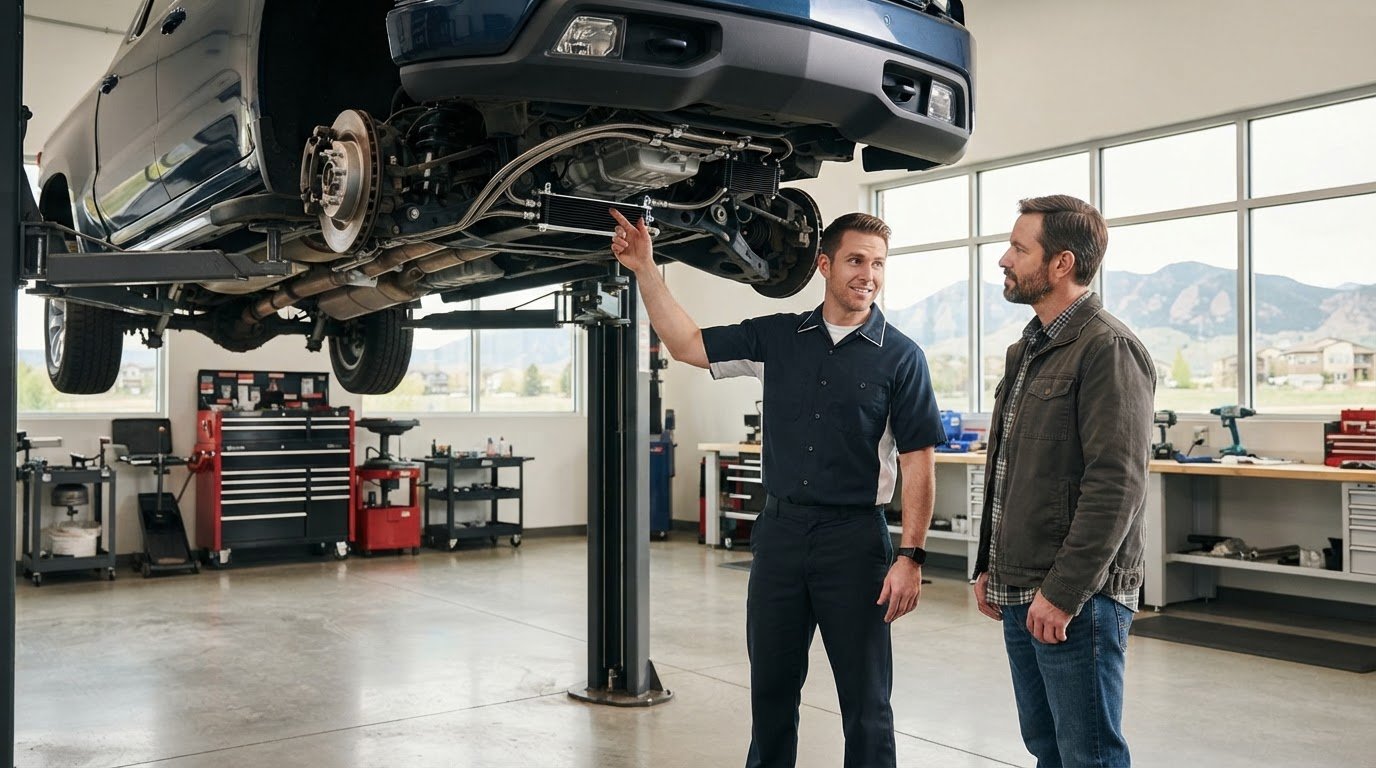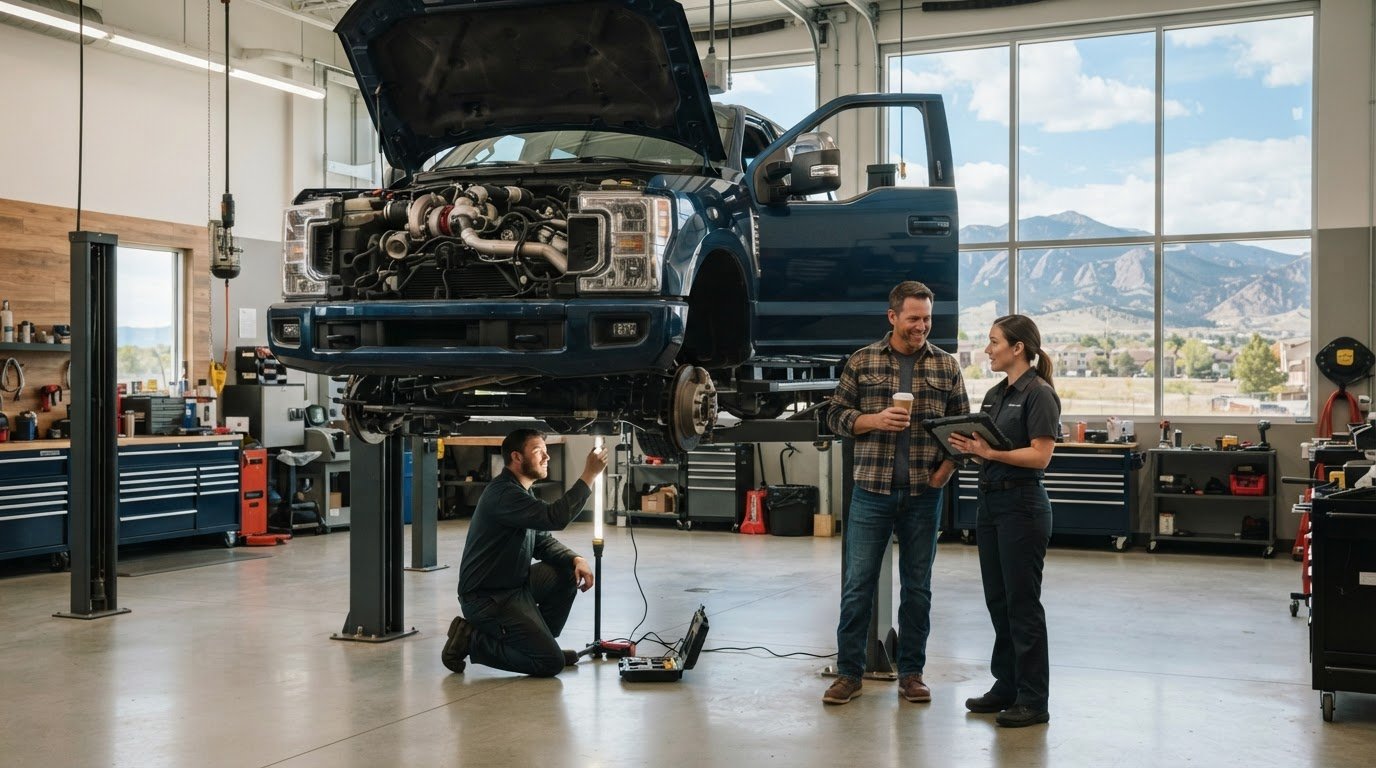
What if reliable Power Stroke care didn’t have to mean dealership rates or a general repair shop guessing at a diesel problem? If you’re looking for an independent shop for Ford Power Stroke repair Centennial truck owners can turn to, specialized Ford knowledge matters. These engines combine complex systems, and a misdiagnosis can leave you with more questions than answers.
It’s reasonable to want clear explanations, sensible repair options, and service that works around your truck’s needs, especially when you depend on it for towing. Eagle Transmission & Auto Repair in Parker serves Centennial drivers with Ford repair, including Power Stroke diesel diagnostics and repair.
This article explains what to look for in an independent diesel specialist, why a careful diagnosis is more useful than replacing parts based on guesswork, and what to discuss when an older engine may need “bulletproofing.” You’ll also learn how to approach repair choices with performance and reliability in mind. The goal is to help you understand the questions to ask and feel more informed about your truck’s next steps.
Key Takeaways
- A Power Stroke symptom can have several possible causes, so diagnosis should narrow down the issue before parts are replaced.
- An independent shop for Ford Power Stroke repair Centennial drivers consider can provide focused diesel care alongside a more personal service experience.
- Learn what symptoms such as a rough idle, white smoke, or reduced boost may signal, and why testing matters.
- Explore repair considerations for the 6.7L Power Stroke, including its fuel system and turbocharger sensors.
- Find out how engine, transmission, and 4×4 concerns can connect when maintaining a Ford Super Duty for Colorado driving.
Why Centennial Truck Owners Prefer Independent Ford Power Stroke Specialists
A Ford Power Stroke is not just an engine to scan for a code and swap parts on. For truck owners in Centennial seeking independent Ford diesel repair, focused Ford knowledge, clear explanations, and attention to how the engine works with the rest of the truck all matter.
That focus matters across the 6.0L, 6.4L, and 6.7L generations. Their designs and systems differ, so a symptom such as hard starting or reduced power needs to be considered in context, not treated as proof of one failed part. A specialist narrows possibilities through the vehicle’s symptoms, diagnostic information, and inspection. For background on how the engine line has evolved, see this overview of Ford Power Stroke engine history and common problems.
Specialized Knowledge Beyond General Repair
Diesel diagnosis calls for familiarity with the systems that support combustion, fuel delivery, air supply, and engine control. A diagnostic code is a clue, not a complete repair plan. The useful next step is understanding what the code indicates, what other symptoms are present, and whether testing points to a specific component. This measured approach helps owners compare repair options with a clearer picture of the problem.
Dealer Standards Without the Dealer Overhead
Independent shops can use professional diagnostic equipment, but tools and data access vary. Rather than assume every shop has identical manufacturer resources, ask how its Ford diesel diagnosis connects scan results to physical testing and a clear explanation. Transparent communication means understanding what has been found, what remains uncertain, and why a repair is being recommended. That conversation can help an owner make an informed choice without relying on a parts list alone.
Ongoing service with a shop familiar with a truck’s repair history can also make it easier to discuss changes in symptoms over time. For an F-250 or F-350 that works hard, sharing details such as when a warning appears or whether power changes under load gives the diagnostic process useful context. Eagle Transmission & Auto Repair provides Ford diesel diagnostics and repair, alongside engine repair for cars and trucks.
A Connected View of the Truck
Power Stroke performance depends on more than the engine alone. The transmission transfers engine power to the wheels, while the drivetrain and 4×4 components help deliver it where it is needed. A truck that feels different under load may need attention beyond one engine code, so it makes sense to consider the connected systems rather than assume the engine is the only source.
That broader view fits Eagle’s “WE FIX EVERYTHING” approach to Ford truck care. Centennial owners can discuss engine, transmission, and drivetrain concerns in the same conversation, with explanations in plain language. Colorado’s cold mornings and changing weather can also make cold starting and operating symptoms worth describing precisely. Note when the issue occurs and whether it changes as the truck warms up. Those details help distinguish an isolated symptom from a pattern that needs closer diagnosis.
Common Power Stroke Engine Problems and Diagnostic Approaches
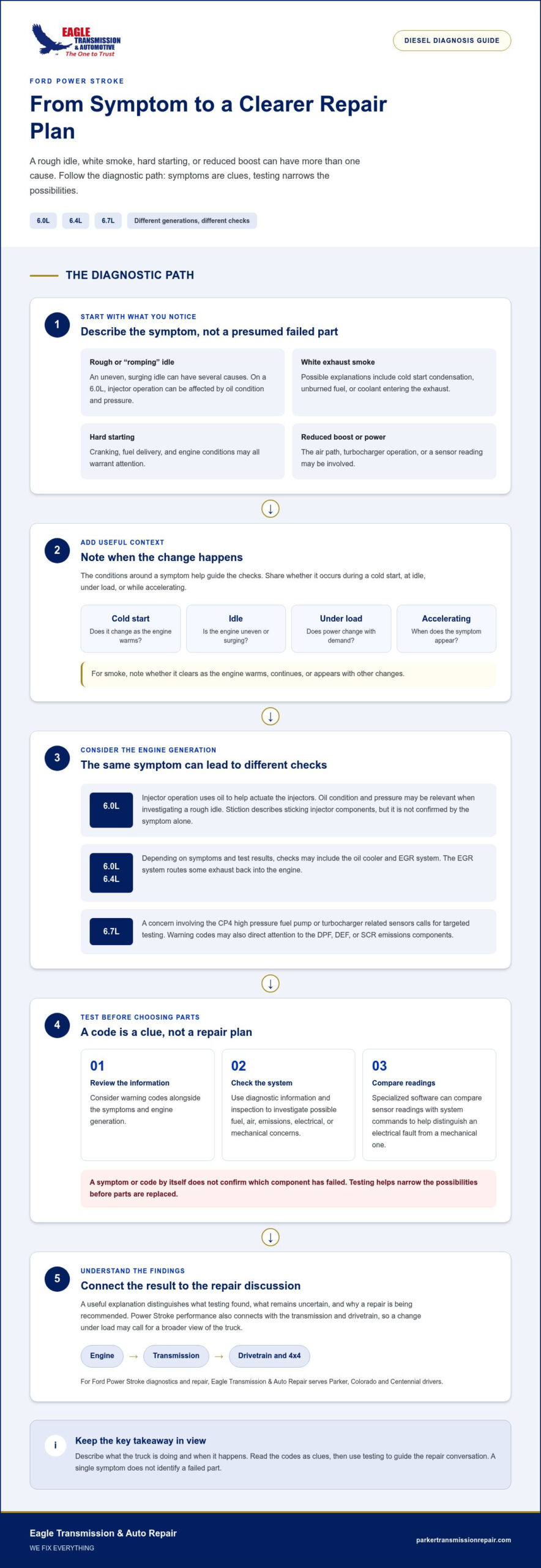
Rough idle, white exhaust smoke, hard starting, or reduced boost can all point toward a Power Stroke concern, but none identifies a failed part by itself. A careful diagnosis considers when the symptom occurs, the truck’s engine generation, warning codes, and whether fuel, air, emissions, or drivetrain systems could be involved.
Read the Symptoms in Context
A “romping” idle describes an uneven, surging idle. On a 6.0L, injector operation can be affected by oil condition and pressure because the engine uses oil to help actuate its injectors. “Stiction” refers to sticking injector components, but a rough idle can have other causes, so testing is needed before drawing conclusions. Hard starts also warrant attention to cranking, fuel delivery, and engine conditions.
White smoke has several possible explanations, including condensation during a cold start, unburned fuel, or coolant entering the exhaust. Note whether it clears as the engine warms, continues, or appears with other changes. Loss of boost may relate to a leak in the air path, turbocharger operation, or a sensor reading that affects engine control.
Different Generations, Different Checks
On 6.0L and 6.4L engines, oil cooler restriction and EGR system concerns are among the areas that may be considered, depending on the symptoms and test results. The EGR system routes some exhaust back into the engine; a fault can affect drivability, but smoke or reduced power alone cannot confirm an EGR problem.
With the 6.7L, a concern involving the CP4 high pressure fuel pump or turbocharger related sensors calls for targeted testing rather than an automatic parts replacement. A warning light can also involve the DPF, which captures soot, or DEF and SCR components, which are part of emissions control. The code points toward a system to investigate, not necessarily the component to replace.
Why Diesel Diagnosis Needs More Than a Code Reader
High pressure common rail fuel systems operate with tightly controlled fuel delivery, so a symptom may come from a mechanical fault, an electrical issue, or an inaccurate sensor signal. Specialized software can compare sensor readings and system commands to help distinguish an electrical fault from a mechanical one.
For a Centennial owner, useful details include whether the issue happens during a cold start, under load, at idle, or while accelerating. A technician can use those clues alongside diagnostic results and physical inspection to narrow down possible causes. If a check engine light is on, recording when it appeared and any change in performance can help make the evaluation more focused.
Look Beyond the Engine
Engine power has to pass through the transmission and drivetrain before reaching the wheels. A vibration under acceleration, a shudder at a particular speed, or a sensation that resembles a misfire may come from a transmission or drivetrain concern instead of the engine. The TorqShift transmission also needs to operate properly to transfer Power Stroke torque smoothly, especially when the truck is working under load.
Considering both systems can prevent an engine symptom from becoming an engine only diagnosis. Eagle Transmission & Auto Repair provides engine and transmission diagnostics and repair. Learn more about Ford F-250 transmission repair, or find directions to Eagle Transmission & Auto Repair if your Power Stroke has a new warning light, rough idle, or vibration.
Independent Repair vs. Dealership Part Replacement
Good repair is not measured by how many parts get replaced. It starts with identifying the fault, checking related systems, and deciding whether a component can be repaired or needs replacement. For a high mileage Super Duty, that distinction can shape the repair plan. An independent shop for Ford Power Stroke repair Centennial owners consider should be able to explain the evidence behind its recommendation, not just name a part.
Repair the Component or Replace the Assembly?
The right choice depends on inspection findings, the condition of related parts, and whether a repair can restore dependable operation. For example, a turbocharger concern may involve a sensor, a connection, an air leak, or internal turbo damage. Replacing the complete assembly without narrowing down the cause may miss the actual fault. Injector concerns also require careful testing, since similar symptoms can come from different underlying problems.
Replacing a larger assembly can be appropriate when damage is extensive or component repair is not a sound option. A targeted repair may make sense when testing isolates a serviceable part and surrounding components are in suitable condition. The useful comparison is not “small repair versus big repair” alone. It is whether each proposed option addresses the diagnosed cause and fits the truck’s condition and intended use.
Bulletproofing and Clear Repair Decisions
“Bulletproofing” is a broad term owners use for updates intended to address known vulnerabilities on some older engines. It is not a single universal repair or a guarantee against future problems. Before considering a kit or group of upgrades, clarify which concern each item addresses, what inspection supports the recommendation, and whether the parts suit the truck’s configuration. Kit contents and installation practices can vary, so avoid assuming every package is the same.
Dealership policies and repair recommendations vary by location and case, so it would be unfair to assume every dealer pushes crate engines or refuses component work. Compare proposals on diagnosis, repair scope, parts, labor, and documented coverage rather than on the shop label alone. Warranty terms differ, so review the actual written terms for any repair instead of relying on a general claim.
Maintenance for Towing and Colorado Driving
Towing through mountain grades puts sustained demands on an engine, transmission, and cooling system. Keep a record of service, towing use, warning lights, and changes in shifting or temperature. That history helps guide maintenance discussions beyond a generic schedule. Fluid condition may offer useful clues, though any analysis must be interpreted alongside symptoms and inspection, not treated as a diagnosis by itself.
For a high mileage truck, a practical plan prioritizes observed condition and use: address active symptoms, keep up with appropriate fluid service, and assess the transmission and drivetrain as well as the engine. A Power Stroke repair decision should preserve the truck’s overall reliability, not simply replace the largest visible part. Eagle Transmission & Auto Repair handles Ford engine and transmission diagnostics and repair. For related Super Duty considerations, see this guide to Ford F-250 transmission repair.
Preparing Your Power Stroke for Colorado Conditions
Colorado driving can put a Power Stroke through quick temperature swings, high elevation, steep grades, and heavy towing. For an independent shop for Ford Power Stroke repair Centennial owners, local context matters, but maintenance decisions still need to reflect the truck’s specific engine, use, and symptoms.
At altitude, thinner air means the turbocharger must work to supply the air the engine needs. Under a heavy load, exhaust gas temperature, or EGT, can also rise, though the reading depends on conditions and engine operation. If you tow, pay attention to changes in power or temperature and avoid treating one gauge reading as a diagnosis. A cooling system concern, air leak, sensor fault, or another issue can affect performance, so testing is more useful than guessing.
Before a mountain towing trip, have the cooling system checked for leaks and proper operation, and take any overheating symptoms seriously. Brakes matter just as much on steep descents: changes in pedal feel, pulling, vibration, or unusual noise deserve inspection. These are general safety checks, not a substitute for vehicle specific guidance or safe driving practices.
Mountain Towing and Drivetrain Stress
Heavy loads ask more of the transmission, differential, and transfer case, particularly in a 4×4 truck. New whining, clunking, vibration, difficulty engaging 4×4, or a change in how the truck behaves under load can point to a drivetrain concern, though each symptom can have more than one cause. Eagle Transmission & Auto Repair provides differential and 4×4 drivetrain service. Learn more about Ford truck drivetrain repair.
Cold Weather Diesel Reliability
Before freezing weather arrives, check battery condition and have glow plug operation evaluated if cold starts become difficult. If the truck has a block heater, check that it operates as intended. Cold starts place extra stress on Power Stroke oiling systems because colder, thicker oil takes more effort to circulate through engine passages.
Diesel fuel can gel in severe cold, restricting flow. Fuel additives may help in appropriate conditions, but use only products suitable for the truck and follow their directions. They don’t replace sound maintenance or resolve an existing fuel system fault.
Build a Practical Seasonal Checkup
Keep track of coolant, fluid service, warning lights, and changes in starting or towing performance. Before a long trip, arrange an inspection if the truck has shown a new symptom; catching a developing issue can help you make a repair decision before the next demanding drive. Eagle Transmission & Auto Repair provides diesel, cooling system, brake, and drivetrain repair. Get directions to Eagle Transmission & Auto Repair to discuss a seasonal Power Stroke inspection.
Eagle Transmission & Auto Repair: Your Centennial Area Ford Diesel Partner
A Power Stroke truck may need attention beyond its engine. Eagle Transmission & Auto Repair provides Ford diesel diagnostics and repair, along with transmission, differential, and 4×4 service, so Centennial owners can discuss related concerns with one local repair shop in Parker. The motto is “WE FIX EVERYTHING,” reflecting a broad approach to truck and drivetrain care.
Full Service Care for Your Ford Super Duty
From brake repair to engine diagnostics, the right service depends on what inspection and testing show. A concern that feels like an engine problem could involve another system, so it helps to share the symptoms clearly and consider how the truck behaves as a whole. Eagle provides Ford repair, including Power Stroke diesel care for Super Duty trucks, as well as transmission and drivetrain repair.
That range can be useful for owners who rely on an F-250 or F-350 for work, towing, or daily driving. Commercial operators can also access fleet repair services. Rather than presenting Eagle as the “top” alternative to a dealership, the meaningful distinction is the choice of an independent facility with specialized Ford repair and a local Parker location serving Centennial.
Clear Conversations About Repair Recommendations
Before arranging a diagnostic, make a short note of what changed and when: hard starting, a warning light, reduced power, a new vibration, or a symptom that appears only while towing. Share the truck’s engine and any recent service details you know. These clues can help frame the concern, though inspection and testing are needed to determine its cause.
Repair recommendations should be understandable. Ask what the diagnostic findings indicate, which repair addresses the identified concern, and whether other systems may be involved. You should be able to discuss the reasoning in plain language and understand which issues are confirmed versus still uncertain. That makes it easier to weigh the next step for your truck without relying on jargon.
A Practical First Step for Centennial Owners
For a Power Stroke diagnostic or maintenance discussion, gather your truck’s basic details and describe its symptoms, operating conditions, and intended use. If it supports a business, note how the truck is used in the fleet. Those details help make the conversation specific to the vehicle and its role, whether it is a work truck, a tow vehicle, or both.
If you need an independent shop for Ford Power Stroke repair Centennial drivers can reach in the Parker area, Eagle Transmission & Auto Repair is ready to help with Ford diesel, transmission, and 4×4 concerns. Schedule your Ford Power Stroke diagnostic at Eagle Transmission & Auto Repair today and share what your truck needs.
Make Your Next Power Stroke Decision With Confidence
A useful next step is to keep a short record of what your truck is doing: when the symptom began, under what conditions it appears, and whether it changes with temperature, load, or speed. Those details can help make a diagnostic conversation more specific and help you understand the options for your truck.
If you’re looking for an independent shop for Ford Power Stroke repair Centennial drivers can turn to, Eagle Transmission & Auto Repair in Parker is ready to discuss your truck’s needs. From a new warning light to a maintenance question before towing, bring your observations and questions. You deserve a clear explanation of what testing finds and what the next steps could involve.
Schedule your Power Stroke diagnostic or repair consultation, then get directions to Eagle Transmission & Auto Repair. A straightforward conversation is a good place to start, and you can move forward with a clearer plan for your truck.
Frequently Asked Questions
How often should I change the fuel filters on my Ford 6.7L diesel?
Follow the maintenance schedule for your specific truck, since the interval can vary by model year and configuration. Check service records to see when the filters were last changed, and consult the owner’s manual if the history is unclear. If the truck has reduced power or hard starting, don’t assume the filters are the cause. Those symptoms can have multiple explanations, so testing helps determine whether filter service is appropriate.
What information should I have ready when scheduling a Power Stroke diagnostic?
Have the truck’s model year, engine, and a brief description of the concern available. Note whether the issue began suddenly or gradually, whether it appears during starting or under load, and whether a warning light is on. If you have service records, they can help show what work has already been done. These details give the diagnostic conversation a useful starting point without assuming a cause.
Can an independent shop perform Ford recall work or warranty repairs?
Recall repairs and warranty coverage depend on the specific vehicle and the terms that apply. Check the recall status through Ford or the relevant official recall resource, and review your warranty documents to understand covered repairs and authorized repair requirements. An independent shop can diagnose other vehicle concerns, but that diagnosis is separate from confirming recall eligibility or warranty coverage. Keep any repair records and coverage documents together for reference.
What should I check before approving a major diesel repair?
Ask for a clear explanation of the diagnostic findings, the parts or systems involved, and why the recommended repair addresses the identified problem. If more than one option is presented, compare the scope of work and any written coverage terms. For an older truck, discuss its overall condition and intended use so the repair decision fits how you rely on it. An accurate estimate requires inspection.
Eagle Transmission & Auto Repair
10189 Parkglenn Way, Parker, CO 80138
Phone: (720) 778-1888
Website: parkertransmissionrepair.com
Hours: 8:00 AM to 6:00 PM, Monday through Friday. Closed Saturday and Sunday.