Have you ever felt that subtle, high-pitched squeal while pulling into your driveway after a long day, or noticed your car taking just a second too long to stop at a red light on Mainstreet? It’s easy to ignore those small signs, but when you’re staring down a steep mountain pass with a trailer in tow, those minor noises can turn into major anxiety. At Eagle Transmission & Auto Repair, we know that reliable brake pad replacement Parker CO isn’t just about routine maintenance; it’s about the peace of mind that comes from knowing your vehicle will stop exactly when you need it to, regardless of the weather.
We understand the frustration of feeling pressured by mechanics or confused by different pad materials that all claim to be the best for your SUV or truck. You deserve an honest diagnosis and a braking system that stays quiet and responsive through every Colorado season. In this article, we’ll explain the real-world impact of our local climate on your brakes and how our expert team ensures your car is ready for everything from winter slush to summer road trips. Because at the end of the day, our motto “WE FIX EVERYTHING” means we prioritize your family’s safety and your confidence behind the wheel above all else.
Key Takeaways
- Learn how Parker’s steep mountain descents and extreme temperature swings put unique thermal stress on your braking system.
- Discover whether ceramic or semi-metallic pads are the better choice for your specific vehicle and typical Colorado driving habits.
- Identify the subtle warning signs, like squealing or grinding, that indicate you need a professional brake pad replacement Parker CO before safety is compromised.
- Understand our detailed digital inspection and lubrication process that keeps your brakes responsive and quiet throughout every season.
- Build confidence for your next mountain trip with a clear understanding of how our “WE FIX EVERYTHING” promise keeps your family safe on the road.
Brake Pad Replacement in Parker, CO: Why Local Conditions Matter
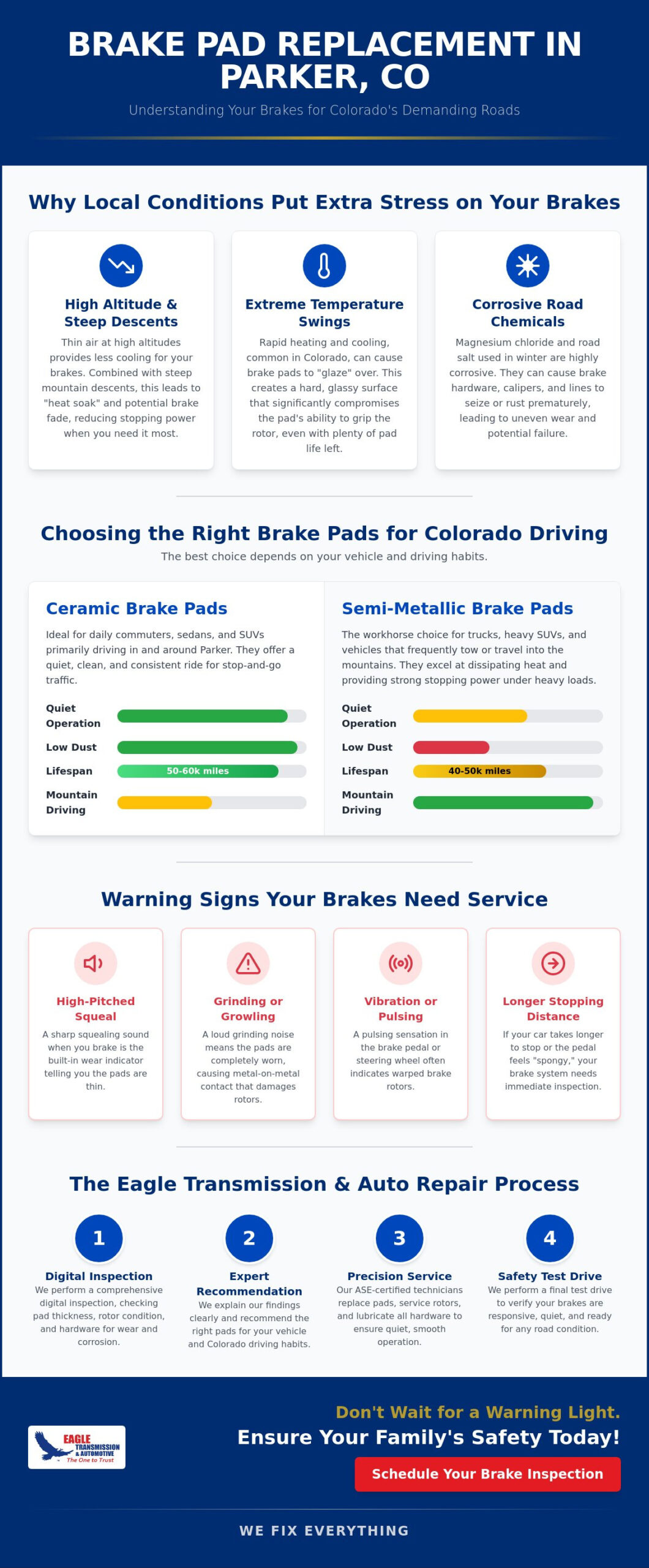
Living in Parker means we deal with driving conditions that would make a flat-lander’s head spin. Between the high-altitude air and the steep grades, your vehicle’s stopping system works twice as hard here as it would in the Midwest. When you’re looking for brake pad replacement Parker CO, you need a team that understands why our thin air and high altitude change the rules of car care. High-altitude driving means your braking system doesn’t cool down as efficiently as it would at sea level. Thin air is a poor conductor of heat, meaning those glowing rotors stay hot for longer after a hard stop. Understanding what brake pads are and how they function is the first step toward staying safe on our local roads. At Eagle Transmission & Auto Repair, we see the specific ways our environment beats up on your car.
One thing many drivers don’t realize is how Parker’s extreme temperature swings affect your friction material. It isn’t uncommon to see a 40-degree shift in a single afternoon. When your brakes get incredibly hot on a descent and then cool rapidly in the thin air, the surface of the pad can “glaze” or crystallize. This creates a smooth, glass-like finish that can’t grab the rotor effectively. You might still have plenty of pad thickness, but your stopping power is compromised. This crystallization is a hidden danger that standard inspections might miss if the technician isn’t familiar with Colorado’s unique climate.
The Impact of Steep Descents and Mountain Driving
Riding your brakes down a long mountain pass is a recipe for “heat soak.” This happens when the heat generated by friction has nowhere to go. Heat is the enemy. Brake fade is the temporary loss of stopping power due to excessive heat buildup. To combat this, we often recommend using engine braking to help manage your speed. This is one reason why we keep a close eye on both your brakes and your transmission. If you find yourself frequently driving into the high country, a more regular schedule for brake pad replacement Parker CO is a smart move to prevent mid-trip failures. We check for signs of thermal stress that can lead to cracked friction material or damaged seals.
Seasonal Maintenance for Douglas County Weather
Our local road crews do a great job keeping us moving, but the magnesium chloride and road salt they use are brutal on metal. These chemicals can cause your brake hardware to seize or corrode prematurely. We suggest a thorough inspection before the first snow hits the Front Range to ensure your pads have enough “meat” left for winter traction. State standards require a vehicle to stop from 20 mph within 45 feet, but in the slush of a Parker winter, you want your system performing much better than the bare minimum. Once spring arrives, we check for warped components that might have suffered during those heavy winter braking sessions. Our team at Eagle Transmission & Auto Repair takes these local factors seriously because we live here too. Our “WE FIX EVERYTHING” motto is our promise to keep your family safe through every season.
Choosing the Right Brake Pads: Ceramic vs. Semi-Metallic for Colorado
When you’re considering brake pad replacement Parker CO, the first question we usually hear is, “Which pads should I get?” It’s a great question because the right answer depends entirely on how you use your vehicle. Whether you’re dropping the kids off at school or hauling a trailer up I-70, your friction material needs to match your lifestyle. At Eagle Transmission & Auto Repair, our “WE FIX EVERYTHING” approach means we don’t just grab the first box on the shelf. We look at your vehicle’s weight, your driving habits, and even where you live in Douglas County to find the perfect fit.
Ceramic Brake Pads: Quiet and Clean for City Commuting
If you drive a sedan or a crossover around Parker and Centennial, ceramic pads are often the crowd favorite. These pads are made from a dense ceramic material mixed with copper fibers. The result is a pad that operates very quietly and produces a light-colored dust that won’t stick to your wheels. Because they have an average lifespan of 50,000 to 60,000 miles, they offer excellent long-term value for daily drivers. They’re reliable and consistent for stop-and-go traffic on Lincoln Avenue. However, they aren’t always the best choice for heavy-duty work. While they cost about 30% to 50% more upfront than other options, they can lose their effectiveness under the extreme heat of heavy towing or long mountain descents.
Semi-Metallic Pads: Heavy-Duty Power for Trucks and SUVs
For our neighbors driving larger vehicles, semi-metallic pads are the gold standard. We frequently recommend these during F-150 and F-250 repairs because they handle high heat exceptionally well. These pads contain a significant amount of metal, which helps pull heat away from the rotors during intense stopping. This is vital when you’re navigating steep grades with a full load. The trade-off is that they are often noisier and create more dark dust. They are also a bit harder on your rotors, potentially reducing rotor life by 15% to 25% compared to ceramics. But for raw stopping power and a lifespan of 35,000 to 45,000 miles in tough conditions, they’re hard to beat.
Choosing between these materials doesn’t have to be a guessing game. If you aren’t sure which material is right for your next mountain adventure, stop by our shop and we can take a look at your current wear patterns together. We’ll help you weigh the benefits of a cleaner wheel against the necessity of heavy-duty heat dissipation so you can drive with total confidence.
Identifying the Warning Signs: When to Schedule Your Brake Service
Your car usually tries to talk to you before a major failure happens. While some signs are obvious, others are subtle enough that you might miss them during your daily commute. Understanding these signals is the best way to avoid expensive repairs down the road. At Eagle Transmission & Auto Repair, we want you to feel empowered to recognize when your vehicle needs professional attention. It’s better to catch a worn part during a routine check than to deal with a failure on a busy Douglas County highway.
The most common signal is a high-pitched squeal when you apply the brakes. This isn’t just a random annoyance. It’s a built-in safety feature called a wear indicator. This small metal tab is designed to scrape against the rotor once the pad reaches a certain level of thinness. If you hear this, it’s time to look into brake pad replacement Parker CO. However, if that squeal turns into a deep, metallic grinding sound, you’ve entered the danger zone. This means your friction material is completely gone, and metal is rubbing against metal. This is a legitimate emergency that can ruin your rotors and compromise your safety. For a deeper understanding of what these symptoms mean for your vehicle’s overall stopping system, our guide to comprehensive brake repair in Parker CO covers everything from early warning signs to full system diagnostics.
Another red flag is a “spongy” or soft brake pedal. If you have to press the pedal nearly to the floor to get a response, air or moisture might have entered your hydraulic lines. This is a serious issue because moisture can boil under the high heat of mountain driving, leading to a total loss of braking power. Don’t fall for the #1 misconception in car care: thinking that if your brakes are silent, they must be healthy. Some pads wear down without ever making a peep, which is why regular inspections are so vital to our “WE FIX EVERYTHING” philosophy.
Vibrations and Pulsing: Is it the Pads or the Rotors?
Do you feel a rhythmic thumping or vibration through the steering wheel or brake pedal when you slow down? This pulsing often points to uneven wear or warped rotors. When rotors are heat-stressed or unevenly worn, the pads can’t make smooth contact. Simply slapping new pads onto damaged rotors is a recipe for premature failure and a shaky ride. We always check the condition of the entire system to ensure your stop is as smooth as it is safe.
Visual Inspection: What to Look for Behind the Wheel
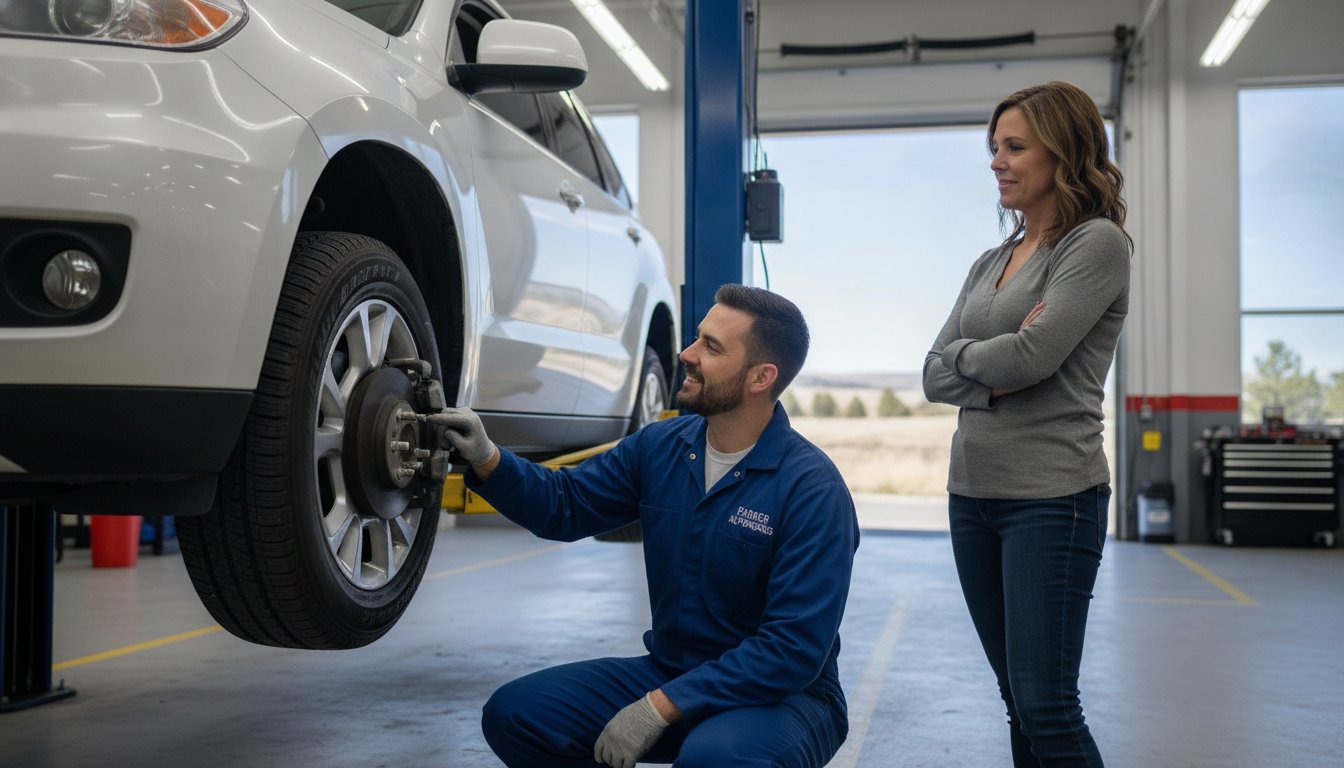
You can actually perform a quick check yourself without any tools. Look through the spokes of your rims at the brake caliper. You should see the friction material pressed against the metal rotor. If that pad looks less than 1/8 inch or 3mm thick, you’re in the danger zone. Additionally, keep an eye on your dashboard. Sometimes a check engine light diagnosis Parker CO reveals issues with the ABS (Anti-lock Braking System) sensors. If any warning light pops up, it’s your car’s way of asking for a professional health check to keep your family safe on the road.
The Eagle Transmission Process: Professional Brake Replacement and Inspection
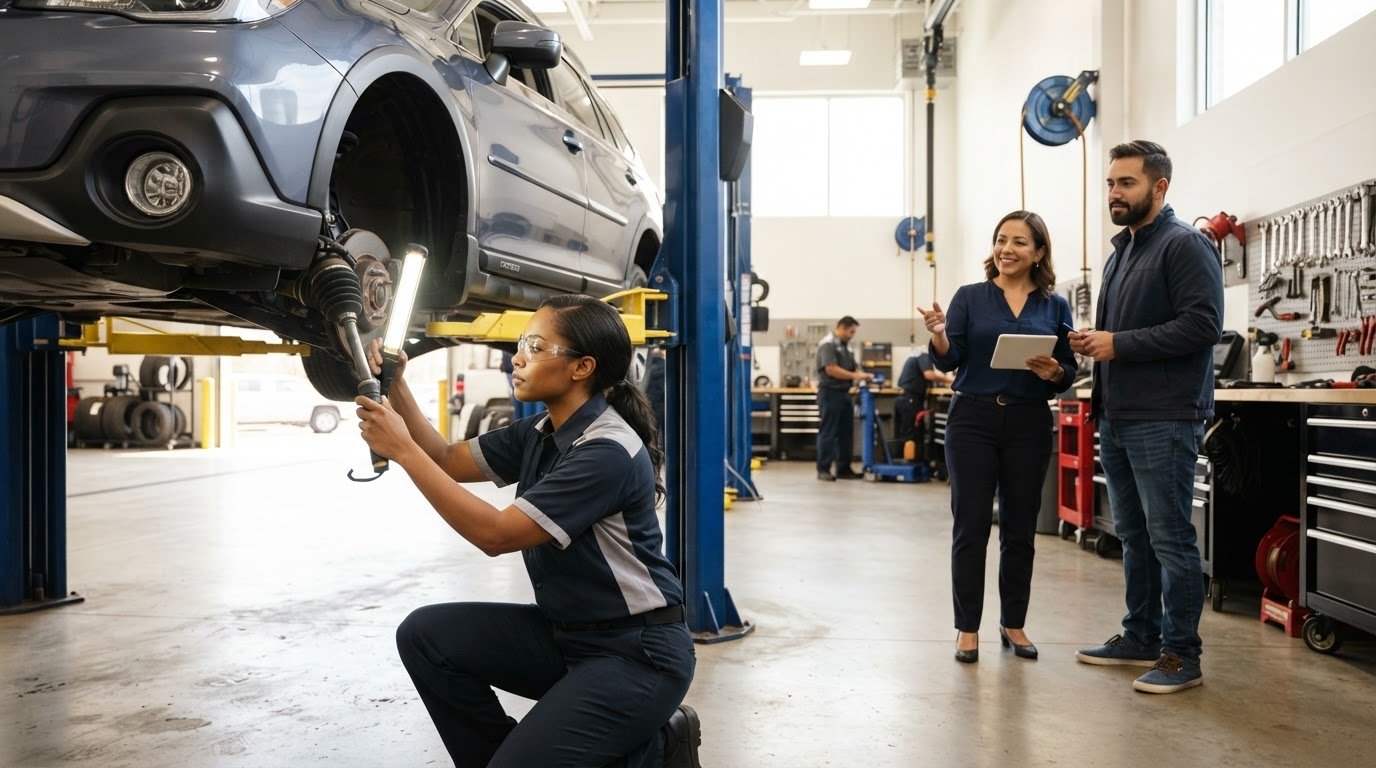
When you bring your vehicle to us, we treat it like it’s our own family car. We don’t believe in just “slapping on” a new set of pads and sending you on your way. A proper brake pad replacement Parker CO requires a methodical approach to ensure every component of your stopping system is working in harmony. Our process is designed to be transparent and thorough, moving away from the guesswork often found at high-volume chain shops. We want you to leave our bays with total confidence in your car’s ability to handle a sudden stop on Hess Road or a long crawl through I-25 traffic.
Our professional service follows five specific steps to guarantee your safety:
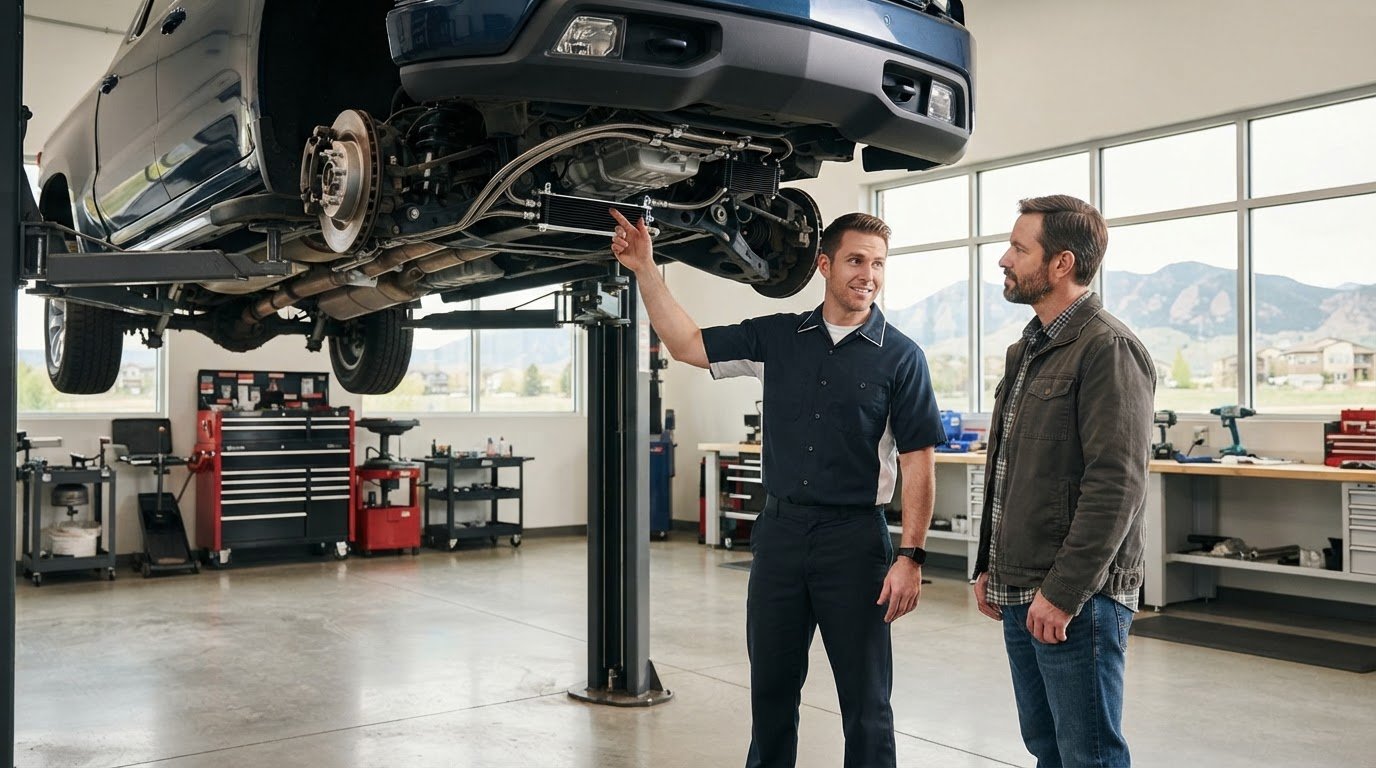
- Step 1: Digital Inspection. We perform a comprehensive digital inspection of your pads, rotors, calipers, and lines. We document our findings with photos so you can see exactly what our technicians see.
- Step 2: Hardware Maintenance. We clean and lubricate all moving hardware. Colorado road grime and salt can cause parts to seize, so this step is vital to prevent “stuck” brakes that drag and wear out too soon.
- Step 3: Precision Installation. We install high-quality pads specifically tailored to your vehicle’s weight and your personal driving habits.
- Step 4: Hydraulic System Test. We conduct a full brake fluid test. We check for moisture and contaminants that can lead to internal corrosion or a “spongy” pedal.
- Step 5: Performance Verification. Every vehicle is road-tested. This allows us to verify the repair and begin the “bedding-in” process for your new friction material.
Beyond the Pads: Total Drivetrain Peace of Mind
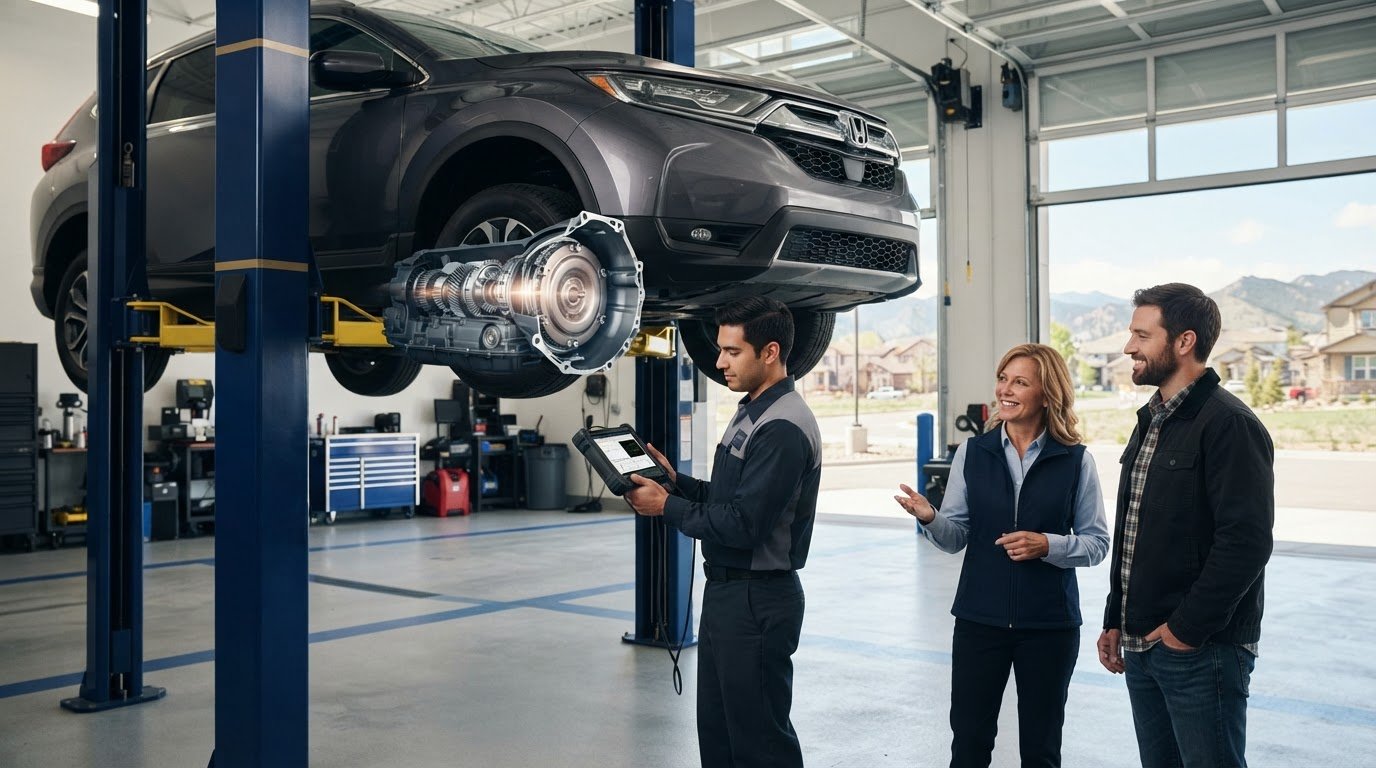
Because we are drivetrain specialists, our technicians look at the bigger picture while your wheels are off. We take a moment to inspect your CV axles and suspension components. This holistic view is part of our “WE FIX EVERYTHING” promise. We believe your brake health is directly connected to your overall vehicle maintenance, including engine repair Parker CO. Our deep background in transmission repair means we understand how your entire powertrain and safety systems work together to keep you on the road.
The Bedding-In Process: Ensuring Longevity
One of the most overlooked parts of a brake job is the bedding-in or “burnishing” process. Bedding-in involves a series of controlled stops to transfer a thin layer of pad material to the rotor. This step is essential because it ensures the pads and rotors mesh perfectly. Proper initial use prevents the formation of “hot spots” that cause annoying vibrations and premature wear. Taking the time to do this right significantly extends the life of your new brakes and keeps them operating quietly for thousands of miles.
If you’ve noticed a change in how your car stops, don’t wait for a warning light to appear. Visit our Parker shop for a professional brake diagnostic and let our team ensure your vehicle is ready for every Colorado season.
Eagle Transmission & Auto Repair: Your Trusted Partner for Safe Stops
Parker is more than just a place where we work; it’s our home. For years, your neighbors have trusted Eagle Transmission & Auto Repair with their most complex mechanical challenges. We’ve built that trust by being straight with people. Whether you’re coming in from Castle Rock, Lone Tree, or Aurora, you’ll find a team that speaks your language. We don’t hide behind technical jargon or try to sell you on repairs you don’t actually need. When we talk about brake pad replacement Parker CO, we’re talking about a supportive partnership to keep your vehicle on the road for the long haul.
Our “WE FIX EVERYTHING” promise isn’t just a catchy slogan. It’s a commitment to understanding every inch of your vehicle’s safety systems. We know that a car that won’t stop is just as big a problem as a car that won’t go. That’s why we apply the same level of specialist expertise to your brakes as we do to our world-class transmission work. We believe in transparency at every step, from the initial digital inspection to the final road test. You deserve to know exactly what’s happening under your car’s hood and chassis. If you want to explore the full scope of what professional brake repair in Parker CO involves, our detailed overview walks you through every aspect of keeping your stopping system in peak condition for Colorado’s demanding roads.
A Local Team That Understands Your Vehicle
There’s a real difference when you visit a shop that treats every vehicle like it belongs to a family member. We aren’t interested in being the cheapest shop in town because we know that “cheap” often means cutting corners on safety. We prioritize high-quality parts that can withstand the unique stresses of Colorado driving. This dedication to excellence is why so many local businesses rely on our fleet repair services. We understand that whether you’re driving a personal sedan or managing a commercial truck, downtime isn’t just an inconvenience; it’s a safety risk.
Schedule Your Brake Inspection Today
Don’t wait for that high-pitched squeal to turn into a terrifying metallic grind. Being proactive about your vehicle’s health is the best way to save money and stay safe. If you’ve noticed any of the warning signs we’ve discussed, like vibrations, a spongy pedal, or increased stopping distances, now is the time to act. Booking your diagnostic appointment or maintenance service is simple and stress-free. We’re here to help you navigate the process without any pressure or confusion.
Your safety is too important to leave to chance or a “one-size-fits-all” chain shop. Let our seasoned professionals give you the honest diagnosis and expert repair you deserve. Contact Eagle Transmission & Auto Repair today for an expert brake evaluation and experience the peace of mind that comes with a truly reliable stopping system.
Drive with Confidence through Every Colorado Season
Your vehicle’s stopping power is its most critical safety feature, especially when navigating the steep grades and unpredictable weather of the Front Range. We’ve explored how local temperature swings can glaze your pads and why choosing between ceramic and semi-metallic materials depends on your specific driving needs. Staying ahead of high-pitched squeals and vibrations ensures your car remains a reliable partner for your family’s daily travels. When it’s time for brake pad replacement Parker CO, you need a team that understands how your entire drivetrain works together to keep you safe.
At Eagle Transmission & Auto Repair, our ASE-Certified Technicians bring specialized Ford and truck repair expertise to every service bay. We stand by our “WE FIX EVERYTHING” promise, treating your safety systems with the same precision as our complex transmission work. Don’t leave your stopping distance to chance before your next weekend trip into the mountains. Schedule your professional brake inspection at Eagle Transmission & Auto Repair today. We look forward to helping you stay safe and secure on the road.
Frequently Asked Questions
How much does brake pad replacement cost in Parker, CO?
The total cost for your service depends on your vehicle’s specific requirements and the type of friction material you choose for your driving style. We focus on providing a transparent, honest diagnosis rather than generic estimates that might change later. At Eagle Transmission & Auto Repair, we prioritize matching the right parts to your vehicle to ensure you get the best value and safety for your investment.
How long do brake pads typically last in the Colorado mountains?
In our local environment, ceramic pads generally last between 50,000 and 60,000 miles, while semi-metallic pads usually range from 35,000 to 45,000 miles. However, these numbers can drop significantly if you frequently navigate steep mountain passes or haul heavy trailers. The constant heat generated during long descents wears down the material faster than typical city driving on the Front Range.
Can I replace just the brake pads and not the rotors?
You can replace only the pads if your rotors are still above the minimum safety thickness and don’t show signs of warping or deep heat damage. We measure your rotors during every brake pad replacement Parker CO to ensure they can safely handle a new set of friction material. If the rotors are compromised, putting new pads on them will lead to vibrations and a much shorter lifespan for your new parts.
Why are my new brake pads squeaking after replacement?
New pads often make a light squeaking sound during the initial “bedding-in” or burnishing phase as they seat against the rotor surface. This is a normal part of the process where a thin layer of pad material transfers to the rotor. If the noise continues after the first few days, it might be due to morning moisture or road dust. We always perform a road test to verify that your system is quiet and operating correctly.
How often should I have my brakes inspected in Douglas County?
We recommend a professional brake inspection every six months or with every other oil change. Because Colorado doesn’t have a mandatory statewide safety inspection for personal cars, the responsibility for keeping your vehicle safe rests with you. Regular checks are vital for catching small issues like “glazing” before they turn into expensive repairs or safety risks during a winter storm.
Does high elevation affect the way my brakes perform?
High elevation affects your brakes because the thinner air isn’t as effective at cooling down the system after a hard stop. This can lead to a condition called heat soak, which may cause a temporary loss of stopping power known as brake fade. We use our “WE FIX EVERYTHING” expertise to help you select components specifically designed to handle the thermal stress of our high-altitude environment.