Your brake rotors probably aren’t actually warped, even if your steering wheel is shaking like a leaf on a windy day in the Rockies. It’s a bold claim, but the idea of “warped rotors” is often a misunderstanding of what’s really happening to your braking system. You’ve likely felt that frustrating pulse in the pedal or a shudder through the seat every time you try to slow down. We know that vibration creates a lot of anxiety; it’s especially nerve-wracking when you’re navigating steep mountain descents and need to feel totally in control. At our shop, we believe you deserve clarity along with a smooth ride.
We’re here to help you understand the root cause of that annoying vibration and the truth behind this common mechanical myth. In this guide, we’ll walk you through the real signs of brake trouble and explain the difference between uneven material buildup and actual damage. You’ll discover whether your vehicle needs a simple resurfacing or a full replacement. Our goal is to ensure you feel confident and safe on every Colorado road, because we fix everything to keep your family protected during every journey.
Key Takeaways
- Identify the common warning signs like steering wheel shimmy and pedal pulsation that signal your braking system needs an expert look.
- Learn why warped rotors are rarely actually bent and how uneven material deposits from your brake pads are the real culprit behind the shudder.
- Understand how steep mountain grades and heavy towing in places like Parker put unique stress on your vehicle’s stopping power.
- Find out when you can save money by resurfacing your rotors versus when a full replacement is the only safe way forward.
- Discover how our “WE FIX EVERYTHING” approach ensures your car or truck is ready for any challenge the Rockies throw at it.
Understanding Warped Rotors: Signs Your Brakes Need Professional Attention
When your car starts shaking during a stop, the first phrase most people reach for is warped rotors. In the automotive world, we use this term to describe brake pulsation or lateral runout. It’s that annoying, rhythmic shudder that tells you the smooth surface of your brake disc is no longer perfectly flat. We see this often at our shop, and while it feels like the car is falling apart, it’s actually a specific mechanical issue we can solve quickly. We don’t believe in letting a minor vibration turn into a major headache.
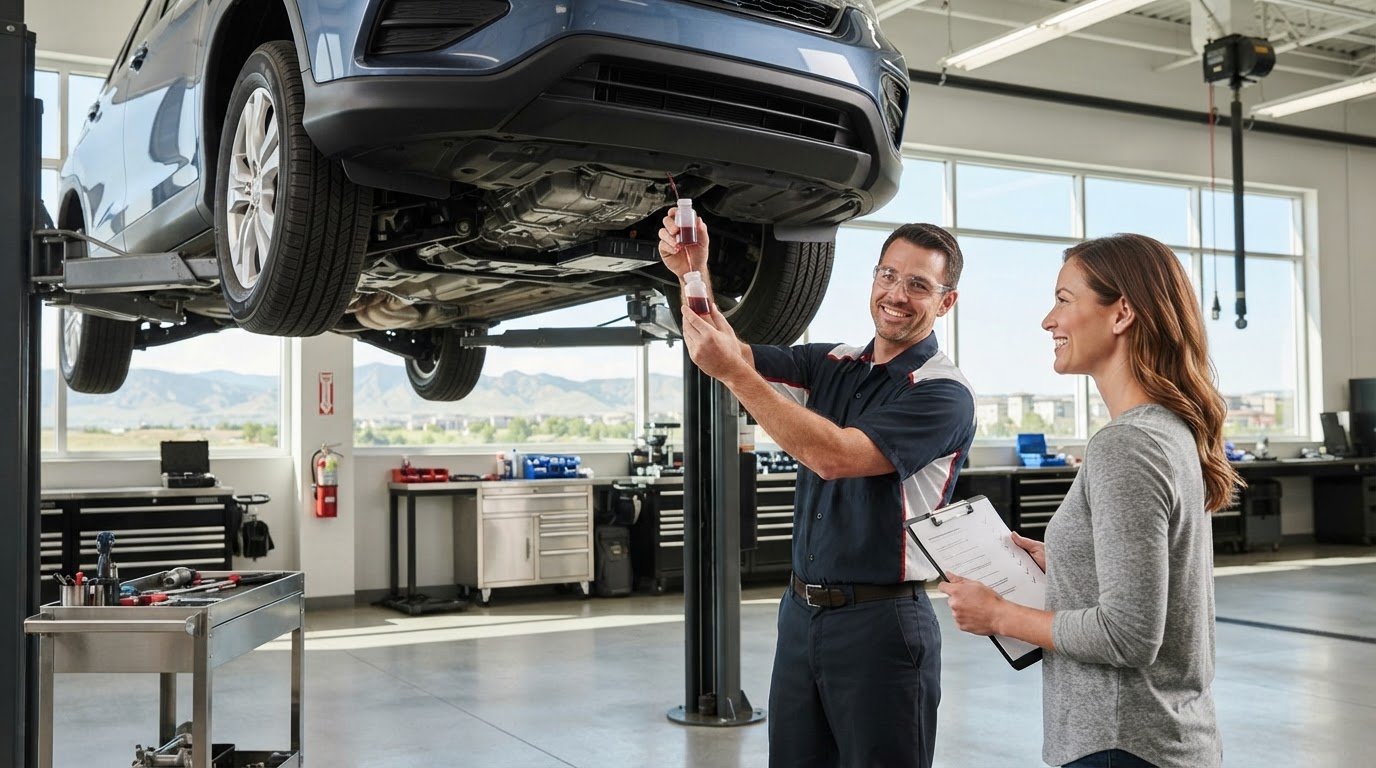
You’ll notice the signs almost immediately. If your steering wheel shimmies or vibrates as you apply the brakes, you’re likely dealing with front rotor issues. Because the front brakes do the heavy lifting for steering and stopping, any imperfection there travels directly up the steering column. You might also hear a rhythmic thumping or a low groaning noise. These sounds usually sync perfectly with the speed of your wheels, getting faster as you accelerate and slowing down as you come to a halt. We pay close attention to these sounds because they help us pinpoint exactly which part of the system is struggling. We listen to your car as much as we listen to you.
Steering Wheel vs. Brake Pedal: Where is the Shudder Coming From?
We often ask customers where they feel the vibration because it tells us exactly where to start working. If the steering wheel dances in your hands, the front axle is the culprit. Vibrations from the front rotors travel through the steering rack and into the wheel. However, if you feel a pulsating sensation primarily through the sole of your foot on the brake pedal, the rear rotors are usually to blame. Rear-end issues are caused by thickness variation, which pushes back against the brake fluid and creates that “kickback” in the pedal. Identifying the correct axle early allows us to focus our repairs. This saves you time and money on unnecessary parts. We focus on getting it right the first time.
The Danger of Ignoring Braking Vibrations
A small vibration might seem like a minor nuisance, but it’s actually a warning sign. Uneven rotor surfaces create inconsistent friction, which can lead to common types of disc damage and significantly increased stopping distances. This is a major safety hazard, especially when you’re cruising down Highway 83 or navigating heavy traffic. If you ignore the shudder, that vibration starts to beat up other parts of your vehicle. It puts unnecessary stress on your suspension components and can even wear out your wheel bearings prematurely. We don’t want a simple brake fix to turn into a massive overhaul. We fix everything from the start to ensure your vehicle remains stable and your family stays safe on the road.
The Warped Rotor Myth: What is Actually Happening to Your Brakes?
Most people imagine their brake rotors bending or twisting like a vinyl record left in a hot car. In reality, your rotors are made of heavy-duty cast iron, a material that is incredibly stiff and resistant to physical bending. When we talk about warped rotors, we aren’t usually talking about a structural curve in the metal. Instead, we are looking at a surface that has become uneven at a microscopic level. We’ve seen thousands of braking systems, and we know that the “warp” is almost always a result of material transfer rather than a bent disc. We handle these chemistry-based problems every day with a focus on restoring your vehicle’s factory-smooth stop.
The real culprit is a process called material transfer. Your brake pads are designed to wear down slowly, leaving a microscopically thin and perfectly even film of friction material on the rotor face. This film is what allows the pads to grip the disc effectively. However, when things get too hot, the resins in the brake pads can break down and bond unevenly to the rotor. This creates “high spots” on the surface. When your pads pass over these sticky deposits, they grab and slip, causing the vibration you feel in your seat or steering wheel. We don’t just replace parts; we investigate these surface issues to ensure the root cause is solved.
Friction, Heat, and the Chemistry of Stopping
Heat is the biggest factor in brake performance. Think about what happens when you finish a hard stop after coming down a steep grade and then sit at a red light with your foot firmly on the pedal. Those scorching hot pads are pressed against one specific area of the rotor, which can lead to a “pad imprint.” This is exactly like leaving a hot stamp on a piece of wax. The extra material bonds to that one spot, creating an uneven surface that shudders the next time you drive. If you suspect your mountain commute has left its mark on your brakes, visit our shop in Parker for a thorough inspection of your rotor surfaces.
Cementite: The Invisible Enemy of Smooth Braking
When heat levels reach extreme peaks, the cast iron itself undergoes a physical transformation. This creates an ultra-hard substance known as cementite. Cementite is a hard, brittle compound formed when cast iron rotors exceed 1200 degrees Fahrenheit. These hard spots are the ultimate enemy of smooth braking because they don’t wear down at the same rate as the rest of the iron. As you continue to drive, the softer metal around the cementite wears away, leaving a permanent bump that you can’t simply sand off. Because these spots are part of the metal’s new structure, they often require specialized machining or a full replacement. We take the guesswork out of this process, identifying exactly which fix is necessary to get you back on the road safely. We fix everything, from simple pad imprints to complex heat-damaged rotors, ensuring your truck or car stops exactly when you need it to.

Why Colorado Drivers Face Unique Rotor Challenges
Living in Parker means your vehicle works harder than a car in the flatlands. Our high elevation and the dramatic grades of the Rockies turn every weekend trip into a grueling stress test for your braking system. We see the results of these conditions daily at our shop. While the term warped rotors is the common way people describe the shaking they feel, we know the local geography is often the primary driver behind that vibration. Between the stop and go heat cycles on I-25 and the sudden temperature drops during a spring snowstorm, your brakes are under constant pressure. We understand these local challenges because we drive these same roads every day.
The “heat-soak” cycle is particularly brutal for Douglas County commuters. When you are stuck in heavy traffic on the interstate, your brakes don’t get the airflow they need to cool down properly. You apply the brakes, they get scorching hot, and then you sit still. This traps intense heat between the pad and the rotor, leading to the uneven material transfer we discussed earlier. Add in a sudden splash of icy slush from a puddle, and that rapid cooling can even cause small stress cracks in the metal. We analyze these patterns to provide solutions that actually last in our unique climate. We don’t just treat the symptom; we address the environmental reality of driving in Colorado.
Mountain Grades and Brake Fade
Descending a 6% grade with a loaded vehicle is a masterclass in physics. If you rely solely on your brake pedal, you risk brake fade, where the system gets so hot it simply stops working. This is why engine braking is your best friend. By using your transmission to control your speed, you take the load off your rotors. We ensure your vehicle is ready for this with Reliable Engine Repair in Parker, CO: The WE FIX EVERYTHING Promise, keeping your powertrain strong enough to handle the descent safely. We believe in a holistic approach to vehicle safety.
Towing and Fleet Vehicle Stress
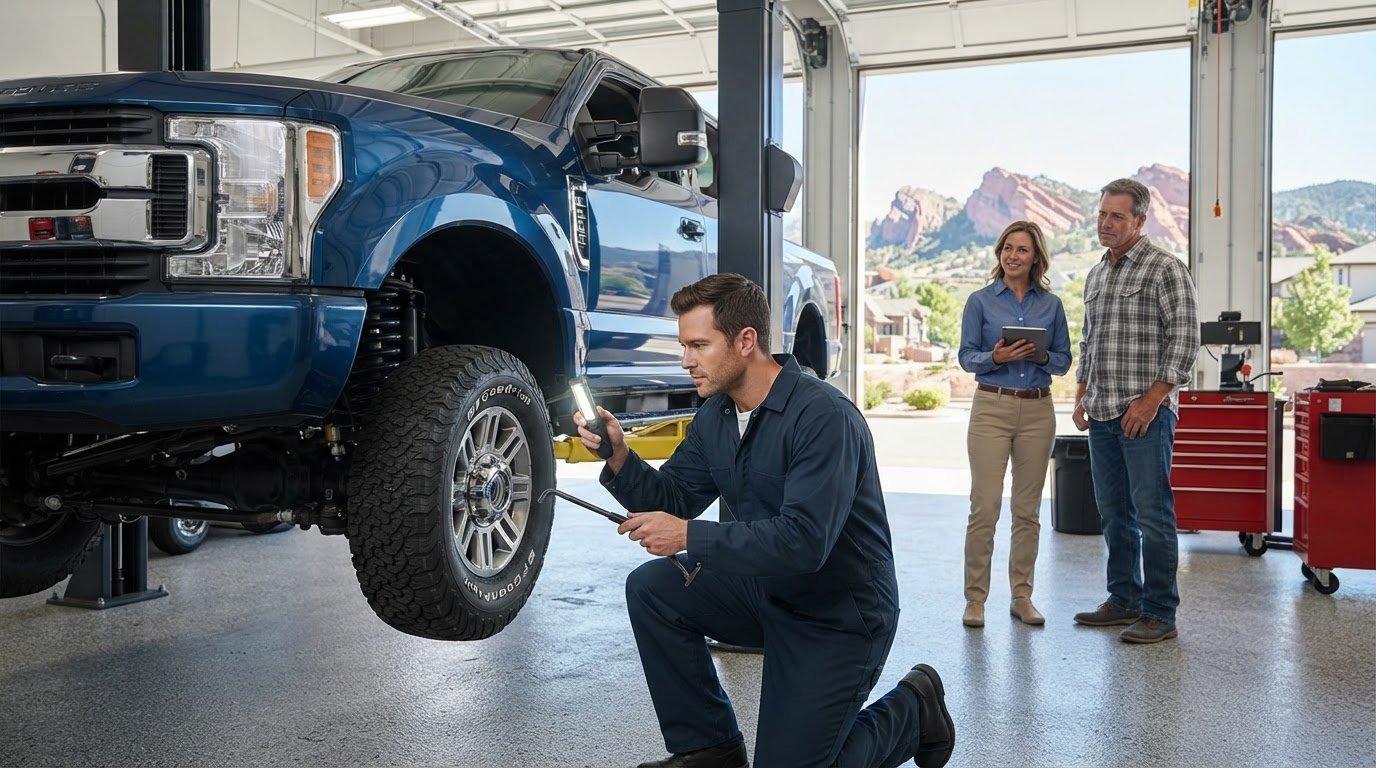
Heavy-duty trucks like the F-150 and F-250 are staples in Douglas County, but towing heavy trailers puts extreme stress on your stopping power. Commercial fleets in Castle Rock and Parker often struggle with pulsating brakes because their rotors are pushed to the limit every single day. We don’t just swap parts; we help fleet managers select the right pad compounds for heavy-duty applications to prevent premature wear. Our Fleet Repair Services in Parker, CO: Reliable Commercial Maintenance & Repair are designed to keep your business moving without the downtime caused by brake failure. We fix everything from single trucks to entire commercial fleets with the same commitment to excellence and reliability.
Resurfacing vs. Replacement: Choosing the Right Fix for Your Rotors
When you feel that familiar shudder through the steering wheel, you want to know the most efficient way to get back to a smooth ride. We believe in total transparency, so we always explain the choice between resurfacing your current parts or installing new ones. When we diagnose warped rotors, we weigh the remaining life of the part against the cost of the repair to find the safest path for you. We don’t believe in guessing; we use precision tools to determine exactly what your vehicle needs to stop safely on Colorado’s roads.
We always recommend replacing your brake pads whenever you install new rotors. Think of it like this: putting old, unevenly worn pads on a brand-new rotor is like wearing dirty, holey socks with a pair of expensive new shoes. The old pads will quickly transfer their uneven wear patterns to the new metal, ruining your investment. For a complete understanding of what goes into choosing the right friction material for Colorado’s demanding conditions, our guide to brake pad replacement in Parker, CO walks you through every option for your SUV or truck. WE FIX EVERYTHING by looking at the whole system, ensuring every component works in harmony for a vibration-free stop.
When Machining Makes Sense
Resurfacing, often called “turning” or “machining,” involves using a precision lathe to shave off a microscopically thin layer of metal from the rotor face. This process restores a perfectly flat surface and removes the “sticky” material deposits that cause vibrations. We use an on-car lathe for this work because it provides the most accurate resurfacing possible by accounting for the unique alignment of your vehicle’s wheel hub. However, we only suggest this if your rotors meet strict safety tolerances. There must be enough metal left to meet the “discard thickness” requirements, ensuring the part can still dissipate heat effectively during a mountain descent.
Why New Rotors are Often the Safer Bet
In many cases, choosing new parts is the smarter long-term investment for your family’s safety. As manufacturing has evolved, the cost of high-quality new rotors has become very competitive. Sometimes the labor time required to carefully machine an old rotor isn’t much different than the price of a fresh part. There are several reasons why new is often better:
- Heat Management: Thinner rotors have less mass, which means they get hot faster and “warp” more easily under stress.
- Structural Integrity: New rotors are free from the deep scoring or microscopic heat cracks that can hide in older metal.
- Total Reliability: You get a fresh start with a full-thickness part designed to last for tens of thousands of miles.
We take the guesswork out of your brake maintenance by providing a clear, honest assessment of your vehicle’s needs. If you want to know if your brakes can be saved or if it’s time for an upgrade, visit us for a professional brake evaluation. We are here to ensure you can drive with peace of mind, no matter where the road takes you.
The WE FIX EVERYTHING Approach to Brake Repair in Parker
Eagle Transmission & Auto Repair isn’t just another service center; we’re your neighbors. We understand that when you’re driving your kids to school or hauling a trailer through Douglas County, you need to know your vehicle will stop exactly when you tell it to. Our “WE FIX EVERYTHING” motto isn’t just a slogan. It’s a bold promise that we handle every part of your vehicle’s safety system with total confidence. Whether you’re dealing with the annoying vibration of warped rotors or need a complex drivetrain integration, we have the mastery to get it done right the first time.
Owners of F-150 and F-250 trucks often come to us because we have specialized Ford repair expertise that goes beyond the basics. These heavy-duty vehicles face unique stresses on Colorado roads, and we know exactly how to maintain their stopping power under pressure. We don’t just swap out parts and send you on your way. We look at the big picture to ensure your family stays safe on every mountain pass and highway. We take pride in being the comprehensive problem-solvers that Parker drivers rely on for total vehicle health.
Comprehensive Diagnostics: Beyond the Rotor
We believe a true repair goes deeper than the surface. During every rotor service, we perform a comprehensive check of your calipers, slide pins, and brake lines. If a caliper pin is stuck, your new rotors will wear unevenly in just a few weeks. We also look at how your transmission helps you slow down. Effective downshifting is vital for saving your brakes from excessive heat during steep descents. You can learn more about how we maintain these critical systems in our Professional Transmission Repair in Parker, CO: The Complete 2026 Guide. We ensure every part of your car works together to keep you in control.
Your Trustworthy Local Expert in Parker
We’ve been a fixture in the Parker community for decades, and our roots run deep. Our team takes pride in being your “Friendly Guide” through the often-confusing world of auto repair. We’ll always explain the “why” behind a repair before we start the “what,” using clear language instead of technical jargon. We want you to feel like a partner in your vehicle’s care, not just another ticket in the system. Our goal is to reduce your anxiety and build a relationship based on transparency and excellence.
If your car is shivering every time you hit the brakes, don’t wait for the problem to get worse. Warped rotors are a clear sign that your system needs professional attention to stay safe. Contact us today to schedule a thorough brake inspection. Experience the peace of mind that comes with our expert care and our “can-do” attitude toward every mechanical challenge.
Drive With Confidence on Every Colorado Descent
You now know that the shudder in your steering wheel isn’t just a mystery; it’s a call for professional care. Whether your vehicle is suffering from the common myth of warped rotors or has developed hard cementite spots from intense mountain heat, you don’t have to settle for a vibrating ride. We understand that navigating the Rockies requires a braking system you can trust implicitly. Understanding the root cause of that vibration is the first step toward a smoother, safer journey for you and your passengers.
At Eagle Transmission & Auto Repair, we’ve served the Parker community for over 20 years. Our specialized Ford truck repair experts and seasoned technicians live by our WE FIX EVERYTHING promise. We handle everything from simple resurfacing to complex drivetrain work with a bold, can-do attitude. Don’t let a small vibration turn into a safety hazard on our steep mountain grades. Schedule your professional brake inspection at Eagle Transmission today and get back to a smooth, safe drive. We’re here to keep your family protected on every road ahead.
Frequently Asked Questions
Is it safe to drive with warped rotors?
It isn’t safe to drive with warped rotors for an extended period. While your car might still stop, the vibration reduces the consistent contact between the pad and the disc, which can increase your stopping distance. This shuddering also puts unnecessary stress on your wheel bearings and suspension components. We recommend bringing your vehicle in as soon as you feel a pulse so we can keep you and your family safe on the road.
How much does it cost to fix warped rotors in Parker, CO?
The cost to fix your brakes in Parker depends on your vehicle type and whether your rotors need resurfacing or a full replacement. Because every car is different, we follow the Colorado Motor Vehicle Repair Act by providing a detailed written estimate before we start any work. This ensures you have total transparency regarding parts and labor. We invite you to call our shop for a personalized quote based on your specific vehicle and braking needs.
Can I fix warped rotors myself by sanding them?
You cannot fix these issues by simply sanding your rotors at home with a hand sander. The vibration you feel is caused by microscopic thickness variations or hard cementite spots that manual sanding cannot remove. Professional machining requires a precision lathe to restore a perfectly flat surface across the entire disc. If the heat damage is too deep, the only safe solution is to replace the part entirely. We have the technical mastery to handle these repairs correctly.
How long do brake rotors typically last in Colorado?
Brake rotors generally last between 50,000 and 70,000 miles, but Colorado driving conditions can shorten that window. Our local geography plays a massive role in this lifespan. If you frequently navigate steep mountain grades or tow heavy trailers in Douglas County, you might see wear much sooner than a driver in the flatlands. We check your rotor thickness during every service to ensure you have enough metal left to handle the intense heat of the Rockies.
Why do my brakes only shake when I’m driving down a mountain?
Your brakes shake during mountain descents because the extreme heat causes brake pad material to transfer unevenly to the rotor surface. This often happens if you come to a full stop after a long downhill stretch while your brakes are still scorching hot. The pad essentially leaves a “stamp” of material on the disc that creates a bump. We can help by checking your system and ensuring your transmission is helping you downshift effectively to reduce the load on your brakes.
Will new brake pads fix a vibrating steering wheel?
New brake pads alone will rarely fix a vibrating steering wheel if the underlying rotor surface is uneven. If your rotors have high spots or material buildup, the new pads will simply follow those same bumps and continue the vibration. In fact, installing new pads on damaged rotors can ruin the new pads prematurely. To make the best choice for your vehicle, learn about your options for professional brake pad replacement in Parker, CO so you understand what materials and service approach will keep your stops smooth and safe. We always look at the entire system to ensure a smooth stop, which usually means servicing the rotors alongside the pads.
Can a car sit for a long time and develop warped rotors?
A car can develop braking issues after sitting for a long time due to corrosion and rust buildup on the disc surface. Moisture can cause a ring of rust to form on the rotor face everywhere except where the brake pad is touching. This creates an uneven surface that feels exactly like warped rotors the next time you drive. We can often clean these surfaces up, but severe rust pitting might require a full replacement to ensure your vehicle stops safely.
What is the difference between resurfacing and replacing rotors?
Resurfacing involves using a precision lathe to shave off a thin layer of metal to make the rotor flat again, while replacing means installing a brand new part. We only resurface rotors that still meet the “discard thickness” safety limits required to dissipate heat. If a rotor is too thin or shows signs of deep heat cracks, we will always recommend a replacement. WE FIX EVERYTHING by choosing the most reliable and cost effective path for your specific vehicle.