A slipping or shuddering transmission doesn’t automatically mean your vehicle needs a full replacement. On a daily commute along E-470 or I-25, uncertain shifting can make every trip stressful. Transmission repair Parker CO drivers can rely on starts with finding the cause. Similar symptoms may come from a fluid issue, a solenoid, an electronic control concern, or internal wear.
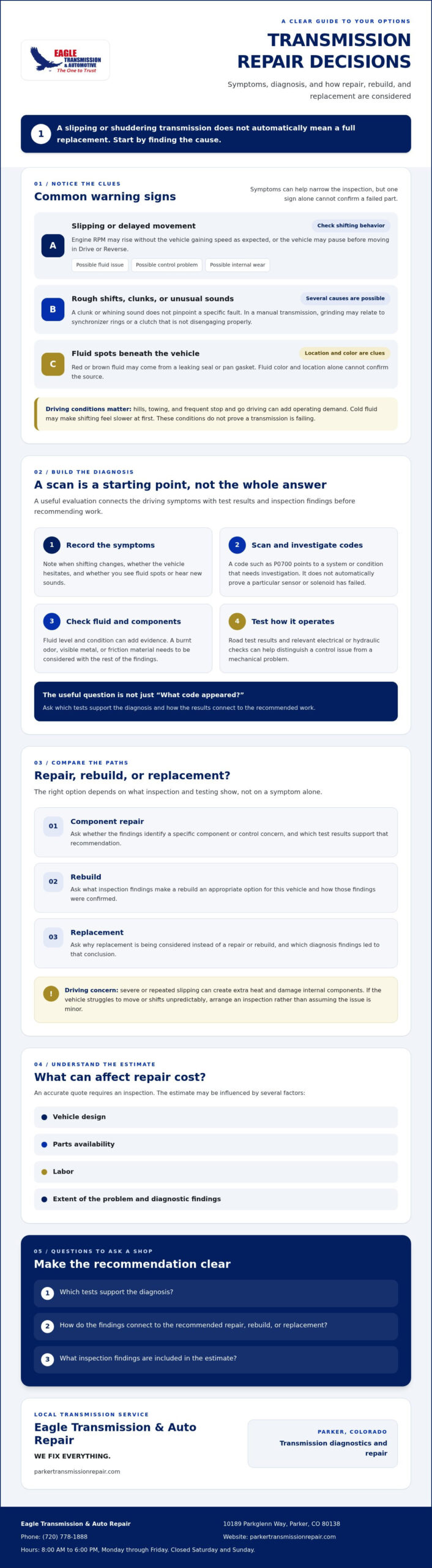
It’s understandable to wonder whether you’re facing a smaller repair, a rebuild, or a replacement, and how a shop will reach that conclusion. The right diagnosis connects symptoms to the components involved instead of treating a guess as an answer. A single warning sign alone can’t confirm what’s wrong.
This guide covers common transmission symptoms, how repair, rebuild, and replacement differ, and what to ask when choosing a local shop. You’ll also learn why a careful inspection matters before committing to major work. Eagle Transmission & Auto Repair serves Parker drivers with transmission repair and service. Its general repair offerings also include engine repair, brake replacement, and check engine light diagnosis. Drivers in Centennial, Castle Rock, Douglas County, Lone Tree, and Aurora can use the same questions when comparing repair options.
Key Takeaways
- Note when shifting changes and check for fluid spots. These clues can help a technician narrow down what needs inspection.
- A useful transmission evaluation considers trouble codes, fluid condition, and how the vehicle shifts during testing.
- Before choosing transmission repair Parker CO, ask whether the findings point to a component repair, rebuild, or replacement.
- Vehicle design, parts availability, labor, and the extent of the problem can all affect an estimate, so an inspection is needed for an accurate quote.
- Ask the shop which tests support its diagnosis and how the results connect to the recommended work.
Common Transmission Warning Signs and Front Range Driving Causes
Slipping gears, a pause before the vehicle moves after shifting into Drive or Reverse, and new whining sounds are signs worth paying attention to. They can point to a transmission problem, but they don’t identify one specific failed part. Transmission fluid leaks also deserve attention. Red or brown fluid beneath the vehicle may come from a leaking seal or pan gasket, though fluid color and location alone can’t confirm the source.
Driving conditions can add strain. Climbing hills or towing asks the transmission to handle more load, which can build heat in the fluid and internal parts. Repeated heat can contribute to fluid breakdown and wear. A careful diagnosis connects symptoms to possible causes before a shop recommends a repair. For details about transmission repair services, see Eagle Transmission & Auto Repair’s service information.
Slipping Gears, Rough Shifts, and Unusual Noises
If engine RPM rises but the vehicle doesn’t gain speed as expected, the transmission may be slipping. Worn friction components, low fluid, or hydraulic or electronic control problems are among the possible causes. A clunk during a shift can involve several drivetrain components, including internal gears or the torque converter, but the sound alone can’t pinpoint the fault. In a manual transmission, grinding during a gear change may relate to worn synchronizer rings or a clutch that isn’t disengaging properly. For background on how automatic transmissions work, see this overview.
Severe or repeated slipping can generate extra heat and damage internal components. Continued driving may worsen the problem, including damage to gearsets such as planetary gears. If the vehicle struggles to move or shifts unpredictably, don’t assume it’s a minor issue. Arrange an inspection to find out what’s causing the change.
Colorado Driving Stress: Hills, Towing, and Winter Cold
Long climbs on routes such as I-25 and towing can keep a transmission working under heavier load, raising fluid temperature. Stop-and-go traffic on Parker Road means frequent starts and shifts, which can also add operating demand. These conditions don’t prove a transmission is failing, but changes in shifting, noise, or fluid leaks are useful clues to report during an inspection.
On a cold Douglas County morning, transmission fluid may be more viscous until it warms, and shifting can feel slower at first. Persistent sluggish engagement, especially after the vehicle has warmed, deserves attention. If slipping, rough shifts, or leaks appear, a diagnostic evaluation can help determine whether the cause is fluid-related, mechanical, or electronic. Drivers seeking transmission repair Parker CO can discuss the symptoms with Eagle Transmission & Auto Repair.
What a Professional Transmission Diagnostic Involves
A transmission code scan is a useful starting point, not a complete diagnosis. The code, driving symptoms, fluid condition, road-test results, and relevant electrical or hydraulic checks can help distinguish a control issue from a mechanical problem. That fuller picture matters before choosing transmission repair in Parker, especially when different faults can produce similar shifting symptoms.
Diagnostic Trouble Codes and Computer Scanning
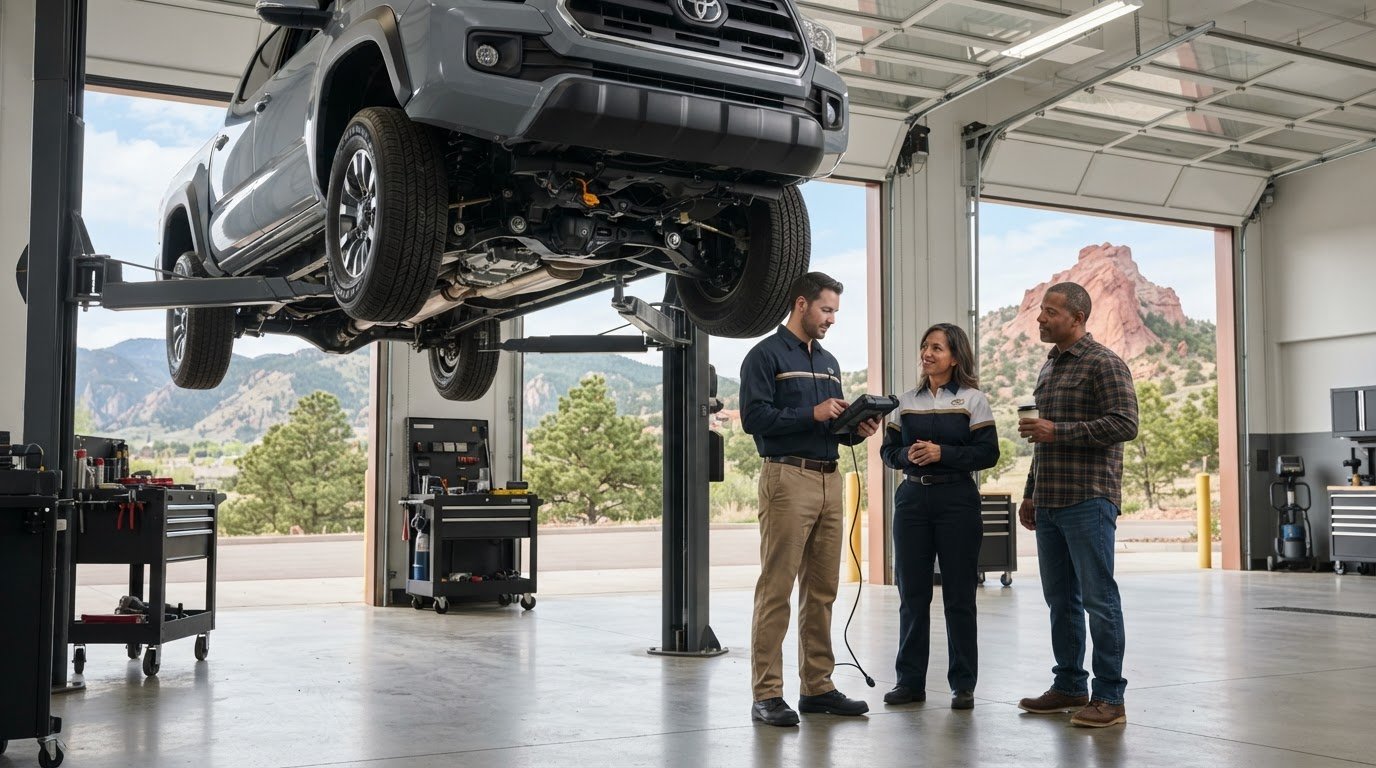
A scan tool can read codes stored by the vehicle’s control modules, including transmission-related codes such as P0700. A code points to a system, circuit, or condition that needs investigation. It doesn’t automatically prove that a particular sensor or solenoid has failed. A technician may compare the code with live sensor readings, inspect wiring and connectors, then road-test the vehicle to observe shift timing and whether the torque converter clutch locks up as expected.
For information about Eagle Transmission & Auto Repair’s transmission repair services, visit the service page.
Physical Inspection, Pan Drops, and Hydraulic Testing
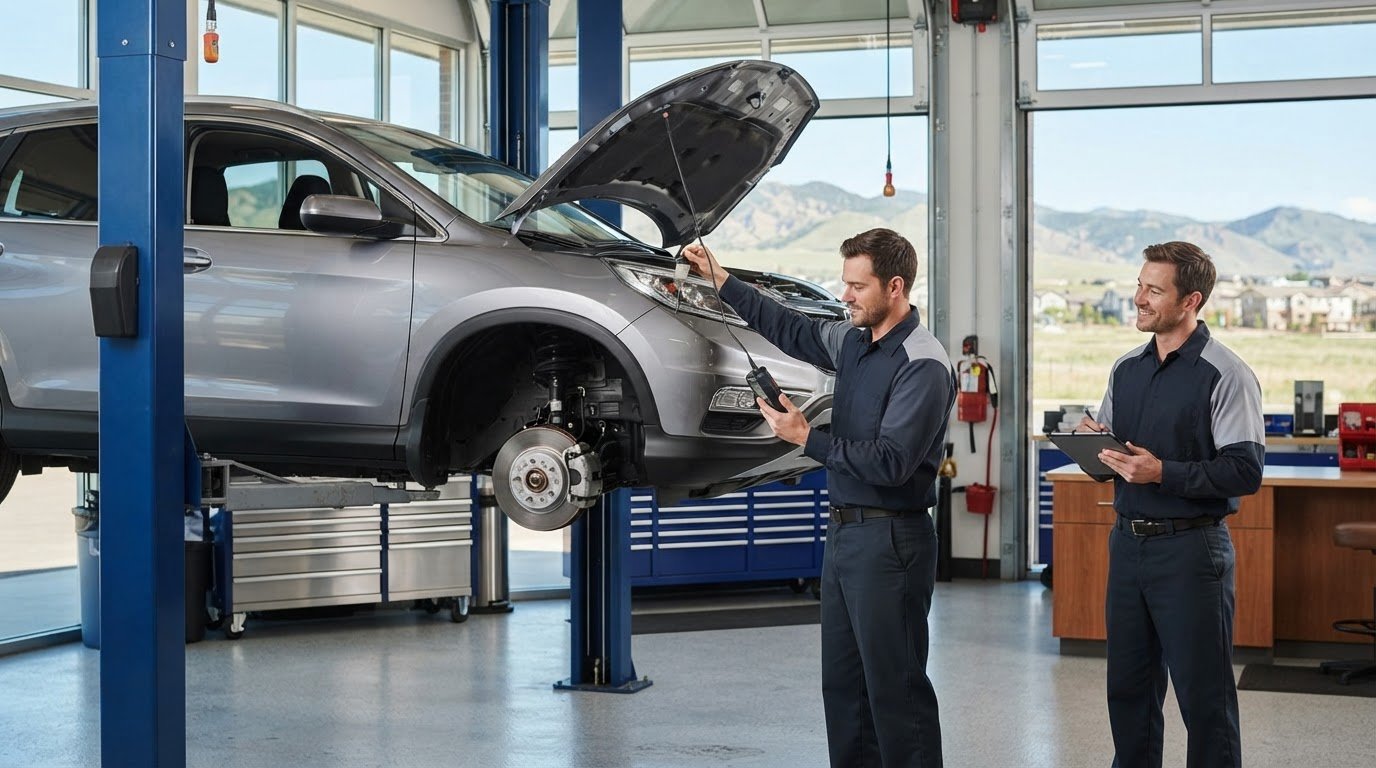
Testing may also include checking fluid level and condition. A burnt odor, visible metal, or friction material in the fluid can add useful evidence, but findings need to be interpreted alongside the vehicle’s symptoms and test results. If the diagnosis calls for it, removing the pan can reveal sediment or debris that isn’t visible from outside the transmission.
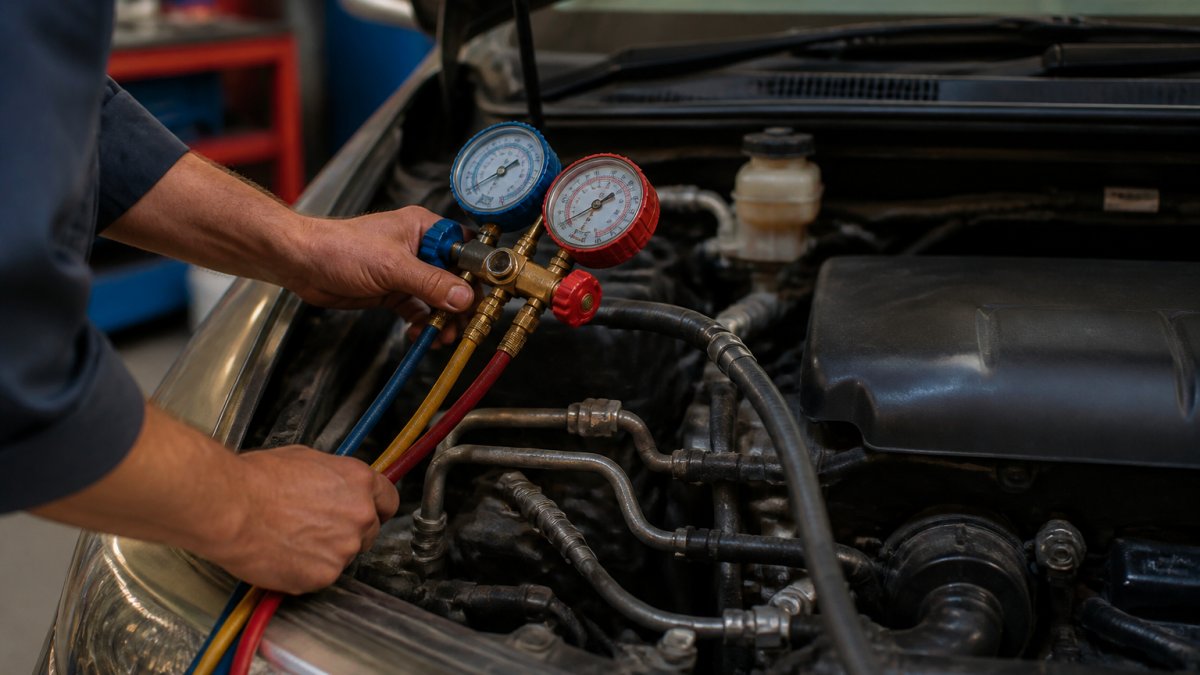
Other checks depend on the suspected fault. A pressure gauge can measure hydraulic line pressure, helping assess whether the pump and valve body are producing and directing pressure appropriately. Cooler-line flow checks may help identify restricted circulation that can interfere with fluid cooling. Electrical tests can examine shift solenoids, speed sensors, connectors, and wiring harnesses. These steps help narrow the cause rather than treating a code as a parts list.
Ask what each recommended test is meant to confirm and how the results support the repair recommendation. The Federal Trade Commission offers general guidance on consumer rights for auto repair, including questions about estimates and repair decisions.
If your vehicle’s shifts feel different or a warning light appears, consider discussing the symptoms with Eagle Transmission & Auto Repair in Parker. A clear explanation of the findings can help you understand the next step.
Transmission Repair vs Rebuild vs Replacement: Comparing Your Options
The right option depends on what testing reveals, not just the vehicle’s age or mileage. A faulty external sensor may call for a focused repair, while widespread internal wear can make a rebuild or replacement more appropriate. A useful diagnosis explains which parts are affected and why the recommended work fits the vehicle.
Targeted Component Repairs and Resealing
A targeted repair addresses a specific fault without overhauling the entire transmission. Examples may include replacing a leaking output shaft seal or cooler line, repairing a pan gasket leak, or replacing a faulty external sensor or solenoid. If a solenoid pack isn’t controlling fluid flow correctly, replacing it may help restore proper shifting, provided testing confirms that it is the cause.
A valve body, which directs hydraulic pressure to the transmission’s internal components, may also contribute to harsh shifts. Depending on its condition, a technician may recommend repairing or replacing the affected part. These focused options can involve less disassembly than a rebuild, but they won’t resolve unrelated internal wear. Ask how the test results support the proposed repair.
Complete Rebuilds and Remanufactured Units
A rebuild involves removing and disassembling the transmission to inspect its internal parts. Worn friction plates, seals, and other damaged components may be replaced, while reusable parts are assessed for continued service. The exact work depends on what inspection finds. A remanufactured unit is a replacement assembly prepared by a remanufacturer. Its inspection, replacement, and testing standards can vary, so ask what the unit includes and whether it suits the vehicle.
Neither choice guarantees a particular lifespan. A rebuild can address wear within the original unit, while a replacement changes out that assembly. The outcome depends on the unit’s condition, the confirmed diagnosis, and the quality and suitability of the parts and work. Vehicle downtime also varies. A focused repair may require less disassembly, while a rebuild or replacement involves more extensive work. Parts availability and the job’s scope affect the schedule.
For a work truck or fleet vehicle, weigh the repair path against how the vehicle is used, its overall condition, and the value of keeping it in service. Age and mileage provide context, but they shouldn’t decide the repair on their own. The Automatic Transmission Rebuilders Association (ATRA) provides background about the transmission rebuilding trade and its industry association.
For transmission repair Parker CO vehicle owners can make a more informed choice by asking the shop to explain the findings, compare the available options, and clarify what each recommendation includes.
What Factors Influence the Cost of Transmission Repair Parker CO Drivers Need
An accurate transmission repair estimate starts with inspecting the vehicle and testing the problem. Symptoms such as slipping or delayed engagement can have different causes, and the work required depends on what the diagnosis reveals. The vehicle’s make, model, drivetrain layout, parts needs, and extent of damage all help determine the scope of a repair. A quote without those findings is only a guess.
Drivetrain Configuration and Vehicle Type
Transmission access varies by vehicle. In some front-wheel-drive cars, the engine and transmission sit across the vehicle in a compact engine bay. Reaching and removing the transmission may involve moving other components, which can affect the labor involved. Rear-wheel-drive layouts differ, and four-wheel-drive trucks may require disconnecting driveshafts and separating the transmission from the transfer case. The exact steps depend on the vehicle’s design.
Parts availability and specialized requirements can also differ by make and model. Heavy-duty trucks may have different transmission and drivetrain configurations than passenger cars. That doesn’t automatically make one repair path more suitable than another, but it does make accurate vehicle identification and diagnosis important.
Extent of Internal Damage and Parts Required
A minor external leak and internal transmission damage call for very different repairs. Seals and gaskets are often called soft parts. Shafts, drums, and planetary gear sets are examples of hard parts. If testing points to a leak, the next step is to identify its source and check whether fluid loss has affected transmission operation. Driving with low fluid can reduce lubrication and hydraulic pressure, increasing the risk of further damage to internal parts.
Slipping is a reason to seek an inspection rather than continue driving as usual. If friction components keep slipping, heat and wear can build, potentially damaging hard parts and expanding the repair. Symptoms alone can’t confirm the extent of damage, so ask what diagnostic findings support the estimate and which parts or labor it includes. An accurate quote requires inspection and testing.
For transmission repair Parker CO, bring the vehicle to Eagle Transmission & Auto Repair for an evaluation of a leak, shifting concern, or other symptom. Get directions to Eagle Transmission & Auto Repair to discuss the next diagnostic step.
How to Choose the Right Transmission Shop in Parker, CO
A transmission concern can involve more than the transmission itself. Look for a shop that can discuss drivetrain diagnosis and explain how its findings support a recommended repair. A basic maintenance visit may not answer questions about shifting, fluid pressure, or internal wear, so ask what testing is relevant to your symptoms and vehicle.
Key Questions to Ask Before Authorizing Transmission Work
Before agreeing to a rebuild or replacement, ask what the shop has confirmed and what remains uncertain. Useful questions include:
- Will you road-test the vehicle and, if needed, check transmission pressure before recommending a rebuild?
- What did the scan, fluid inspection, and other tests show, and how do those findings support this repair?
- Can you inspect related drivetrain components, such as a transfer case or differential, if the symptoms point beyond the transmission?
- For a replacement assembly, what parts are included, and how is the unit sourced?
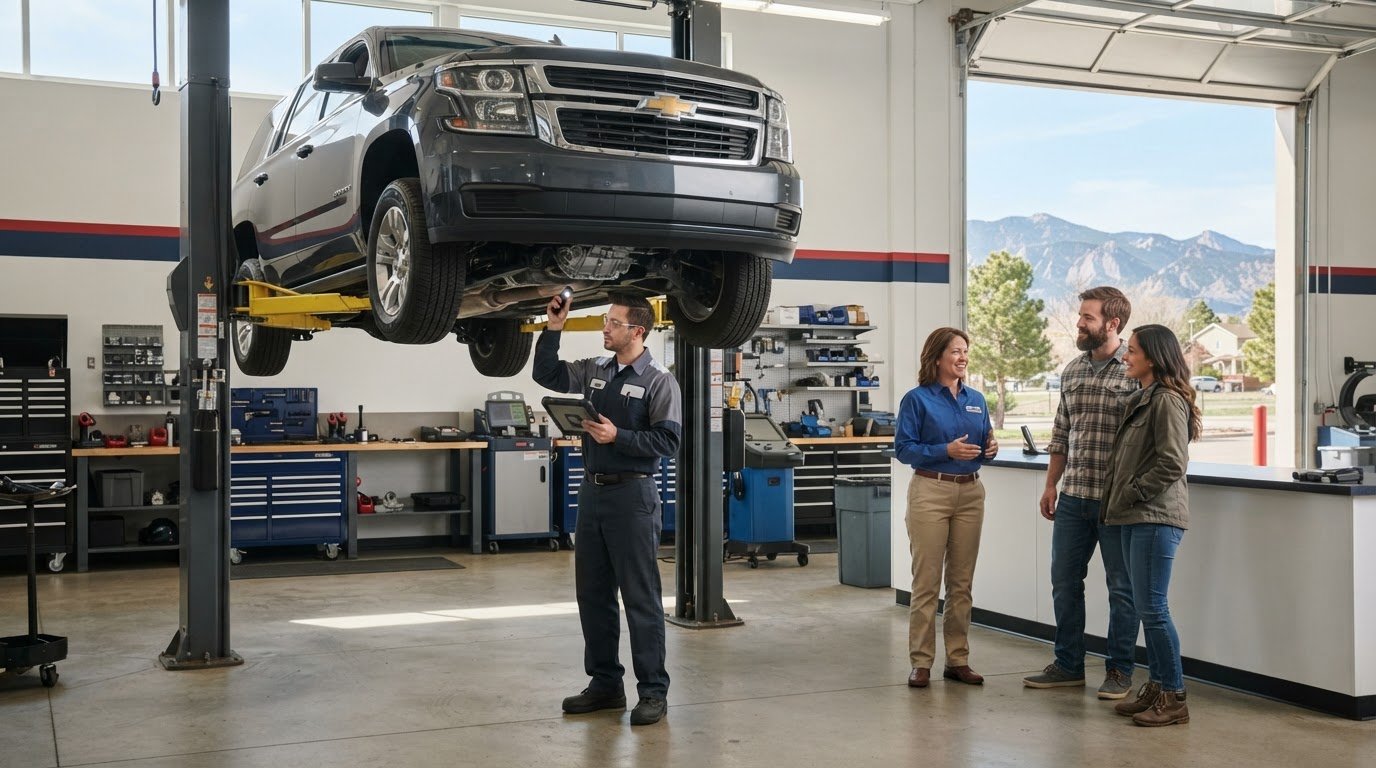
Clear answers help you compare recommendations without relying on a symptom or trouble code alone. If a shop recommends extensive work, ask which findings distinguish that option from a smaller repair.
Comprehensive Drivetrain Care at Eagle Transmission & Auto Repair
Eagle Transmission & Auto Repair provides transmission repair and service, manual clutch replacement, differential gear service, and 4×4 transfer case service. The shop also handles general auto repairs, including engine repair, brake replacement, and check engine light diagnosis. Fleet services and Ford repair are available as well. This range may be relevant to owners of cars, trucks, and commercial fleet vehicles who need related repair work.
Transmission symptoms can sometimes overlap with concerns elsewhere in the drivetrain. A clunk, vibration, or change in how power reaches the wheels may call for checking related components rather than assuming the transmission is the only source. Ask which systems were evaluated and how the findings connect to the recommendation. To learn more about transmission repair services, review Eagle’s service information.
Drivers from Parker and nearby communities, including Castle Rock, Centennial, Douglas County, Lone Tree, and Aurora, can use these questions to make a more informed shop choice. If you’re comparing options for transmission repair Parker CO, ask Eagle Transmission & Auto Repair about the symptoms you’re noticing and the diagnostic steps that may help identify the cause.
Take the Next Step Toward Reliable Shifting
Slipping gears or a fluid leak calls for a clear diagnosis, not guesswork. Testing can help show whether the issue points to a focused repair, a rebuild, or another solution. Eagle Transmission & Auto Repair handles transmission service and repair, along with related drivetrain work and general auto repair.
For transmission repair Parker CO drivers can discuss their symptoms with Eagle Transmission & Auto Repair. Call (720) 778-1888 or visit parkertransmissionrepair.com to ask about the next diagnostic step. Get directions to Eagle Transmission & Auto Repair.
Eagle Transmission & Auto Repair
10189 Parkglenn Way, Parker, CO 80138
Phone: (720) 778-1888
Website: parkertransmissionrepair.com
Hours: 8:00 AM to 6:00 PM, Monday through Friday. Closed Saturday and Sunday.
Frequently Asked Questions
Can I drive my car if the transmission is slipping?
Driving with a slipping transmission can worsen wear, especially if the vehicle continues to lose power or struggles to engage a gear. If slipping is severe, avoid driving it and arrange an inspection. A flare in engine RPM without a matching increase in speed is one warning sign. The cause could be low fluid, worn internal parts, or a control issue, so testing is needed before deciding what repair is appropriate.
How do I know if my vehicle needs a transmission repair or a complete replacement?
An inspection and diagnostic tests help determine whether a targeted repair may address the problem or whether internal damage points to a rebuild or replacement. A trouble code alone cannot make that decision. The shop should explain what testing found, which parts are affected, and why the recommended option fits. For transmission repair Parker CO drivers should look for a clear explanation of the findings before approving major work.
What color should healthy transmission fluid be?
Transmission fluid color varies by vehicle and fluid type, so color alone can’t confirm whether it’s healthy. Some automatic transmission fluids are red when new, but other specifications may look different, and fluid can darken with use. A burnt odor, visible debris, or a leak also deserves attention. Check the vehicle’s specified fluid requirements and have the level and condition assessed if you notice a change.
Why does my transmission shift hard when the weather is cold in Parker?
Cold fluid can flow more slowly before it warms, which may make shifts feel sluggish at first. If hard shifting continues after the vehicle has warmed, or happens along with slipping, warning lights, or delayed engagement, don’t assume temperature is the only cause. Fluid condition, sensors, solenoids, wiring, or internal wear can also affect shifting. A diagnostic inspection can help separate a temporary cold response from a developing fault.
What causes a transmission to overheat while driving in Colorado?
Heavy loads, towing, long climbs, and repeated stop-and-go driving can increase transmission workload and heat. Low fluid or a problem with fluid circulation or cooling may contribute too. Heat can affect fluid and internal components, so take a temperature warning seriously and follow the vehicle’s guidance. If you notice unusual shifting, a burning odor, or a warning light, arrange an inspection rather than guessing at the cause.
Is a check engine light always related to an engine problem or can it mean transmission trouble?
A check engine light can indicate a powertrain issue, including a transmission control or shifting concern, not just an engine fault. A diagnostic scan retrieves stored codes, but a code identifies an area to investigate rather than proving a specific part has failed. Eagle Transmission & Auto Repair serves drivers in Parker, Douglas County, Castle Rock, Centennial, Lone Tree, and Aurora with check engine light diagnosis and transmission services.