Table of Contents
- What a Transmission Flush Actually Does
- Transmission Flush vs. Fluid Change: Which Service Do You Need?
- Signs of Low Transmission Fluid and When to Act
- Transmission Fluid Change Interval: How Often Should You Service?
- Critical Questions to Ask Before Approving Transmission Service
- Finding a Trustworthy Transmission Shop in Parker and Nearby Areas
- What Happens During Your Transmission Service
- Conclusion: Schedule Your Transmission Service Today
- Frequently Asked Questions
Last Updated: October 22, 2026
What a Transmission Flush Actually Does
A transmission flush near me removes old, contaminated transmission fluid and replaces it with fresh fluid. Specialized equipment circulates new fluid through the system, pushing out degraded fluid, sludge, and debris.
Your transmission relies on clean fluid. Heat, friction, and age break fluid down, and degraded fluid can’t protect internal components, cool the system, or maintain proper pressure. A flush restores those functions.
Think of it like an engine oil change, but more thorough: a flush cleans the entire system, including narrow passages and valve bodies where old fluid leaves deposits.
However, flushing isn’t appropriate for every vehicle. Consumer Reports cautions that power-flushing a high-mileage transmission can dislodge sludge and particles, potentially leading to clogs in sensitive components. This is why we evaluate each vehicle individually before recommending this service.
At Eagle Transmission & Auto Repair in Parker, we help drivers decide whether a flush makes sense based on age, mileage, fluid condition, and manufacturer recommendations.
Transmission Flush vs. Fluid Change: Which Service Do You Need?
These services sound similar but work very differently, and most vehicles need one or the other, not both.
Drain and fill (transmission fluid change). We pull the drain plug or drop the pan, let gravity drain the fluid, replace the filter if serviceable, install a new pan gasket, and refill to spec.
Transmission flush (fluid exchange). A flush machine connects to the cooler lines and uses the vehicle’s own pump, or a low-pressure external pump, to push new fluid in while old fluid exits, exchanging most of the total fluid in one visit. A proper flush is an exchange, not a high-pressure blast that can dislodge varnish and clutch material into the valve body and solenoids.
Why the distinction matters for your vehicle.
- Fluid condition. Dark, burnt-smelling fluid on a high-mileage transmission is a warning, not a green light. Fresh detergent-rich fluid can loosen deposits that were holding worn clutches together, so a shop should inspect the fluid first.
- Service history. A transmission serviced on schedule is a good candidate for either method. Unknown history at 120,000 miles calls for a gentle drain and fill, or no service if the fluid is severely degraded and the unit already slips.
- Transmission type. Many modern automatics, especially sealed units, lifetime-fill claims, and CVTs, specify an exact fluid and procedure in the owner’s manual. Some manufacturers approve a fluid exchange; others specify drain and fill only. The manual wins over any general rule.
- Cooler and lines. A flush touches the cooler circuit. If the cooler is clogged or the lines are degraded, that has to be addressed first.
A simple decision framework:
| Situation | Typical recommendation |
|---|---|
| Under ~80,000 miles, serviced on schedule, fluid still reddish | Drain and fill, or exchange if the manual allows |
| 80,000-120,000 miles, unknown history, fluid dark but not burnt | Drain and fill, then reassess |
| Over 120,000 miles, fluid burnt or gritty, transmission already slipping | Diagnose first; service may not be appropriate |
| Towing or mountain driving, fluid overheated | Inspect cooler and fluid; exchange only if the unit is healthy |
| Manual specifies a specific fluid and procedure | Follow the manual exactly |
Those mileage figures are general guidance, a well-maintained truck at 130,000 miles can be a better flush candidate than a neglected sedan at 70,000. If you’re weighing the two, schedule a transmission inspection in Parker and we’ll show you the fluid and explain our reasoning.
A shop that recommends a flush for every vehicle, regardless of mileage or history, is not evaluating your transmission. Ask what specifically about your fluid and service history led to the recommendation.
Signs of Low Transmission Fluid and When to Act
Low transmission fluid creates immediate problems: your transmission can’t shift smoothly, cool itself, or protect internal parts.
Watch for these warning signs:
- Delayed or hard shifts, the transmission hesitates when you accelerate or shift between gears
- Slipping, the engine revs but the vehicle doesn’t accelerate smoothly; you feel a loss of power
- Burning smell, overheated fluid smells acrid and sharp; this means friction is building
- Transmission fluid leaks, red or pink fluid under your vehicle, especially after parking
- Warning light on your dashboard, many vehicles display a transmission warning or check-engine light
- Grinding or shaking, unusual noise or vibration during acceleration
- Difficulty shifting into reverse, reverse gear becomes sluggish or won’t engage
If you notice any of these, stop driving and get a diagnosis soon. Driving with low fluid causes rapid damage. A small leak today becomes an expensive repair tomorrow.
Colorado’s temperature swings, freezing winter mornings to hot summer days, stress transmission fluid more than moderate climates. Cold starts strain fluid viscosity and summer heat accelerates breakdown, so regular checks matter more here.
Transmission Fluid Change Interval: How Often Should You Service?
Your manufacturer’s interval is the starting point, but real-world conditions often demand more frequent service. Most vehicles specify 30,000 to 60,000 miles; some modern transmissions claim 100,000 or more, but that assumes ideal driving.
Real driving is rarely ideal. Stop-and-go commuting, common in the Aurora and Centennial areas, generates more heat and wears fluid faster than highway driving. Towing, mountain driving, and extreme temperatures all shorten fluid life.
Consider these factors:
| Driving Condition | Recommended Interval |
|---|---|
| Normal highway driving | Manufacturer interval |
| Stop-and-go commuting | Every 30,000 miles |
| Towing or hauling | Every 25,000 miles |
| Hot or cold climate extremes | Every 30,000 miles |
| High-mileage vehicle (over 100k) | Every 30,000 miles or per fluid inspection |
The safest approach: have your fluid inspected every 30,000 miles or annually, whichever comes first. Dark, burnt-smelling fluid means service is overdue; clear, bright red fluid means you can wait.
We recommend fluid service every 30,000 to 40,000 miles for most drivers in Colorado, especially if you commute through heavy traffic or tow occasionally.
Critical Questions to Ask Before Approving Transmission Service
Before you authorize any transmission work, ask these questions. A trustworthy shop welcomes them.
1. What’s the condition of my transmission fluid?
A shop should show you the fluid.
**2.
3. Is a flush appropriate for my vehicle?
Some transmissions, especially older or high-mileage ones, shouldn’t be flushed.
4. What happens if I don’t service my transmission now?
Honest shops explain the real risk.
5. Do you use the manufacturer-recommended fluid for my vehicle?
Using the wrong fluid causes shifting problems and accelerates wear.
6. What’s included in the service?
Filter change? Pan gasket? Fluid top-off? Clear scope prevents surprises.
7. How long will the service take?
A fluid change typically takes 1-2 hours; a flush may take longer.
8. Do you offer a warranty on this work?
Ask what’s covered and for how long.
9. Can I get a second opinion without obligation?
A good shop doesn’t pressure you or make you feel locked in after a diagnosis.
Finding a Trustworthy Transmission Shop in Parker and Nearby Areas
Search results for a transmission flush near you are dominated by listings and service pages, which makes it hard to tell shops apart.
**1.
2. Ask which fluid specification they use. Transmission fluid is not universal.
3. Ask how they perform the exchange. Does the shop use a fluid exchange machine connected to the cooler lines, and at what pressure?
**4.
5. Ask what the warranty covers and for how long. Warranty terms vary widely.
**6.
7. Check credentials and equipment, but weigh them correctly. ASE certification (Automotive Service Excellence) signals that technicians have passed standardized testing and is a reasonable baseline (About ASE).
8. Read reviews for specifics, not stars. Look for reviews that mention a particular service, a clearly explained diagnosis, or a resolved problem.
9. Visit before you commit. A clean, organized bay with diagnostic equipment visible tells you more than a website.
10. Ask about high-mileage and older vehicles. A shop that recommends a rebuild for every aging transmission is selling, not diagnosing.
At Eagle Transmission & Auto Repair in Parker, we have worked on transmissions for decades and expanded into full-service repair, so we see these decisions from both sides. If you want a straight answer about whether your vehicle needs a flush, a drain and fill, or nothing at all, contact our Parker shop.
Bring your owner’s manual or a photo of the transmission fluid specification page when you visit. It helps the shop confirm the correct fluid and procedure for your vehicle.
What Happens During Your Transmission Service
Knowing the process helps you know what to expect.
Step 1: Fluid inspection. We sample your transmission fluid and examine its color, smell, and condition to determine whether service is needed and what type.
Step 3: Visual inspection. We check for leaks, damaged hoses, and loose connections. A small leak caught early prevents major problems.
Step 4: Fluid service. For a fluid change, we drain the old fluid from the pan, replace the filter, and refill with the manufacturer-recommended fluid.
Step 5: Road test. After service, we test-drive your vehicle to confirm smooth shifting and normal operation.
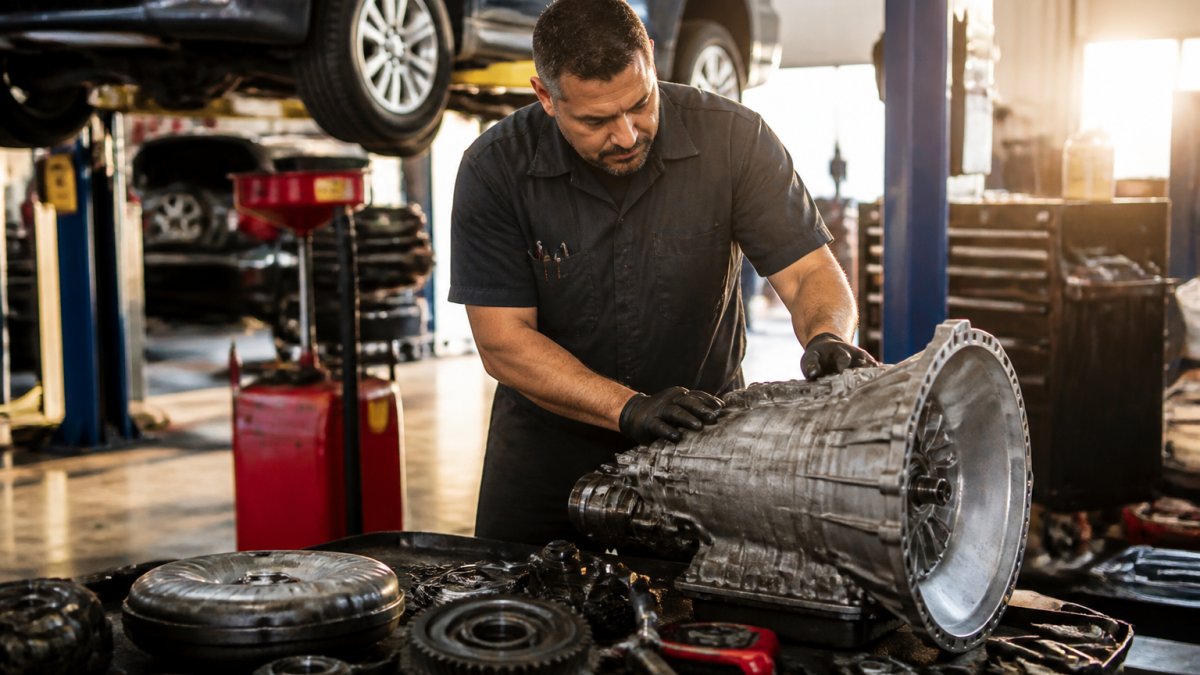
Step 6: Final inspection and documentation. We show you what we found, what we did, and provide written documentation. You’ll know exactly what service was performed and why.
The entire process typically takes 1-2 hours for a fluid change, longer for a flush.
The key to avoiding unnecessary transmission work is getting a thorough diagnosis first. That diagnosis tells you whether service is truly needed or whether you can safely delay it.
Conclusion: Schedule Your Transmission Service Today
Transmission problems don’t fix themselves. A small fluid leak or early sign of wear becomes an expensive rebuild if you ignore it. The best protection is regular maintenance and honest diagnosis.
If you’re noticing shifting problems, hearing unusual noises, or seeing fluid leaks, don’t wait. We offer free transmission diagnostics to identify what’s really happening. Our team at Eagle Transmission & Auto Repair has spent over 40 years diagnosing and fixing transmission issues for drivers throughout Parker, Castle Rock, Centennial, Aurora, and surrounding communities.
Contact us to schedule your free diagnostic or transmission service. We’ll give you honest answers about what your vehicle needs and what it costs.
Frequently Asked Questions
How do I know if I need a transmission flush or just a fluid change?
A transmission flush removes old fluid and contaminants from the entire system using specialized equipment, while a fluid change drains and refills the pan. If your transmission fluid is dark, smells burnt, or shows signs of sludge, a flush may be recommended. However, high-mileage vehicles can be at risk if debris is dislodged during a flush. The right choice depends on your vehicle’s condition and manufacturer recommendations. We recommend a free diagnostic at our Parker shop to determine which service suits your vehicle best.
How often should transmission fluid be changed according to manufacturer recommendations?
Most manufacturers recommend a transmission fluid change interval between 30,000 and 60,000 miles, though some newer vehicles may go longer. Check your owner’s manual for your specific vehicle’s interval. Colorado’s stop-and-go commuting in the Denver metro area and temperature swings can accelerate fluid degradation, so you may benefit from more frequent service. We can review your owner’s manual and driving habits to recommend the right interval for your situation.
What questions should I ask a transmission shop before approving service?
Ask whether they’ve reviewed your owner’s manual, what type of fluid your vehicle requires, whether they recommend a flush or drain-and-fill, what the service includes (filter replacement, leak inspection), how long the service takes, and what warranty or guarantee backs their work. Request a free diagnostic first so you understand the problem before committing. At Eagle Transmission & Auto Repair, we offer free road test and computer diagnostics so you know exactly what’s needed before any work begins.
Can a transmission flush damage a high-mileage vehicle?
Consumer Reports cautions that power-flushing a high-mileage transmission can dislodge sludge and particles, potentially causing clogs. For vehicles with higher mileage, a drain-and-fill may be safer than a full flush. This is why a proper diagnosis matters. We evaluate each vehicle individually to recommend the safest service approach, especially for older or high-mileage vehicles in our Parker area.
How do I find a reliable transmission shop near me?
Look for a shop with experience on your specific vehicle make and model, ASE-certified technicians, and willingness to provide free diagnostics before charging for work. Ask whether they stand behind their service with a warranty. Check whether they offer transparent communication and can explain what’s wrong without pressure to over-service. Eagle Transmission & Auto Repair has over 40 years of transmission expertise and serves drivers throughout Parker, Castle Rock, Aurora, Centennial, and surrounding Douglas County communities with honest diagnostics and same-day service goals.