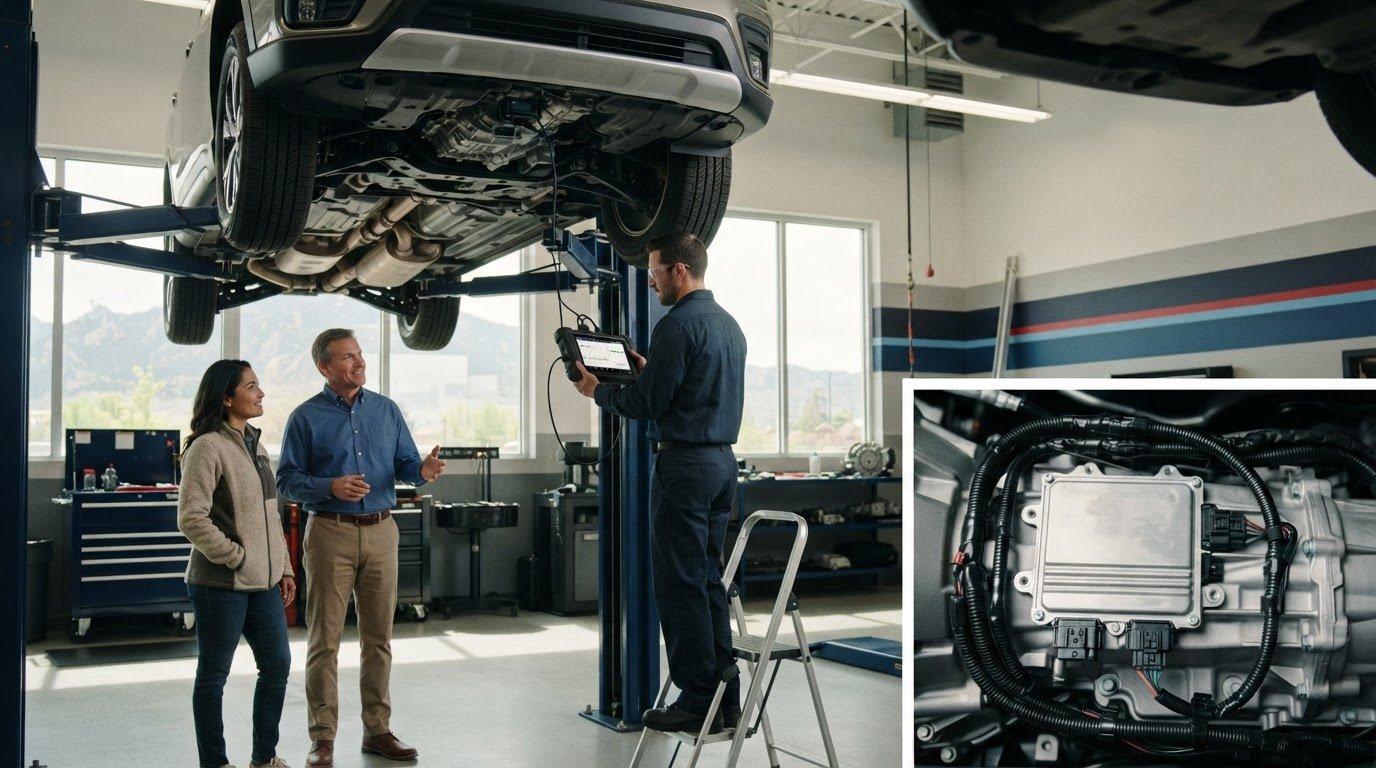
What if the signs of a bad fuel pump point to a different problem altogether? Trouble starting, sputtering, stalling, or losing power can make a failing pump seem likely, especially when symptoms come and go. But similar issues can also come from a clogged fuel filter, an electrical fault, or another engine problem.
It’s understandable to want a clear answer before deciding whether to keep driving or arrange an inspection. The symptoms are useful clues, but they can’t confirm the cause on their own. This guide explains what to watch for, what else could be behind those warning signs, and how a technician can narrow down the possibilities with checks such as fuel pressure and electrical testing.
You’ll also learn when an intermittent issue deserves prompt attention and when it’s safer to stop driving and seek help. That way, you can take a sensible next step without assuming the fuel pump is at fault or replacing parts based on symptoms alone.
Key Takeaways
- Common signs of a bad fuel pump include sputtering, hesitation, weak acceleration, stalling, and trouble starting, but symptoms can vary.
- Because the fuel pump helps move fuel from the tank toward the engine, inconsistent delivery may affect how smoothly the engine runs and how much power it makes.
- Battery, starter, ignition, and other engine problems can cause similar symptoms, so testing is more useful than guessing and replacing parts.
- Note when the symptoms occur and how often. Repeated stalling or power loss deserves prompt attention because it can interrupt driving.
- An engine diagnosis can help distinguish a suspected fuel delivery issue from other possible causes and guide a sensible next step.
What Are the Most Common Signs of a Bad Fuel Pump?
A failing fuel pump may interrupt the fuel supply, but symptoms vary from one vehicle to another. The signs of a bad fuel pump can include recurring sputtering, hesitation, weak acceleration, stalling, extended cranking, or an engine that won’t start. These are clues, not a diagnosis. A single symptom can have several possible causes, so it’s best not to assume the pump has failed based on how the vehicle feels.
Some drivers notice trouble mainly during acceleration, climbing a hill, carrying a load, or another moment when the engine needs more power. Others experience a rough or inconsistent drive at different times. A fuel pump is part of the system that moves fuel from the tank toward the engine. For a general overview of how pumps work and where they may be located, see Fuel pump.
- Sputtering or hesitation: The engine may briefly stumble, jerk, or feel as if it loses momentum, then run normally again.
- Weak acceleration: Pressing the accelerator may not produce the response you expect, especially when the engine is under greater demand.
- Stalling: The engine may shut off unexpectedly. If this happens repeatedly, it deserves prompt attention because it can interrupt driving.
- Starting trouble: The engine may take longer than usual to start, or it may crank without starting.
How fuel delivery problems can feel while driving
Hesitation can feel like a pause in power when you press the accelerator. Sputtering may feel like the engine briefly runs unevenly, rather than delivering steady power. These sensations can raise concern about fuel delivery, but they don’t identify the cause on their own. If power loss or stalling returns, note when it happens and arrange an assessment. Symptoms may come and go, and their pattern can differ between vehicles.
Pay attention to the conditions surrounding the symptom. Does it happen while accelerating, at a steady speed, or only after the engine has been running? Does the vehicle recover quickly, or does it continue to run poorly? These details can help describe the problem clearly, but they still can’t confirm a pump fault.
Starting trouble and sounds that may raise suspicion
Extended cranking or a no start can involve fuel delivery, but it may also stem from unrelated starting or engine problems. A sound near the fuel tank that has changed from what you normally hear may be another clue worth mentioning during an inspection. Sound varies by vehicle, so there’s no single noise that proves a pump is failing. Treat it as one observation, not a verdict.
The key distinction is simple: symptoms suggest what to investigate, while testing helps establish what is actually wrong. If the vehicle repeatedly sputters, loses power, stalls, or struggles to start, record the pattern and seek an assessment rather than replacing parts based on one sign alone.
How a Fuel Pump Problem Can Affect Engine Performance
The fuel pump helps move fuel from the tank toward the engine, where it can be used to keep the engine running. If fuel delivery becomes inadequate or inconsistent, the engine may not run as smoothly or respond with the power you expect. That connection helps explain why a fuel delivery concern can show up as a change in performance, but it doesn’t mean every stumble or loss of power comes from the pump.
Think of fuel delivery like a supply line feeding a busy kitchen. If the supply can’t keep pace with demand, the work may slow or become uneven. In a vehicle, an engine that isn’t receiving fuel consistently may run roughly or feel less responsive. That’s a useful way to understand possible signs of a bad fuel pump, not a shortcut to diagnosing one.
Why symptoms may show up under acceleration
An engine’s needs change with how it’s operating. Asking for more acceleration, climbing a hill, or carrying a load can place different demands on the system than cruising steadily. If a driver notices hesitation during one of these moments, fuel delivery may be worth assessing. The same sensation can have other causes, though, so the driving condition is a clue to report, not proof of pump failure.
Describe what the vehicle was doing when the change happened. Was the accelerator pressed gently or firmly? Was the vehicle climbing, cruising, or pulling away from a stop? A clear account can help guide an assessment without turning a brief loss of response into a parts diagnosis.
Why symptoms can be intermittent
A developing or inconsistent fault may not behave the same way on every trip. The engine might run normally for a while, then feel uneven under different conditions. A temporary return to normal is encouraging, but it doesn’t establish that the underlying issue has gone away. Keep track of when the change occurs and whether it returns, and share that pattern during an inspection.
Performance depends on several systems working together. Fuel delivery is one part of that picture, while other engine or electrical concerns can also affect how smoothly the vehicle runs. That’s why the same driver complaint can lead to different findings from one vehicle to another. The goal of diagnosis is to use evidence from the vehicle, rather than treating a symptom as a verdict.
If the issue keeps returning, avoid demanding more power from the vehicle just to see whether it happens again. Note the conditions and seek an assessment, especially if performance drops enough to interfere with normal driving. For a practical next step, you can get directions to the Parker auto repair shop for engine diagnostic service.
Bad Fuel Pump or Another Problem? How Symptoms Can Overlap
A weak start, stall, or drop in power can raise suspicion about fuel delivery, but these symptoms don’t point to one part by themselves. A weak battery or starter may affect starting, while ignition or other engine faults can cause rough running or reduced power. The useful question isn’t just what the symptom resembles. It’s what testing shows about the systems involved.
Use this comparison as a starting point, not a way to diagnose the vehicle at home:
| Symptom | Possible fuel pump connection | Other possible causes | Diagnostic caveat |
|---|---|---|---|
| Slow cranking or no start | Fuel may not be reaching the engine consistently. | Battery or starter concern, or another starting system fault. | Note whether the engine cranks slowly, normally, or not at all. |
| Rough running or hesitation | Uneven fuel delivery may affect how smoothly the engine runs. | Ignition or other engine problems. | The sensation alone can’t identify which system is responsible. |
| Stalling or weak power | A fuel supply concern may be one possibility. | Other engine or electrical faults may produce similar changes. | When and how often it happens can help guide testing. |
What else can cause hard starting, stalling, or weak power?
If the engine turns over slowly, the battery or starter may be involved. If it cranks at its usual speed but won’t start, the cause could still be fuel related or something else. Ignition concerns and other engine faults may also contribute to rough running, stalling, or lost power. Because the clues overlap, an inspection is more dependable than choosing a part based on a symptom.
A warning light can add useful information, but it doesn’t automatically name the failed component. A technician may consider the light alongside the vehicle’s behavior and test results. Eagle Transmission & Auto Repair offers check engine light diagnostics as part of its diagnostic services.
What diagnosis needs to establish
A technician typically considers the driver’s description, checks relevant systems, and looks for evidence that supports or rules out possible causes. General diagnostic examples may include checking fuel pressure and examining the pump’s electrical supply, along with evaluating other starting or engine systems as needed. The appropriate checks depend on the vehicle and its symptoms. No single clue should be treated as confirmation.
This is why the signs of a bad fuel pump are best understood as reasons to investigate, not a parts replacement checklist. Broader engine repair and diagnostics can help assess whether the concern relates to fuel delivery or another engine issue. Sharing when the trouble occurs, such as during starting or acceleration, gives the assessment useful context.
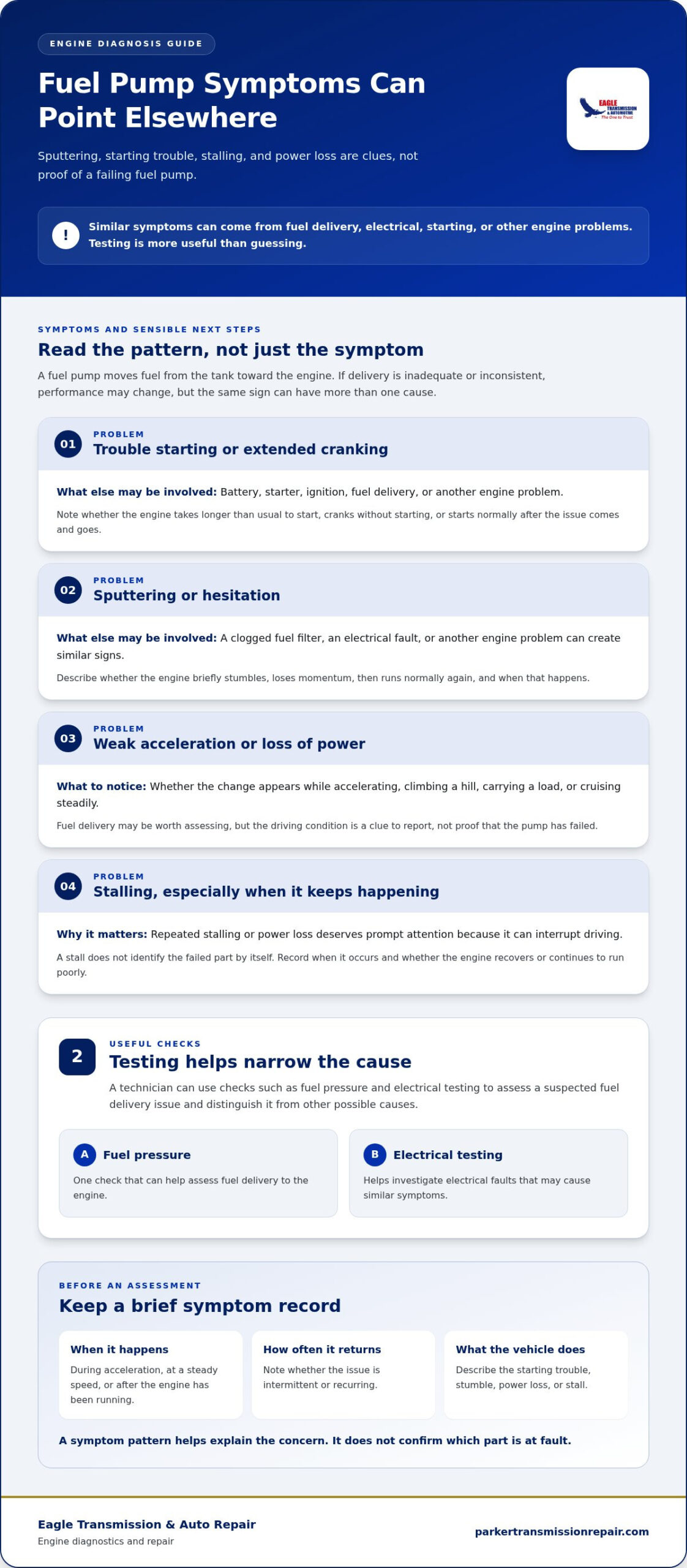
What Should You Do If You Notice Fuel Pump Symptoms?
Intermittent engine trouble can be hard to judge, especially if the vehicle seems normal again after a brief stumble. Treat the signs of a bad fuel pump as a reason to gather details and arrange an assessment, not as proof that the pump is the cause. Repeated stalling or sudden power loss deserves prompt attention because it can interrupt driving unexpectedly.
Use this simple plan:
- Record what you notice. Note the symptom, when it happens, and whether it repeats. Details can help make an intermittent issue easier to describe.
- Avoid guessing at the failed part. Similar behavior can come from different systems, so a symptom alone is not enough to identify the cause.
- Arrange an assessment. If stalling or power loss recurs, or the vehicle won’t start, have the concern evaluated rather than relying on it to behave normally next time.
When to limit driving and seek an inspection
Recurring stalls, sudden loss of power, or a no start are good reasons to seek prompt assessment. If the engine stalls while you’re moving, focus on guiding the vehicle to a safe location as conditions allow. Don’t assume it’s safe to continue driving just because the engine restarts or the symptom temporarily disappears. Without inspecting the vehicle, no one can reliably judge how it will behave on the next trip.
An unresolved issue may leave you unexpectedly stranded, even if the vehicle has completed other trips without trouble. If power drops or stalling returns, avoid continuing a drive that feels difficult to manage. If the vehicle won’t start, note what happens when you try, then arrange an inspection instead of repeatedly treating a restart as confirmation that the problem has passed.
What details to share about the symptoms
A short, clear account is more useful than trying to name the faulty part. If you can, write down what happened soon after the event. For example, note whether the engine stumbled while accelerating, stalled after running normally, or cranked without starting. Include whether it restarted and whether the same behavior happened again.
- When did the symptom appear, such as at startup, during acceleration, or while driving steadily?
- How often has it occurred, and does it seem to happen under similar conditions?
- Did the engine restart, or did the starting behavior change?
- Was a warning light on, or did you notice another change in engine behavior?
These observations help guide an evaluation, but they don’t replace testing. Avoid changing several things at once or assuming that keeping the fuel tank full will resolve the concern. General maintenance and consistent refueling habits can support vehicle care, but they can’t establish what’s causing an existing symptom.
For a recurring stall, power loss, or starting concern, arrange an engine diagnostic assessment with Eagle Transmission & Auto Repair in Parker. Get directions to the Parker shop for an engine diagnostic assessment.
Fuel Pump Symptoms in Parker: Getting an Engine Diagnosis
Symptoms can raise a reasonable question about fuel delivery, but they can’t identify the failed part by themselves. A diagnostic evaluation helps narrow down the actual cause before repair decisions are made. If hesitation, stalling, or starting trouble keeps returning, focus on getting the engine concern assessed rather than treating a suspected fuel pump problem as a confirmed diagnosis.
How to approach a suspected fuel delivery issue
Bring a clear description of what the vehicle does and the conditions around the symptom. For example, explain whether the engine hesitates during acceleration, stalls after running normally, or takes longer to start. Mention whether the issue happens repeatedly, whether the engine restarts, and whether a warning light appears. These details help frame the concern without deciding in advance which component is responsible.
Fuel delivery is only one part of engine operation. Starting, ignition, electrical, and other engine concerns can sometimes create similar behavior. A sound assessment should distinguish among possible causes with relevant inspection and testing before repair choices are made. Depending on the findings, the next step may involve a fuel delivery concern or another system. The important point is to base that decision on evidence from the vehicle, not on a symptom checklist alone.
That approach is especially useful when symptoms come and go. A vehicle that runs normally during one trip may still have an issue that appears under different conditions. Notes about when the problem occurs can help guide the evaluation, while testing is needed to determine what is actually happening. No symptom description, however detailed, can guarantee an exact diagnosis without examining the vehicle.
Arrange an engine evaluation in Parker
Eagle Transmission & Auto Repair provides engine diagnostics and repair for drivers experiencing recurring hesitation, stalling, or starting trouble. The purpose of an evaluation is to identify the source of the engine concern and help guide the appropriate repair decision. It does not mean every suspected fuel pump issue will have the same cause or outcome.
If you’re in Parker, Colorado and the symptoms are returning, arrange an engine diagnostic assessment with Eagle Transmission & Auto Repair. Share what you’ve noticed and when it happens so the concern can be evaluated with that context. Get directions to Eagle Transmission & Auto Repair.
Eagle Transmission & Auto Repair
10189 Parkglenn Way, Parker, CO 80138
Phone: (720) 778-1888
Website: parkertransmissionrepair.com
Hours: 8:00 AM to 6:00 PM, Monday through Friday. Closed Saturday and Sunday.
Take the Next Step With a Clear Picture
A repair decision is easier to approach when it’s based on what the vehicle shows, not on a guess about which part might be responsible. If you’ve noticed signs of a bad fuel pump, bring your observations about when the symptoms occur to the conversation. A careful diagnosis can help identify the source of the trouble and inform what to do next.
Eagle Transmission & Auto Repair provides engine diagnostics and repair in Parker, Colorado. If starting trouble, hesitation, or stalling is affecting your vehicle, call (720) 778-1888 to arrange an engine diagnostic, or get directions to Eagle Transmission & Auto Repair. You don’t need to arrive with the cause figured out. Start with what you’ve noticed, and take the next step toward a clearer answer.
Frequently Asked Questions
Can a bad fuel pump cause symptoms only when accelerating?
Yes, a fuel delivery concern may be noticed during acceleration, though that pattern alone can’t identify the pump as the cause. Pay attention to whether the vehicle’s speed builds smoothly or whether the engine seems to respond differently from the vehicle’s movement. These details can help describe the concern. A technician can use them as context for an assessment, rather than treating acceleration related symptoms as a diagnosis.
Does a fuel pump problem always make a car fail to start?
No. A vehicle may start and run even if there’s a concern affecting fuel delivery. A successful start doesn’t by itself rule out a problem, just as a no start doesn’t establish that the fuel pump is responsible. Notice whether the issue changes between starts or occurs after the engine has been running. Sharing that pattern can add useful context to an engine evaluation.
Can a car stall because of a bad fuel pump and then start again?
Yes, a vehicle may stall and later restart, but the restart doesn’t identify what caused the stall. If it happens again, note whether the engine restarted right away or only after a pause, and whether it ran differently afterward. Avoid relying on repeated restarts as a test. A recurring stall is a reason to arrange an assessment, particularly if it makes the vehicle difficult to use reliably.
Can a warning light confirm that the fuel pump is bad?
No. A dashboard warning light doesn’t name the fuel pump as the failed part. If a light appears, note its exact wording or symbol and whether it remains on after restarting. This can help communicate what the vehicle displayed, but it doesn’t establish the cause. A diagnostic evaluation is needed to interpret warning information alongside the vehicle’s condition and determine what should be checked next.
For recurring starting or engine performance concerns, call Eagle Transmission & Auto Repair at (720) 778-1888 to arrange an engine diagnostic in Parker.
Eagle Transmission & Auto Repair
10189 Parkglenn Way, Parker, CO 80138
Phone: (720) 778-1888
Website: parkertransmissionrepair.com
Hours: 8:00 AM to 6:00 PM, Monday through Friday. Closed Saturday and Sunday.